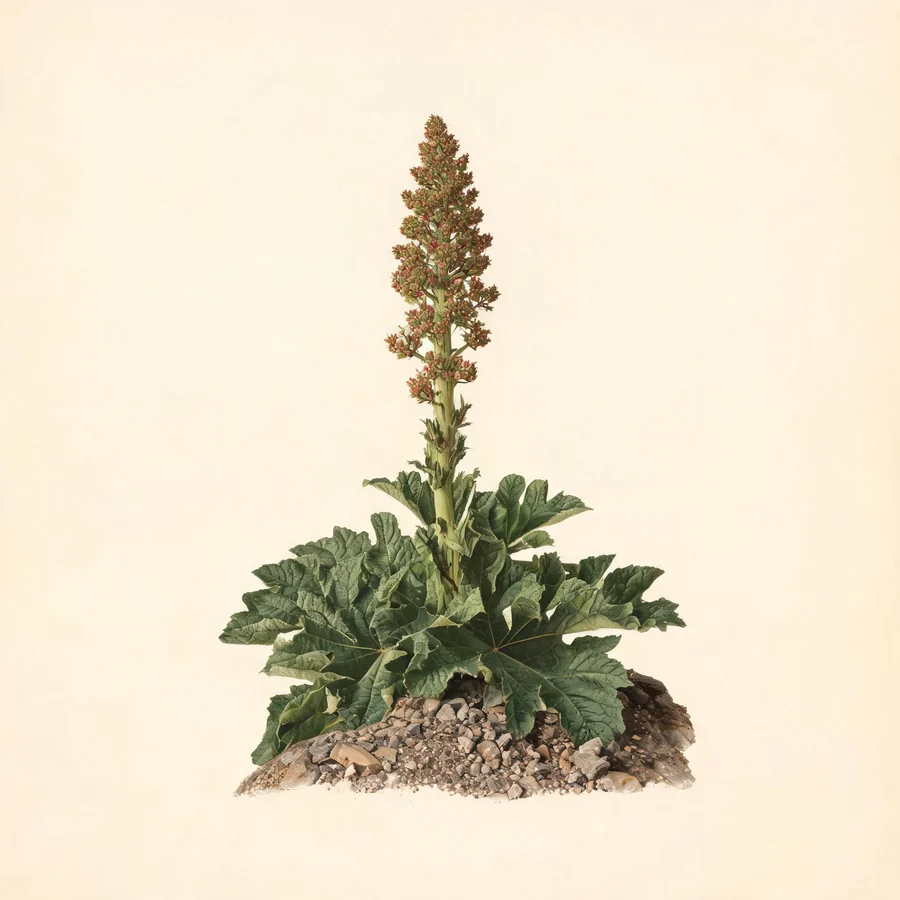
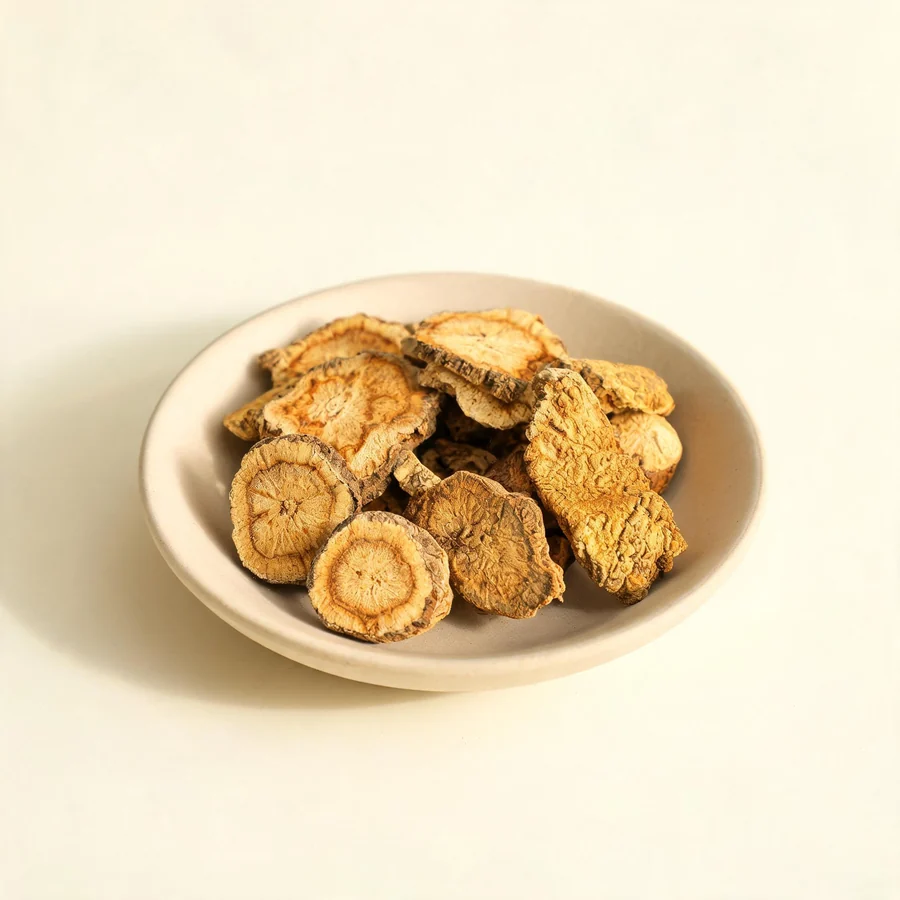
Skin profile
Where this herb sits in skin practice: the pattern it corrects, the skin signs it suits, and what it should not be used for.
Da Huang is for heat toxin with a shut bowel, for blood heat that leaks into the skin, and for bruising: a short, forceful herb that is stopped when the bowels move. Its purgative and anthraquinone risks are the reason the course is brief.
Skin signs that suggest it
- Boils, abscesses or spreading red infection with a dry, hard stool and a full, tender abdomen
- Purpura or petechiae with a bright or deep red colour, fever and a red tongue (blood heat)
- A plaque or lesion that bleeds easily, or bruised, fixed, painful swelling after injury
- Inflamed skin with a thick yellow or dry black tongue coating and a dry mouth
- A red face, red eyes and irritability alongside the skin lesion (fire rising)
When it is not the right herb
Not in pregnancy, and not during menstruation or the postpartum period when bleeding is already heavy. Not for cold-deficient digestion, with loose stools, a poor appetite and a cold abdomen, and not for constipation that comes from dryness or blood deficiency, where purging makes the dryness worse. Not for undiagnosed severe abdominal pain, vomiting or a rigid abdomen, which is a surgical emergency. It is not a habitual laxative, and it is not for pale, cold, dry skin with no heat.
What it does for skin
Skin-relevant actions only. Each one describes a mechanism in TCM terms and what it looks like on the skin.
Purges heat and opens the bowel beneath a hot skin
In the Yang Ming picture the bowel and the skin are read together: heat that cannot leave by the stool is held in the body and pushes outward as a boil, a pustule or a spreading red lesion. Da Huang opens that exit, and the skin flare is expected to settle as the heat is discharged. It is added in the last minutes of decoction so that the purgative anthraquinones are preserved, and the bowels moving is the endpoint rather than a side effect.
Cools the Blood and stops reckless bleeding
When heat sinks into the Blood it drives blood out of the small vessels, producing petechiae, purpura or a lesion that bleeds at the slightest touch. The root is bitter and cold, it enters the Liver and Pericardium, and its downward direction carries the fire away. Where bleeding must be checked as well as its cause cleared, the charred preparation is used, together with Sheng Di Huang and Mu Dan Pi.
Resolves toxin and drains an abscess
For a boil, an abscess or a spreading red infection, Da Huang supplies both toxin-resolving power and a route out through the bowel. It is a standard ingredient in the fire-purging formulas, where Huang Lian and Lian Qiao handle the infection and the rhubarb provides direction. A collection of pus still needs drainage, and spreading infection with fever needs antibiotics; the herb is an adjunct to that care and not a replacement.
Breaks blood stasis and reduces swelling
Da Huang moves blood forcefully, and the wine-prepared form is used when the aim is to disperse stagnant blood rather than to purge. The skin picture is a bruise, a fixed painful swelling or a hard nodule after injury, often with a dusky colour. Because the same action can increase bleeding, it is avoided where the skin is already bleeding or the person is on an anticoagulant.
Clears heat and toxin from the surface when applied
Ground rhubarb is applied as a paste or a wash to burns, sores and hot swellings, where its colour and bitterness are read as drawing out heat and toxin. Modern burn care comes first: a burn is cooled with running water and assessed, and a herbal paste is never used on a deep or extensive burn. On a small superficial burn or a hot sore it is a traditional adjunct, applied thinly and removed if it stings.
Skin conditions it is used for
Mapped to the condition pages on this site. The pattern column shows what the skin is doing when this herb is the right choice.
| Condition | Pattern | Why it suits | Typical setting |
|---|---|---|---|
| Boils | Toxic heat with a shut bowel | A boil with surrounding redness, throbbing pain and a dry stool is the clearest setting for rhubarb in skin practice. The herb drains the heat downward while resolving the toxin that is gathering in the flesh, and it is given in a formula with Huang Lian and Lian Qiao. A boil with spreading redness, fever or a black centre needs medical care, and a facial boil should never be squeezed. | Huang Lian Jie Du Tang with Da Huang added late in the decoction |
| Skin Abscess | Heat and dampness collecting into pus | An abscess is a collection, and no herb replaces drainage. Da Huang is used around that: while the collection is forming it clears the heat and moves the stagnation, and after drainage it helps settle the surrounding inflammation. The classical formulas for abscess combine it with toxin-resolving and blood-moving herbs, and the course is short because the purge is real. | Xian Fang Huo Ming Yin with Da Huang added, alongside drainage |
| Cellulitis | Heat toxin spreading through the flesh with a dry bowel | Spreading, hot, tender redness with fever and a dry stool is heat toxin that is not contained. Da Huang is an adjunct to antibiotics here: its toxin-clearing and downward-draining actions support the formula, and its purgative effect is watched closely, because diarrhoea and fluid loss in an ill person are unwelcome. Cellulitis can become serious quickly, so medical assessment comes first and the herb never delays it. | Huang Lian Jie Du Tang with Da Huang, alongside antibiotics |
| Purpura | Blood heat forcing blood out of the vessels | Purpura from heat is bright or deep red, comes with fever, thirst and irritability, and may follow an infection or a drug. Da Huang cools the Blood and drains the fire downward, and the charred form is used when the bleeding is active. It is combined with blood-cooling herbs such as Sheng Di Huang and Mu Dan Pi. Purpura also occurs from platelet disorders and from drugs, so the cause needs a diagnosis before a cooling purge is chosen. | A modified Xi Jiao Di Huang Tang with charred Da Huang |
| Skin Burns | Heat and toxin in a superficial burn | Rhubarb powder is a traditional topical for small burns and scalds, mixed with water or oil and applied thinly. The evidence for it is traditional rather than trial-based, and it is never a substitute for cooling a burn with running water, covering it and having a deep or extensive burn assessed. It is not applied to blistered, broken or deep burns, and infection in a burn needs medical treatment. | Da Huang powder in a thin paste, alongside standard first aid for burns |
| Acne | Yang Ming heat with constipation and inflamed papules | Inflammatory acne with a flushed face, a dry stool and a thick tongue coating is read as heat in the Yang Ming, and rhubarb is used to open the bowel and clear the heat. It is a short addition to a cooling formula, not a routine acne herb, and it is avoided in the many people whose acne comes with a cold or dry digestion. The purgative effect is the reason it is reserved for a clear excess pattern. | Fang Feng Tong Sheng San |
Combinations for skin
Herbs it is paired with when the skin, not an internal organ, is the target.
| Partner | Ratio | Why the pair is used |
|---|---|---|
| Mang Xiao | 3 to 9 g Da Huang with 6 to 12 g Mang Xiao dissolved in the strained decoction | The classic purgative pair. Da Huang drives the accumulation out while the salt softens stool that has dried hard, so that it can pass, and the two together cover distension, fullness, dryness and solidity. In skin practice the pair is used when a hot lesion runs with a bound bowel, and it is stopped as soon as the stool passes. The salt is dissolved at the end rather than boiled. |
| Huang Lian | 3 to 6 g Huang Lian with 3 to 9 g Da Huang | Huang Lian is the middle-burner herb, clearing heat and drying dampness there; Da Huang drains fire downward and supplies the exit. Heat is therefore cleared from above and below simultaneously, which suits a boil or a spreading red lesion with fever and irritability. Intensity comes from the coptis, direction from the rhubarb, and since both are cold the course is short and the digestion is watched. |
| Sheng Di Huang | 10 to 15 g Sheng Di Huang with 3 to 9 g Da Huang | Sheng Di Huang nourishes Yin and cools the Blood, while Da Huang clears the heat and drains it away. The pair is used for purpura, petechiae or a hot rash that bleeds, where cooling alone would leave the Blood dry. The rhubarb is given in the smaller weight and often in the charred form, and the combination is reviewed as soon as the bleeding settles. |
| Tao Ren | 6 to 10 g Tao Ren with 3 to 6 g Da Huang | Tao Ren is a gentle moistener that moves blood; Da Huang breaks stasis forcefully and in a descending direction, clearing the heat that so often comes with it. The pair suits a bruise, a fixed painful swelling or a dusky nodule after injury, and the wine-prepared root is preferred where the purpose is to move blood rather than to purge. It is avoided where bleeding is already present or the person takes an anticoagulant. |
Formulas where it leads
- Huang Lian Jie Du Tang (黄连解毒汤) - The fire-purging formula of Huang Lian, Huang Qin, Huang Bo and Zhi Zi, to which Da Huang is added when the bowel is also shut. It is the model for treating heat toxin with suppuration, and the rhubarb supplies the downward exit that the other three do not. It is a short-course formula for a clear excess pattern, and it is not for a pale, cold or depleted person.
- Fang Feng Tong Sheng San (防风通圣散) - A large, complex formula that pairs surface-releasing herbs with purgatives, including Da Huang and Mang Xiao, for heat that is both in the exterior and in the bowel. In skin practice it is used for inflamed acne or a hot, dry rash in a robust person with a bound stool. It is not a formula for chronic or deficient skin, and the purgative effect makes supervision necessary.
Topical use
Da Huang is applied to the skin as a powder, a paste or a wash for hot, red, swollen lesions, small burns and sores. The powder is mixed with cooled boiled water or a little oil and spread thinly on intact or lightly broken skin. It is a traditional adjunct, not a wound dressing: burns are cooled with running water first, deep or extensive burns need medical care, and the paste is removed if it stings or the skin becomes more inflamed.
| Preparation | How and when it is used |
|---|---|
| Powder paste | Mix 10 to 20 g of finely ground root with enough cooled boiled water or a little vegetable oil to make a thin paste. Apply to a small burn, a hot sore or a localised swelling, leave for 20 to 30 minutes, then rinse gently. Do not apply to a deep, blistered or extensive burn. |
| Cooled wash | Simmer 15 to 30 g of sliced root in 500 ml of water for 15 minutes, strain and cool. Use as a compress on hot, red, swollen skin for 10 to 15 minutes once or twice daily, and discard what is left. Stop if the skin stings or the redness spreads. |
Patch test and cautions
Patch test on a small area of normal skin first. Do not apply to deep, blistered or extensive burns, to open ulcers or to skin that is already infected and spreading, and do not cover the paste with an airtight dressing. A burn larger than a few centimetres, or any burn on the face, hands, feet or joints, needs medical assessment.
Safety for skin use
What to check before recommending or using it, including the cautions that matter most for skin patients.
Do not use, or use with caution
- Pregnancy. Both the purge and the blood-moving effect may stimulate the womb, and every major materia medica treats the root with caution; a crisis decision belongs to an experienced clinician, not to self-treatment.
- Cold-deficient digestion: loose stool, a poor appetite, a chilly abdomen, and a tongue that is pale. A bitter cold purge adds to the cold and leaves digestion weaker.
- Constipation from dryness or from blood deficiency, where the bowel lacks fluid rather than being blocked by heat. Purging increases the dryness, and moistening herbs are the correct approach.
- Undiagnosed severe abdominal pain, vomiting, a rigid or silent abdomen, or suspected obstruction. These are surgical emergencies, and a purge can make them worse.
- Long or habitual use. Anthraquinone laxatives have been tied to melanosis coli and to possible strain on kidney and liver, and stopping after years of use can bring rebound constipation.
Pregnancy and breastfeeding
Contraindicated for routine use. The purge and the blood-moving effect may both provoke contractions of the womb, and anthraquinones have been shown to act on uterine muscle in the laboratory; that is the reasoning behind the old warning about miscarriage and early labour. Classical texts permit the root where the condition is urgent and clearly diagnosed, under expert care, holding that treating a real cause does no harm to the pregnancy, but that judgement belongs to a clinician in a crisis. Anthraquinones do pass into milk and may loosen a baby's stool, so the herb is avoided while nursing, or given briefly at a minimal dose with the infant watched.
Interactions
- Warfarin and other anticoagulants. Diarrhoea alters absorption and may push the INR up, while the blood-moving quality can add to the drug effect; clotting is checked whenever the herb is started or stopped.
- Diuretics, digoxin and corticosteroids. A laxative lowers potassium, and with a loop or thiazide diuretic that fall can disturb the heart rhythm and make digoxin more hazardous.
- Drugs carried by the renal organic anion transporters. In the laboratory rhein blocks OAT1 and OAT3, so levels of medicines using those routes, among them methotrexate and certain antibiotics, could in theory rise.
- Other laxatives and liver-burdening medicines. Adding a stimulant laxative compounds fluid loss, and a hepatotoxic load such as high-dose paracetamol or a statin deserves caution.
Allergy and patch testing
A reaction to rhubarb is uncommon. Topical use can cause contact dermatitis, so patch test a paste before applying it to a larger area. Stop at once if the skin stings, blisters or reddens, and do not use a preparation that has caused any reaction.
General safety references
General references for herbal hepatotoxicity and herb-drug interactions; they are not specific to this herb.
- Review article: Herbal hepatotoxicity - an update on traditional Chinese medicine preparations. Alimentary Pharmacology & Therapeutics, 2014. PMID: 24844799.
- Interactions between herbal medicines and prescribed drugs: an updated systematic review. Drugs, 2009. PMID: 19719333.
- Warfarin and food, herbal or dietary supplement interactions: a systematic review. British Journal of Clinical Pharmacology, 2021. PMID: 32478963.
Evidence
The classical record is quoted with its source. The modern note states the level of evidence plainly.
Classical record
It treats dysentery with red and white discharge, tenesmus and abdominal pain, dribbling urination, constipation from excess heat with dryness, tidal fever with delirious speech, jaundice, and all sores of the fire type.
Ben Cao Gang Mu (Compendium of Materia Medica), Li Shizhen - The final phrase, all sores of the fire type, is the shortest statement of the skin use and the reason the herb appears in topical preparations for hot lesions.
Its qi and flavour are heavy and turbid. It descends straight downward, moving without staying, and has the force to break through gates and seize doors, which is why it is called the general.
Yao Pin Hua Yi - The image explains both the strength of the purge and the reason it is given briefly: a herb that breaks gates is not a daily remedy.
It drains the bowels, clears heat and resolves stasis.
Shen Nong Ben Cao Jing (Divine Husbandman's Classic of Materia Medica) - The oldest summary already joins the purgative, cooling and stasis-breaking actions that skin practice draws on.
Modern evidence
Evidence status
- The firm modern findings concern the anthraquinones rather than the skin. Excess brings cramping, diarrhoea and dizziness, and prolonged laxative use has been linked to melanosis coli and to possible strain on kidney and liver; emodin has been implicated in liver damage when inflammation is already present.
- Laboratory work on emodin, rhein and aloe-emodin reports anti-inflammatory and antimicrobial activity, and rhein inhibits renal transporters in cell studies. These are laboratory findings, not evidence that rhubarb treats a skin disease.
- No controlled dermatological trial of rhubarb for eczema, acne or burns was identified. The topical burn use is traditional, and burn care has its own established first aid that comes before any herbal application.
PubMed records
Selected real PubMed records for this herb's species or its constituents, chosen by species name and title relevance. They are references for the non-TCM discussion above, not proof that the herb treats any skin condition.
- In vitro study of the nephrotoxicity of total Dahuang (Radix Et Rhizoma Rhei Palmati) anthraquinones and emodin in monolayer human proximal tubular epithelial cells cultured in a transwell chamber.. Journal of traditional Chinese medicine = Chung i tsa chih ying wen pan, 2019. PMID: 32186110 (safety record).
Dose and forms
Skin-practice dosing and the preparations that suit skin complaints.
| Form | Dose and notes |
|---|---|
| Decoction, purgative | 3 to 12 g of prepared root, put in for the final five to ten minutes of boiling, or steeped in water just off the boil, since long boiling breaks down the sennosides that drive the laxative effect. The stool passing is the endpoint. |
| Decoction, blood-cooling | 3 to 9 g of the charred form when the aim is to cool the Blood and stop bleeding, decocted normally rather than added late. It is given inside a formula with Sheng Di Huang and Mu Dan Pi. |
| Small dose | 1 to 3 g works as a mild astringent, since the tannins now predominate: the reverse of what happens at purgative strength. The amount is never adjusted casually, because the same root either loosens or binds according to it. |
| Topical paste | 10 to 20 g of powder mixed to a thin paste for a small burn, hot sore or localised swelling, left for up to 30 minutes and rinsed off. It is not for deep, blistered or extensive burns. |
Form and duration matter as much as the number of grams. The raw root is the stronger laxative, the wine-prepared form shifts the emphasis towards moving blood, and the charred form is for bleeding. For purgation the root goes in late; for blood-cooling it is decocted normally. A course lasts days, not weeks, and the herb is not a habitual laxative.
Citations and further reading
Only real sources are listed: the classical materia medica passages quoted above, and the source works behind the botanical and safety statements.
- Ben Cao Gang Mu (Compendium of Materia Medica), Li Shizhen, 1578 - classical entry quoted above.
- Yao Pin Hua Yi, on the character of the herb - classical entry quoted above.
- Shen Nong Ben Cao Jing (Divine Husbandman's Classic of Materia Medica), attributed compilation of the Han period - classical entry quoted above.
- Da Huang monograph: Pharmacopoeia of the People's Republic of China - source for the accepted species, part used and dose range.
- Modern safety statement: based on toxicological and pharmacological literature on anthraquinone laxatives, summarised as a statement about the level of evidence rather than as a cited finding.
- Botanical description and identification: botanical literature on Rheum palmatum and related species, Polygonaceae.
Educational reference for qualified practitioners. This page is not medical advice, and skin conditions should be diagnosed by a clinician before treatment.