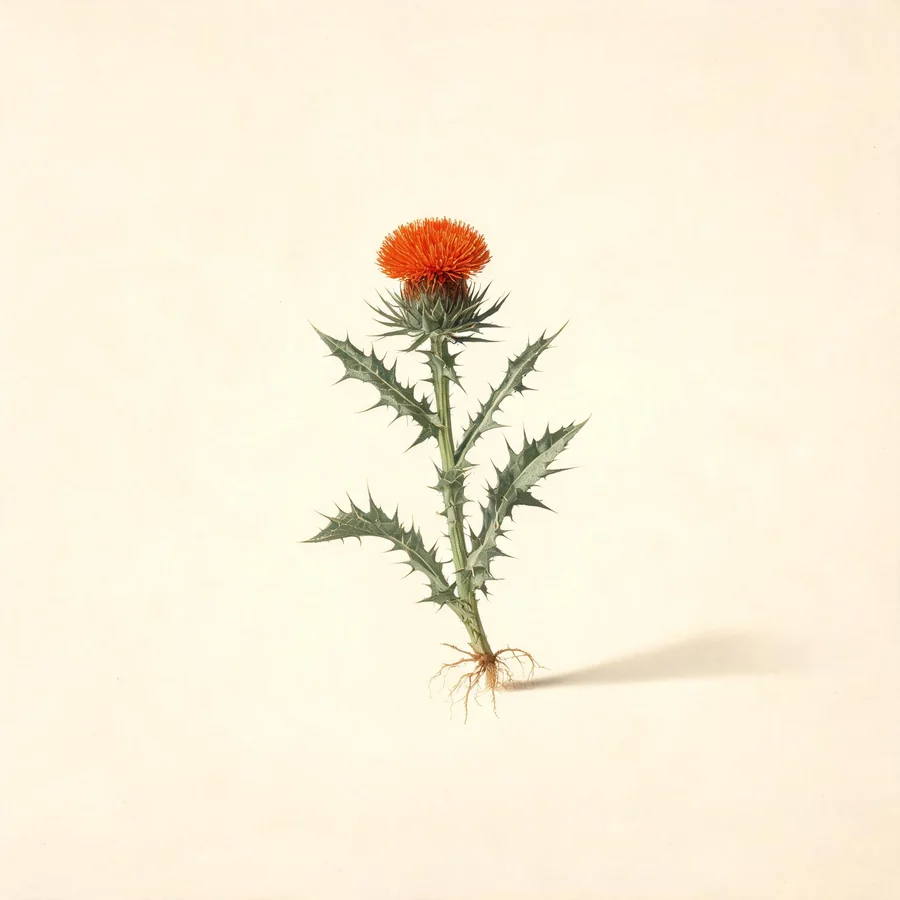
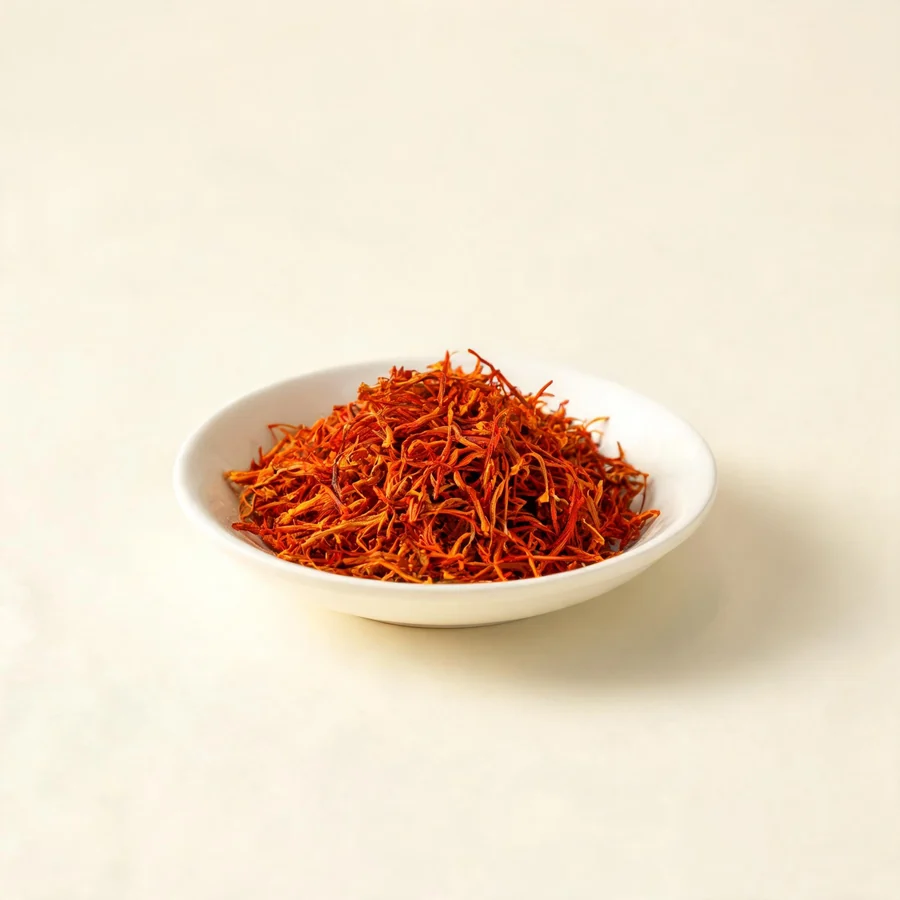
Skin profile
Where this herb sits in skin practice: the pattern it corrects, the skin signs it suits, and what it should not be used for.
Hong Hua is the warm mover: it suits bruises, purpura, dusky fixed patches, tender nodules and cold mottled extremities. The dose decides whether it harmonises or breaks, and the bleeding risk decides whether it is used at all.
Skin signs that suggest it
- Bruises that fade slowly and stay dark purple or tender
- Fixed dusky red or purple patches, especially on the face or the shins
- Tender red nodules under the skin of the lower legs
- Cold, mottled or dusky fingers and toes that worsen in cold weather
- A raised scar that is red-purple, firm and sometimes itchy
When it is not the right herb
Not in pregnancy and not while trying to conceive. Not for active bleeding of any kind, a bleeding disorder, or anyone on an anticoagulant or antiplatelet medicine, and not in the weeks before surgery. Not for skin that is pale, thin and dry from Blood deficiency with no fixed or dusky component, where moving Blood further thins what is short. Because it is warm, it is not the main herb for bright red, spreading, hot rashes with fever, which need cooling rather than warming.
What it does for skin
Skin-relevant actions only. Each one describes a mechanism in TCM terms and what it looks like on the skin.
Invigorates Blood and disperses stasis in the skin
This is the primary action and the reason the flower appears in so many formulas. Stasis in the skin is colour and tissue that have stopped changing: a bruise that is weeks old, a patch that stays dusky, a nodule that will not resolve. The flower is said to quicken the flow rather than to break the clot, which makes it the partner of the heavier peach kernel rather than its replacement.
Clears the colour left by bruising and old inflammation
After an injury or an inflamed lesion, the skin may keep a mark long after the surface has healed. The tradition treats this as Blood left in the tissue, and the flower is used in the fading phase, when the skin is intact. The result is slow, measured in weeks, and the same mark will also fade on its own; the herb is used when it is stuck rather than to hurry a normal bruise.
Opens the small vessels in cold, dusky extremities
Mottled blue-red skin on the hands and feet, chilblains and fingers that go white then blue in the cold are read as Blood that cannot reach the surface. The warm, moving flower is used with warming herbs such as Gui Zhi and Dang Gui to restore the flow. It is an adjunct: Raynaud's phenomenon and chilblains need the cause assessed, and warmth, stopping smoking and medical treatment come first.
Disperses tender nodules and softens scars
Tender red lumps under the skin of the shins, and scars that stay raised and discoloured, are read as stasis with heat or with dampness. The flower moves the Blood while other herbs clear the heat or dry the dampness, and it is used in the nodule and scar formulas alongside peach kernel and moutan. Steroid injections and pressure therapy remain the treatments with evidence for scarring, and the herb is supportive.
Skin conditions it is used for
Mapped to the condition pages on this site. The pattern column shows what the skin is doing when this herb is the right choice.
| Condition | Pattern | Why it suits | Typical setting |
|---|---|---|---|
| Bruising | Blood stasis after injury, once the bruise has stopped spreading | A fresh bruise is left alone; a bruise that has stopped spreading but remains dark, tender and slow to fade is the one treated. The flower quickens the flow around the clotted blood and is combined with peach kernel and Dang Gui. It is used for the stiffness and discolouration that linger after a deep knock, and any bruise that keeps growing or is out of proportion to the injury needs medical review rather than a herb. | Tao Hong Si Wu Tang |
| Purpura | Heat in the Blood with stasis in the small vessels | Purpuric spots that do not blanch, with a dark red tongue and a feeling of heat, are read as heat that has damaged the vessels and left stagnant Blood in the skin. The flower supplies the moving element in a cooling formula, so the spots are cleared rather than simply suppressed. Purpura needs medical assessment first, because platelet disorders and vasculitis are the causes that matter, and the herb is used only once those have been addressed. | Modified Xi Jiao Di Huang Tang with Shui Niu Jiao and Hong Hua |
| Erythema nodosum | Damp-heat with Blood stasis in the tender nodules | Tender red nodules on the shins are read as damp-heat that has settled in the Blood and tissue. The flower moves the Blood in the nodules while cooling and damp-draining herbs clear the underlying heat. The condition is often a reaction to an infection, a drug or an inflammatory disease, and those causes need to be found and treated, so the herb is an adjunct rather than a stand-alone answer. | Modified Si Miao Yong An Tang with Hong Hua |
| Chilblains | Cold stasis in the peripheral vessels | Itching, burning red-purple swellings on the toes and fingers after cold exposure are read as cold that has slowed the Blood in the small vessels. The warm moving flower is used with warming and Blood-building herbs, and chilblains are one of the flower's clearest skin applications. Prevention is most of the treatment: warm dry footwear, gradual warming and avoiding smoking, with medical review if the skin breaks down or the circulation is poor. | Dang Gui Si Ni Tang with Hong Hua |
| Keloids | Stasis bound in the raised scar | A scar that continues to thicken and spread after the wound has healed is read as Blood laid down and not cleared. The flower is used with peach kernel and the stronger stasis breakers in a formula given for months. It is an adjunct to steroid injection, silicone sheeting and pressure, which are the treatments with evidence, and it should not delay them. | Tao Hong Si Wu Tang with San Leng and E Zhu |
| Melasma | Blood stasis in the facial vessels | Symmetrical brown patches on the face are read as stasis in the fine vessels, often with constrained Liver Qi and poor sleep. The flower moves the Blood while Chai Hu and Bai Shao settle the Qi, and the formula is given for months. Sun protection is the measure that matters most, and hormonal and drug causes should be identified rather than treated through the skin alone. | Tao Hong Si Wu Tang with Chai Hu and Bai Shao |
Combinations for skin
Herbs it is paired with when the skin, not an internal organ, is the target.
| Partner | Ratio | Why the pair is used |
|---|---|---|
| Tao Ren | 6 to 10 g Hong Hua with 10 g Tao Ren | The standard stasis pair. The flower is the lighter circulator and the kernel is the heavier breaker, so the two cover both the sluggish flow and the fixed lump within it. They are named together in the chest formulas and in the gynaecological ones, and for the skin they are the usual pair for old bruises, dusky patches and thickened plaques. |
| Dang Gui | 10 g each | Dang Gui nourishes Blood while the flower moves it, which is the classical way of clearing stasis while keeping the person supplied. It suits the pale, tired person with dark fixed lesions, and it is the reason the flower can be used in someone whose Blood is thin. The proportions usually give Dang Gui the larger share, so the moving is carried by an ample Blood supply. |
| Chuan Xiong | 6 to 10 g each | Chuan Xiong carries Qi within the Blood and drives it upward and outward, which makes it the partner for dusky facial skin and for fixed headache with period pain. Warmth and the pregnancy bar apply to each of them, so putting the two together does not bring in anyone who could not take one alone. It is used where the skin lesion and the headache belong to the same stasis picture. |
| Dan Shen | 10 g each | Since one cools as it moves and the other warms as it moves, the mix can be tuned to the pattern. For stasis with heat, such as a fixed rosacea-like redness or a rash after a fever, Dan Shen is given the larger share; when cold is present, the flower is. Together they cover fixed facial redness with more flexibility than either alone. |
Formulas where it leads
- Tao Hong Si Wu Tang (桃红四物汤) - Si Wu Tang with peach kernel and safflower added, the standard formula for stasis on a background of Blood deficiency. It is the base for old bruising, fixed dusky patches and the chronic plaque phase of psoriasis, where moving Blood and nourishing it have to happen together.
- Dang Gui Si Ni Tang (当归四逆汤) - A warming formula for cold that has settled in the channels, with cold hands and feet, dusky skin and chilblains. Hong Hua is added where the stasis is marked, and the pair of warming and moving is the reason the formula suits cold, mottled extremities rather than hot skin.
- Si Miao Yong An Tang (四妙勇安汤) - A toxin-resolving and vessel-clearing formula for hot, red, swollen lesions with a stagnant centre, used in the tradition for gangrenous and ulcerating skin. Hong Hua adds the moving element when the lesion is dusky and indurated rather than frankly infected, and any such lesion needs medical care first.
Topical use
Safflower is used on the skin as an infused oil or a tincture for bruising and for dusky, cold patches. The flower's colouring pigments are the same compounds that are studied for their effect on clotting, so a topical preparation is not automatically free of the systemic caution, and it is kept to limited areas of intact skin. It is a traditional household remedy in much of China, sold as a red oil for bruises and sprains, and it should be bought from a supplier who tests for synthetic dye.
| Preparation | How and when it is used |
|---|---|
| Infused oil | Dried florets steeped in a light carrier oil for two to four weeks, then strained and applied sparingly to an unbroken bruise two or three times a day. Do not use on broken, grazed or infected skin, and stop if it stings or reddens more. |
| Tincture or liniment | A tincture is dabbed on intact skin over an old bruise or a cold dusky patch, avoiding the face, the eyes and any area of thin skin. Because the pigments stain and alcohol stings, it is not used on children or on skin that is already inflamed. |
| Diluted wash | A weak decoction of the flowers, cooled, is used as a wash for dusky mottled skin on the hands and feet, particularly in cold weather. It is a comfort measure rather than a treatment, and the feet should be dried and warmed afterwards. |
Patch test and cautions
Patch test on normal skin for 24 hours before first use. Do not apply to broken, ulcerated or infected skin, near the eyes, or to large areas, and do not use occlusive dressings over it. Stop if burning, stinging or spreading redness develops. Anyone who is pregnant, on an anticoagulant or due for surgery should not use it topically either, because the active compounds are absorbed through the skin.
Safety for skin use
What to check before recommending or using it, including the cautions that matter most for skin patients.
Do not use, or use with caution
- Pregnancy and trying to conceive. The flower moves Blood strongly and laboratory work has shown it to stimulate uterine muscle, so no trimester is regarded as safe.
- Active bleeding, a bleeding disorder, heavy periods or recent surgery. While bleeding is underway, the last thing to add is a herb that both moves Blood and slows clotting.
- Anticoagulant or antiplatelet treatment. The pigments have prolonged clotting times in laboratory work, and the combination raises the risk of bruising and bleeding.
- Blood deficiency without stasis: scanty pale periods, sallow skin and fatigue. Moving Blood in that state only thins a supply that is already low.
- Planned surgery or dental work. It is stopped a week or two beforehand, and the surgeon and anaesthetist are told it has been taken.
Pregnancy and breastfeeding
Contraindicated throughout pregnancy and while trying to conceive. The flower moves Blood strongly, experiments point to uterine stimulation, and the old literature is explicit that it can bring on menstruation and expel a fetus. No trimester is regarded as safe, and a late period should be tested before it is taken. It is used in the postpartum period in traditional practice, but only under supervision and only when stasis has been confirmed. Breastfeeding is a separate question: nothing is known about transfer, and the theoretical worry is the herb's effect on clotting.
Interactions
- Anticoagulants. In laboratory work the flower's pigments lengthen prothrombin time and partial thromboplastin time, so warfarin, heparin and the direct oral anticoagulants may add to the effect. If they are combined, clotting is monitored and the herb's dose is held steady.
- Antiplatelet drugs and non-steroidal anti-inflammatory drugs. Aspirin, clopidogrel and the anti-inflammatory painkillers act on the same system, and the effect is likely to add up. Bruising without a cause, nosebleeds or black stools mean stop and get advice.
- Blood pressure medicines. In animals the extracts widen the vessels slightly and lower pressure, which matters for anyone on blood pressure treatment, particularly after a dose change.
- Anaesthesia and surgery. The effect on clotting is the reason the herb is stopped before an operation, and it belongs on the list a patient gives the anaesthetist.
Allergy and patch testing
Safflower contact dermatitis is reported, and people who react to other plants in the daisy family may be more likely to react to it. The topical oil and tincture should be patch tested, and a new rash or worsening itch while taking the herb should be assessed rather than assumed to be the original condition. Synthetic dye on poor quality flowers is a separate and more common cause of a skin reaction than the plant itself.
General safety references
General references for herbal hepatotoxicity and herb-drug interactions; they are not specific to this herb.
- Review article: Herbal hepatotoxicity - an update on traditional Chinese medicine preparations. Alimentary Pharmacology & Therapeutics, 2014. PMID: 24844799.
- Interactions between herbal medicines and prescribed drugs: an updated systematic review. Drugs, 2009. PMID: 19719333.
- Warfarin and food, herbal or dietary supplement interactions: a systematic review. British Journal of Clinical Pharmacology, 2021. PMID: 32478963.
Evidence
The classical record is quoted with its source. The modern note states the level of evidence plainly.
Classical record
It puts the Blood in motion, moistens what has dried, relieves pain, disperses swelling and opens the menses.
Ben Cao Gang Mu (Compendium of Materia Medica), Li Shizhen, 1578 - A handful of verbs that later writers expand at length. The one that matters most for skin is the scattering of swelling.
The flower frees the channels and vessels with remarkable ease and moves Qi inside the Blood; it can both drain and supplement, each in its own fashion.
Yao Pin Hua Yi (Materia Medica Explained by Drug Properties), Ming dynasty - That double capacity, to drain and to supplement, is where the dose rule comes from: small amounts harmonise, large amounts break.
It is used for locked jaw with loss of speech, for blood that has congealed, and for the various complaints that follow childbirth.
Tang Ben Cao (Materia Medica of the Tang Dynasty) - Brief, and already obstetric; congealed blood is its first indication, and the flower has stayed close to childbirth ever since.
Modern evidence
Evidence status
- Laboratory work on safflower yellow and the flower's flavonoids reports anti-inflammatory, antioxidant and vasoactive effects, and the pigments have prolonged clotting times and inhibited platelet clumping in vitro. These are mainly cell and animal studies.
- No clinical trial of Hong Hua in bruising, purpura, chilblains or scarring was identified. Small studies of multi-herb formulas for cardiovascular disease do not establish a skin benefit, and the skin uses rest on tradition.
- Quality is the practical modern issue: surveys have found synthetic dye, spent florets and added weight in the market, so a tested supplier matters more than a claim on the packet.
PubMed records
Selected real PubMed records for this herb's species or its constituents, chosen by species name and title relevance. They are references for the non-TCM discussion above, not proof that the herb treats any skin condition.
- Phytochemistry and Pharmacology of Carthamus tinctorius L.. The American journal of Chinese medicine, 2016. PMID: 27080938 (pharmacology or review record).
- Carthamus tinctorius L.: a comprehensive review of its ethnomedicine, phytochemistry, pharmacology, and clinical applications.. Frontiers in pharmacology, 2025. PMID: 40918514 (pharmacology or review record).
Dose and forms
Skin-practice dosing and the preparations that suit skin complaints.
| Form | Dose and notes |
|---|---|
| Decoction | 3 to 6 g daily in a formula for skin, at the lower end of the general range of 3 to 10 g. Skin practice uses the harmonising and moving dose rather than the breaking dose. |
| Dose and strength | 1 to 3 g is described as harmonising and is used where Blood deficiency is also present; 6 to 10 g breaks stasis in dense clots and fixed nodules and is used for shorter periods. |
| Form | Dried flower decocted normally. A long boil drives off the pigments, so the flowers go in along with the rest of the formula rather than simmering for an hour. |
| Course length | Three to six weeks with review, stopped a week or two before planned surgery, and not continued as a household tonic. |
The dose is chosen by the job: harmonise, move or break. In skin practice the middle range is usual, and it is kept lower when the person is pale or depleted. Because the herb is warm, the rest of the formula decides how much heat it adds, and a large dose in a warm formula can turn a quiet dusky patch into an inflamed one. The other variable is the quality of the flowers, which is where much of the practical harm in this trade has come from.
Citations and further reading
Only real sources are listed: the classical materia medica passages quoted above, and the source works behind the botanical and safety statements.
- Ben Cao Gang Mu (Compendium of Materia Medica), Li Shizhen, 1578 - classical entry quoted above.
- Yao Pin Hua Yi (Materia Medica Explained by Drug Properties), Ming dynasty - classical entry quoted above.
- Tang Ben Cao (Materia Medica of the Tang Dynasty) - classical entry quoted above.
- Flos Carthami monograph: Pharmacopoeia of the People's Republic of China - source for the accepted botanical source, part used and quality requirements.
- Modern evidence statement: based on published laboratory work on safflower pigments and flavonoids and on market quality surveys; no clinical trial in skin disease is presented as proof of effect.
- Botanical description and identification: botanical literature on Carthamus tinctorius, Asteraceae.
Educational reference for qualified practitioners. This page is not medical advice, and skin conditions should be diagnosed by a clinician before treatment.