Skin profile
Where this herb sits in skin practice: the pattern it corrects, the skin signs it suits, and what it should not be used for.
The bulb is on this page for cold obstruction at the surface, not for rashes. The signs that make it plausible are dusky colour, coldness, a slow deep pulse and a pale wet tongue. The signs that rule it out are redness, heat, pus and dryness with thirst. It is a warming mover with an old external tradition for indolent swellings, and the same qualities make a warm poultice dangerous on an infection.
Skin signs that suggest it
- Dusky red or purple swellings on the toes and fingers that itch, burn and flare in cold damp weather
- Fingers that turn white, then blue, then red in the cold, with numbness and tingling between attacks
- A deep, pale swelling that comes up slowly, is not hot to touch and does not come to a head
- A dusky or bluish-red complexion with a feeling of tightness in the chest
- A pale or purplish tongue with a white or greasy coating and a deep, slow pulse
When it is not the right herb
Not for red, hot, tender or spreading lesions, and not for a boil or abscess that is already inflamed: the bulb is warm and dispersing, and on a hot lesion it adds heat. Not during an acute fever, and not where the person is dry and running hot, with night sweats, a parched tongue that has lost its coating and constant thirst. Not for chest pain that is new, severe or accompanied by breathlessness, sweating or faintness, which is a medical emergency and not a pattern to treat at home.
What it does for skin
Skin-relevant actions only. Each one describes a mechanism in TCM terms and what it looks like on the skin.
Unblocks Yang where cold has knotted the surface
The bulb is the classical remedy for a Yang that cannot get through, and at the surface that shows as extremities that stay cold and dusky while the rest of the body is warm. Chilblains and cold-provoked colour change in the fingers are read as the same obstruction in miniature. The action is to move the blockage rather than to warm the person through, which is why it is given with warming and blood-moving herbs rather than as a standalone circulatory tonic.
Disperses a cold, indolent swelling
A swelling that is pale, deep, slow and not hot is read as cold phlegm that has settled and will not resolve. The bulb's traditional external use is exactly here, as a poultice of the crushed fresh bulb on intact skin. The distinction that matters is temperature: a hot, red, tender swelling is infection or heat toxin, needs medical assessment and must not be covered with a warm poultice.
Moves Qi and eases the constriction that shows in the face
A chronically dusky or bluish-red face, with a sense of tightness in the chest rather than a rash, is read as Qi and Blood not reaching the surface cleanly. The bulb's Qi-moving and knot-dispersing action makes it a reasonable addition to a formula for that picture. Sudden colour change in the face or lips is a different matter entirely and belongs to emergency care.
Carries warmth into the small vessels of the hands and feet
The skin use of the bulb is peripheral. Given in a warming formula, it is expected to help fingers and toes that stay cold and discoloured, and it is judged by colour and comfort over weeks. Raynaud's phenomenon can also be the first sign of an underlying connective tissue disease, so a new or worsening case needs a diagnosis before any herb is added.
Skin conditions it is used for
Mapped to the condition pages on this site. The pattern column shows what the skin is doing when this herb is the right choice.
| Condition | Pattern | Why it suits | Typical setting |
|---|---|---|---|
| Chilblains | Yang deficiency with cold stagnating in the peripheral channels | Chilblains are the clearest skin picture of cold obstruction: dusky, itchy, burning swellings on the toes and fingers, worse every winter. The bulb disperses the cold knot while the formula as a whole warms the channels and moves the Blood, and the combination is judged over a season rather than a week. A chilblain that ulcerates or becomes infected needs medical care rather than a warm poultice. | Dang Gui Si Ni Tang with Xie Bai added |
| Raynaud's disease | Cold binding the vessels so Yang cannot reach the fingers | The white-blue-red sequence in the cold is read as Yang failing to reach the extremities through vessels constricted by cold. The bulb contributes the unblocking half of the treatment and the formula supplies the warming and Blood-moving half. Raynaud's can accompany lupus, scleroderma or a vascular problem, so the diagnosis comes first and the herb is an addition to medical care rather than a replacement for it. | Dang Gui Si Ni Tang, modified with Xie Bai and Gui Zhi |
| Skin abscess | Cold-phlegm stagnation: a deep, pale, indolent swelling | An abscess that is deep, pale, slow and not hot belongs to the cold-deficiency category rather than the hot one, and the classical answer is to warm and unblock so that it can resolve or come to a head. The bulb is a supporting disperser in that kind of formula. A hot, spreading, painful abscess with fever is the opposite pattern and needs urgent medical treatment. | Yang He Tang with Xie Bai |
| Purple face | Chest Yang obstructed, so Blood does not reach the face | A dusky, bluish-red complexion with chest tightness and a slow deep pulse is read as obstruction at the chest rather than disease of the skin itself. The classical chest formula suits that picture, and the facial colour is expected to improve as the obstruction clears. Sudden purple or blue discolouration, particularly with chest pain or breathlessness, is an emergency and must be assessed at once. | Gua Lou Xie Bai Bai Jiu Tang |
Combinations for skin
Herbs it is paired with when the skin, not an internal organ, is the target.
| Partner | Ratio | Why the pair is used |
|---|---|---|
| Gua Lou | 10 to 15 g Gua Lou with 6 to 10 g Xie Bai | Trichosanthes opens the chest and the bulb frees the Yang that is stuck there, which is the pairing at the centre of the classical formula for chest impediment. On a skin page the pair is used where a dusky face or cold extremities come with chest tightness, and it is a formula pairing rather than something to assemble at home. |
| Dang Gui | 10 g each in a warming formula | Angelica nourishes and moves the Blood while the bulb moves the Qi that is holding it back, which is the division of labour in the chilblain formulas. The combination is used for dusky, cold, painful extremities and for a complexion that has lost its colour, and the balance shifts towards angelica when the skin is also dry and thin. |
| Gui Zhi | 6 to 10 g Gui Zhi with 6 to 10 g Xie Bai | Cinnamon twig warms the channels and the bulb unblocks them, so the two cover both halves of a cold obstruction. The pair appears in formulas for cold hands and feet and in the modified chilblain prescriptions. Both are warming, so the combination is stopped once the extremities stay warm and the colour has returned. |
| Bai Jie Zi | equal parts in a fresh poultice | Mustard seed is hot and violently dispersing and the bulb is warm and slippery, and the two are pounded together in the traditional external treatment for a cold, deep swelling. The mixture is applied to intact skin for a short time only, because both can blister. It is never used on broken skin, on the face or on a lesion that is hot. |
Formulas where it leads
- Gua Lou Xie Bai Bai Jiu Tang (瓜蒌薤白白酒汤) - The classical formula for chest impediment, with trichosanthes, the bulb and white wine, for chest and back pain with breathlessness and a deep slow pulse. Its skin relevance is the Yang-unblocking action that shows as a dusky face and cold extremities; it is not a skin formula and it is included because it defines what the herb does.
- Dang Gui Si Ni Tang (当归四逆汤) - A warming formula for cold hands and feet with a fine pulse, built on cinnamon twig, angelica and a small amount of asarum. Chilblains and cold-provoked colour change are treated with it, and the bulb is a common addition when the obstruction is marked.
- Yang He Tang (阳和汤) - The formula for a cold, deep, indolent swelling, with antler glue, cinnamon and prepared aconite warming the interior while mustard seed and the bulb disperse at the surface. It is the classical answer to an abscess that is pale and slow rather than red and hot.
Topical use
The bulb has a genuine external tradition, and it is narrow. A poultice from the crushed fresh bulb goes on a cold, pale, indolent swelling on intact skin, and a warm soak is used for chilblains. Both rely on the same warming, dispersing quality, and both are limited by the fact that the bulb can irritate or blister skin, especially when it is left on too long.
| Preparation | How and when it is used |
|---|---|
| Pounded bulb poultice | A fresh bulb is crushed to a paste and spread on a cloth over a cold, pale swelling for ten to fifteen minutes at a time. The skin is checked every few minutes for burning, and the paste is removed at the first sign of stinging. It goes only on intact skin of a limb, never on the face or on a lesion that is warm. |
| Warm soak for chilblains | Two or three crushed bulbs are simmered in a litre of water for ten minutes, strained and cooled to a comfortable hand temperature. Hands or feet are soaked for ten minutes once a day. The water is tested with an elbow or a thermometer, because numb fingers and toes cannot judge heat and scald easily. |
| Bulb and mustard seed paste | Equal parts of crushed fresh bulb and mustard seed are mixed into a paste for a stubborn cold swelling, applied briefly and watched closely, since both ingredients can raise a blister. This is a practitioners' preparation rather than a household one. |
Patch test and cautions
Patch test on the inner forearm for twenty-four hours before the first application. Do not apply to broken, ulcerated, hot or infected skin, do not cover with an occlusive dressing, and do not leave a poultice on while sleeping. Stop at once if the skin burns, stings or blisters. People with diabetes or neuropathy should avoid warm soaks unless the temperature has been checked, because they cannot feel a scald developing.
Safety for skin use
What to check before recommending or using it, including the cautions that matter most for skin patients.
Do not use, or use with caution
- Red, hot, tender or spreading skin lesions, and boils or abscesses with heat. The bulb is warm and dispersing and adds to a hot picture; these need clearing treatment and often medical care.
- Acute febrile illness, and Yin deficiency with heat: a red tongue without coating, night sweats, thirst and a dry throat. The warming, drying bulb makes that picture worse.
- Qi deficiency with no stagnation. A tired, breathless person without any sense of blockage has nothing for a dispersing herb to move, and it drains rather than supports.
- Chest pain that is new, severe or comes with sweating, breathlessness or faintness. That is an emergency and not a case for a warming bulb.
Pregnancy and breastfeeding
Old sources are unexpectedly relaxed about this bulb: Li Shizhen lists it among the medicines that settle a fetus, and one classical formula joins it with angelica for cold cramping in the abdomen during pregnancy. That is a formula-level judgement and not a licence. In food amounts the bulb is ordinary, while medicinal doses move and disperse, so a pregnant woman takes them only where a genuine obstruction exists and a practitioner has agreed. A small topical area is the lower-risk option, though it still needs checking, and the same restraint applies while nursing, where its sulphur compounds can flavour the milk.
Interactions
- Antiplatelet and anticoagulant medicines such as aspirin, clopidogrel or warfarin. Laboratory work shows allium extracts reducing platelet clumping, and the family has a long reputation for thinning the blood, so medicinal doses are discussed with the prescriber and unusual bruising is reported.
- Cholesterol-lowering medicines. Extracts of the bulb have lowered cholesterol in animal studies, so an additive effect with a statin is possible in theory, although whether it matters in practice is unknown.
- No human interaction is documented at food or standard decoction doses. The cautions above come from laboratory work and from the pharmacology of the allium family rather than from reported cases.
Allergy and patch testing
The bulb is an allium, so anyone who reacts to garlic, onion or leeks may react to it. Contact with the fresh juice can cause a local irritant dermatitis, and a poultice is a commoner cause of skin trouble than the decoction is. Patch test any external preparation, keep it off the face, and stop if the skin becomes redder, itchier or blistered rather than calmer.
General safety references
General references for herbal hepatotoxicity and herb-drug interactions; they are not specific to this herb.
- Review article: Herbal hepatotoxicity - an update on traditional Chinese medicine preparations. Alimentary Pharmacology & Therapeutics, 2014. PMID: 24844799.
- Interactions between herbal medicines and prescribed drugs: an updated systematic review. Drugs, 2009. PMID: 19719333.
- Warfarin and food, herbal or dietary supplement interactions: a systematic review. British Journal of Clinical Pharmacology, 2021. PMID: 32478963.
Evidence
The classical record is quoted with its source. The modern note states the level of evidence plainly.
Classical record
The entry gives the bulb a bitter, warm nature with no toxicity, says that it reaches the bones, and lists its tasks: resolving cold and heat, expelling water qi, warming the middle and breaking up accumulations.
Ming Yi Bie Lu (Supplement to the Classic of Materia Medica) - Summarised rather than quoted. This is the earliest compact statement of the warming and dispersing action.
Where chest impediment brings wheezing, a cough with sputum, pain that runs from chest to back and breathlessness, and where the wrist pulse is deep and slow while the position above the bar runs tight and quick, the governing prescription is the decoction of trichosanthes and this bulb in white wine.
Jin Gui Yao Lue (Essentials of the Golden Cabinet), Zhang Zhongjing - Summarised rather than quoted. This passage made the bulb central to chest impediment and is the reason its warming action is trusted.
Acrid, it disperses; bitter, it descends; warm, it scatters; slippery in body, it opens. On that reading, cold and stagnation give way wherever they sit: cleared when above, resolved when below, removed when in the middle, with even old stubborn congestion loosening.
Ben Cao Qiu Zhen (本草求真), Huang Gongxiu - Summarised rather than quoted. A reading of the bulb's qualities in four parts, which later writers repeated.
Modern evidence
Evidence status
- The chemistry of the bulb is the chemistry of the allium family: volatile sulphur compounds, steroidal saponins and flavonoids. Laboratory work on those fractions describes effects on platelet clumping, on lipids and on inflammatory signalling, in cell and animal systems.
- No controlled trial of Xie Bai in chilblains, Raynaud's phenomenon or any other skin condition was identified. The external use rests on tradition and on small clinical experience, and the effect on the peripheral circulation has not been measured in patients in a way that would support a claim.
- Regulatory status: the dried bulb is an accepted article in the Chinese Pharmacopoeia and the fresh bulb is eaten as a vegetable, which is a statement about familiarity rather than about efficacy. Nothing on this page is a claim of proven benefit.
PubMed records
Selected real PubMed records for this herb's species or its constituents, chosen by species name and title relevance. They are references for the non-TCM discussion above, not proof that the herb treats any skin condition.
- Allii Macrostemonis Bulbus: A Comprehensive Review of Ethnopharmacology, Phytochemistry and Pharmacology.. Molecules (Basel, Switzerland), 2023. PMID: 36985457 (pharmacology or review record).
Dose and forms
Skin-practice dosing and the preparations that suit skin complaints.
| Form | Dose and notes |
|---|---|
| Decoction | Five to ten grams of the dried bulb daily in a formula, which is the ordinary range for the digestive and peripheral uses. For a marked chest picture practitioners go higher, to fifteen grams or more, following the proportions in the classical formulas. |
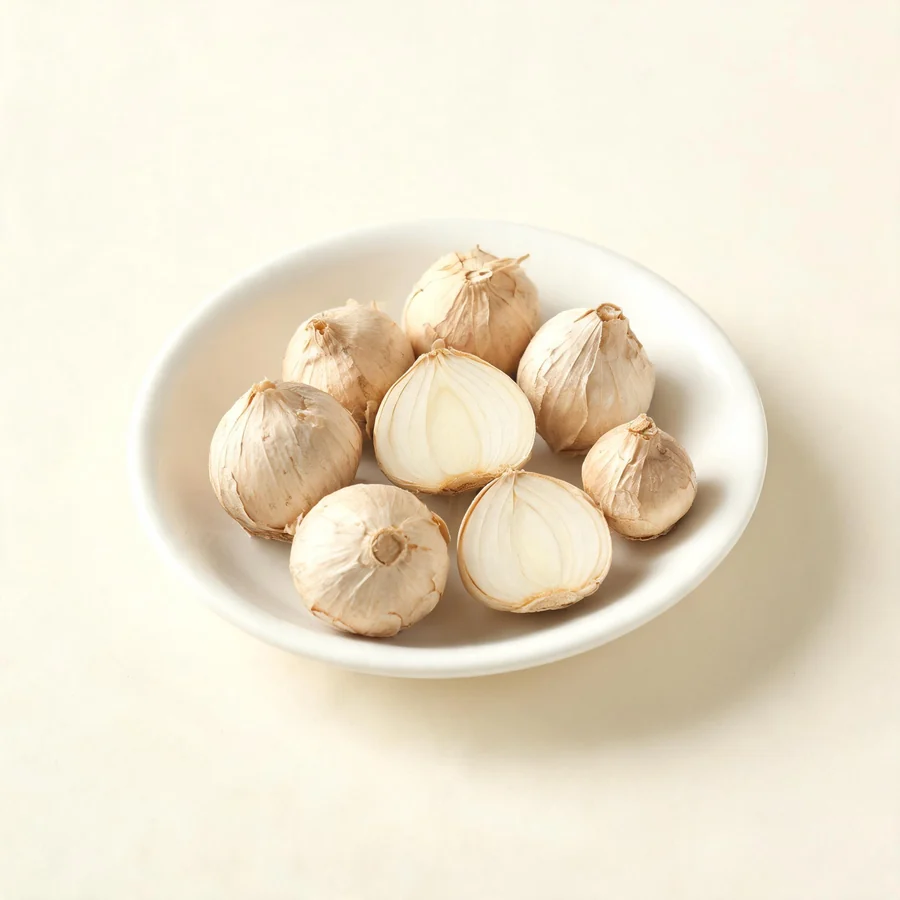
| Fresh bulb, external | One or two fresh bulbs crushed for a single poultice, or two or three bulbs simmered in a litre of water for a soak. External use is limited to intact skin and to short applications. |
| Course length | Four to eight weeks through the cold season for chilblains, with review; for a cold swelling, days rather than weeks. The bulb is warming and drying, so a course is stopped when the extremities stay warm or the mouth begins to dry. |
Because the bulb is listed in China as both food and medicine, the margin is wide and the practical cautions concern warmth rather than poison. Its volatile sulphur compounds are the active part and the awkward part together: they carry the warmth and the garlic smell, and they make a decoction taste harsh and come back on the breath. Keeping the lid on while it simmers holds more of the volatile fraction in the pot, and taking it with food is easier on the stomach. The old rule against serving the bulb alongside Chinese chives costs nothing to keep.
Citations and further reading
Only real sources are listed: the classical materia medica passages quoted above, and the source works behind the botanical and safety statements.
- Ming Yi Bie Lu (Supplement to the Classic of Materia Medica), Tao Hongjing, Southern and Northern Dynasties - classical entry summarised above.
- Jin Gui Yao Lue (Essentials of the Golden Cabinet), Zhang Zhongjing, Han period - classical entry summarised above.
- Ben Cao Qiu Zhen (本草求真), Huang Gongxiu, 1769 - classical entry summarised above.
- Allii Macrostemonis Bulbus monograph: Pharmacopoeia of the People's Republic of China - accepted botanical source, part used and quality requirements.
- Modern evidence statement: based on published laboratory literature on Allium macrostemon, summarised as a statement about the level of evidence rather than as a cited finding.
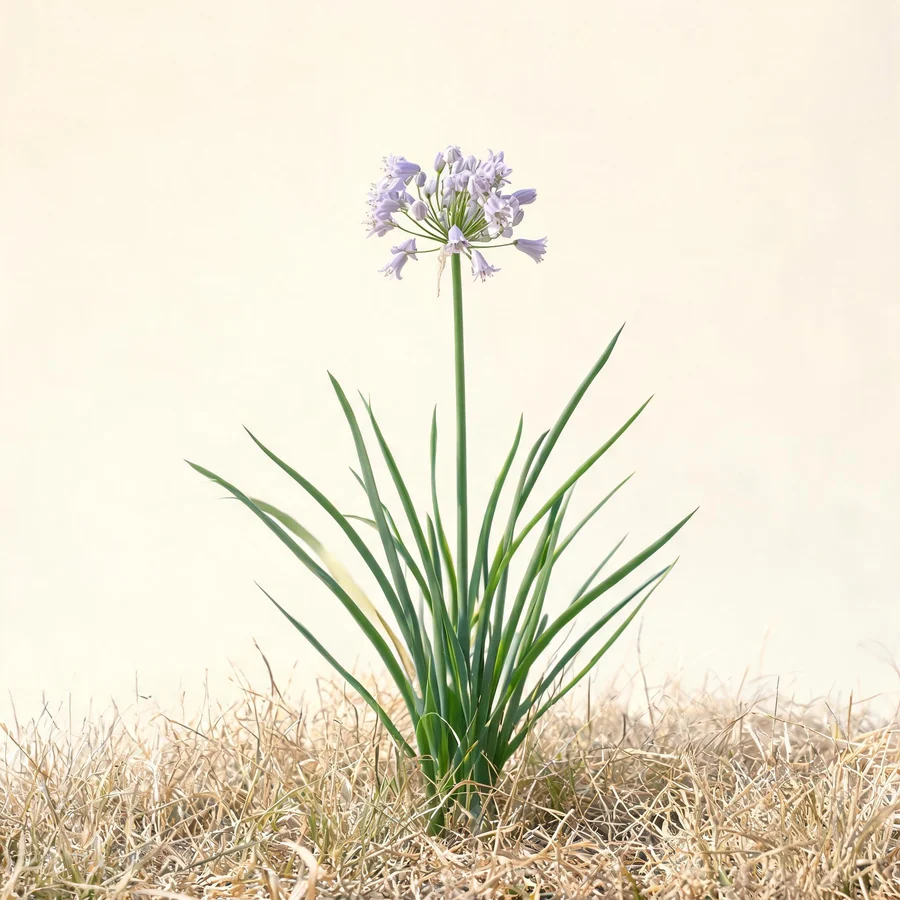
- Botanical description and identification: botanical literature on Allium macrostemon, Amaryllidaceae.
Educational reference for qualified practitioners. This page is not medical advice, and skin conditions should be diagnosed by a clinician before treatment.