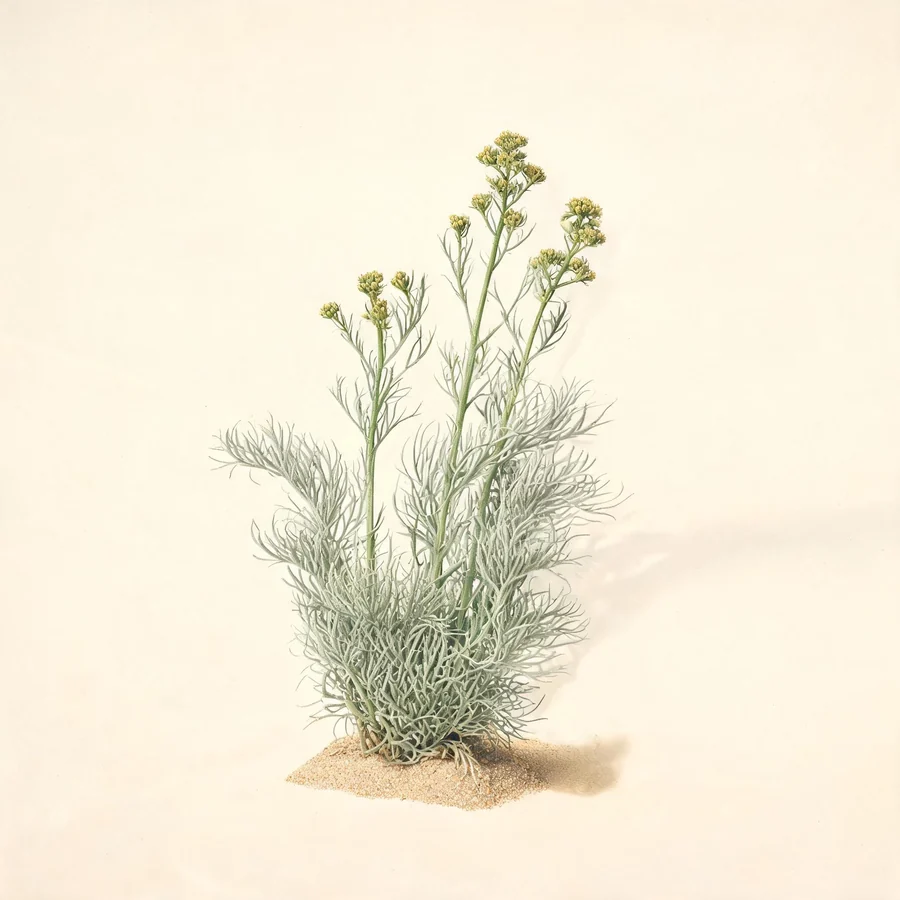
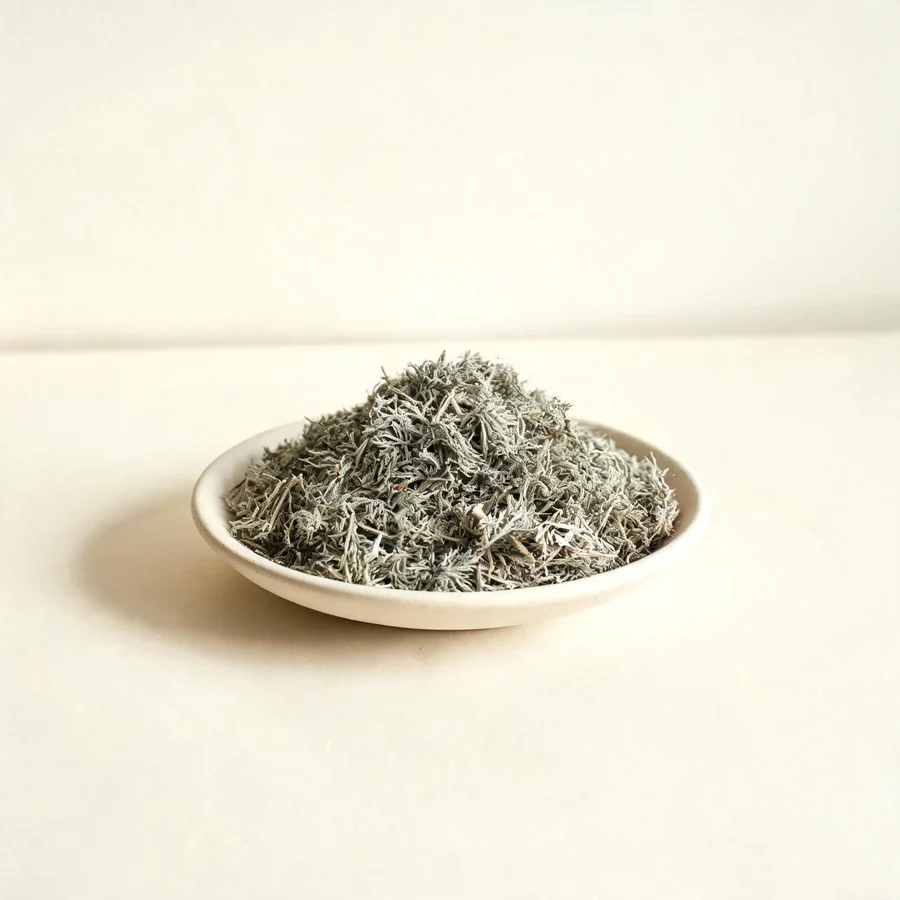
Skin profile
Where this herb sits in skin practice: the pattern it corrects, the skin signs it suits, and what it should not be used for.
Yin Chen is a mild Damp-Heat herb rather than a strong one. Its place on a skin page is the wet, itchy, slightly yellow surface, where the aim is to dry the moisture and cool the heat at the same time, and it is used as a wash as much as a decoction.
Skin signs that suggest it
- Red, weeping or oozing patches with a yellow crust, worse in humid weather (damp-heat on the surface)
- Itch that is intense, worse at night and in heat, with skin that is moist rather than dry
- Greasy yellow scaling on the scalp, the eyebrows or the folds beside the nose (damp-heat rising)
- Small itchy vesicles or papules in the skin folds and the groin (damp-heat in the lower body)
- A dull yellowish cast to the skin with dark urine and a greasy yellow tongue coating
When it is not the right herb
Not for skin that is dry, thin, pale and cold, with no moisture and no redness, and not for the lichenified phase of chronic eczema where scratching has thickened the surface rather than made it weep. A drying, cooling herb takes away the little fluid such skin still holds. Wind-cold wheals, pale and shifting, are also the wrong picture for a cold herb. Courses are short, and a wash is stopped once the ooze has settled rather than continued as a habit.
What it does for skin
Skin-relevant actions only. Each one describes a mechanism in TCM terms and what it looks like on the skin.
Clears Damp-Heat from the surface
The core action on the skin. Damp-Heat is read where a lesion is inflamed and wet at the same time: a weeping eczematous patch, a crusted corner of the nostril, a greasy scalp, a rash in a fold that never quite dries. Yin Chen dries the Dampness and cools the Heat in one movement, which is why the ooze and the redness settle together instead of one improving while the other worsens. It is a mild herb and is usually one part of a formula rather than the whole of it.
Settles itch that comes from moisture and heat
The itch of Damp-Heat is worse at night, worse in humidity and worse under bedclothes, and the skin beneath the scratching is moist rather than dry and cracked. Yin Chen is not a sedating antipruritic and does nothing for the dry neuropathic itch of a thinned elderly skin; it works by removing the dampness and the heat that provoke the sensation. That means the itch falls as the surface dries, which is why the herb is judged over a week rather than over an hour.
Drains Dampness downward so the lesion dries
The shoots are diuretic in the traditional reading, and the skin use rests partly on that: fluid that would keep a patch wet is carried out through the urine instead. Practitioners read the sign in the whole picture, a heavy body, scanty dark urine and a greasy coating, rather than in the lesion alone. It is why the herb suits a hot, weeping rash in someone who also feels waterlogged, and why it is a poor choice where the urine is already copious and pale.
Takes the yellow, damp cast out of the skin
The herb is named for the yellowing of jaundice, and the same clearing shows on the surface when the skin itself looks dull, slightly yellow and damp rather than bright. That is a sign to read with care: yellowing has many causes and a herb is not a way to investigate them. On a skin page the action works as a marker of Damp-Heat in the Liver and Gallbladder channels, which is also where itchy, moist eruptions of the trunk and the groin are placed.
Skin conditions it is used for
Mapped to the condition pages on this site. The pattern column shows what the skin is doing when this herb is the right choice.
| Condition | Pattern | Why it suits | Typical setting |
|---|---|---|---|
| Eczema | Acute, weeping Damp-Heat flare | A wet, red, itchy flare is the clearest surface expression of Damp-Heat, and Yin Chen is used while the lesion oozes rather than after it has dried and thickened. It is a supporting herb in the formula, added for its drying and cooling pair of actions, and a cooled wash is applied to the affected patch. The dry, lichenified stage of the same disease is a different pattern and calls for a different set of herbs. | A Damp-Heat formula with Ku Shen and Bai Xian Pi, plus a cooled Yin Chen wash on the patches |
| Itchy skin | Itch driven by Damp-Heat, with moist rather than dry skin | This is itch with no clear rash, or with a rash that stays faint and moist. The distinguishing feature is that the skin is warm, slightly damp and worse for heat, and that the itch is not relieved by emollients because the problem is not dryness. Yin Chen is given inside a formula and used as a wash where the area is limited. Winter itch and the itch of thin elderly skin are outside its range. | Yin Chen with Bai Xian Pi and Fang Feng in a Damp-Heat formula |
| Seborrhoeic dermatitis | Damp-Heat rising to the scalp and face, with greasy yellow scale | Greasy yellow scale on a red base, in the scalp, the eyebrows and the folds beside the nose, is read as Damp-Heat in the upper body. The shoots enter the Spleen and Stomach channels that run to the face, and the drying action suits the oiliness without stripping the surface. A dilute decoction used as a scalp rinse is the practical form, and it is kept out of the eyes. | Yin Chen with Zhi Zi and Fang Feng, or a diluted decoction as a scalp rinse |
| Heat rash | Summer heat and dampness held under the skin | Prickly heat in hot, humid weather is dampness and heat that the surface cannot vent, and the same weather makes the drying quality useful. A cooled wash is easy to apply to a child's back or to a fold, and the herb is gentle enough for a short course. Cooling the room and loosening clothing do at least as much, and a rash with pustules or fever needs review rather than another wash. | A dilute Yin Chen wash, or with Ma Chi Xian and Che Qian Cao in a cooling wash |
| Itchy vesicular rashes | Small itchy blisters from Damp-Heat surfacing | Tiny vesicles on a red base, weeping when scratched, are Dampness and Heat arriving at the surface together. The drying and cooling action addresses both halves of that picture, and the herb is used inside a formula and as a compress while the vesicles are fresh. Vesicles that are grouped and painful, or that follow a nerve line, are a different problem and need a diagnosis rather than a wash. | Yin Chen with Ku Shen and Huang Qin in a Damp-Heat formula |
Combinations for skin
Herbs it is paired with when the skin, not an internal organ, is the target.
| Partner | Ratio | Why the pair is used |
|---|---|---|
| Zhi Zi | 9 to 15 g Yin Chen with 6 to 10 g Zhi Zi | The classical Damp-Heat pair. Zhi Zi drains heat from all three burners and cools the Blood, while Yin Chen separates the dampness from the heat and carries it out through the urine. Together they suit a hot, itchy, slightly yellow surface with dark urine and a greasy coating, which is the picture in which both herbs are traditionally used. Yin Chen leads on the dampness, so the proportion is kept in its favour. |
| Ku Shen | 9 to 15 g Yin Chen with 6 to 10 g Ku Shen | Ku Shen is the stronger herb against itch and the more drying of the two, and it is the one that reaches the lower body and the genitals. Yin Chen adds cooling and a diuretic drain that Ku Shen does not have. The pair is used on weeping, itchy eczema and on moist rashes in the folds, with the proportion shifted toward Yin Chen once the skin is already becoming dry and tight. |
| Bai Xian Pi | 9 to 15 g each in a decoction | Bai Xian Pi is a skin-specific herb that clears heat and wind and quiets itch, and it is the usual partner when the aim is the surface rather than the liver. Yin Chen supplies the drying of dampness underneath it. The pair suits an itchy rash that is both red and moist, and both herbs can go into a wash for a limited area as well as into a decoction. |
| Huang Qin | 9 to 15 g Yin Chen with 6 to 10 g Huang Qin | Huang Qin is colder, stronger against heat toxin and weighted to the upper body, while Yin Chen is milder and reaches the surface through dampness. The pair is chosen when a weeping lesion has begun to pustulate or crust, so that the toxin is addressed along with the moisture. Both are drying, so the course is short and the skin is watched for tightness. |
Topical use
The shoot is used on the skin as a cooled decoction, most often for a weeping, itchy patch that is too moist for an ointment and too extensive for a cream. It is a mild preparation, used as a rinse, a compress or a short soak, and it supports internal treatment rather than replacing it. The wash is limited to the affected area and is not used on the whole body.
| Preparation | How and when it is used |
|---|---|
| Cooled decoction compress | Roughly 30 g of dried shoots are simmered in a litre of water for 20 minutes, strained and left to cool to skin temperature. Clean gauze is soaked, wrung out and laid on the weeping or itchy patch for 10 to 15 minutes, once or twice daily, and the liquid is discarded at the end of the day. |
| Dilute rinse for the scalp | A weaker decoction, about 15 g to a litre, is poured over the scalp after washing and left for a minute before rinsing. It is kept out of the eyes and off broken skin, and a patch test on the inner arm is done 24 hours before the first proper use. |
| Short soak for hands or feet | The same decoction is used at room temperature for a 10 minute soak of affected hands or feet where the skin is intact. The feet are dried carefully afterwards, particularly between the toes, since leaving the area damp defeats the purpose of a drying herb. |
Patch test and cautions
Patch test first, on a small area of normal skin, for 24 hours. Do not apply to broken, ulcerated or clearly infected skin without supervision, and stop at once if the area stings, burns or reddens further. The preparation is made fresh each day, is not kept, and is not used near the eyes or on the face of a young child.
Safety for skin use
What to check before recommending or using it, including the cautions that matter most for skin patients.
Do not use, or use with caution
- Spleen and Stomach deficiency-cold, with loose stools, a poor appetite, a cold abdomen and a pale tongue. A bitter, drying, cooling herb has no Damp-Heat to clear in that picture and will deepen the cold, so it is withheld.
- Dry skin without moisture: ichthyosis, the lichenified stage of chronic eczema, and thin pale skin with no redness. The drying action removes fluid the surface cannot spare, and the itch usually worsens.
- Skin that is yellow from depleted Blood, or from Blood that has stagnated for years, rather than from Dampness. That needs a different reading of the case, and a herb which drains dampness sets the correct treatment back.
- Known allergy to the daisy family, including ragweed, chrysanthemum and mugwort. Handling the dried shoots can cause a contact reaction, so a first wash is a patch test on a small area.
Pregnancy and breastfeeding
Avoid unless a qualified practitioner prescribes it. Laboratory work on an infusion of the shoots reported contraction of uterine muscle in animal tissue, and a cold draining herb is not wanted in early pregnancy without a clear reason. The herb is not classed as toxic and the spring shoots are eaten as a vegetable, but a medicinal dose is a different matter from a dish. External use on a small area is generally considered lower risk, though it is still checked first. During breastfeeding, standard doses are considered compatible, but reliable data are lacking, so a short course at an ordinary dose is preferred and the infant's digestion watched.
Interactions
- Lithium. Anything that pushes urine output up leaves less lithium to be cleared, and the gap between a therapeutic and a toxic level is narrow. Nobody on lithium should add these shoots without telling the prescriber and arranging blood checks.
- Sedatives, benzodiazepines and alcohol. Experiments on the plant report a calming effect mediated at the GABA receptor, so added drowsiness is plausible. Whether that matters at tea strength is unknown, and advice about driving should follow the sedative rather than the herb.
- Warfarin, aspirin and other antiplatelet drugs. Scoparone has slowed clotting in laboratory experiments, so an additive effect is theoretical but worth declaring, and practice is to stop the shoots a fortnight before planned surgery.
Allergy and patch testing
Contact dermatitis from herbs in washes is well recognised, and a wash of these shoots is no exception. Patch test on the inner arm for 24 hours, keep the first application to a small patch, and stop at once if the skin becomes more irritated rather than calmer. People who react to mugwort, chrysanthemum or ragweed are the ones most likely to react here, and a known daisy-family allergy is a reason to choose something else.
General safety references
General references for herbal hepatotoxicity and herb-drug interactions; they are not specific to this herb.
- Review article: Herbal hepatotoxicity - an update on traditional Chinese medicine preparations. Alimentary Pharmacology & Therapeutics, 2014. PMID: 24844799.
- Interactions between herbal medicines and prescribed drugs: an updated systematic review. Drugs, 2009. PMID: 19719333.
- Warfarin and food, herbal or dietary supplement interactions: a systematic review. British Journal of Clinical Pharmacology, 2021. PMID: 32478963.
Evidence
The classical record is quoted with its source. The modern note states the level of evidence plainly.
Classical record
味苦平,主风湿寒热,邪气热结黄疸。
Bitter and neutral. It governs wind-damp with cold and heat, and pathogenic heat that binds into jaundice.
Shen Nong Ben Cao Jing (Divine Husbandman's Classic of Materia Medica) - The earliest entry, and the jaundice indication is already tied to wind-damp and to bound heat, which is the same pairing of dampness and heat read on the skin.
Yin Chen treats wind-damp with cold and heat, heat that binds, jaundice spreading over the body, scanty urine and heat in the head, all of which arise from damp-heat in the Yangming and Taiyin. Its bitter cold dries dampness and clears heat; once damp-heat goes, the symptoms recede of themselves. It is the key herb for removing dampness and dispersing bound heat.
Ben Cao Jing Shu (Commentary on the Classic of Materia Medica), Miao Xiyong - The commentary puts the shoot in the Yangming and Taiyin channels, which makes the yellowing a consequence of dampness left unresolved rather than the thing being treated.
Yellowing has a yin and a yang form. With Zhi Zi and Huang Bai, Yin Chen treats yang jaundice; with Fu Zi and Gan Jiang it treats yin jaundice. In every case Yin Chen is chief, and the assistants are chosen warm or cold according to the nature of the yellowing.
Ben Cao Tu Jie (Illustrated Materia Medica) - The principle stated here is that the chief herb is fixed while its assistants are chosen by temperature, and the same logic decides whether a wash suits a hot, moist patch or should be withheld from a cold, dry one.
Modern evidence
Evidence status
- Laboratory work on scoparone, chlorogenic acid and the whole-shoot extract reports anti-inflammatory, antimicrobial and choleretic activity, mostly in cell and animal models. The anti-inflammatory findings are the ones sometimes linked to skin, but no study has shown that a wash or a decoction changes a lesion in a person.
- No adequately powered dermatological trial of Yin Chen was identified. Where the herb appears in reports of skin disease it sits inside a multi-herb wash or formula, so its own contribution cannot be separated from that of the other herbs.
- Safety position: the shoots are classed as non-toxic and have a history as a spring vegetable. The drawbacks recorded are digestive upset from large doses of concentrated extract, and contact sensitivity in people allergic to the daisy family.
PubMed records
Selected real PubMed records for this herb's species or its constituents, chosen by species name and title relevance. They are references for the non-TCM discussion above, not proof that the herb treats any skin condition.
- Artemisia anomala S. Moore: A review of botany, traditional uses, phytochemistry, pharmacology and quality control.. Journal of ethnopharmacology, 2023. PMID: 37245709 (pharmacology or review record).
- Artemisia scoparia: Traditional uses, active constituents and pharmacological effects.. Journal of ethnopharmacology, 2021. PMID: 33636317 (pharmacology or review record).
Dose and forms
Skin-practice dosing and the preparations that suit skin complaints.
| Form | Dose and notes |
|---|---|
| Decoction (internal) | 9 to 15 g of dried shoots daily, inside a formula, for as long as the Damp-Heat is active. Higher doses belong to acute jaundice under supervision and sit outside skin practice. |
| External wash | About 30 g of dried shoots to a litre of water, simmered for 20 minutes, strained and cooled, for compresses or rinses once or twice daily on weeping or itchy patches. |
| Spring or autumn material | Spring-picked shoots are the material the classics describe. The autumn flowering herb has a different balance of compounds and is not substituted gram for gram, and a supplier should be able to say which was collected. |
| Course length | One to two weeks with review. Stop when the ooze and the itch have settled, or sooner if the appetite drops, the stools loosen or the skin becomes tight and dry. |
The range is wide because the same shoot serves a gentle digestive prescription and a heavy acute one, and skin practice stays at the lower figure. A wash is judged by the area it covers rather than by a gram dose, but the strength of the liquor still matters, so it is made to a consistent recipe and used fresh. The dried shoots are the article for a decoction; fresh spring shoots are stronger and are used at about the same weight in a wash.
Citations and further reading
Only real sources are listed: the classical materia medica passages quoted above, and the source works behind the botanical and safety statements.
- Shen Nong Ben Cao Jing (Divine Husbandman's Classic of Materia Medica), attributed compilation of the Han period - classical entry quoted above.
- Ben Cao Jing Shu (Commentary on the Classic of Materia Medica), Miao Xiyong, Ming dynasty - classical entry quoted above.
- Ben Cao Tu Jie (Illustrated Materia Medica) - classical entry quoted above.
- Yin Chen monograph: Pharmacopoeia of the People's Republic of China - source for the accepted botanical sources, the part used and quality requirements.
- Modern evidence statement: based on laboratory literature on scoparone, chlorogenic acid and Artemisia capillaris, framed as a statement about the level of evidence rather than as a cited finding.
- Botanical description and identification: botanical literature on Artemisia capillaris and Artemisia scoparia, Asteraceae.
Educational reference for qualified practitioners. This page is not medical advice, and skin conditions should be diagnosed by a clinician before treatment.