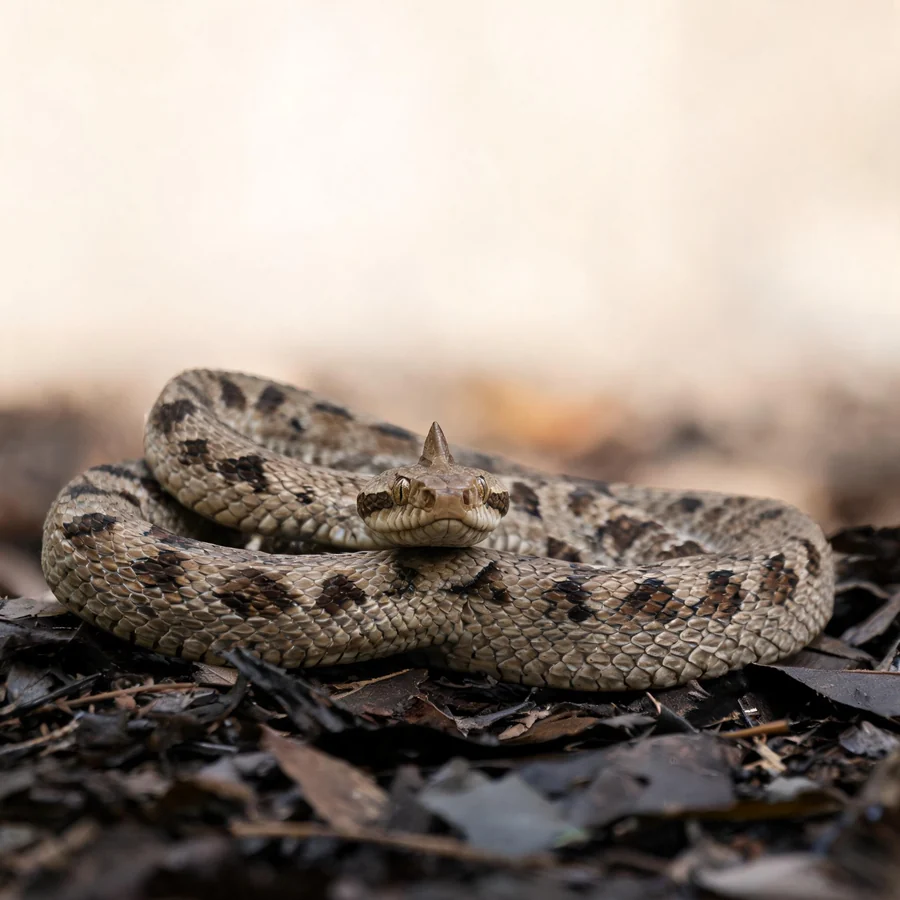
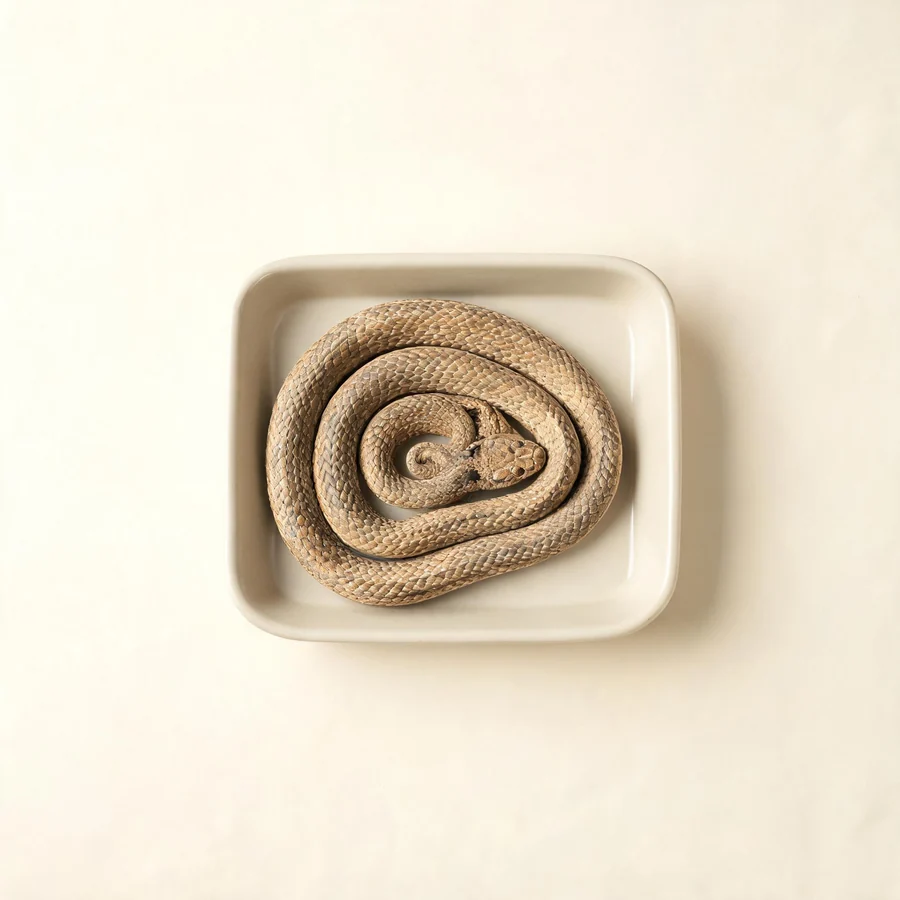
Skin profile
Where this herb sits in skin practice: the pattern it corrects, the skin signs it suits, and what it should not be used for.
Bai Hua She is chosen when Wind in the skin has become chronic and deep: itch that travels, skin that has thickened, and patches that have gone numb. Its toxicity, its animal origin and its effect on clotting decide whether it can be used at all, and none of those decisions belongs outside a supervised prescription.
Skin signs that suggest it
- Severe itch that wanders from one area to another and is worse at night
- Thickened, leathery or lichenified skin from long scratching, with little or no ooze
- Dry, scaly eruptions that have persisted for months and resisted topical treatment
- Patches where sensation is dulled, or a numb, heavy feeling in the affected skin
- A pale or dusky complexion with little redness, and a white-coated tongue
When it is not the right herb
Not for acute, bright red, weeping or infected skin, and not for the hot, dry, flushed skin of yin deficiency with empty heat, which a warm drying animal medicine will make worse. It is not for children, frail older people or anyone who is already depleted, and it is not for pregnancy or breastfeeding. It is not a self-care herb: the material is toxic, its sourcing is regulated, and homemade wine preparations have caused poisoning. Nor is it a substitute for the treatment of scabies, which needs a scabicide, or of any infected or spreading skin lesion, which needs medical assessment.
What it does for skin
Skin-relevant actions only. Each one describes a mechanism in TCM terms and what it looks like on the skin.
Dispels Wind from the skin
Wind in the skin shows as itch that moves, comes and goes, and is worse at night or in a draught. The snake is the most penetrating Wind medicine in the tradition, and the reasoning is that Wind lodged deeply enough to keep returning cannot be reached by a surface herb. Applied to skin, that means chronic itchy eruptions where the itch travels and the lesions never settle in one place. It is given with lighter Wind herbs such as Fang Feng and Jing Jie rather than on its own.
Opens the collaterals that nourish the skin
Blood reaches the skin through the fine channels and collaterals, the body's smallest distribution network. When Wind and Dampness lodge there, the skin over the area becomes thick, dry, discoloured and eventually numb. The animal medicine is described as opening those fine pathways where plant medicines reach only partly, which is the traditional explanation for its use in thickened, insensitive and leathery skin. The same reasoning underlies its old place in leprosy, where sensation is lost.
Quiets itch that has outlasted surface treatment
This is not a sedating antipruritic and it does not act on the sensation of itch directly. It is used where itch has driven a cycle of scratching, thickening and more itch, and where creams, antihistamines and gentler herbs have not broken it. The aim is to remove the Wind that the tradition holds responsible, and the measure of success is a fall in night-time scratching rather than an immediate stop to the itch. It is combined with blood-nourishing herbs so that the drying action does not leave the skin more parched.
Resolves the residue of old skin disease
The classical record names it for leprosy, scabies and sudden itching raised by Wind, which were the deep and stubborn skin diseases of the time. Read today, those entries describe chronic, generalised, scaly and itching conditions with a strong Wind component, and the herb still has a small place in that kind of case. It is never the whole treatment. Infection, infestation and any systemic illness must be identified and treated in their own right, and the herb is an adjunct in a supervised formula.
Skin conditions it is used for
Mapped to the condition pages on this site. The pattern column shows what the skin is doing when this herb is the right choice.
| Condition | Pattern | Why it suits | Typical setting |
|---|---|---|---|
| Eczema | Chronic wind-dry eczema with thickened, lichenified skin | The acute weeping phase of eczema is a damp-heat picture and does not call for this warm animal medicine. The case it suits is the long-standing one: the skin has thickened and darkened, the itch is severe and worse at night, there is scaling rather than ooze, and ordinary topical treatment has stopped holding it. The old formulas for wind-dry eczema use the snake with blood-nourishing and Wind-dispelling herbs, and it is reserved for that late stage under supervision. | Dang Gui Yin Zi with Bai Hua She added |
| Chronic urticaria | Wind lodged in the channels, with wheals that move and recur | Wheals that appear in one place as they fade in another, that itch intensely and that have gone on for months are read as Wind in the channels rather than as a surface reaction alone. The snake is used where the pattern has become chronic and the wheals are pale or normal in colour rather than hot and red. It is given with Wind-releasing herbs and with Blood-nourishing herbs, since the tradition holds that chronic Wind arises where Blood is thin and cannot anchor it. | Modified Xiao Feng San with Bai Hua She and Wu Shao She |
| Neurodermatitis | Wind and stasis bound in a fixed, thickened plaque | A single lichenified plaque that itches intensely, often on the neck, ankle or groin, is read as Wind that has become fixed with stagnant Blood. The snake is chosen for the stubbornness of the plaque and the depth of the itch, and it is combined with blood-moving herbs that soften the thickening. It is a supporting herb, and the main work is still done by stopping the scratch cycle, which may need behavioural and topical treatment. | Bai Hua She with Wu Shao She, Chan Tui and Dan Shen |
| Itchy skin without a rash | Wind itch without heat or ooze | When itch is the whole complaint and there is no redness, warmth, weeping or scaling to clear, the pattern is Wind alone. Ordinary cooling and drying herbs have little to work on in that picture, and the tradition turns to a medicine that moves through the channels and drives Wind out. The snake is used only after simpler Wind herbs have been tried, and only for a defined course. | Bai Hua She powder with Fang Feng and Jing Jie in a Wind-dispelling formula |
| Scabies | Wind-toxin and parasites burrowing in the skin | Scabies appears in the old texts as a Wind and toxin condition with intolerable itch and a rash that spreads between people. The herb was used for it, and the record is honest about a disease that is caused by a mite. Modern treatment is a scabicide for the person and for close contacts, with washing of bedding and clothing. The traditional use is recorded here for completeness and is not a reason to delay that treatment. | Bai Hua She with Ku Shen and She Chuang Zi in a traditional wash |
| Thickened or insensitive skin | Wind and Dampness obstructing the collaterals of the skin | Skin that has thickened, lost its fine texture and gone numb over a patch is read as obstruction in the fine collaterals. This is the pattern the herb is most specific for in theory, because the whole claim of the animal medicine is that it reaches pathways a plant does not. It is combined with blood-moving and channel-opening herbs. Numbness or loss of sensation needs medical assessment first, because the causes include nerve disease that no herb will reverse. | Bai Hua She with Wu Shao She, Ji Xue Teng and Dang Gui |
Combinations for skin
Herbs it is paired with when the skin, not an internal organ, is the target.
| Partner | Ratio | Why the pair is used |
|---|---|---|
| Wu Shao She | 3 to 6 g Bai Hua She with 6 to 9 g Wu Shao She in decoction | The two snakes are used for the same kind of Wind, and the black-striped Wu Shao She is neutral and non-toxic while the pit viper is warm and toxic. The gentle one carries the treatment and allows a longer course; the potent one is added for a stubborn plaque or an itch that will not settle. This is the standard way of using the stronger snake without exposing the person to it for weeks at a time. |
| Chan Tui | 3 to 6 g of each in decoction | Cicada moult is a light Wind herb that reaches the surface and is used for itchy rashes and for the restless, broken sleep that severe itch causes. It supplies the surface action while the snake works deeper, and the pair is used for chronic itchy eruptions that flare at night. Neither is a sedative, and the sleep improves when the itch does. |
| Ku Shen | 6 to 10 g Ku Shen with 3 to 6 g Bai Hua She | Ku Shen is bitter, cold and strongly antipruritic, and it covers the heat and dampness that the warm snake cannot address. The combination is used where a chronic itchy condition also has areas of redness and moisture, so the two herbs cover the dry thickened skin and the wet patches in one formula. Ku Shen also carries most of the antiparasitic tradition, which is why the pair appears in old washes for scabies. |
| Dang Gui | 10 g Dang Gui with 3 to 6 g Bai Hua She | Wind is said to arise where Blood is thin, and a warm drying medicine used alone can thin it further. Dang Gui builds and moves Blood, so the pair treats the itch and protects the skin from the drying that the treatment itself causes. It is the usual pairing in chronic dry eczema and in the itch of older people, where the deficiency is part of the picture. |
Formulas where it leads
- Dang Gui Yin Zi (当归饮子) - The classical formula for wind-dry skin disease with blood deficiency: dry, thickened, itchy skin in a pale or depleted person. Bai Hua She is not one of its original ingredients, and it is added in practice when the itch is severe and stubborn, where its penetrating quality is wanted and the nourishing base protects against its dryness.
- Xiao Feng San (消风散) - A wind-heat formula for acute and subacute itchy eruptions with redness. It is the usual setting for the snake in chronic urticaria, where the surface herbs are kept and a small amount of the animal medicine is added for the depth and persistence of the itch. The formula is adjusted so that the warming snake does not overwhelm the cooling herbs.
Safety for skin use
What to check before recommending or using it, including the cautions that matter most for skin patients.
Do not use, or use with caution
- Pregnancy. It is classed as toxic and its movement is forceful and penetrative, and there are no safety data. It is contraindicated rather than used with caution.
- Breastfeeding. Nothing is known about transfer of venom-derived peptides or other constituents into milk, and the substance is toxic and animal-derived, so it is not recommended.
- Yin deficiency with empty heat. The medicine is warm and drying, and a dry mouth, night sweats, a peeled red tongue and a rapid fine pulse all say that it will cost fluids the person cannot spare.
- Anticoagulant or antiplatelet treatment, a bleeding disorder, or planned surgery. Venom-derived proteins have shown anticoagulant activity, and the combination is avoided rather than monitored.
- Known allergy to animal protein, and any previous reaction to a snake preparation. A sensitised person can react severely.
- Deficiency without Wind. A strongly dispersing medicine given to someone depleted takes away what little they have, and the classical commentary warns that Wind-like signs arising from deficiency are made worse by it.
Pregnancy and breastfeeding
Contraindicated. Bai Hua She is classed as toxic, and the tradition describes a forceful, penetrative movement that it holds to risk disturbing a pregnancy. No safety data exist for use in pregnancy, and the animal protein adds a risk of allergic reaction for the mother. The position is avoidance, not a cautious dose, and it applies to every trimester and to anyone trying to conceive. The same advice covers breastfeeding, because nothing is known about transfer of the material into milk and the substance is toxic. A topical preparation is not a way around this, since the concern is systemic and the preparations are not standardised.
Interactions
- Anticoagulants and antiplatelet drugs. In laboratory work the venom proteins have anticoagulant and antiplatelet effects, so warfarin, heparin, aspirin, clopidogrel and the newer oral anticoagulants could in theory add up to more bleeding than expected. Most services never combine them; if they ever did, clotting would have to be checked.
- Blood pressure medicines. Some venom components lower blood pressure, and the effect could add to that of antihypertensives, particularly in an older person who is already prone to dizziness on standing. This is a reason to tell every prescriber rather than to adjust a dose at home.
- Immunosuppressants and biological drugs. As foreign animal protein it may alter immune activity, but no interaction has been characterised. The caution rests on principle, not on any recorded harm, and it is a further reason for a supervised, time-limited course.
- Alcohol and sedatives. Snake wine is the traditional vehicle and a recognised poisoning risk, and alcohol adds both to sedation and to the bleeding tendency. Anyone taking a sedative should not use an alcohol-based preparation at the same time.
Allergy and patch testing
Properly processed material still carries the risk of an allergic reaction to a foreign protein, and in a sensitised person that reaction can be severe, presenting as urticaria, wheeze or anaphylaxis rather than a local rash. Anyone with a known allergy to animal proteins, to snake material or to a previous herbal preparation containing it should not take it. Because the reaction is systemic, a patch test does not predict it. Stop at once and seek medical help if breathing becomes difficult or the face swells. Topical snake oils and wines can also sensitise the skin, and they should not be applied to broken skin.
General safety references
General references for herbal hepatotoxicity and herb-drug interactions; they are not specific to this herb.
- Review article: Herbal hepatotoxicity - an update on traditional Chinese medicine preparations. Alimentary Pharmacology & Therapeutics, 2014. PMID: 24844799.
- Interactions between herbal medicines and prescribed drugs: an updated systematic review. Drugs, 2009. PMID: 19719333.
- Warfarin and food, herbal or dietary supplement interactions: a systematic review. British Journal of Clinical Pharmacology, 2021. PMID: 32478963.
Evidence
The classical record is quoted with its source. The modern note states the level of evidence plainly.
Classical record
味甘,咸,温,有毒。主中风,湿痹不仁,筋脉拘急,口面㖞斜,半身不遂,骨节疼痛,大风疥癞及暴风瘙痒,脚弱不能久立。
Its taste is sweet and salty, its nature warm, and it is toxic. The indications are wind-stroke; damp impediment with numb, insensate skin; cramped and tight sinews and vessels; a mouth and face pulled to one side; paralysis of one half of the body; aching joints; leprosy and scabies; itching that comes on suddenly with wind; and legs too weak to stand for long.
Kai Bao Ben Cao (Materia Medica of the Kai Bao Era), Song dynasty - This is the entry from which nearly every later indication descends. Leprosy, scabies and wind-driven itch are all named in it, so the skin uses were there from the start rather than added later.
白花蛇,有大毒,头尾各一尺尤甚,不可用,只用中段干者。以酒浸去皮骨炙过收之,不复蛀坏。
This snake is severely toxic, and the first foot of the head and of the tail is worse still and may not be used; the dried middle of the body alone is taken. Once it has been soaked in wine, stripped of skin and bone, roasted and stored, insects will not damage it.
Ben Cao Tu Jing (Illustrated Classic of Materia Medica), Song dynasty - Half of this passage is about handling: it explains why the head and tail are cut away, and how wine, skinning and roasting became the standard preparation.
中风口面歪斜、半身不遂,定缘阴虚血少内热而发,与得之风湿者殊科,非所宜也。
When a mouth and face are drawn aside and one side of the body is paralysed because yin is deficient, blood is scanty and heat is held within, the case belongs to a wholly different class from one produced by wind-damp, and this medicine has no place in it.
Ben Cao Jing Shu (Commentary on the Materia Medica), Ming dynasty - The distinction drawn here still matters: signs that look like Wind but come from dryness and deficiency belong to another illness, and a dispersing medicine will not help them.
Modern evidence
Evidence status
- No clinical trial of Bai Hua She in eczema, urticaria or any other skin disease was identified, and the skin uses rest on the traditional record rather than on controlled evidence.
- The best-studied part of the material is its venom. Thrombin-like enzymes, phospholipases and metalloproteinases from related vipers have been characterised in laboratory work, mainly for their effects on clotting, and this is the basis of the bleeding caution rather than of any claim about the skin.
- Regulatory status: the dried body is an accepted article in the Chinese Pharmacopoeia under the name Agkistrodon, and the wild population is under pressure from habitat loss and from collecting for medicine. Legality, provenance and welfare belong to the safety question, and several jurisdictions restrict or prohibit the trade.
PubMed records
Selected real PubMed records for this herb's species or its constituents, chosen by species name and title relevance. They are references for the non-TCM discussion above, not proof that the herb treats any skin condition.
- Biochemical properties and comparative pharmacology of a coagulant from Deinagkistrodon acutus snake venom.. European journal of pharmaceutical sciences : official journal of the European Federation for Pharmaceutical Sciences, 2013. PMID: 23429184 (pharmacology or review record).
Dose and forms
Skin-practice dosing and the preparations that suit skin complaints.
| Form | Dose and notes |
|---|---|
| Decoction | 3 to 6 g of the dried body daily in a formula for chronic skin patterns. The range runs to 9 g in the older literature for acute spasm, which is outside skin practice. The lower figure is the usual starting point. |
| Powder | 1 to 1.5 g of ground body daily, divided into two doses, is the form most used for skin. The powder is considered more effective weight for weight than a decoction, since boiling extracts some constituents poorly. |
| Course length | Short courses of two to four weeks with review. It is not a maintenance medicine, and the warm drying quality makes prolonged use unattractive even where the skin is improving. |
| Processing | Wine-prepared material (Jiu Qi She) is the usual form. The head and tail are removed before use because the classical record places the highest venom concentration there. |
Every figure here is a record of traditional practice, not an instruction to obtain or prepare the animal. The material is toxic, animal-derived and regulated, and it must come from a licensed supplier through a practitioner. The powder and the decoction are not interchangeable by arithmetic, and the wine preparation is a separate form with its own dose. Homemade snake wine has caused poisoning and is not a safe substitute for a prepared medicine.
Citations and further reading
Only real sources are listed: the classical materia medica passages quoted above, and the source works behind the botanical and safety statements.
- Kai Bao Ben Cao (Materia Medica of the Kai Bao Era), Song dynasty - classical entry quoted above.
- Ben Cao Tu Jing (Illustrated Classic of Materia Medica), Song dynasty - classical entry quoted above.
- Ben Cao Jing Shu (Commentary on the Materia Medica), Ming dynasty - classical entry quoted above.
- Agkistrodon monograph: Pharmacopoeia of the People's Republic of China - source for the accepted article, its processing and its dose limits.
- Zoological description and conservation status: literature on Deinagkistrodon acutus, Viperidae, including its vulnerable listing.
- Modern evidence statement: based on published venom biochemistry and pharmacology; no clinical trial in skin disease is presented as proof of effect.
Educational reference for qualified practitioners. This page is not medical advice, and skin conditions should be diagnosed by a clinician before treatment.