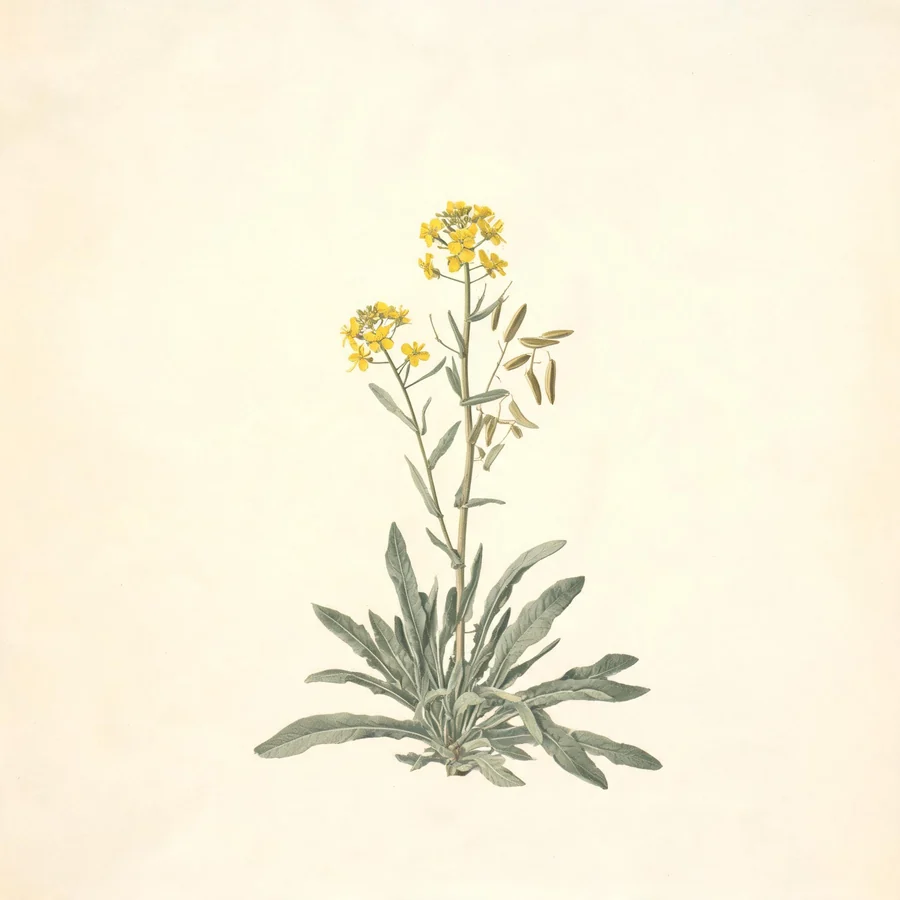
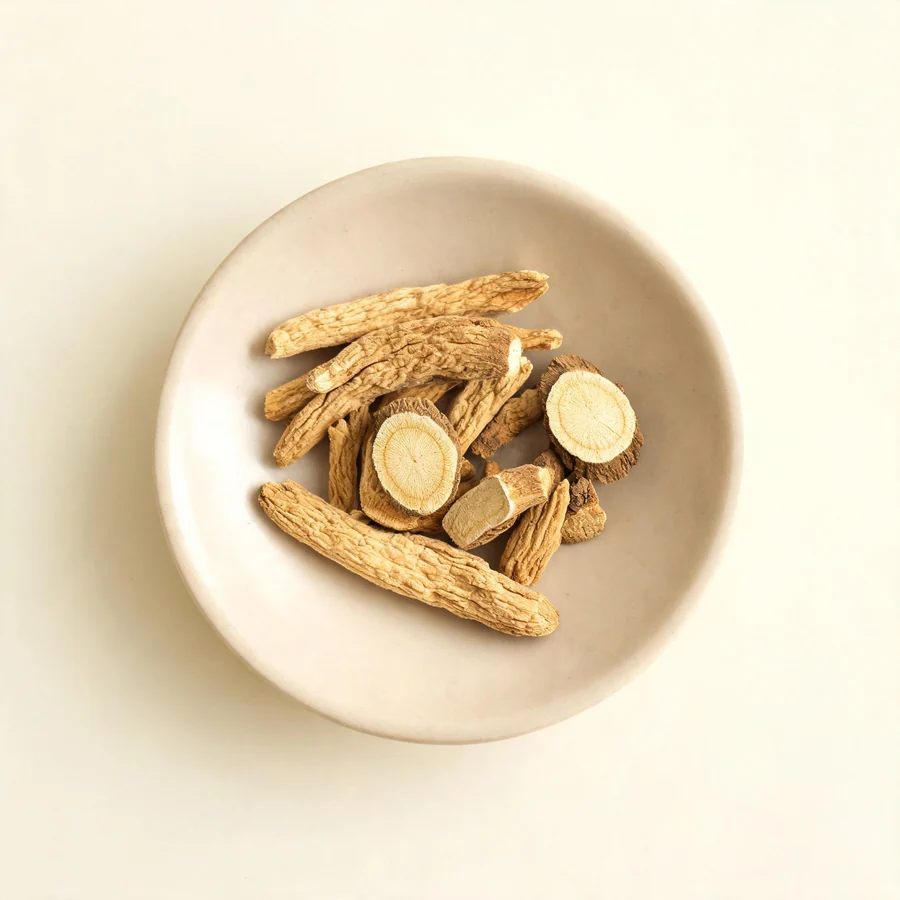
Skin profile
Where this herb sits in skin practice: the pattern it corrects, the skin signs it suits, and what it should not be used for.
Ban Lan Gen is the rash herb of febrile illness: hot, dusky, spotted, and part of a fever rather than a skin problem on its own. Its course is days, not weeks.
Skin signs that suggest it
- A rash of small red or purple spots that do not fade when pressed, arriving with fever (heat at the Blood level)
- A hot, dusky eruption with a crimson tongue and a rapid pulse
- Skin lesions that appear alongside a raw, swollen throat or tender neck glands
- Bleeding into the skin with nosebleeds or bleeding gums during a febrile illness
- Red blotches that spread quickly in a feverish, restless person
When it is not the right herb
Not for a cold-pattern rash, where the spots are pale or blanch and the person has chills, a clear runny nose and no sore throat: a cold root given at that stage drives the cold deeper. Not for cold, weak digestion, where it produces nausea, griping and loose stools. Not for dry, chronic skin disease with no heat, and not as a winter preventive drink. Anyone with aspirin sensitivity should avoid it, and in pregnancy it is used only for a clear indication and for the shortest course.
What it does for skin
Skin-relevant actions only. Each one describes a mechanism in TCM terms and what it looks like on the skin.
Clears heat toxin from a feverish eruption
The core use. A rash that arrives with fever, a raw throat and a restless, hot patient is read as heat toxin moving through the body and showing on the skin, and the bitter cold root confronts the toxin itself rather than only the surface. It is a supporting herb inside a formula, and it is chosen when the eruption is part of a systemic illness rather than a local skin problem.
Cools Blood that is pushing out spots
Once the spots do not blanch, the heat is read as having reached the Blood level, and the root's second action is to cool it. It is used alongside raw rehmannia and the leaf of its own plant, which is the stronger Blood cooler, and the aim is to settle the eruption rather than to dry the skin. A rash of this kind needs a diagnosis at the same time, because the illness behind it matters more than the spots.
Takes heat down from the throat and the head
The root descends where the leaf disperses, and that descending quality is read on the skin as well: lesions on the face, the neck and the upper trunk that come with a swollen throat are treated with a herb that moves heat downward rather than outward. It is the reason the root is chosen over the leaf when the throat and the rash appear together.
Cools without moving Blood
Unlike the blood-moving roots used for dusky lesions, this one does not invigorate, which matters when a rash is spreading and there is bleeding into the skin: the aim is to settle the Blood, not to push it further. That restraint is why it can be used in a febrile eruption with petechiae, where a stasis-moving herb would be out of place.
Skin conditions it is used for
Mapped to the condition pages on this site. The pattern column shows what the skin is doing when this herb is the right choice.
| Condition | Pattern | Why it suits | Typical setting |
|---|---|---|---|
| Macular rash in a febrile illness | Heat toxin at the Qi and Blood levels | A blotchy red rash that spreads during a fever is the classic setting for the root, and it is given as part of a formula that clears the illness as a whole. It is used when the rash is hot, dusky and accompanied by thirst and restlessness, and it is stopped when the fever settles. A fever with a rash can be a serious illness, and the diagnosis comes before the herb. | Ban Lan Gen with Jin Yin Hua, Lian Qiao and Sheng Di Huang |
| Petechiae | Heat in the Blood forcing blood out of the vessels | Pinpoint spots that do not blanch are the smallest sign of blood leaving its channels, and the root's Blood-cooling action is directed at that. It is a supporting herb alongside raw rehmannia and its own leaf, and new or spreading petechiae need a blood count and a diagnosis. It is not used on its own, and it is not a treatment for a platelet disorder. | Ban Lan Gen with Sheng Di Huang and Da Qing Ye |
| Purpura | Heat toxin with purpuric patches in a febrile illness | Larger purpuric patches in a hot, feverish person are read as heat toxin that has entered the Blood, and the root is one of the herbs used to cool and clear it. Its role is secondary to the blood-cooling pair of raw rehmannia and mudan pi, and it is dropped once the fever and the patches are settling. Purpura that is unexplained, recurrent or associated with bleeding elsewhere needs medical assessment. | Ban Lan Gen with Sheng Di Huang, Mu Dan Pi and Chi Shao |
| Drug rash | Heat toxin with a sudden widespread eruption | A drug eruption that appears suddenly, spreads and is accompanied by fever is treated in the tradition as heat toxin, and a cold toxin-clearing root has a place in the formula. It is never the lead herb, and the first step is always to stop the suspected medicine and get advice. A rash with blistering, peeling, mouth involvement or a high fever is an emergency and needs immediate medical care. | Ban Lan Gen with Jin Yin Hua, Lian Qiao and Sheng Di Huang in a heat-toxin formula |
| Chickenpox | Heat toxin at the surface with vesicles | The vesicular rash of chickenpox is read as heat toxin at the surface and the Blood level, and the root is used in Chinese paediatric practice as one component of a cooling formula. It is not an antiviral and it does not shorten the illness; the care that matters is fluid, rest and watching for complications. Chickenpox in an adult, in pregnancy or with a severe rash needs medical advice. | Ban Lan Gen with Jin Yin Hua and Lian Qiao in a paediatric cooling formula |
Combinations for skin
Herbs it is paired with when the skin, not an internal organ, is the target.
| Partner | Ratio | Why the pair is used |
|---|---|---|
| Da Qing Ye | 9 to 15 g each | Leaf and root are harvested from one plant, and the old rule divides the work: the leaf scatters outward and cools the Blood, the root moves down and settles the throat. At equal weight they cover a fever carrying both a sore throat and an eruption, which neither half manages alone. Learning this pair comes before deciding which part to use. |
| Sheng Di Huang | 10 to 15 g raw rehmannia with 9 to 15 g root | Rehmannia is cold, enriching and Blood-cooling, and it supplies the nourishment the root does not; the root supplies the toxin-clearing. The heavier weight goes to rehmannia, because the enriching herb has to carry the formula, and the setting is an eruption of spots or a crimson tongue rather than an ordinary sore throat. |
| Jin Yin Hua | 9 to 15 g each | Honeysuckle clears heat toxin and lifts wind-heat away from the surface too, something the root cannot do, so one herb works at the exterior while the other works within. It is the backbone of the early formulas for a hot sore throat with a rash, and both herbs are used at the same weight. |
| Xuan Shen | 9 to 15 g each | Scrophularia moistens where the root dries, eases an inflamed throat and clears the low heat of deficiency, which makes it two allies rather than one. The pair is used where a long fever has damaged fluids and the skin is dry as well as hot, and the moisture matters because the root alone would leave the surface tighter. |
Safety for skin use
What to check before recommending or using it, including the cautions that matter most for skin patients.
Do not use, or use with caution
- Cold digestion, with loose stools that have gone on for months, a cold abdomen and little appetite. The bitter cold root can deepen that and produce nausea, griping and worse diarrhoea.
- No heat anywhere: someone pale and tired who always feels chilly, with neither fever nor a red throat, has nothing for a cold herb to clear and may lose yang.
- A cold just beginning, where shivering outweighs the fever, the nose runs clear and the body aches without sweating. This root works on heat alone; used in the first day of such a cold it is said to push the cold further in.
- Aspirin sensitivity: the plant holds compounds near enough to salicylates that a sensitive person may react, and taken with aspirin or ibuprofen it multiplies gastric irritation.
- Prolonged unsupervised use: a few days is the pattern, and a daily habit through the winter months has no support in the sources, because of digestive irritation and the animal signal of strain at high doses.
Pregnancy and breastfeeding
Used with caution rather than forbidden. The root is not on the classical lists of herbs avoided in pregnancy, but its cold bitterness unsettles a digestion that is already fragile, and a single animal study found chromosome damage at high dose with no human safety data to set against it. The position is a defined reason to prescribe, the smallest dose and the fewest days, with a practitioner involved. Topical use is not established for this herb, so the question is about internal courses only.
Interactions
- Painkillers of the aspirin family: the salicylate-like compounds mean a sensitive person may react, and taken together they multiply stomach irritation. Taking it with a meal rather than before eating is the simple precaution.
- Medicines that suppress immunity: in the laboratory the root stimulates immune cell activity, the reverse of what transplant or autoimmune treatment aims for, so it needs review before use in that group.
- Stomach-irritating medicines, including steroids and non-steroidal anti-inflammatories: the cold bitter root adds to their gastric effects, and the same advice about taking it with food applies.
Allergy and patch testing
Skin rash and hives have been reported after oral doses. The injectable form is separate again, carries far more risk of anaphylaxis, and belongs to hospital practice rather than an equivalent of the decoction. Anyone with a previous reaction to the root, or to related plants such as mustard and cabbage, should avoid it. A patch test is not a reliable screen for a systemic reaction, so a first dose is taken with that in mind.
General safety references
General references for herbal hepatotoxicity and herb-drug interactions; they are not specific to this herb.
- Review article: Herbal hepatotoxicity - an update on traditional Chinese medicine preparations. Alimentary Pharmacology & Therapeutics, 2014. PMID: 24844799.
- Interactions between herbal medicines and prescribed drugs: an updated systematic review. Drugs, 2009. PMID: 19719333.
- Warfarin and food, herbal or dietary supplement interactions: a systematic review. British Journal of Clinical Pharmacology, 2021. PMID: 32478963.
Evidence
The classical record is quoted with its source. The modern note states the level of evidence plainly.
Classical record
The root of indigo takes its nature and taste from the leaf. It reaches the Blood level by way of the Liver and the Stomach and is credited with four tasks only: clearing heat, resolving toxin, warding off epidemic disease and destroying parasites. Within that sameness lies a difference, since the leaf disperses while the root descends.
Ben Cao Bian Du (A Categorical Reader of Materia Medica) - The clearest statement in the record of why the leaf suits an eruption and the root the throat, and it also fixes the Blood-level action that skin practice relies on.
The text gives it for epidemic heat toxin.
Ri Hua Zi Ben Cao (Materia Medica of the Ri Hua Studio) - One Song sentence that pins the epidemic use down, and by extension the febrile rash that comes with such an illness.
Its taste is bitter, its nature cold, and it is recorded as non-toxic.
Ben Cao Shu (A Commentary on Materia Medica) - The record's shortest entry, and what the modern safety classification rests on, permitting short courses at ordinary doses.
Modern evidence
Evidence status
- Laboratory work on the root reports antiviral, antibacterial, anti-inflammatory and immune-stimulating activity, largely in cell and animal systems, with much of it on influenza and herpes viruses. These are laboratory findings rather than evidence of benefit in a skin condition.
- Clinical evidence in skin disease is very limited. Chinese-language reports describe the root within multi-herb formulas for febrile eruptions and paediatric viral illness, and no adequately controlled trial of the single herb in a skin condition was identified.
- Regulatory status: the dried root is an accepted herbal substance in the Chinese Pharmacopoeia. High-dose animal work has found damage to chromosomes in marrow cells, which is the basis for keeping courses short rather than for avoiding the herb at ordinary doses.
PubMed records
Selected real PubMed records for this herb's species or its constituents, chosen by species name and title relevance. They are references for the non-TCM discussion above, not proof that the herb treats any skin condition.
- Characterization, evaluation of nutritional parameters of Radix isatidis protein and its antioxidant activity in D-galactose induced ageing mice.. BMC complementary and alternative medicine, 2019. PMID: 31694618 (pharmacology or review record).
Dose and forms
Skin-practice dosing and the preparations that suit skin complaints.
| Form | Dose and notes |
|---|---|
| Decoction | 9 to 15 g of dried root daily in a formula, for a few days. The lower end suits a child or a sensitive stomach; the upper end is for a pronounced febrile rash or a hot throat. |
| Acute range | 15 to 30 g is recorded for a strong heat-toxin picture. The very large weights of 60 to 120 g belong to hospital practice and are not a home dose. |
| Granules | Convenience granules do not match the decoction gram for gram, so one sachet is not 9 g of root, and their sugar content matters in diabetes. |
| Course length | Three to five days is the usual course. Longer use is not recommended, and the herb is stopped once the fever and the rash have settled. |
The number on the packet is less useful here than the form it comes in. The dried root decocted at 9 to 15 g is the ordinary exposure; the granules are a different product with their own dose; the injectable is a hospital medicine and not comparable. Preventing illness and treating it are not the same use either, and neither is designed to continue for weeks on end.
Citations and further reading
Only real sources are listed: the classical materia medica passages quoted above, and the source works behind the botanical and safety statements.
- Ben Cao Bian Du (A Categorical Reader of Materia Medica) - classical entry quoted above.
- Ri Hua Zi Ben Cao (Materia Medica of the Ri Hua Studio), Song dynasty - classical entry quoted above.
- Ben Cao Shu (A Commentary on Materia Medica) - classical entry quoted above.
- Pharmacopoeia of the People's Republic of China, Radix Isatidis monograph - source for the accepted botanical source, part used and quality requirements.
- Botanical identification: taxonomic literature on Isatis indigotica, Brassicaceae, including the southern substitute from Baphicacanthus cusia.
- Modern evidence statement: summarised from laboratory literature on the root, presented as a comment on the level of evidence rather than as a cited finding.
Educational reference for qualified practitioners. This page is not medical advice, and skin conditions should be diagnosed by a clinician before treatment.