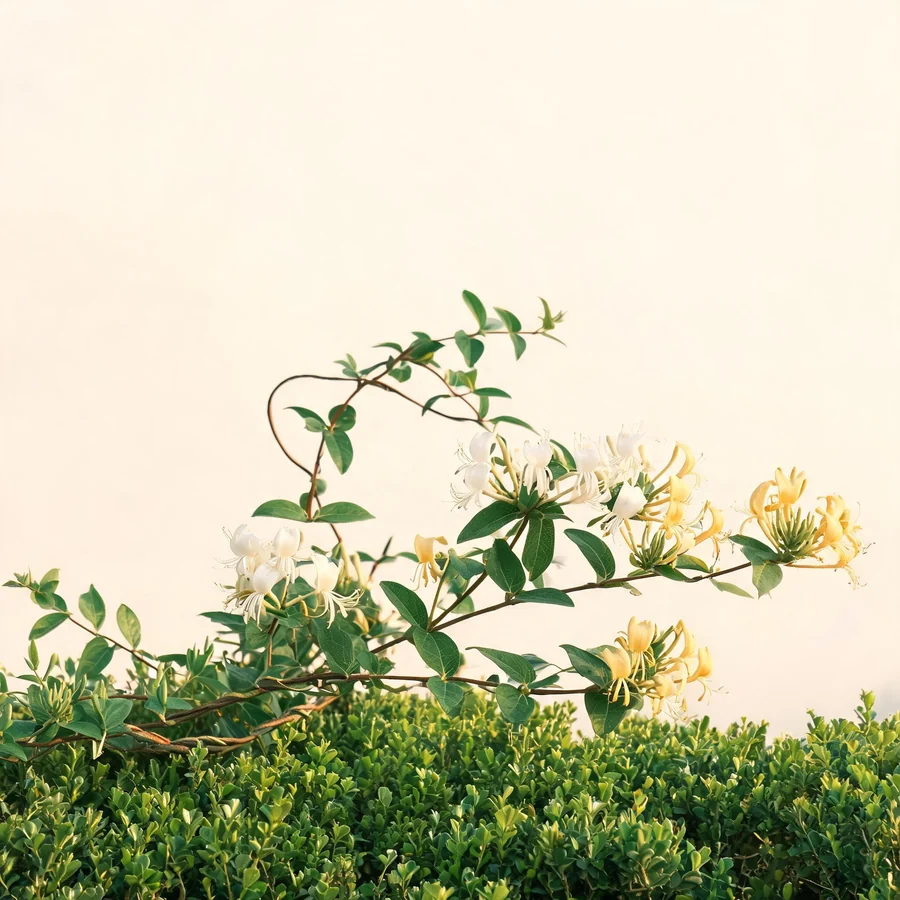
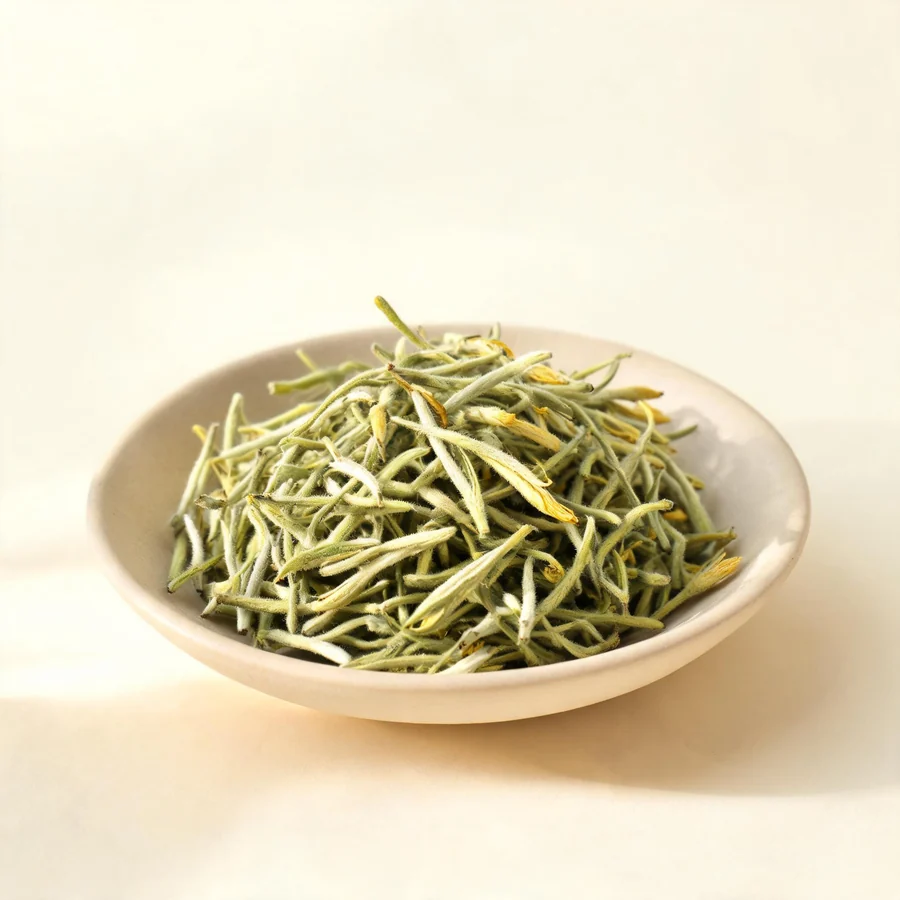
Skin profile
Where this herb sits in skin practice: the pattern it corrects, the skin signs it suits, and what it should not be used for.
Jin Yin Hua is the gentle first choice for a hot, red, recent eruption, and for the sore throat that often comes with it. Its sweetness allows it to clear without drying, which makes it useful on the face, in children and in washes, but it is still a cold herb and it is not a daily tea for a cold constitution.
Skin signs that suggest it
- Red, hot, tender boils or pustules, especially on the face, neck or trunk
- Honey-coloured crusted lesions with oozing, spreading by contact
- A bright red rash that appeared with fever, sore throat or a cold (wind-heat)
- Prickly heat or a fine red papular rash in hot weather or a hot room
- A red tongue tip with thirst and irritability, and a rapid pulse
When it is not the right herb
Not for a wind-cold illness, with chills greater than fever and a clear nasal discharge, which this cooling flower does not suit. Not for cold-deficient digestion, with loose stools and a poor appetite. Not for chronic ulcers that discharge thin clear fluid or for pale, indolent lesions, because those reflect deficiency and clearing delays healing. And not as an indefinite daily tea: taken for months without heat signs, the cold nature gradually injures the Spleen and Stomach.
What it does for skin
Skin-relevant actions only. Each one describes a mechanism in TCM terms and what it looks like on the skin.
Clears Heat and resolves Toxin
This is the primary action, and it is what makes the flower useful for sores, boils and abscesses that are hot, swollen and painful. It addresses the toxin that turns inflammation into suppuration and spread, and it is used for infected eczema, folliculitis and impetigo. Because its sweetness tempers the cold, it clears the toxin without drawing down the Qi and Blood that repair requires, and the old writers described it as draining with something of a supplementing quality inside the draining.
Disperses Wind-Heat from the surface
A rash that begins with fever, a sore throat, headache and thirst is read as wind-heat moving outward, and the flower is light enough to release that pathogen through the surface. It is the leading herb in the formulas for the first days of a febrile illness, and it is used when a hot rash follows the same pattern. Its gentle dispersing action makes it suitable for children and for skin that is already a little dry.
Cools the Blood in a spreading eruption
When a rash becomes bright red and spreads quickly, the heat has moved from the Qi level toward the blood. The flower clears at both levels, which is unusual, and it can push the pathogen back outward rather than letting it sink deeper. It is used in the formulas for eruptions that follow a fever and for dusky red plaques, combined with herbs that cool the blood and nourish the fluids.
Clears Summerheat from the skin
Prickly heat, a fine red papular rash and a hot, itchy skin in summer are read as summerheat and dampness trapped at the surface. The flower is the traditional summer cooling herb, taken as a light infusion and used in children's baths, and it clears the surface heat without the harshness of the bitter roots. It is also used where heat rash has become slightly infected, with small pustules at the centre of the papules.
Protects the fluids while clearing
The sweet taste is not incidental: it is the reason the flower can be used where the bitter, drying herbs would leave the skin and the mouth dry. In a hot, thirsty person with a red rash, it clears the heat while the fluids are preserved, and it is chosen for children, for older people and for anyone whose digestion does not tolerate the strong bitters. This makes it a reliable first choice at the start of an eruption.
Skin conditions it is used for
Mapped to the condition pages on this site. The pattern column shows what the skin is doing when this herb is the right choice.
| Condition | Pattern | Why it suits | Typical setting |
|---|---|---|---|
| Boils | Heat toxin gathering in the flesh | A red, hot, painful swelling that is coming to a head is the clearest skin expression of heat toxin, and the flower is one of the leading herbs for it. Classical writers held that it could break up a sore not yet formed and encourage a formed one to discharge. It is combined with Lian Qiao and Pu Gong Ying, and a hot spreading lesion with fever needs medical care. | Wu Wei Xiao Du Yin, with Jin Yin Hua as the leading herb |
| Impetigo | Damp-heat toxin with yellow crusts | Honey-coloured crusts over red, oozing skin are read as heat toxin with dampness near the surface, and the flower clears the toxin while drying herbs in the same formula handle the ooze. It is used around the nose and mouth, where the skin is thin, because its sweetness makes it less harsh than the bitter roots. Because impetigo spreads by contact, a small patch is treated with hygiene measures and a spreading rash needs medical assessment. | A modified Huang Lian Jie Du Tang with Jin Yin Hua and Lian Qiao |
| Erysipelas | Heat toxin spreading over the surface | A bright red, hot plaque with a sharp advancing edge and fever is read as heat toxin moving through the skin, and the flower is used to clear the toxin and help contain the spread. It is combined with the strongest fire-purging herbs and with Lian Qiao. This condition can progress quickly and needs urgent medical treatment; herbs are supportive only, and never a substitute for antibiotics. | Huang Lian Jie Du Tang with Jin Yin Hua and Lian Qiao, within supervised care |
| Urticaria | Wind-heat in the skin | Red wheals that rise with heat, warmth or a feverish cold, and move from one area to another, are read as wind-heat in the skin. The flower releases the wind and clears the heat at the same time, which is why it appears in the wind-heat formulas for acute urticaria. It is used for recent, red, heat-provoked wheals rather than for the chronic or cold-provoked type. | Xiao Feng San, modified with Jin Yin Hua for red wheals after a cold |
| Heat rash | Summerheat and dampness trapped in the skin | Fine red papules on the neck, chest and in the skin folds during hot, humid weather are read as summerheat and dampness that cannot escape through the surface. The flower clears the heat and disperses it outward, and a cooled infusion is used as a wash or added to a bath. It is gentle enough for children, and it is one of the few skin herbs with a genuine food-use tradition. | A light infusion of Jin Yin Hua with Bo He, or a cooled wash for the affected area |
| Eczema | Acute damp-heat flare with redness and ooze | When eczema flares as red, weeping, crusted patches with heat, the flower is used to clear the heat toxin while stronger drying herbs address the ooze. Its sweetness means it can be used on the face and in children without the harshness of the bitter roots. It is a supporting herb in this pattern, not the main drying agent, and it is stopped when the flare settles. | A modified damp-heat formula with Huang Qin and Ku Shen, together with a cooled wash |
Combinations for skin
Herbs it is paired with when the skin, not an internal organ, is the target.
| Partner | Ratio | Why the pair is used |
|---|---|---|
| Lian Qiao | 9 to 15 g each, in equal parts | The classic pair for early heat and toxin: the flower clears at the Qi and Blood levels and the fruit releases the surface and disperses nodules. Equal parts cover the outside and the inside at once, which is why the pair leads the formulas for wind-heat illness and also serves for hot, swollen sores. It is the first pairing to consider when a rash begins with a sore throat. |
| Gan Cao | 10 to 15 g Jin Yin Hua with 3 to 6 g Gan Cao | Liquorice plays three parts in this trio: it harmonises the mixture, it eases the throat, and its sweetness makes a light floral drink palatable. Taken together, the three herbs are the simplest traditional answer for the first sore throat of a feverish cold, and the model for many ready-made teas sold for that purpose. |
| Pu Gong Ying | 15 g each | Each clears heat toxin and the pair is a strong one for sores and infection. The flower is the general remedy for any sore, while Pu Gong Ying leans toward the breast and toward hot swellings with redness and pain. The combination is chosen for boils and for a red, tender mass that is still hard, and it reaches both the internal and the surface aspect of the lesion. |
| Huang Qin | 10 to 15 g Jin Yin Hua with 6 to 10 g Huang Qin | Huang Qin is the bitter, drying partner: it drains damp-heat from the upper and middle burners and cools the blood. The flower releases the surface and resolves toxin gently. The pair suits a hot skin lesion with internal heat, because the gentle herb works at the surface while the bitter one clears below, and the result is less drying than a formula built only on root bitters. |
| Zi Hua Di Ding | Wu Wei Xiao Du Yin proportions, with Jin Yin Hua in the larger share | Zi Hua Di Ding cools the blood and takes down swelling in sores that sit deep, and the two form the centre of the five-herb toxin-clearing formula. The flower works on the Qi and the Blood levels at once, while the viola is the specialist in the hard boil set deep, which will not point. The classical proportions give the honeysuckle the larger share, a sign of its rank as the leading toxin-clearing medicine. |
Formulas where it leads
- Yin Qiao San (银翘散) - The foundational wind-heat formula for early fever and sore throat, in which the flower leads with Lian Qiao. It is used when a rash begins with a feverish cold, and it is taken as a light decoction because the aromatic herbs are volatile and lose their dispersing quality with long boiling.
- Wu Wei Xiao Du Yin (五味消毒饮) - The five-herb formula for toxic heat gathering into boils and abscesses, with the flower as the leading toxin-clearing medicine. It is used in the early, hard stage before a lesion points, and the emphasis changes once it has opened. The original is a strong formula given for a short period.
- Qing Ying Tang (清营汤) - The formula for heat that has entered the nutritive level, with fever at night, a dark red tongue and restlessness, in which the flower helps push the pathogen back out toward the surface. It is relevant to skin when a rash becomes deep red and spreads with a fever, and it belongs in supervised care.
Topical use
Honeysuckle is one of the few skin herbs that is also a food, and a cooled infusion or a light decoction is used as a wash, a compress or a bath for hot, red and itchy skin. It is traditional for prickly heat and for the red, weeping stage of infantile eczema, and it is gentle enough for short repeated use on a child. The aim is to cool the surface and clear toxin, not to dry the skin, so the wash stays on for minutes rather than hours.
| Preparation | How and when it is used |
|---|---|
| Cooled infusion compress | 10 to 15 g of dried buds are steeped in 500 ml of just-boiled water for 10 minutes, strained and cooled. Apply with clean gauze to hot, red or itchy patches for 5 to 10 minutes, two or three times a day, and make a fresh infusion each time. |
| Bath for heat rash | A handful of buds is steeped in a litre of hot water, strained and added to a lukewarm bath for a child with prickly heat. Keep the bath short, pat the skin dry rather than rubbing, and stop if the skin becomes drier or more irritated. |
| Wash with Lian Qiao | Equal parts of honeysuckle and forsythia are simmered gently for 10 minutes and used cooled as a wash for hot, crusted or weeping lesions. The two are the classic pair for heat toxin, and the wash is used on limited areas only. |
Patch test and cautions
Patch test on a small area before the first use, and do not use on deep or openly infected skin, near the eyes or on the genitals. Stop if the skin stings, burns or becomes redder. A wash is an adjunct and does not replace medical care for a spreading, febrile or pustular infection, and it should not be used on cold, dry or pale skin.
Safety for skin use
What to check before recommending or using it, including the cautions that matter most for skin patients.
Do not use, or use with caution
- Spleen and Stomach deficiency-cold: the digestion is already cold, with loose stools, little appetite and a dislike of chilled food. Adding a cold flower to that picture deepens the cold rather than clearing anything.
- Sores that discharge thin clear pus or fluid rather than thick yellow pus, which point to deficient Qi rather than to toxic heat. To clear in that picture is to weaken the person further.
- Wind-cold illness, with chills greater than fever and a clear nasal discharge, which this cooling, surface-releasing flower does not suit.
- Prolonged daily use in someone with no heat signs. The cold nature gradually injures Spleen Yang, and the flower also has a mild antiplatelet effect that matters for some people.
Pregnancy and breastfeeding
It is used widely in China in pregnancy for acute feverish illness, and no abortifacient effect is known. The caution lies with its cold nature, not with the flower, since a long or high-dose course in a woman with weak digestion can bring loose stools and discomfort, so brief supervised courses are the sensible form. A hot, red, recent eruption can be treated with it briefly, and a wash on a small area is lower risk again.
Interactions
- Anticoagulants and antiplatelet drugs: the chlorogenic acid and caffeic acid derivatives in the flower slightly reduce platelet activity, so with warfarin, heparin, aspirin or clopidogrel bleeding may be more likely. Anyone on these medicines should tell their prescriber about the tea.
- Immunosuppressants: the flower has a measurable effect on immune signalling, so for a transplant recipient, or anyone taking immunosuppressants long term, it could in theory oppose the drug. The caution is theoretical, but it is reason enough not to drink the tea daily without advice.
- Medicines handled by cytochrome P450: chlorogenic acid influenced liver enzyme activity in preclinical work. That matters for drugs with a narrow window, ciclosporin and theophylline among them, and a prescriber should be told before the tea becomes a habit.
- No major interaction has been established in clinical reports. The points above are reasoning from laboratory work rather than documented events, and they matter most for people taking several medicines at once.
Allergy and patch testing
Allergic reaction to honeysuckle is uncommon but reported, and it can follow contact with the plant, the tea or a wash. People with a known sensitivity to other flowers or to pollen should patch test a wash before using it on a child or on broken skin. Stop at once if the skin becomes redder, itchy or swollen after application.
General safety references
General references for herbal hepatotoxicity and herb-drug interactions; they are not specific to this herb.
- Review article: Herbal hepatotoxicity - an update on traditional Chinese medicine preparations. Alimentary Pharmacology & Therapeutics, 2014. PMID: 24844799.
- Interactions between herbal medicines and prescribed drugs: an updated systematic review. Drugs, 2009. PMID: 19719333.
- Warfarin and food, herbal or dietary supplement interactions: a systematic review. British Journal of Clinical Pharmacology, 2021. PMID: 32478963.
Evidence
The classical record is quoted with its source. The modern note states the level of evidence plainly.
Classical record
善于化毒,毒未成者能散,毒已成者能溃。
It is skilled at transforming toxin: where the toxin has not yet gathered into a mass it disperses it, and where it has already gathered it brings it to discharge.
Ben Cao Zheng (Correct Materia Medica) - The same sore is addressed at both ends of its life: before it gathers, and after it has gathered.
解毒去脓,泻中有补,痈疽溃后之圣药。
It resolves toxin and expels pus, and within its draining there is a supplementing quality; it is the supreme herb for abscesses that have already broken open.
Ben Jing Feng Yuan (Encountering the Sources of the Classic of Materia Medica) - The paradox of a draining herb that also supplements is the old way of explaining the sweet taste: clearing here does not leave the person emptied.
Modern evidence
Evidence status
- Laboratory work on chlorogenic acid, luteolin and the whole-flower extract reports anti-inflammatory, antibacterial and antioxidant activity, including against organisms found in skin infection. These are cell and animal studies at concentrations that a tea or decoction does not reliably reach in tissue.
- Clinical trial evidence in skin disease is limited and mostly indirect, drawn from studies of multi-herb formulas for feverish colds in which the flower is one ingredient. No robust trial of the single flower in eczema, impetigo or heat rash is available in the mainstream literature.
- The flower is listed as non-toxic in the Chinese Pharmacopoeia and appears on the medicine-food homologous list, which is an unusually strong safety statement based on long use. That standing reflects low toxicity, not proof of benefit for any skin condition.
PubMed records
Selected real PubMed records for this herb's species or its constituents, chosen by species name and title relevance. They are references for the non-TCM discussion above, not proof that the herb treats any skin condition.
- Preparation and Characterization of Polysaccharide-Based Hydrogels for Cutaneous Wound Healing.. Polymers, 2022. PMID: 35566885 (skin-related record).
- Chrysoeriol ameliorates TPA-induced acute skin inflammation in mice and inhibits NF-κB and STAT3 pathways.. Phytomedicine : international journal of phytotherapy and phytopharmacology, 2020. PMID: 31999977 (skin-related record).
- Lonicerae Japonicae Flos with the homology of medicine and food: a review of active ingredients, anticancer mechanisms, pharmacokinetics, quality control, toxicity and applications.. Frontiers in oncology, 2024. PMID: 39314630 (safety record).
Dose and forms
Skin-practice dosing and the preparations that suit skin complaints.
| Form | Dose and notes |
|---|---|
| Decoction | 6 to 15 g of dried buds daily. Six to ten grams is enough for a mild wind-heat picture with a sore throat; ten to fifteen grams is the usual figure when there is fever and inflammation. |
| Higher doses | For severe heat toxin, such as a large abscess or a high fever, the dose rises to 15 to 30 g; a decoction of the single herb at 30 g or more is a traditional figure for acute infection. Amounts above 15 g belong to supervised acute care. |
| Tea and infusion | A few grams steeped in a cup of just-boiled water for a few minutes, drunk warm, is the traditional domestic form. The flower is never boiled hard, since the volatile aromatics that do much of the work evaporate. |
| Topical | A cooled infusion or light decoction used as a compress, wash or bath for hot, red and itchy skin, on limited areas and for short periods. |
This is a generous dose of a food-grade flower, and the caution is its cold nature rather than a toxicity ceiling. Because the aromatics are volatile, the flower is steeped or added late rather than simmered for long, and a tea made at home is a brief infusion rather than a simmer. Charring reduces the cold and adds an astringent quality that checks bleeding; dry-frying leaves it milder still, and both are dosed like the raw flower.
Citations and further reading
Only real sources are listed: the classical materia medica passages quoted above, and the source works behind the botanical and safety statements.
- Ben Cao Zheng (Correct Materia Medica) - classical entry quoted above.
- Ben Jing Feng Yuan (Encountering the Sources of the Classic of Materia Medica) - classical entry quoted above.
- Lonicera japonica monograph: Pharmacopoeia of the People's Republic of China - source for the accepted botanical source, part used and quality requirements.
- Modern evidence statement: based on laboratory and pharmacopoeial literature on the flower, summarised as a statement about the level of evidence rather than as a cited finding.
- Botanical description and identification: botanical literature on Lonicera japonica, Caprifoliaceae.
Educational reference for qualified practitioners. This page is not medical advice, and skin conditions should be diagnosed by a clinician before treatment.