Skin profile
Where this herb sits in skin practice: the pattern it corrects, the skin signs it suits, and what it should not be used for.
Dan Dou Chi is for the early, hot, itchy surface: a recent red rash or crop of wheals with feverishness and restlessness. It is the mildest exterior medicine, chosen when a stronger sweat would dry the skin, and it almost never works alone.
Skin signs that suggest it
- An early, itchy red rash or wheals with a feeling of heat and a recent onset
- Feverishness, a mild headache and a sore throat alongside the skin eruption
- Restlessness, irritability and poor sleep during a hot, itchy flare
- A thin yellow tongue coating with a red tongue edge and a floating rapid pulse
- Skin that is dry or thin, where a stronger sweating herb would dry it further
When it is not the right herb
Not for a rash that is deep, dark red and spreading quickly with high fever, which needs urgent assessment rather than a mild surface medicine. Not for cold, pale, weeping skin with no heat signs, and not for a chronic lichenified eczema where the surface is already dry. It is also the wrong choice when the Stomach rebels with nausea, because its light upward movement adds to that direction, and it should be avoided by anyone who needs a stable vitamin K intake.
What it does for skin
Skin-relevant actions only. Each one describes a mechanism in TCM terms and what it looks like on the skin.
Releases Wind-Heat from the surface
The bean opens the surface gently and lets a recent wind-heat eruption settle. It is used when a rash has appeared over hours or a day, itches, and comes with the mild feverishness and sore throat of an early exterior pattern. The release is light rather than a sweat, so it does not strip the skin of moisture, and that is the quality that makes it usable in a thin or elderly person.
Vents heat that is trapped under the skin
Its signature action is to release heat that has been trapped rather than cool it in place. On the skin this shows as wheals or a red rash that will not resolve because the heat has no route out, often with a feeling of pressure and restlessness. The medicine gives that heat a way to disperse, and it is paired with cooling herbs when the redness is strong.
Clears warm-toxin eruptions that are slow to come out
The classical record names warm-toxin eruptions among its uses, and the tradition reads a rash that is slow to surface as heat toxin held at the exterior. The bean is given with herbs that resolve toxin and with cooling medicines, not as a stand-alone treatment. A spreading eruption with fever, drowsiness or dehydration is a medical matter and is not treated with a kitchen medicine.
Settles the spirit by removing the obstruction
The irritability that comes with a hot, itchy flare is not treated as a separate emotional problem. Heat sitting where it should not be disturbs sleep and mood, and venting it settles both. This is why the bean appears in formulas for restless insomnia after a fever, and why a skin patient who cannot settle at night may be given it alongside the herbs that act on the eruption.
Skin conditions it is used for
Mapped to the condition pages on this site. The pattern column shows what the skin is doing when this herb is the right choice.
| Condition | Pattern | Why it suits | Typical setting |
|---|---|---|---|
| Urticaria | Wind-Heat at the surface with red, itchy wheals | Recent red wheals with itching, a mild feverishness and a sore throat are the wind-heat picture this bean suits. It is given with wind-releasing and heat-clearing herbs, and its mildness makes it usable in a patient who could not take a stronger diaphoretic. A wheal that is deep, spreading or associated with swelling of the lips or throat is an emergency and needs immediate medical care, not a decoction. | With Fang Feng, Jing Jie and Bo He in a wind-heat formula |
| Macular rash | Wind-Heat with a red macular eruption that is slow to fade | A flat red rash that appears with feverishness and does not settle is read as wind-heat held at the surface. The bean lifts the pathogen outward and is combined with herbs that clear heat and resolve toxin. Because the rash may be the first sign of a drug reaction or an infection, it is examined before it is treated, and a rash with fever, mucosal involvement or blistering needs urgent assessment. | With Jing Jie, Lian Qiao and Bo He |
| Chickenpox | Warm-toxin eruption that needs to surface | The classical line names warm-toxin eruptions, and chickenpox is the childhood eruption that most closely matches it: vesicles appearing in crops with mild fever and itch. The bean is a gentle support in the early phase, given with cooling and toxin-resolving herbs. It does not replace antivirals for a severe case, and a child who is drowsy, dehydrated or breathing quickly needs medical care at once. | With Lian Qiao, Jin Yin Hua and Chan Tui in a light heat-clearing formula |
| Mild wind-heat itch | Wind-Heat with a warm, dry surface | For itch that comes with warmth, a recent onset and a thin skin that would not tolerate strong sweating, the bean is a gentle choice. It releases the surface and vents heat without drying, and it is combined with itch-quieting herbs. Chronic itch with lichenification, or itch with no heat signs, is a different pattern and is not helped by a dispersing medicine. | With Bo He and Chan Tui, or with Bai Xian Pi for a heat-type itch |
Combinations for skin
Herbs it is paired with when the skin, not an internal organ, is the target.
| Partner | Ratio | Why the pair is used |
|---|---|---|
| Jing Jie | 6 to 10 g Jing Jie with 10 to 15 g Dan Dou Chi | Schizonepeta is warmer and sweats more forcefully, and the bean is cool and light. Together they release an early wind-heat rash without over-drying the skin, and the bean adds the venting action that schizonepeta lacks. The pair is used for recent itchy eruptions and for the early phase of a heat-type cold with a rash. |
| Bo He | 6 to 10 g each | Both are cooling and both lift wind-heat, yet peppermint travels through the head and eyes whereas the bean acts lower, in the chest and at the surface. The pair suits an itchy rash with headache, sore throat and red eyes. The bean is the milder material and is given at the larger weight. |
| Lian Qiao | 10 g each | Forsythia clears heat and resolves toxin, and the bean lifts the heat outward. The combination is used for red, slightly swollen eruptions with heat signs and for warm-toxin rashes that are slow to settle. It is a light formula, suitable for a child or a thin adult, and it is not a substitute for treating a spreading infection. |
| Zhi Zi | 6 to 10 g Zhi Zi with 10 to 15 g Dan Dou Chi | The classical pair for heat trapped in the chest. Gardenia drains heat downward while the bean vents it upward, so a hot, itchy flare with restlessness and broken sleep is worked from both ends. The usual proportion is equal weights, or twice as much bean as gardenia, and the pair is given short-term. |
Topical use
The bean has a small external tradition: mashed into a poultice, or charred in a dry pan and powdered for a wound. Neither is a first-line skin preparation, and both belong to a time before sterile dressings. On intact skin a cool poultice is occasionally used for a hot, itchy patch; on broken skin the risk of contamination outweighs any traditional benefit.
| Preparation | How and when it is used |
|---|---|
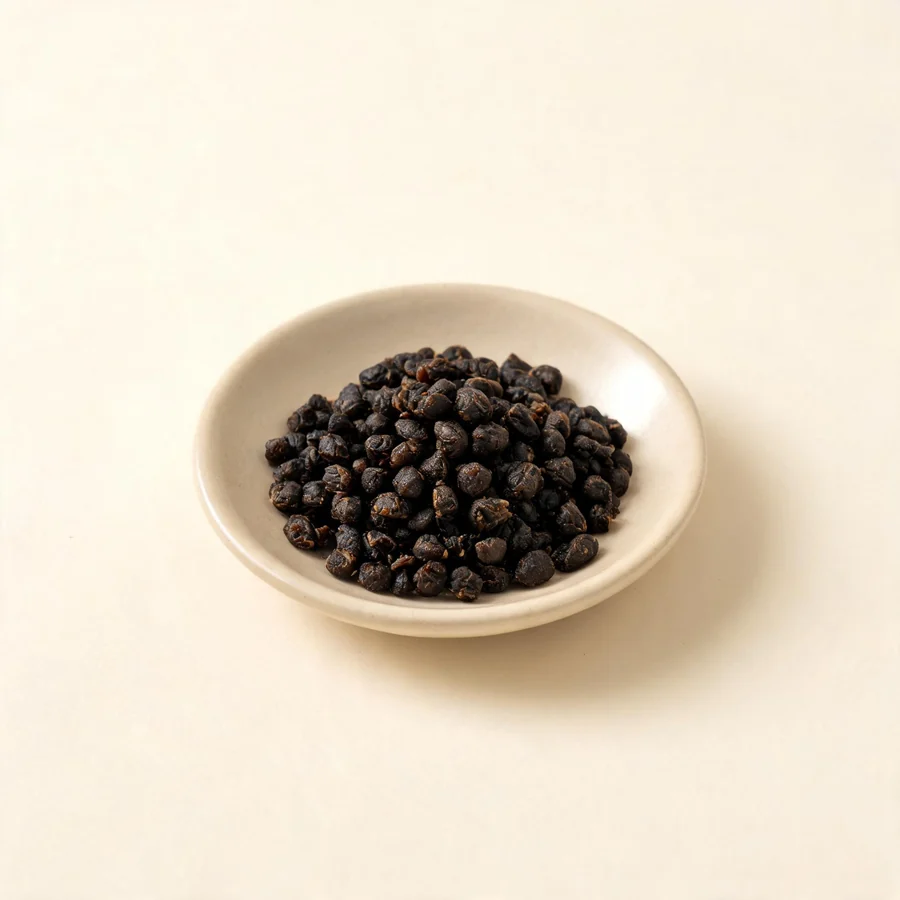
| Cool poultice | A small quantity of fermented bean is mashed with a little water to a soft paste, spread on clean gauze and laid on an intact, hot, itchy patch for no more than 15 minutes. Remove it at once if the skin stings, and wash the area afterwards. |
| Charred powder | The traditional preparation is dry-fried to charcoal and ground to a fine powder for a minor wound. This is not recommended for home use: a non-sterile powder on broken skin risks infection, and modern wound care is safer. |
Patch test and cautions
Patch test first, keep the application short and small, and never apply to broken, ulcerated or infected skin, to the face or near the eyes. Stop if itching or redness increases. Anyone with soy allergy should not use it on the skin at all, since the allergenic proteins are still present, and a poultice is not a treatment for a spreading rash or a febrile illness.
Safety for skin use
What to check before recommending or using it, including the cautions that matter most for skin patients.
Do not use, or use with caution
- Soy allergy. The bean is fermented soybean and the proteins survive fermentation, so a person with soy allergy should avoid it internally and on the skin.
- Stomach Qi rebelling upward with nausea and vomiting. A light, ascending dispersing substance adds to the wrong direction and can make the nausea worse.
- A rash that is deep, spreading, blistering or accompanied by high fever. This is not a surface pattern and a mild exterior medicine delays proper assessment.
- Warfarin and other vitamin K antagonists. Fermentation produces vitamin K2, which opposes these drugs directly; see the interactions below.
Pregnancy and breastfeeding
Standard medicinal doses are generally regarded as acceptable when there is a clear exterior pattern, and some classical sources describe the bean as calming the fetus. The practical rule is that a dispersing medicine is used for an indication and not as a supplement, and the decision belongs to a practitioner. During breastfeeding the concern is different: the classical sources warn that the bean can lessen milk flow, so a mother working to establish lactation should avoid it. A short course for a clear indication after delivery is unlikely to cause harm, but it should be brief.
Interactions
- Warfarin and other vitamin K antagonists. The fermentation organisms produce menaquinone-7, a form of vitamin K2 that supports clotting-factor synthesis and directly opposes the drug. Fermented soy foods have been shown to raise plasma menaquinone-7 from ordinary servings, so the effect is plausible at medicinal doses. Anyone stabilised on warfarin should either leave the bean out or have INR checks arranged.
- Other anticoagulants and antiplatelet drugs. That vitamin K route is not relevant here, and an effect of the bean on platelets is not established. Mention it to the prescriber rather than assume it is inert.
- Monoamine oxidase inhibitors. Fermented foods are rich in amines, and people taking an MAOI are commonly warned about such foods. No case involving this bean is documented, but the food chemistry makes the caution reasonable.
- Hormone-sensitive treatment. Soy isoflavones have weak oestrogenic activity in the laboratory, and a theoretical interaction with tamoxifen or an aromatase inhibitor has been raised. No case report exists at medicinal doses, so this is a reason to disclose rather than to avoid.
Allergy and patch testing
Soy allergy is the main risk, and it is a true allergy rather than an intolerance, so a history of wheeze, swelling or urticaria after soy products is a reason to avoid the bean entirely. Fermented foods can also trigger symptoms in people with histamine sensitivity, and a rash or flushing after eating them is worth noting. A patch test is sensible before a poultice, but it does not predict a reaction to the decoction.
General safety references
General references for herbal hepatotoxicity and herb-drug interactions; they are not specific to this herb.
- Review article: Herbal hepatotoxicity - an update on traditional Chinese medicine preparations. Alimentary Pharmacology & Therapeutics, 2014. PMID: 24844799.
- Interactions between herbal medicines and prescribed drugs: an updated systematic review. Drugs, 2009. PMID: 19719333.
- Warfarin and food, herbal or dietary supplement interactions: a systematic review. British Journal of Clinical Pharmacology, 2021. PMID: 32478963.
Evidence
The classical record is quoted with its source. The modern note states the level of evidence plainly.
Classical record
豉,味苦,寒,无毒。主伤寒头痛寒热,瘴气恶毒,烦躁满闷,虚劳喘吸,两脚疼冷。又杀六畜胎子诸毒。
Fermented bean is bitter, cold and free of poison. It governs the headache and alternating chill and fever of cold damage, malignant miasmic toxin, irritable restlessness with chest fullness, the panting of consumptive exhaustion and cold aching legs. It also neutralises the poisons of the unborn young of livestock.
Ming Yi Bie Lu (Supplement to the Classic of Materia Medica) - The oldest clear profile: cold, bitter, safe, and aimed at fever with chest oppression and restlessness.
下气,调中。治伤寒温毒发痘,呕逆。得葱则发汗,得盐则能吐,得酒则治风,得薤则治痢,得蒜则止血,炒熟则又能止汗。
It lowers Qi and harmonises the middle. It treats warm-toxin eruptions in cold damage, and vomiting. With scallion it promotes sweating, with salt it induces vomiting, with wine it treats Wind, with Chinese chives it treats dysentery, with garlic it stops bleeding, and dry-fried it can check sweating.
Ben Cao Gang Mu (Compendium of Materia Medica), Li Shizhen - The line about warm-toxin eruptions is the classical basis for using the bean in eruptive heat rashes, and the rest explains why its direction changes with its partner.
Modern evidence
Evidence status
- No clinical trial of Dan Dou Chi in skin disease was found for this page. The uses described here rest on the classical record and on clinical tradition, and no claim of proven benefit in urticaria, chickenpox or any other eruption is made.
- The one well-established modern fact is nutritional: fermentation by Bacillus species produces menaquinone-7, a vitamin K2 that interacts with warfarin. That is a pharmacological and safety finding, not evidence about the skin.
- Soy isoflavones such as genistein and daidzein have been studied for weak oestrogenic and antioxidant activity in the laboratory. Those are cell and animal findings, and they do not establish an effect on skin inflammation in people.
PubMed records
Selected real PubMed records for this herb's species or its constituents, chosen by species name and title relevance. They are references for the non-TCM discussion above, not proof that the herb treats any skin condition.
- Douchi (fermented Glycine max Merr.) alleviates atopic dermatitis-like skin lesions in NC/Nga mice by regulation of PKC and IL-4.. BMC complementary and alternative medicine, 2016. PMID: 27776525 (skin-related record).
- Effect of Hataedock Treatment on Epidermal Structure Maintenance through Intervention in the Endocannabinoid System.. Evidence-based complementary and alternative medicine : eCAM, 2020. PMID: 32063982 (skin-related record).
Dose and forms
Skin-practice dosing and the preparations that suit skin complaints.
| Form | Dose and notes |
|---|---|
| Decoction | 6 to 12 g daily, added to the pot with the other herbs and decocted normally. For skin use it almost always supports another herb rather than working alone, and 10 to 15 g is the range when it is the main exterior medicine. |
| Granules and pills | Follow the manufacturer's label for concentrated granules, because the ratio of raw herb to granule varies widely. Pills are a traditional form and are used where a decoction is inconvenient. |
| Course length | Short courses of a few days to two weeks, matching the length of an exterior pattern. The bean is not a maintenance medicine, and a rash that persists beyond that needs assessment. |
The person shapes the dose more than the medicine does. An elderly, thin or dry patient does better near the lower end, while a robust adult in the full grip of an exterior pattern can take more. Raising the amount will not turn the bean into a forceful diaphoretic, because its action is light by nature. The practical limit is the gut: a generous helping loosens the stool before it achieves much else.
Citations and further reading
Only real sources are listed: the classical materia medica passages quoted above, and the source works behind the botanical and safety statements.
- Ming Yi Bie Lu (Supplement to the Classic of Materia Medica), Tao Hongjing, Southern and Northern Dynasties - classical entry quoted above.
- Ben Cao Gang Mu (Compendium of Materia Medica), Li Shizhen, 1578 - classical entry quoted above.
- Pharmacopoeia of the People's Republic of China, Semen Sojae Praeparatum monograph - accepted raw material, processing and quality requirements.
- Modern evidence statement: based on nutritional and pharmacological literature on menaquinone-7 and soy isoflavones, presented as a statement about the level of evidence rather than as a cited skin finding.
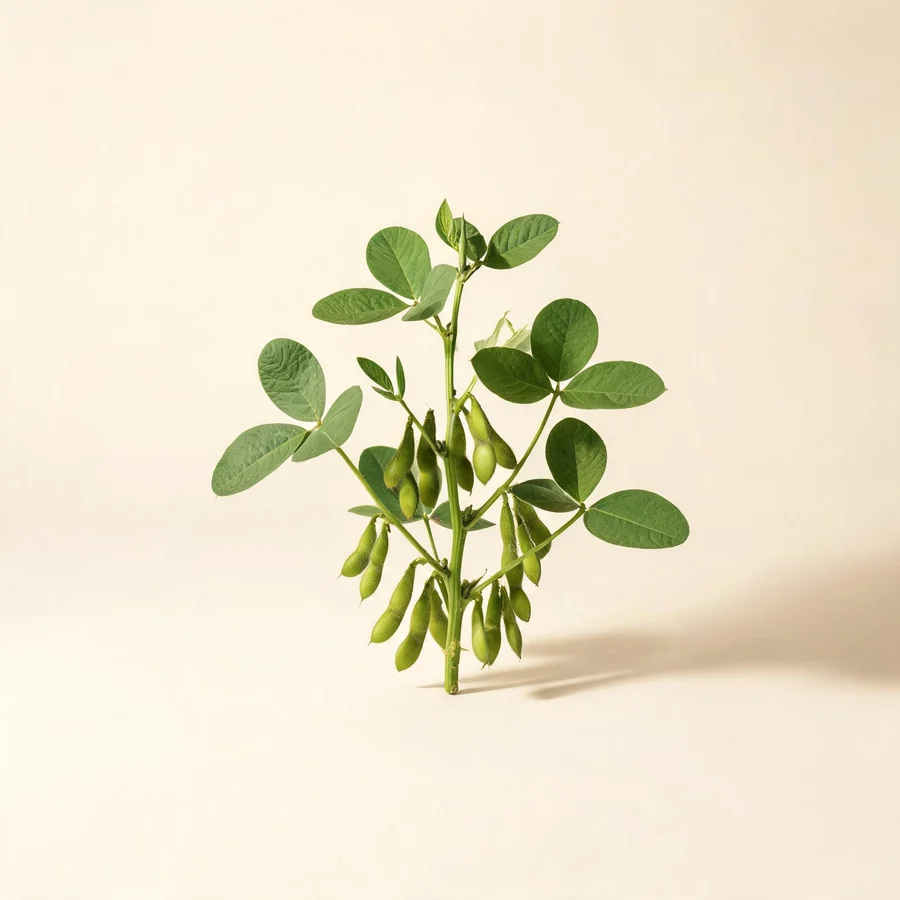
- Botanical description: botanical literature on Glycine max, Fabaceae, and the fermentation process used for the medicinal product.
Educational reference for qualified practitioners. This page is not medical advice, and skin conditions should be diagnosed by a clinician before treatment.