Skin profile
Where this herb sits in skin practice: the pattern it corrects, the skin signs it suits, and what it should not be used for.
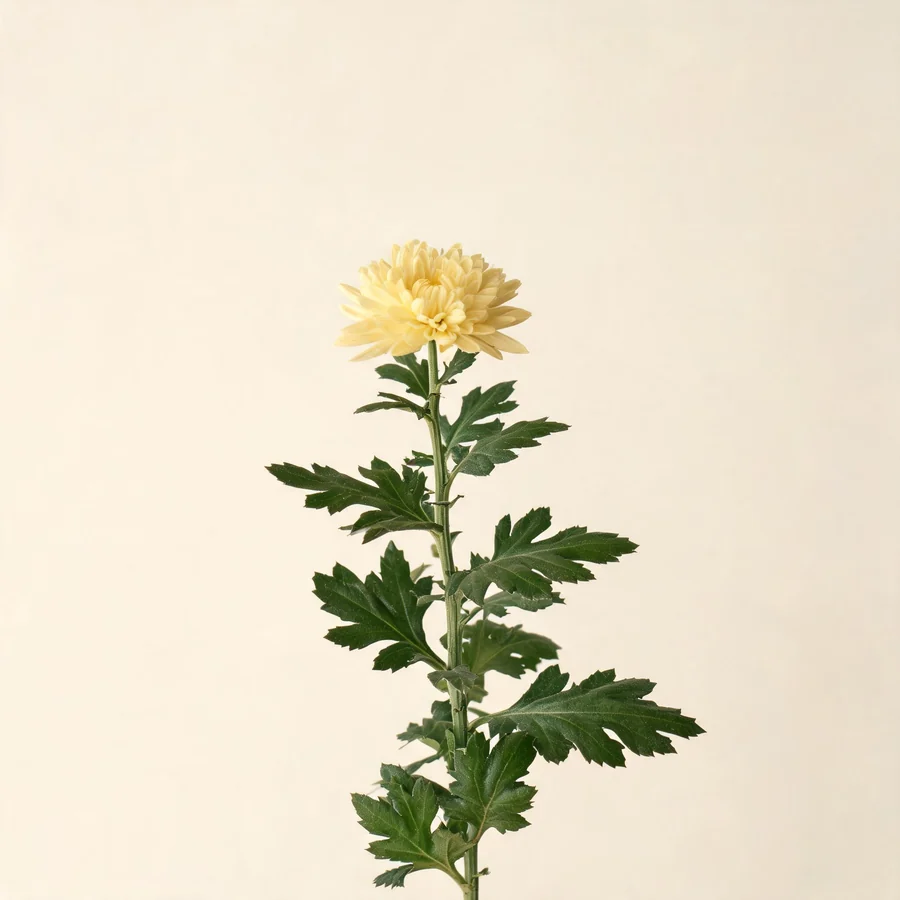
Ju Hua is the mild end of the cooling flowers: useful at the start of a hot rash, on a flushing face, and as a tea that can be repeated when a bitter root would be too much.
Skin signs that suggest it
- A red, itchy rash that appears with a sore throat, a feverish cold or a sudden change to hot weather (wind-heat at the surface)
- Flushing and burning of the cheeks, red eyes and a short temper (Liver fire rising to the face)
- Small red papules and pustules on an oily, flushed face that flare after alcohol, stress or a late night
- Red, hot, tender boils or inflamed follicles with redness spreading around them (heat toxin)
- A red tongue edge with a thin yellow coating and a wiry, rapid pulse
When it is not the right herb
Not for the rash of a cold pattern: pale or blanchable spots with chills, a clear runny nose and no sore throat belong to wind-cold, and a cooling flower given at that stage deepens the chill. Not for pale, dry, cold skin with no heat sign, and not for a person with cold limbs, loose stools and a poor appetite, where the coolness dulls digestion further. Not for anyone with a daisy-family allergy, and not in large daily doses for months on end, because the cooling effect accumulates even in a mild herb.
What it does for skin
Skin-relevant actions only. Each one describes a mechanism in TCM terms and what it looks like on the skin.
Lifts wind-heat off the surface
A hot rash that arrives with a sore throat, a feverish cold or the first hot days of summer is read as wind-heat sitting at the surface, and the flower's light dispersing quality moves it outward. The action is gentle, which is the point: it can be given to a child or a sensitive adult without the drying that stronger surface herbs cause. It is used at the start of an eruption, not after the skin has become dry and thickened.
Clears heat toxin from boils and inflamed follicles
The yellow flower in particular is recorded for boils, abscesses and skin infection, where heat has concentrated into a hard, red, tender swelling. It is a supporting herb in that setting, working with honeysuckle and liquorice, and it is chosen when the lesions are on the face or the head because the flower's lightness carries upward. It does not replace a toxin-clearing root such as Huang Lian in a severe infection.
Settles the Liver fire that flushes the face
Flushing with burning, visible vessels and papules that worsen with temper, alcohol or sleeplessness is read as Liver fire rising, and the flower enters the Liver and cools it. The effect is on the heat behind the flush rather than on the vessels themselves, so it is a supporting herb for a persistent redness and not a way to remove capillaries. It is combined with herbs that cool the Blood and clear the Stomach.
Cools without drying, so it can be repeated
This is a property read as an action. Most herbs that clear heat from the skin are bitter and drying and can only be used for a short time; the chrysanthemum is sweet as well as bitter and only slightly cool, so it can be taken as a weak infusion over weeks while a hot rash settles. The limit is the digestion, which a cool flower will eventually dull, rather than the skin.
Skin conditions it is used for
Mapped to the condition pages on this site. The pattern column shows what the skin is doing when this herb is the right choice.
| Condition | Pattern | Why it suits | Typical setting |
|---|---|---|---|
| Boils | Heat toxin with a red, hot, tender swelling | A boil that is red, raised and sore, especially on the face or the neck, is the heat-toxin picture the yellow flower is recorded for. It is used early, while the lesion is still hard, as a supporting herb with honeysuckle and liquorice rather than as the lead. A boil with spreading redness, fever or a facial site needs medical assessment, and a flower is no substitute for that. | Ju Hua, Jin Yin Hua and Gan Cao in a heat-clearing formula |
| Acne | Heat toxin with a flushed face and inflammatory papules | Inflammatory acne with red papules, pustules and a face that flushes suits the two actions together: heat toxin for the lesions and Liver fire for the flush. The flower is a light herb in that formula, added where the person is young, hot and reactive rather than deep and congested. It is not a treatment for comedonal acne and it will not replace the stronger heat-clearing roots. | Yin Qiao San modified with Ju Hua, or with Lian Qiao and Mu Dan Pi |
| Rosacea | Liver fire rising with flushing and papules | Rosacea-type redness that burns, flushes with stress or alcohol and carries small papules is read as fire rising to the face. The flower's entry into the Liver and its ascending nature make it a reasonable supporting herb, and it is paired with Blood-cooling and Stomach-clearing herbs. It is not for the dry, photosensitive type with no heat sign, and it does not remove established vessels. | Ju Hua with Mu Dan Pi, Zhi Mu and Lian Qiao |
| Heat rash | Summer heat held at the surface with small red papules | The small red itchy papules of heat rash in hot, humid weather are read as heat trapped at the surface, and a light cooling flower that disperses is a natural fit. It is used as a weak infusion and, in practice, as a cooled rinse over the affected area. The main treatment is cooling the skin and reducing sweat, and the flower supports that rather than replacing it. | Ju Hua with Bo He and Sang Ye as a light infusion |
| Urticaria | Wind-heat with red wheals after a hot cold | Red wheals that rise and fade, especially when the attack began with a feverish cold or arrives with a sore throat, are read as wind-heat at the surface. The flower is a secondary herb here, added for the surface heat rather than for the wheals themselves, and it is combined with the wind-releasing herbs that do the main work. Swelling of the lips or tongue, wheeze or difficulty breathing with wheals needs urgent medical help. | Ju Hua with Fang Feng and Jing Jie in a wind-heat formula |
Combinations for skin
Herbs it is paired with when the skin, not an internal organ, is the target.
| Partner | Ratio | Why the pair is used |
|---|---|---|
| Jin Yin Hua | 10 to 15 g each | Honeysuckle clears heat toxin across a wide range and lifts wind-heat off the surface, while the flower is lighter and reaches the head and the face. Together they suit a hot, red boil or a flushed rash with a sore throat, and they are the pair most often used when a skin infection begins with a cold. Honeysuckle carries the detoxifying weight; the chrysanthemum lightens the heat above it. |
| Gan Cao | 5 to 10 g liquorice with 6 to 10 g flower | Liquorice is the harmonising herb of the tradition, and with chrysanthemum it makes the mildest of the heat-toxin combinations. It is used for a sore throat with a rash, for a small boil in a person who cannot take bitter cold roots, and as the base of a cooling drink. It is not a combination for a spreading infection, where liquorice adds nothing to the toxin-clearing. |
| Sang Ye | 10 g mulberry leaf with 6 to 10 g flower | The classical wind-heat pair, in which mulberry leaf takes the Lung and the cough while the flower takes the head and the eyes. Skin practice borrows the pair for a hot rash that comes with a cough or a sore throat, and the proportions keep the flower light. Mulberry leaf moistens where the flower dries, so the pair suits a rash on slightly dry skin better than the flower alone. |
| Bo He | 3 to 6 g mint with 6 to 10 g flower | Mint is acrid, and it disperses far more strongly than the flower, which is cooling and settling, so the pair covers both the surface and the heat beneath it. It is used as a light infusion for a hot rash with a blocked nose or a sore throat. Mint is the harsher of the two on a delicate stomach, which is why it goes in at the smaller weight. |
Safety for skin use
What to check before recommending or using it, including the cautions that matter most for skin patients.
Do not use, or use with caution
- Cold and weak digestion: cold limbs, loose stools, a poor appetite and discomfort after cold food or drink. The flower's coolness and slight bitterness dull the appetite and loosen the stool further in that picture.
- Wind-cold at the surface: chills that outweigh the fever, a clear runny nose and no sore throat. A cooling dispersing flower given at the onset of a cold of that shape is said to drive the cold deeper.
- Asteraceae allergy: anyone who reacts to ragweed, daisy, marigold or chamomile should steer clear of the tea and of the dried flower instead of testing a little of it.
- Daily medicinal doses over months, particularly in a depleted or elderly person, because the cooling effect accumulates in the digestion even though the flower itself is mild.
Pregnancy and breastfeeding
Widely drunk as an ordinary tea in pregnancy, and it does not appear among the herbs the classics warn against. A medicinal decoction is still a different exposure from a weak cup: the flower cools, so a pregnancy with cold limbs, loose stools or a past miscarriage is not one to chill in quantity. Weak tea in small amounts is generally regarded as acceptable; concentrated decoctions taken to lower blood pressure or ease headache belong with a practitioner's advice. The same applies while breastfeeding, where a cup or two is unlikely to matter and a daily strong decoction is a different thing.
Interactions
- Tacrolimus, ciclosporin and sirolimus: a case report describes toxic blood levels of tacrolimus in a transplant recipient who drank a herbal tea containing chrysanthemum, with laboratory work confirming inhibition of the enzyme that clears it. Anyone on these medicines should treat the tea as a possible reason for levels climbing, and tell the prescriber.
- Blood pressure medicines: animal and laboratory work reports a mild lowering effect, which could add to a prescribed antihypertensive. What that looks like in practice is dizziness when standing up, so readings are worth measuring rather than guessing at.
- Warfarin and other anticoagulants: the flower's flavonoids affect platelet behaviour in the laboratory, with no clinical interaction documented. Someone whose anticoagulation sits finely balanced should raise the tea at the next review and report any unusual bruising.
- Digoxin, and other medicines pumped out of cells by P-glycoprotein: laboratory work suggests the flower inhibits that transport protein, which in theory raises their concentration. Where the drug has a narrow therapeutic index, that is a reason not to drink large daily amounts.
Allergy and patch testing
The daisy family is the specific risk. Anyone sensitised to ragweed, marigold or chamomile may react to chrysanthemum too, with a contact rash, itchy eyes, sneezing or, rarely, chest tightness, and such a person should avoid it rather than patch test it. A cooled flower wash is the more likely route to a skin reaction, so any preparation applied to the skin is tested on a small area first.
General safety references
General references for herbal hepatotoxicity and herb-drug interactions; they are not specific to this herb.
- Review article: Herbal hepatotoxicity - an update on traditional Chinese medicine preparations. Alimentary Pharmacology & Therapeutics, 2014. PMID: 24844799.
- Interactions between herbal medicines and prescribed drugs: an updated systematic review. Drugs, 2009. PMID: 19719333.
- Warfarin and food, herbal or dietary supplement interactions: a systematic review. British Journal of Clinical Pharmacology, 2021. PMID: 32478963.
Evidence
The classical record is quoted with its source. The modern note states the level of evidence plainly.
Classical record
主诸风头眩、肿痛,目欲脱,泪出,皮肤死肌,恶风湿痹,利血气。
It treats giddiness from wind of any kind, swelling with pain, eyes that feel as though they would leave the head, and tearing, and it also addresses dead skin and the ache that wind-damp obstruction brings, while benefiting blood and qi.
Shen Nong Ben Cao Jing (Divine Husbandman's Classic of Materia Medica) - The oldest description puts the surface and the skin in the same list as the head and the eyes, which is the licence for using the flower on a rash at all.
凡花皆主宣扬疏泄,独菊花则摄纳下降,能平肝火,熄内风,抑木气之横逆。
Every flower disperses and vents, yet this one alone gathers inward and moves down. It calms Liver fire, puts out internal wind, and holds back the sideways surging of wood qi.
Ben Cao Zheng Yi (Seeking the Truth of the Classic Materia Medica) - This is where the notion began that this flower settles instead of dispersing, which is why a flushing face suits it better than an eruption that needs to surface.
Modern evidence
Evidence status
- Laboratory studies of the flower and its flavonoids, including luteolin and apigenin, report anti-inflammatory, antibacterial and antioxidant activity in cell and animal models. These are laboratory findings and do not demonstrate an effect on skin disease.
- Clinical evidence in skin conditions is very limited: Chinese-language reports describe the flower mainly as one component of multi-herb formulas for acne, boils and wind-heat rashes, and no adequately controlled trial of the single herb in a skin condition was identified.
- Regulatory status: the dried flower head is an accepted herbal substance in the Chinese Pharmacopoeia. The information here describes traditional practice and the state of the evidence, not a claim of proven benefit.
PubMed records
Selected real PubMed records for this herb's species or its constituents, chosen by species name and title relevance. They are references for the non-TCM discussion above, not proof that the herb treats any skin condition.
- Chrysanthemi Flos extract alleviated acetaminophen-induced rat liver injury via inhibiting oxidative stress and apoptosis based on network pharmacology analysis.. Pharmaceutical biology, 2021. PMID: 34629029 (pharmacology or review record).
Dose and forms
Skin-practice dosing and the preparations that suit skin complaints.
| Form | Dose and notes |
|---|---|
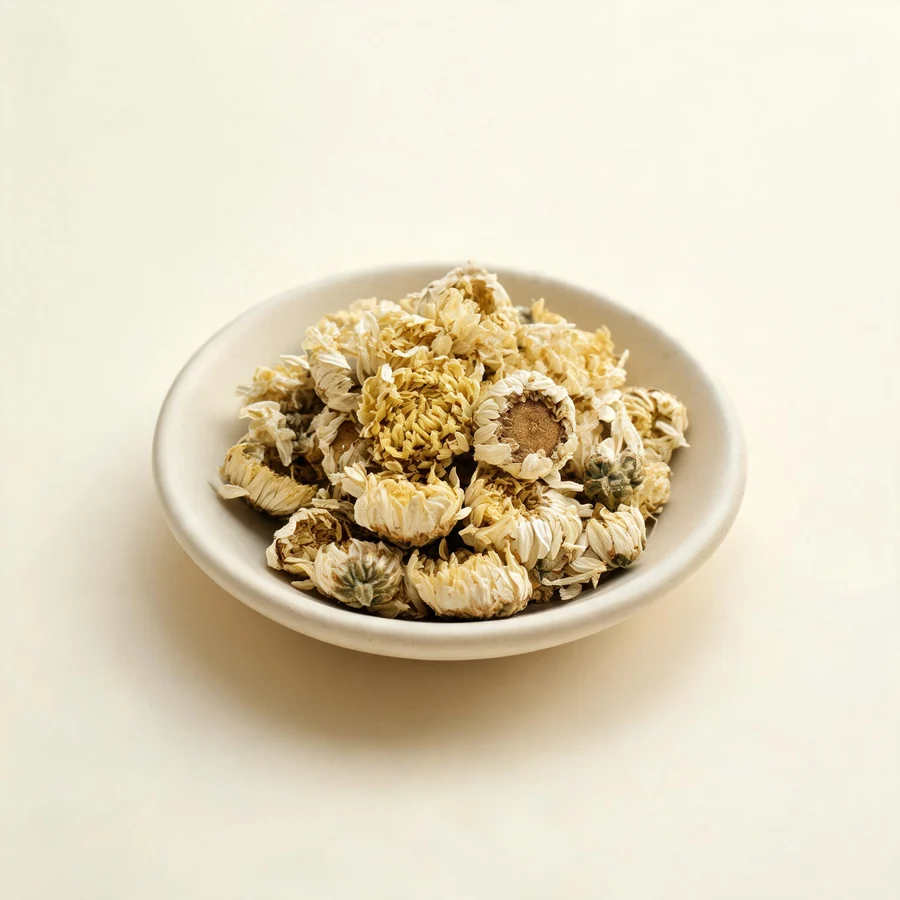
| Infusion | 3 to 5 g of dried flower heads in a cup with a lid, left to steep five to ten minutes, up to two or three cups a day. Keeping the cup covered holds the aromatic fraction in the drink. |
| Decoction in a formula | 5 to 10 g daily with other herbs. In a surface formula it is often added for the final five to ten minutes, so that the volatile oil is not boiled off. |
| Children | Between a third and a half of the grown-up amount for a child at school, as a weak tea and for a few days only, because cooling herbs chill a child's digestion easily. |
| Course length | A weak infusion can be taken over weeks for a flushing tendency; a medicinal decoction is used for days to a couple of weeks and stopped when the heat signs settle. |
The window is narrow because the flower is gentle: under about 5 g it is a drink, and over 15 g it is being asked to do a job better suited to stronger herbs. Form matters more than the number, since boiling it uncovered for a long time drives off the aromatic part and leaves a bitter liquid with less to offer. White and yellow cultivars share the same range, and the choice between them is a question of emphasis rather than of dose.
Citations and further reading
Only real sources are listed: the classical materia medica passages quoted above, and the source works behind the botanical and safety statements.
- Shen Nong Ben Cao Jing (Divine Husbandman's Classic of Materia Medica), attributed compilation of the Han period - classical entry quoted above.
- Ben Cao Zheng Yi (Seeking the Truth of the Classic Materia Medica), Zhang Yin'an, Qing dynasty - classical entry quoted above.
- Pharmacopoeia of the People's Republic of China, Chrysanthemi Flos monograph - source for the accepted botanical source, part used and quality requirements.
- Botanical identification: taxonomic literature on Chrysanthemum morifolium, Asteraceae, including the named medicinal cultivars.
- Modern evidence statement: summarised from laboratory literature on the flower's flavonoids, presented as a comment on the level of evidence rather than as a cited finding.
- Case-report literature on chrysanthemum tea and tacrolimus blood levels - the basis of the interaction note above.
Educational reference for qualified practitioners. This page is not medical advice, and skin conditions should be diagnosed by a clinician before treatment.