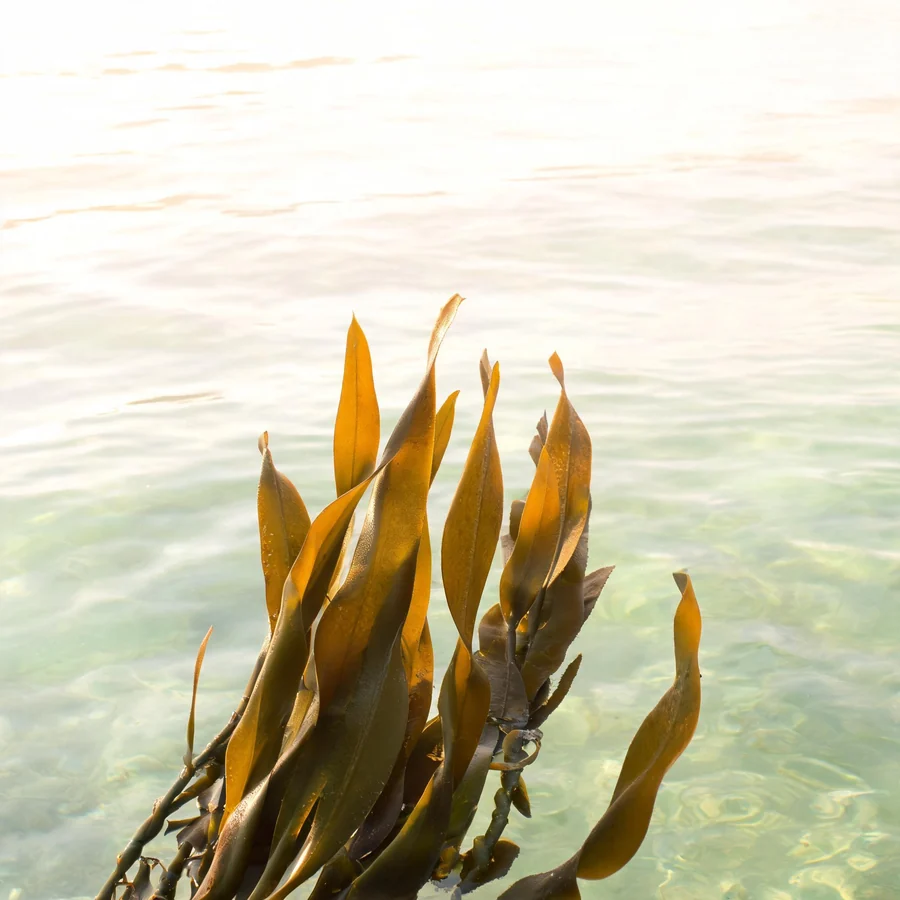
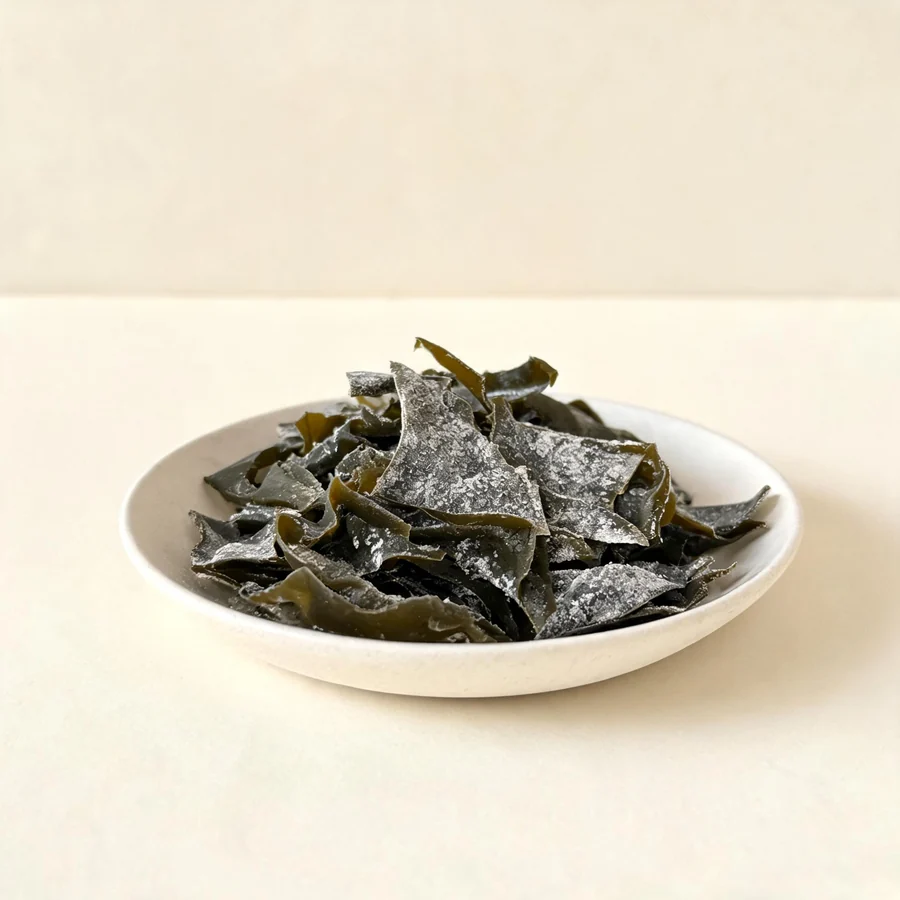
Skin profile
Where this herb sits in skin practice: the pattern it corrects, the skin signs it suits, and what it should not be used for.
Kun Bu is a softener, not a treatment: it is used where tissue has set firm, and it is limited by its iodine load. It does nothing for a red, weeping or infected lesion, and a lump needs a diagnosis before it needs a herb.
Skin signs that suggest it
- A raised, firm scar that has grown beyond the original wound and itches or aches
- Firm, rubbery lumps under the skin that can be moved a little but not flattened
- Hardened, tight skin that cannot be pinched up, over the fingers, hands or forearms
- A cystic swelling under the skin with a bluish tinge and a doughy feel
- A greasy or slippery tongue coat, and a wiry or slippery pulse
When it is not the right herb
Not for red, hot, weeping or infected skin, where cooling and toxin-resolving herbs are needed and a salty seaweed adds nothing. Not in pregnancy, because of the mineral load on the fetal thyroid. Not for anyone with an overactive thyroid or a nodular goitre, and not for anyone preparing for radioiodine on a restricted-iodine diet. Not for a new lump that has not been examined, and not as a substitute for a diagnosis. And not for a cold, weak digestion with loose stools, where a cold, slippery seaweed makes the stool looser still.
What it does for skin
Skin-relevant actions only. Each one describes a mechanism in TCM terms and what it looks like on the skin.
Softens hardness in a scar or a lump
Salt is what does the work in this reading of the herb, and the logic is simple: a salty substance is thought to loosen what has hardened, so a marine alga is used where tissue has lost its give. In skin practice that means a keloid that stands proud and feels firm, a lipoma or cyst that is discrete and rubbery, and the bound-down tissue of an old scar. The herb does not remove a lump and is not offered as a way to do so; it is one part of a formula that also moves blood or resolves phlegm, and it is taken over months.
Dissipates phlegm that has formed a nodule
In this system Phlegm means material that has thickened because it stopped circulating. Where it collects between skin and muscle it can be felt as a nodule with no clear colour of its own, and the seaweeds are the traditional choice for that state, given with fritillaria, oyster shell and prunella. Laboratory work on kelp describes gels that take up water and swell, which is interesting but not the same claim, and nothing clinical follows from it.
Cools a nodule that has become hot and tender
A lump that has turned warm and tender changes the picture: the surrounding tissue is hot, the mouth may be dry and the nodule hurts when pressed. There the seaweed's cooling is useful and it is given with bitter herbs that drain, not on its own. A swelling that is quiet, soft and cool does not want cold at all, and a warming, dispersing strategy is the better match.
Carries a caution larger than its action
Iodine is why this herb is treated with more care than other softeners. Reported figures for dried kelp run from about 2,000 to beyond 5,000 micrograms of iodine in every gram, so a single medicinal dose can dwarf a whole day of ordinary eating, and the gland may either slow down or be driven harder. Thyroid tests come before a course and are repeated during it, and what limits the dose is the mineral load rather than the weight of thallus.
Skin conditions it is used for
Mapped to the condition pages on this site. The pattern column shows what the skin is doing when this herb is the right choice.
| Condition | Pattern | Why it suits | Typical setting |
|---|---|---|---|
| Keloids | Phlegm and blood stasis bound into a hard scar | A keloid is firm, raised and slow to change, and the tradition reads that firmness as phlegm and stagnant blood that have set in the tissue. The seaweed is included for its softening action, alongside blood-moving herbs, in the pattern where the scar is hard and dark rather than red and oozing. It will not flatten a keloid, and the realistic aim is a softer, less tender scar while injections or silicone do the main work. | Xian Fang Huo Ming Yin, modified with Kun Bu, Mu Dan Pi and Chi Shao |
| Subcutaneous lipomas and nodules | Damp-Phlegm forming discrete nodules | A soft, rubbery, discrete lump that has been present for years and does not hurt fits the damp-phlegm reading better than any other. Kun Bu is a standard component of the softening group for that picture, with fritillaria and oyster shell, and it is taken for months in a formula that also dries the dampness. A lump that is new, growing or fixed should be examined before it is treated as a nodule. | Hai Zao Yu Hu Tang, or a modified softening formula with Zhe Bei Mu and Mu Li |
| Sebaceous cysts | Phlegm in the channels with a doughy swelling | A cyst that feels doughy, moves with the skin and sometimes has a bluish tinge is read as phlegm that has collected in a space and stayed. The seaweed's softening action is used alongside herbs that dry dampness and resolve phlegm, and a cyst that becomes hot, tender or discharging is treated as toxic heat instead. Excision remains the definitive treatment, and the herb does not replace it. | Modified Hai Zao Yu Hu Tang with Zhe Bei Mu and Xia Ku Cao |
| Scleroderma | Phlegm and stasis with hardened, bound-down skin | The tight, hard skin of scleroderma is the clearest instance of tissue that will not soften, and the tradition reaches for the softening seaweeds in the phlegm-and-stasis pattern. This is supportive care at most, and it is given only alongside specialist management, since the disease can involve the lungs, gut and kidneys. Nothing on this page suggests that a seaweed alters its course. | Modified Hai Zao Yu Hu Tang, alongside specialist care |
| Skin swelling | Damp-Phlegm with a firm, cool swelling | A swelling of the skin that is firm, cool and not especially red is read as damp-phlegm rather than heat, which is the setting where a salty softener belongs. It is combined with herbs that dry dampness and move Qi, and warmth and redness would change the reading towards heat and a different formula. A swelling with fever, spreading redness or breathlessness needs urgent assessment. | Modified Hai Zao Yu Hu Tang with Fu Ling and Chen Pi |
Combinations for skin
Herbs it is paired with when the skin, not an internal organ, is the target.
| Partner | Ratio | Why the pair is used |
|---|---|---|
| Hai Zao | 10 to 15 g of each | Sargassum and kelp are the pair that most softening formulas are built on, and they are rarely separated. Both are salty and cold, both are held to loosen hardness, and tradition rates kelp as the more powerful of the two. On skin they are used for cool, firm lumps and hard scars, never for an inflamed or weeping lesion, and both bring the same mineral caution. |
| Zhe Bei Mu | 10 to 15 g Kun Bu with 6 to 10 g Zhe Bei Mu | Fritillaria works through bitterness and cold rather than through salt, so it loosens the phlegm while the seaweed softens the mass. The two are used where a nodule has become tender, with a dry throat and a coated tongue, which is phlegm that has started to heat. Either herb alone leaves half of that picture untouched. |
| Xia Ku Cao | 10 g of each, or 10 g Kun Bu with 15 g Xia Ku Cao | Prunella is bitter, acrid and cold, and it drains the Liver fire that has clumped tissue into a lump, while the seaweed works on the lump's firmness. Cooling the process and loosening its product are two different jobs, and doing both suits a nodule that is sore and warm. It is the usual pairing when a lump comes with headaches, irritability and a bitter taste. |
| Mu Li | 10 g Kun Bu with 20 to 30 g Mu Li | The oyster shell is a heavy mineral substance; it loosens hardness and also draws down Yang that has risen, so the seaweed's work is reinforced while the headache, dizziness and anxiety that go with a hot nodule are addressed. A quiet, painless swelling gains little from the shell. The shell is decocted first, and the pair is taken over months rather than weeks. |
Formulas where it leads
- Hai Zao Yu Hu Tang (海藻玉壶汤) - The classical formula for goitre and for nodules, built on kelp and sargassum with fritillaria, tangerine peel, pinellia, angelica, chuanxiong and licorice. Its skin use is the firm, cool lump and the hard scar, taken over months; it is not a formula for a red, hot or weeping lesion, and the iodine load means thyroid function is checked first.
- Xian Fang Huo Ming Yin (仙方活命饮) - The great formula for sores and swellings, with honeysuckle, forsythia, fritillaria, angelica, peony, frankincense and myrrh. Kelp appears in some versions as the softening component for a lesion that has begun to harden, and it is used only after the acute hot phase has settled.
Safety for skin use
What to check before recommending or using it, including the cautions that matter most for skin patients.
Do not use, or use with caution
- Pregnancy. The mineral load reaches the fetus and may quieten its thyroid while the brain is still developing, so a decoction is avoided and even food amounts are discussed with a practitioner.
- Thyroid disease, whether overactive, underactive or nodular. Extra iodine can push a toxic gland harder or upset replacement therapy, and a restricted-iodine diet before radioiodine rules the herb out.
- Cold, weak digestion, with a poor appetite and unformed stools. A salty, cold, slippery seaweed tends to loosen the bowel further, so if there is a strong reason to use it the dose is kept low and the middle shielded with ginger or atractylodes.
- An unexamined lump. A nodule that is new, growing, fixed or discharging needs a diagnosis before a softening herb is considered, because treatment may hide a change rather than reveal it.
Pregnancy and breastfeeding
Best avoided as a medicine in pregnancy. The mineral passes across the placenta, and a big maternal intake may quieten the unborn thyroid at a time when the brain depends on it; kelp eaten as food in small amounts is ordinary in coastal communities, yet a prescribed decoction is another order of exposure. Its cold, downward nature is a second reason for restraint. While nursing, iodine enters milk easily, so a therapeutic dose may multiply what the baby receives, and the herb belongs only under supervision once the infant's thyroid status is known.
Interactions
- Levothyroxine and other replacement therapy. A heavy mineral load can disturb replacement and make hormone readings swing, so the herb is spaced several hours from the tablet and blood tests are repeated during a course.
- Antithyroid drugs such as methimazole, carbimazole and propylthiouracil. Iodine may blunt their effect or destabilise control, and any such combination is the prescriber's decision rather than a quiet addition.
- Digoxin. Kelp supplies a lot of potassium, and a large potassium intake can work against digoxin and unsettle the heart rhythm, especially where the kidneys are not clearing potassium well.
- Warfarin and heparin. Laboratory work on kelp polysaccharides has shown anticoagulant activity, so a therapeutic dose could in theory add to bleeding risk.
- Lithium. Lithium and iodine both bear on the thyroid, and using them together raises the likelihood of an underactive gland.
Allergy and patch testing
Reactions to kelp are uncommon, and what people call an iodine allergy is usually a sensitivity that argues for caution rather than a true immune response; anyone who has reacted to iodised contrast or to shellfish should ask before taking it. Seaweeds also take up arsenic, cadmium and lead from the sea around them, so a clean, monitored source counts for more with kelp than with a root grown on land. Patch test any preparation applied to skin, and stop if it itches, reddens or swells.
General safety references
General references for herbal hepatotoxicity and herb-drug interactions; they are not specific to this herb.
- Review article: Herbal hepatotoxicity - an update on traditional Chinese medicine preparations. Alimentary Pharmacology & Therapeutics, 2014. PMID: 24844799.
- Interactions between herbal medicines and prescribed drugs: an updated systematic review. Drugs, 2009. PMID: 19719333.
- Warfarin and food, herbal or dietary supplement interactions: a systematic review. British Journal of Clinical Pharmacology, 2021. PMID: 32478963.
Evidence
The classical record is quoted with its source. The modern note states the level of evidence plainly.
Classical record
主十二种水肿,瘿瘤聚结气,瘘疮。
It governs the twelve kinds of water swelling, goitre with knotted gatherings of Qi, and running sores.
Ming Yi Bie Lu (Supplement to the Classic of Materia Medica), attributed to Tao Hongjing - The Han-era record is the first to name goitre and water swelling together, and the running sores are the one skin-adjacent use it carries.
昆布,咸能软坚,其性润下,寒能除热散结。瘿坚如石者,非此不除。
Kelp is salty, and salt can soften hardness; its nature is moistening and downward-moving; being cold it clears heat and disperses what is knotted. Where a goitre is hard as stone, nothing else will shift it.
Ben Cao Jing Shu (Commentary on the Classic of Materia Medica), Ming dynasty - The Ming commentary states the mechanism in one line, and the stone-hard goitre aphorism is the origin of the claim that a hard lump yields to salt.
昆布之性,雄于海藻,噎症恒用之,盖取其祛老痰也。
Kelp is stronger in character than sargassum, and it is regularly used in choking obstruction because it drives out old, deep-seated phlegm.
Ben Cao Hui (Collected Materia Medica) - It ranks the two seaweeds and ties the action to old phlegm, which is the same reasoning that carries the herb to a firm subcutaneous nodule.
治水病瘿瘤,功同海藻。
It treats water disease and goitre, and its effects are the same as those of sargassum.
Ben Cao Gang Mu (Compendium of Materia Medica), Li Shizhen, 1578 - Li Shizhen treats the two seaweeds as interchangeable in action, which is why they are nearly always prescribed together.
Modern evidence
Evidence status
- Kelp alginates and fucoidan have been studied in laboratory and animal systems for anticoagulant, anti-inflammatory and immune effects, and iodine is a known modifier of thyroid function. None of this demonstrates that kelp softens a keloid, a lipoma or a cyst in a person.
- No controlled trial of Kun Bu in a skin condition was identified. Reports of seaweed for goitre are old and confounded by iodine status, and a thyroid swelling is not the same problem as a fibrous scar, so the skin use rests on the classical softening rationale rather than on measured outcomes.
- Regulatory status: the thallus is an accepted article in the Chinese Pharmacopoeia, and it is also a food. The quality questions are iodine content, species identity and heavy-metal load, and products vary widely. What this page describes is traditional practice and the state of the evidence, not a claim of proven benefit.
PubMed records
Selected real PubMed records for this herb's species or its constituents, chosen by species name and title relevance. They are references for the non-TCM discussion above, not proof that the herb treats any skin condition.
- Isolation, structural characterization and bioactivities of polysaccharides from Laminaria japonica: A review.. Food chemistry, 2022. PMID: 34530347 (pharmacology or review record).
- The Effect of Laminaria japonica on Metabolic Syndrome: A Systematic Review of Its Efficacy and Mechanism of Action.. Nutrients, 2022. PMID: 35893900 (pharmacology or review record).
Dose and forms
Skin-practice dosing and the preparations that suit skin complaints.
| Form | Dose and notes |
|---|---|
| Decoction | 6 to 12 g of rinsed, dried thallus daily within a formula. The smaller half of that range fits a soft, recent swelling; the upper half fits a firm nodule that has been present for years. Thyroid function is checked before the first dose. |
| Specialist range | Fifteen to thirty grams appears in modern practice for a stubborn thyroid swelling, but only briefly and with monitoring of the gland. That is a prescriber's figure, not one to use at home. |
| Preparation | Rinse the thallus well to clear sand and surface salt, soak it until it turns pliable, then cut and dry it before decocting. Washing reduces how much salt reaches the liquid, though the iodine stays. |
What matters here is the mineral load rather than the number of grams, so assessment comes first. Both accepted species, Laminaria japonica and Ecklonia kurome, carry the same risk, and a batch that blends them is difficult to dose evenly. Someone whose iodine intake is already adequate needs less and for a shorter time than a person with an iodine-deficiency goitre, and every course is reviewed instead of being continued on habit.
Citations and further reading
Only real sources are listed: the classical materia medica passages quoted above, and the source works behind the botanical and safety statements.
- Ming Yi Bie Lu (Supplement to the Classic of Materia Medica), attributed to Tao Hongjing - the passage on goitre and running sores is quoted in the original above.
- Ben Cao Jing Shu (Commentary on the Classic of Materia Medica), Ming dynasty - the passage on salt softening hardness is quoted in the original above.
- Ben Cao Hui (Collected Materia Medica) - the passage ranking kelp above sargassum is quoted in the original above.
- Ben Cao Gang Mu (Compendium of Materia Medica), Li Shizhen, 1578 - the passage equating kelp with sargassum is quoted in the original above.
- Thallus Laminariae seu Eckloniae monograph, Pharmacopoeia of the People's Republic of China - accepted sources, part and quality requirements.
- Iodine content and thyroid risk: public health and nutrition literature on seaweed iodine, summarised as a range rather than cited as a finding.
- Modern evidence statement: based on published laboratory work on kelp polysaccharides, presented as a statement about the level of evidence.
Educational reference for qualified practitioners. This page is not medical advice, and skin conditions should be diagnosed by a clinician before treatment.