Skin profile
Where this herb sits in skin practice: the pattern it corrects, the skin signs it suits, and what it should not be used for.
Ma Huang is a surface opener with a real cardiovascular cost. Its skin role is limited to a cold, sealed pattern in a person whose heart and blood pressure allow it, in a small dose for a few days, under supervision.
Skin signs that suggest it
- Pale or light-red wheals that rise on chilled skin and settle with warmth
- No sweating with the skin signs, and a dislike of cold and draughts
- Sudden puffiness around the eyes and face after a chill, with scanty urine
- Cold, tight, thickened skin with stiffness that is worse in cold damp weather
- Chills, body aches and a tight floating pulse, with a thin white tongue coat
When it is not the right herb
Not where sweat comes without effort, and not for night sweats, a dry mouth or a red tongue with little coat: the surface is already open and the fluids are already leaking. Not for red, hot, burning wheals or any skin that is hot and inflamed. Not with heart disease, high blood pressure, an arrhythmia, hyperthyroidism, glaucoma, an enlarged prostate, diabetes, anxiety or insomnia. Not with a monoamine oxidase inhibitor, and not in pregnancy or breastfeeding. Not for weight loss, performance or a chronic skin tendency, and not as a concentrated extract.
What it does for skin
Skin-relevant actions only. Each one describes a mechanism in TCM terms and what it looks like on the skin.
Opens a sealed surface and lets cold out through sweat
The classic indication is a surface that has shut: chills, body aches, no sweat, and skin signs that appear with the cold. The stem is described as light, ascending and dispersing, and its warmth pushes the pathogen out through the pores. On the skin that means pale wheals or a cold, tight patch that came on with a chill. The dose is small and the course short, because the same action that opens the surface will drain a person who is already sweating.
Moves water and reduces swelling at the surface
Ma Huang opens the Lung, and the Lung is treated as the upper source of the water pathways; when it opens, fluid pooled at the surface can descend and leave as urine. That is the logic of wind-water: a puffy face and eyelids after a chill, with scanty urine and no sweat. The change is seen as more urine rather than more sweat, and the effect is the reason the stem appears in oedema formulas as well as in cold ones.
Frees the Lung so the skin can settle
The framework pairs the Lung with the skin and body hair, and a tight chest with tight skin is read as one problem. Opening the Lung releases the surface, which is why the same herb serves a wheeze and a wind-cold rash. The dose for this is smaller than the dose for a sweat, and the honey-fried form is used when the aim is to settle rather than to disperse.
Warms and unblocks cold-damp in the channels
Where cold and damp have settled into the channels and the skin has become cold, tight and hard, the stem is used in a warming, dispersing formula with Gui Zhi and Fang Feng. It is a support in that picture, not a cure, and the disease it most often accompanies needs medical management. The aim is to soften and warm the surface while the deeper treatment continues.
Skin conditions it is used for
Mapped to the condition pages on this site. The pattern column shows what the skin is doing when this herb is the right choice.
| Condition | Pattern | Why it suits | Typical setting |
|---|---|---|---|
| Urticaria | Wind-Cold at the surface: pale wheals, worse with cold, no sweat | Pale or light-red wheals that appear on chilled skin, settle with warmth and come with chills and no sweating are the wind-cold picture. The stem is paired with Gui Zhi to open the surface, and the course is short and supervised because of the cardiovascular load. Red, burning wheals provoked by heat are wind-heat and are made worse by this warming herb. | Gui Zhi Ma Huang Ge Ban Tang, or Ma Huang with Gui Zhi and Fang Feng |
| Facial swelling | Wind-Cold-Water invading the Lungs: sudden puffiness after a chill | Sudden puffiness around the eyes and face after exposure to cold, with scanty urine and no sweat, is wind-water: the Lung's control of water has been disturbed at the surface. The stem opens the Lung above so the fluid can descend, and it is used with herbs that support the Spleen. Eyelid swelling with breathlessness, throat tightness or a rash is an emergency and needs immediate care, not a formula. | Yue Bi Tang, with Shi Gao and Bai Zhu |
| Scleroderma | Painful obstruction with Wind-Cold-Damp: skin tight, cold and stiff | In the wind-cold-damp pattern the skin is tight and cold, the joints ache in damp weather and warmth helps. The stem is a warming dispersing support inside a formula, and it does not alter the course of the disease, which needs specialist management. Anyone with this diagnosis should be under medical care, and the herb is never a substitute for it. | A modified Juan Bi Tang or Xiao Qing Long Tang, inside specialist care |
| Skin swelling | Wind-water with puffy swelling of the upper body | A puffy, non-red swelling of the face and upper body after a chill, with scanty urine, is the wind-water pattern that responds to opening the Lung. The stem is combined with herbs that drain water below, and the dose is kept low. A swelling that is hot and red, or that comes with breathlessness, chest pain or reduced urine, needs urgent assessment. | Yue Bi Jia Zhu Tang, or with Fu Ling and Bai Zhu |
Combinations for skin
Herbs it is paired with when the skin, not an internal organ, is the target.
| Partner | Ratio | Why the pair is used |
|---|---|---|
| Gui Zhi | 6 g Ma Huang with 6 to 10 g Gui Zhi | The standard pairing for a surface that has closed. Cinnamon twig warms the channels and settles the nutritive and defensive layers from the inside, while ephedra drives the pathogen out from the outside, so the sweat is stronger than either herb produces alone. It suits a robust adult with chills, body aches and no sweat, and blood pressure and pulse are the questions to settle before use. |
| Shi Gao | 3 to 6 g Ma Huang with 15 to 30 g Shi Gao | The mineral is cold and heavy, and it outweighs the stem several times over, which checks the warmth while leaving the opening action intact. The ratio is what matters: a little stem against a lot of mineral, for a hot itchy rash with thirst and coarse breathing. Reverse it and the cooling formula turns warming. |
| Fang Feng | 6 to 10 g each | Both release Wind, but one is gentle and one is forceful. Fang Feng is the broad surface herb used for wheals and wind-damp itch, and Ma Huang adds the drive that opens a shut surface. The pair suits wind-cold urticaria and wind-water puffiness, and it is kept short because the combined dispersing force is greater than either herb alone. |
| Bai Zhu | 6 g Ma Huang with 10 to 15 g Bai Zhu | Bai Zhu strengthens the Spleen and dries Dampness, so the fluid is not simply pushed out and allowed to return. The pairing is used for wind-water swelling on a Spleen-deficient base, where the person is puffy, tired and loose-stooled. It also cushions the draining effect of the stem, and it is the combination used when the swelling keeps recurring after a cold. |
Formulas where it leads
- Yue Bi Tang (越婢汤) - The classical formula for wind-water with puffiness of the face and upper body, fever and chills, no sweat and scanty urine. Ma Huang opens the Lung and Shi Gao cools it, so fluid can descend. On a skin page it is relevant to the puffiness rather than to a rash, and it is a short course under supervision, with the blood pressure checked before and during.
- Gui Zhi Ma Huang Ge Ban Tang (桂枝麻黄各半汤) - The half-and-half formula from the cold damage text, for a surface pattern that has not resolved and has begun to itch. Each herb is given at half the strength of its full formula, which is the point: the aim is a gentle opening rather than a drenching sweat. It is the clearest classical link between this stem and an itchy skin sign.
Safety for skin use
What to check before recommending or using it, including the cautions that matter most for skin patients.
Do not use, or use with caution
- Established cardiovascular disease: high blood pressure, angina, arrhythmia, heart failure, a previous heart attack or stroke, or narrowed arteries. Ephedrine narrows blood vessels and makes the heart work harder, and the risk is not theoretical.
- Hyperthyroidism, glaucoma, an enlarged prostate, diabetes, anxiety, insomnia or tremor. The stimulant effect makes each of these worse.
- Spontaneous sweating, night sweats, a dry mouth with a red tongue and little coat, or any hot, red, inflamed skin. The herb opens a surface that is already open.
- Pregnancy and breastfeeding, and children outside specialist care. Ephedrine crosses the placenta, passes into milk and stimulates uterine muscle.
- Restricted status: this is not a self-care herb. Ephedra products were removed from the United Kingdom market in 2008, ephedrine is a prescription medicine and a regulated precursor in many countries, and the United States banned ephedrine alkaloids from dietary supplements in 2004. It is not for weight loss or performance.
Pregnancy and breastfeeding
Avoided. Ephedrine stimulates uterine muscle and raises blood pressure and heart rate, which is a burden on both mother and fetus, and there are no safety data to justify skin use in pregnancy. During breastfeeding, ephedrine passes into milk; an exposed infant may be restless, sleep badly and feed poorly, and the drug can reduce milk supply. A cold, puffy face or an itchy rash in pregnancy should be assessed and managed without this herb.
Interactions
- Monoamine oxidase inhibitors: an absolute prohibition. Ephedrine releases noradrenaline and an MAOI stops its breakdown, so the combination can produce a hypertensive crisis.
- Decongestants, amphetamines, tricyclic antidepressants and other sympathomimetics: additive stimulation of blood pressure and heart rate.
- Digoxin, antiarrhythmics and volatile anaesthetics: the herb influences cardiac rhythm and sensitises the heart to catecholamines, so it is stopped well before surgery.
- Caffeine, theophylline and other stimulants: the combination intensifies the cardiovascular and central effects and is the pattern behind many of the recorded severe cases.
- Antihypertensives and beta-blockers: the pressor effect opposes the medicine, and the combination should be managed by a prescriber rather than adjusted at home.
Allergy and patch testing
Rash and itching have been reported with ephedra products, but the reaction that matters is sympathomimetic rather than allergic: palpitations, tremor, agitation, headache and insomnia are reasons to stop at once and seek advice, not a dose to adjust. Anyone with a known sensitivity to ephedrine, pseudoephedrine or a related amine should avoid the herb entirely.
General safety references
General references for herbal hepatotoxicity and herb-drug interactions; they are not specific to this herb.
- Review article: Herbal hepatotoxicity - an update on traditional Chinese medicine preparations. Alimentary Pharmacology & Therapeutics, 2014. PMID: 24844799.
- Interactions between herbal medicines and prescribed drugs: an updated systematic review. Drugs, 2009. PMID: 19719333.
- Warfarin and food, herbal or dietary supplement interactions: a systematic review. British Journal of Clinical Pharmacology, 2021. PMID: 32478963.
Evidence
The classical record is quoted with its source. The modern note states the level of evidence plainly.
Classical record
麻黄乃肺经专药,故治肺病多用之。张仲景治伤寒无汗用麻黄,有汗用桂枝。
The ephedra stem belongs specifically to the Lung channel, so prescriptions for the Lungs reach for it repeatedly. In Zhang Zhongjing's cold damage work it appears where no sweat has broken, while cinnamon twig covers the case in which sweat has already flowed.
Ben Cao Gang Mu (Compendium of Materia Medica), Li Shizhen - Li Shizhen, 1578. The sentence gives the channel affinity and the distinction between a sealed surface and one that is already sweating, which is the whole safety logic of the herb.
麻黄轻清上浮,专疏肺郁,宣泄气机,是为治感第一要药,虽曰解表,实为开肺,虽曰散寒,实为泄邪。
Light, clear and buoyant, the stem is aimed at unblocking constraint in the Lungs and at letting the Qi mechanism move. It is the leading herb for external contraction. What is called releasing the exterior is in fact opening the Lungs, and what is called scattering cold is in fact venting the pathogen.
Ben Cao Zheng Yi (The Correct Meaning of Materia Medica) - Zhang Shanlei, 1920. The reading that the stem opens the Lung rather than simply warming the surface is the one modern practice uses, and it explains why a warm herb can serve a hot pattern in a small dose.
It releases the exterior, calms wheeze and promotes urination.
Shen Nong Ben Cao Jing (Divine Husbandman's Classic of Materia Medica) - The oldest entry, and the three uses it names are still the three the herb is known for. The original Chinese is not reproduced here.
Modern evidence
Evidence status
- Ephedrine pharmacology is well established: it is a sympathomimetic that raises blood pressure and heart rate, stimulates the central nervous system and can cause arrhythmia, myocardial infarction, stroke, seizure and psychosis in overdose, particularly alongside caffeine. This is drug pharmacology, not a dermatological finding.
- Regulatory status is part of the evidence. Ephedra-containing herbal products were withdrawn from the United Kingdom market in 2008, ephedrine is a prescription medicine, and the United States banned ephedrine alkaloids from dietary supplements in 2004.
- No controlled trial of Ma Huang in urticaria, oedema or scleroderma was identified. The skin uses rest on traditional practice, and the herb should not be used for a skin condition without medical supervision.
PubMed records
Selected real PubMed records for this herb's species or its constituents, chosen by species name and title relevance. They are references for the non-TCM discussion above, not proof that the herb treats any skin condition.
- Ephedrae herba: A comprehensive review of its traditional uses, phytochemistry, pharmacology, and toxicology.. Journal of ethnopharmacology, 2023. PMID: 36641108 (safety record).
Dose and forms
Skin-practice dosing and the preparations that suit skin complaints.
| Form | Dose and notes |
|---|---|
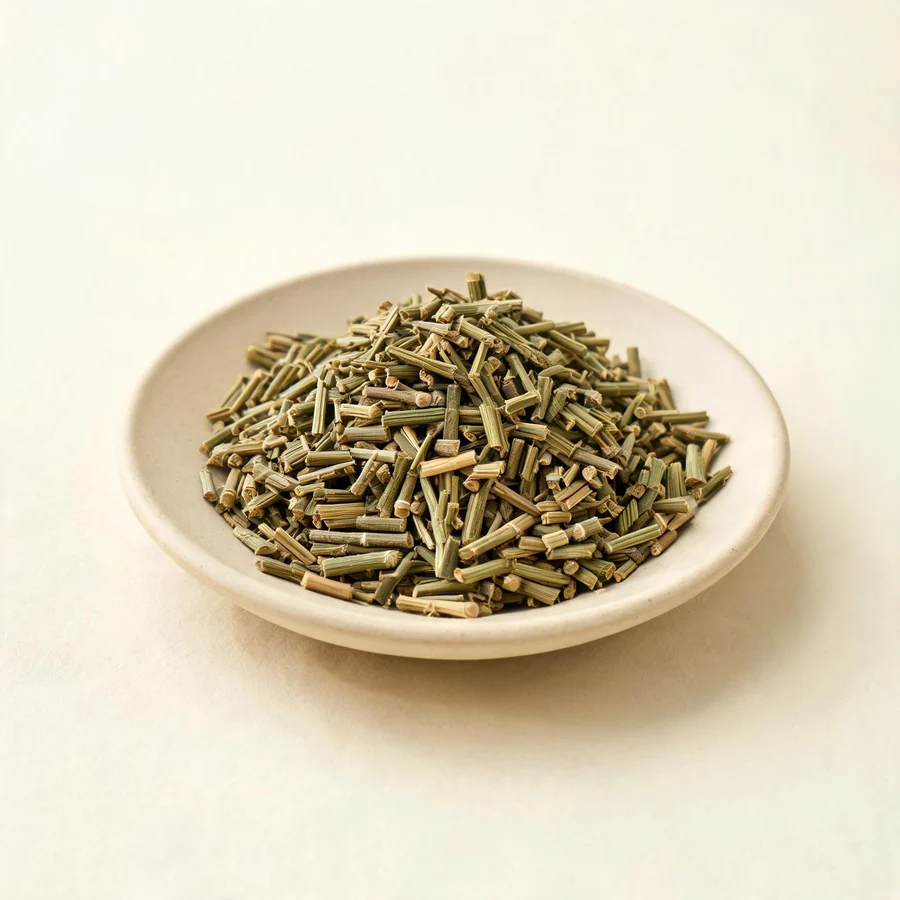
| Decoction | 2 to 6 g of the dried stem in a formula, boiled first and the foam skimmed. Six grams is already a substantial dose for a robust adult and is not a starting point. |
| Honey-fried stem | 3 to 6 g of Mi Ma Huang when the aim is to settle the Lung or shift water, not to make the patient sweat. |
| Ceiling | 10 g a day is the pharmacopoeial ceiling; up to 15 g is on record for a strong adult with an acute excess cold, under supervision. Above that the extra grams add stimulation, not effect. |
| Course length | Days. Stop when the sweat breaks or the wheals settle, and do not continue for a chronic skin tendency. |
The dose follows the goal: a small amount settles the Lung and moves water, a larger amount breaks a sealed exterior and produces a sweat, and beyond that the only change is more stimulation. Start at the bottom of the range, use the honey-fried form for anyone frail, older or young, and stop once the surface has opened. Concentrated extracts are not part of skin practice: the recorded severe reactions are concentrated on exactly that route and on combination with caffeine.
Citations and further reading
Only real sources are listed: the classical materia medica passages quoted above, and the source works behind the botanical and safety statements.
- Ben Cao Gang Mu (Compendium of Materia Medica), Li Shizhen, 1578 - passage quoted above.
- Ben Cao Zheng Yi (The Correct Meaning of Materia Medica), Zhang Shanlei, 1920 - passage quoted above.
- Shen Nong Ben Cao Jing (Divine Husbandman's Classic of Materia Medica), Han period compilation - entry quoted above.
- Ephedrae Herba monograph: Pharmacopoeia of the People's Republic of China - accepted species, part used and the ten gram ceiling.
- Regulatory statement: United Kingdom withdrawal of ephedra-containing herbal products in 2008 and the prescription status of ephedrine.
- Pharmacology of ephedrine: sympathomimetic actions, cardiovascular and central nervous system toxicity, and the interaction with caffeine and monoamine oxidase inhibitors.
Educational reference for qualified practitioners. This page is not medical advice, and skin conditions should be diagnosed by a clinician before treatment.