Skin profile
Where this herb sits in skin practice: the pattern it corrects, the skin signs it suits, and what it should not be used for.
Nu Zhen Zi is chosen for dryness that comes with low-grade warmth, in a person who needs a long course and whose digestion will not take a heavier tonic. It is mild by design, so it supports a formula rather than carrying one.
Skin signs that suggest it
- Dry, thin, crepey skin, worst on the face, neck and forearms, with a dull rather than inflamed look
- Low-grade warmth at night, a dry mouth and heat in the palms and soles without a red rash
- A dry, tight scalp with fine flakes, thinning hair or early greying
- Dry eyes and a sore lower back alongside the skin changes
- A red tongue with little coating and a thin, rapid pulse
When it is not the right herb
Not for cold digestion. A cool, moistening fruit taken by someone with a poor appetite, a cold abdomen and loose stools tends to make all three worse. It is wrong where Yang is deficient and the limbs are cold with plentiful pale urine, and it is not the herb for Dampness with a greasy coating, where a moistening tonic adds to the congestion. It has no place in an acute red, weeping or infected lesion, and it is too mild to be relied on alone for marked deficiency; richer tonics or a formula are needed there. It works slowly, so it is the wrong choice when a quick change is expected.
What it does for skin
Skin-relevant actions only. Each one describes a mechanism in TCM terms and what it looks like on the skin.
Nourishes the Liver and Kidney Yin that keeps skin supple
Yin is the cool, moist, storing substance of the body, and the Liver and Kidney hold the deeper part of it. When it thins, the skin loses moisture before it loses colour, so the first signs are crepey texture, fine lines and a dry feel rather than redness. The fruit replenishes that reserve gently and can be continued for months, which is the practical difference between it and the heavier tonics that have to be stopped when the digestion protests.
Cools low-grade deficiency heat without bitter cold
The warmth of Yin deficiency is low grade: worse in the evening, felt in the palms and soles, and accompanied by a dry mouth and a red tongue with little coat. A bitter cold herb would clear it and leave the person drier, which is the wrong trade. Nu Zhen Zi is cool rather than cold, so it settles the warmth while restoring the moisture whose absence produced it, and it is the reason it suits long, slow courses in older skin.
Supports the hair and the scalp
Hair is the Kidney's charge, and the Blood that feeds it is stored in the Liver, so hair that thins or greys early is read as depletion of both. The classical texts name a hair-darkening action for this fruit, and in practice it is used with Mo Han Lian in the two-herb formula for that purpose. The effect is slow and partial, it is best judged over six months or more, and hair loss with a medical cause such as thyroid disease or iron deficiency needs that cause treated first.
Nourishes without cloying, so it can be taken for months
Rich Yin tonics such as prepared rehmannia and the shells are effective and heavy: they can produce fullness, a coated tongue and loose stools, and they have to be balanced with aromatic herbs. This fruit is light and sweet but not sticky, so it can carry a long course in someone whose digestion is only moderate. That mildness is also its limit, and where the deficiency is deep it supports the heavier herbs rather than replacing them.
Skin conditions it is used for
Mapped to the condition pages on this site. The pattern column shows what the skin is doing when this herb is the right choice.
| Condition | Pattern | Why it suits | Typical setting |
|---|---|---|---|
| Skin Dryness | Liver and Kidney Yin deficiency with dryness and low-grade heat | Dry, thin skin with night warmth, a dry mouth, dry eyes and a sore lower back is the Yin-deficient form of dryness rather than the Blood-deficient one, and the distinction changes the treatment. This fruit feeds the Yin of both organs and cools the mild heat without drying, which suits the person who cannot tolerate a cold bitter herb or a heavy shell. It is given over months, and emollients and a humidifier still do most of the short-term work. | Er Zhi Wan, whose partner is Mo Han Lian, or a Yin-nourishing formula with Gou Qi Zi |
| Senile Pruritus | Yin deficiency with Wind from dryness: night itch in thin skin | Itch in later life, in dry thin skin, worse at night, with night sweats and a dry throat, is read as Yin failing to moisten the surface so that Wind moves through it. The fruit is the mild, long-course choice for that picture: it rebuilds the Yin gradually and does not burden the digestion of an older person as a shell would. It is combined with Blood tonics and with a wind-diffusing herb, and a generalised itch still needs a medical review for systemic causes. | A Yin and Blood nourishing base with Dang Gui and Fang Feng |
| Wrinkled And Shrunken Skin | Liver and Kidney Yin and Essence decline: thin, dry, lax skin | Thinning and wrinkling that arrive with dizziness, tinnitus, a sore lower back and dry eyes are read as the decline of Liver and Kidney Yin and Essence, which the tradition holds to be the substance that fills the skin. The fruit is used as a slow, gentle builder for months, often with Gou Qi Zi and Shu Di Huang, and its mildness makes it suitable for long use in older people. No herb reverses photoageing, and sun protection remains the measure with the strongest evidence. | A Liver and Kidney tonic formula with Gou Qi Zi and Shu Di Huang |
| Dry Scalp | Blood and Yin failing to reach the scalp: tight, dry, flaking scalp | A tight, dry scalp with fine white flakes, worse in the evening and accompanied by night sweats or a malar flush, is the empty-heat form of scalp dryness, where Yin does not reach the highest point. The fruit nourishes the Liver and Kidney Yin and the Blood that carries moisture upward, and it is classically given for the hair itself. It is a supporting herb for a chronic picture, and a flaking scalp that does not respond, or that comes with patches of hair loss, should be examined. | Er Zhi Wan with He Shou Wu, or a Yin-nourishing formula with Gou Qi Zi |
Combinations for skin
Herbs it is paired with when the skin, not an internal organ, is the target.
| Partner | Ratio | Why the pair is used |
|---|---|---|
| Mo Han Lian | 10 to 15 g each, the two herbs of Er Zhi Wan | The classical pair for Liver and Kidney Yin: the privet fruit nourishes Yin and clears mild deficiency heat, while Mo Han Lian also cools the Blood and stops bleeding. On the skin and hair they are used together for early greying, a dry scalp and dryness with warmth at night. The proportions are usually equal, and the pair is taken for months rather than weeks. |
| Gou Qi Zi | 10 to 15 g each | Both go to the Liver and Kidney and build Yin. Gou Qi Zi leans warm and nourishes Blood and Essence more broadly, while this fruit is cool and clears low-grade heat. The warmth of the one balances the coolness of the other, so the pair suits dry eyes, dry skin, dizziness and a sore lower back without chilling the digestion. It is one of the safest long-course pairs in the materia medica. |
| Shu Di Huang | 10 g Nu Zhen Zi with 12 to 15 g Shu Di Huang | The fruit is light and the prepared root is rich, so the pair is chosen when the deficiency is deeper than the fruit alone can reach but the digestion will not take the root on its own. Shu Di Huang builds Blood and Essence and Nu Zhen Zi cools and moistens, and together they suit dry, thin skin with night warmth and a dull complexion. An aromatic herb is added where the root causes fullness. |
| Fang Feng | 10 g Nu Zhen Zi with 6 to 9 g Fang Feng | Fang Feng releases Wind from the surface and the fruit treats the dryness from which the Wind arose, which is the pairing for itch in dry, thin skin that moves about and worsens at night. It is a small addition by design: the Wind herb is there to move what the Yin tonic is rebuilding, not to dominate the formula. The pair is used in chronic urticaria and in the itch of later life. |
Formulas where it leads
- Er Zhi Wan (二至丸) - The two-herb formula of Nu Zhen Zi and Mo Han Lian, named for the solstices at which the two herbs are traditionally gathered. It is the classical expression of mild, long-course Liver and Kidney Yin nourishment, and in this edition it is the setting for dry skin and dry scalp with low-grade heat, and for the hair changes that accompany them.
Safety for skin use
What to check before recommending or using it, including the cautions that matter most for skin patients.
Do not use, or use with caution
- Spleen and Stomach weakness with cold: unformed stools or a chilly abdomen. The cool, moistening fruit can worsen diarrhoea and abdominal discomfort, and the wine-steamed form or a warming partner is needed if it is used at all.
- Yang deficiency with chilly limbs and plentiful pale urine: a cool Yin tonic can suppress a warming function that is already low.
- Dampness with a greasy coating, a heavy body and a poor appetite: a moistening tonic adds to congestion rather than resolving it.
- Known allergy to Ligustrum lucidum or to other members of the olive family, including privet hedges, olive and ash.
Pregnancy and breastfeeding
Generally regarded as one of the gentler Yin tonics and used at standard doses under guidance, because it has no strong moving or downward-draining action. The cautions are the digestive ones: where there is a cold Spleen, loose stools or nausea, it is either left out or given wine-steamed with a warming herb. It is not a herb to self-prescribe in pregnancy, and any skin treatment in pregnancy should be reviewed by a practitioner who knows the whole picture. During breastfeeding it appears in postpartum formulas for Yin-deficient women, with the same caution about the mother's digestion and the infant's stools.
Interactions
- Insulin and oral hypoglycaemics: oleanolic acid in the fruit has lowered blood glucose in animal studies, so the effect could add to glucose-lowering treatment; readings are worth checking when a regular course starts.
- Immunosuppressants such as ciclosporin or tacrolimus: the polysaccharides have enhanced immune activity in laboratory work, which runs against what a transplant patient needs, so the herb should be disclosed rather than added quietly.
- Chemotherapy and lipid-lowering medicines: animal work suggests a protective effect on marrow against cyclophosphamide and reports falls in cholesterol, so coordination with the treating team is sensible rather than self-directed use.
Allergy and patch testing
Allergy to the fruit is uncommon but possible, and the tree is a member of the olive family, so people who react to privet, olive or ash pollen may be more likely to react. A rash, wheeze or digestive upset after a dose is a reason to stop. Because the dried fruit is sometimes confused with related species, a reaction may be to what the product actually contains, and buying from a supplier that names the species is the practical safeguard.
General safety references
General references for herbal hepatotoxicity and herb-drug interactions; they are not specific to this herb.
- Review article: Herbal hepatotoxicity - an update on traditional Chinese medicine preparations. Alimentary Pharmacology & Therapeutics, 2014. PMID: 24844799.
- Interactions between herbal medicines and prescribed drugs: an updated systematic review. Drugs, 2009. PMID: 19719333.
- Warfarin and food, herbal or dietary supplement interactions: a systematic review. British Journal of Clinical Pharmacology, 2021. PMID: 32478963.
Evidence
The classical record is quoted with its source. The modern note states the level of evidence plainly.
Classical record
It strengthens Liver and Kidney, gives the hair its dark colour and clears the eyes.
Classical materia medica, as summarised for the herb - The three actions that later practice builds on: the Yin tonification, the hair and the eyes.
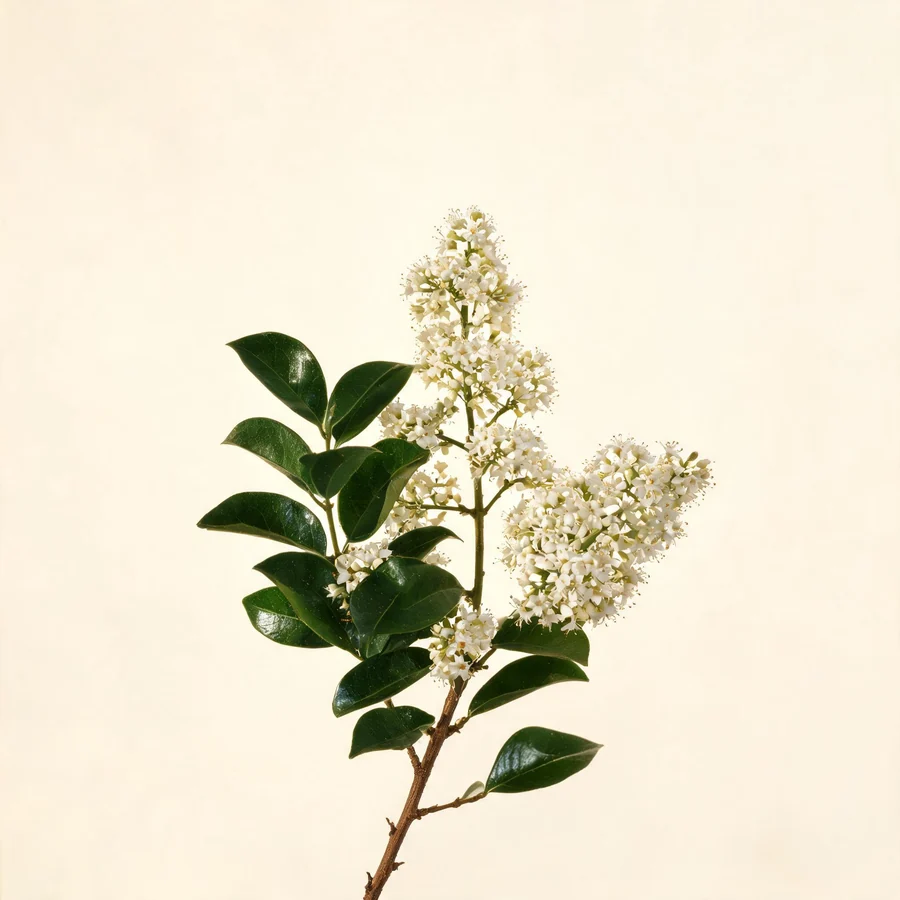
The tree keeps its green through the winter, which is read as the steadfastness of a virtuous woman, and the herb is said to strengthen Yin, firm the lower back and knees, and brighten the eyes.
Ben Cao Gang Mu (Compendium of Materia Medica), Li Shizhen - The lines account for the name and for the actions that make it useful in dry, ageing skin with a weak lower back.
It nourishes the Yin Qi, settles deficiency Fire and eases restless heat with tidal fever and the sensation of steaming bones; it checks night sweating and treats wasting thirst, cloudy urine, flooding and spotting, blood in the stool or urine, genital sores and haemorrhoidal pain; and it clears Liver Fire so that the eyes are bright and do not water.
Ben Cao Zheng (Correct Materia Medica) - The genital sores and the deficiency-heat list are the parts that touch the skin, and they are the reason it is used where dryness comes with warmth.
Modern evidence
Evidence status
- Laboratory work describes oleanolic acid, ursolic acid and privet polysaccharides with antioxidant, anti-inflammatory and glucose-lowering activity. These are cell and animal findings, and they do not establish a benefit for dry skin or hair loss in people.
- No adequate clinical trial of Nu Zhen Zi in a skin condition was identified. What exists is largely laboratory work and small studies of multi-herb formulas, often in Chinese-language journals, which this page does not present as proof of effect.
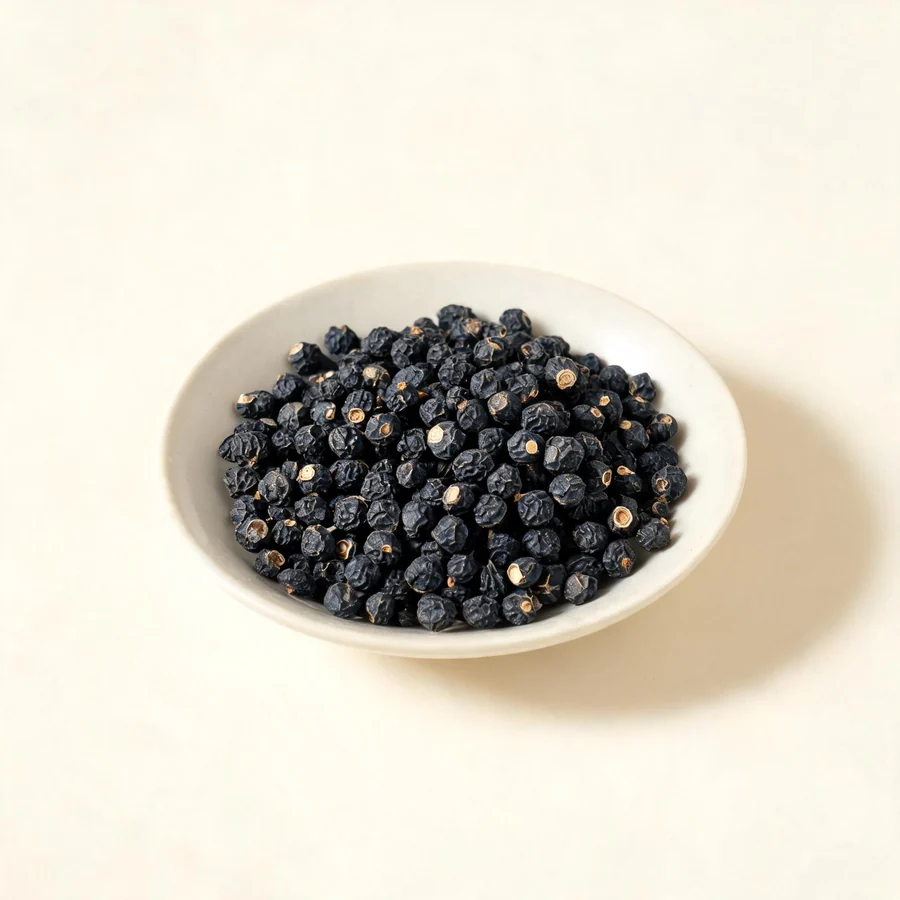
- Identity matters for the evidence. The dried fruit is an accepted pharmacopoeial substance with a marker requirement, and related Ligustrum and Viburnum fruits are sold in its place, so a product that has not been identified cannot be assumed to be the herb described here.
PubMed records
Selected real PubMed records for this herb's species or its constituents, chosen by species name and title relevance. They are references for the non-TCM discussion above, not proof that the herb treats any skin condition.
- Ethanol extract of Ligustrum lucidum Ait. leaves suppressed hepatocellular carcinoma in vitro and in vivo.. Cancer cell international, 2019. PMID: 31572063 (safety record).
- Acute and subacute oral toxicity of acetylated Ligubtrum lucidum Ait. polysaccharide in male mice.. Drug and chemical toxicology, 2026. PMID: 41230684 (safety record).
Dose and forms
Skin-practice dosing and the preparations that suit skin complaints.
| Form | Dose and notes |
|---|---|
| Decoction | 6 to 12 g of dried fruit daily, crushed before decocting. The lower end suits mild dryness or a supporting role, and 12 to 15 g is used for a clearer Yin deficiency with night warmth and dry eyes. |
| Wine-steamed form | The fruit steamed with yellow rice wine is the usual tonic form: it is gentler on the digestion and is preferred where the Spleen is cool or the course is long. The raw fruit is kept for the cooling and moistening effect when heat is more prominent. |
| Course length | Months rather than weeks, because the action is gradual. Review every few weeks, and stop or reduce if the appetite falls, the abdomen feels cold or the stool loosens. |
The dose is modest because the fruit is mild and is meant to be taken for a long time, and because its cool, moistening nature sets the practical limit rather than toxicity. Three things set it: how dry the person is, how much heat is present, and how well the digestion tolerates a moistening tonic. Where the stool loosens, the wine-steamed form is used and a warming herb is added before the dose is increased. The fruit is also one of the few Yin tonics that can be given in older age without much risk of cloying, which is why it often carries a long course.
Citations and further reading
Only real sources are listed: the classical materia medica passages quoted above, and the source works behind the botanical and safety statements.
- Classical materia medica summary for the herb - the entry on the Liver, the Kidney, the hair and the eyes is given in translation above.
- Ben Cao Gang Mu (Compendium of Materia Medica), Li Shizhen, 1578 - the passage on the evergreen tree and the tonic actions is given in translation above.
- Ben Cao Zheng (Correct Materia Medica) - the entry on deficiency fire, night sweating and the genital sores is given in translation above.
- Pharmacopoeia of the People's Republic of China, Fructus Ligustri Lucidi monograph - source for the accepted botanical source, part used, marker substance and quality requirements.
- Botanical literature on Ligustrum lucidum, Oleaceae - source for the description of the tree and fruit, and for the related species sold in its place.
- Modern evidence statement: based on laboratory literature on oleanolic acid and privet polysaccharides and on the absence of identified skin trials, stated as a level of evidence rather than as a cited finding.
Educational reference for qualified practitioners. This page is not medical advice, and skin conditions should be diagnosed by a clinician before treatment.