Skin profile
Where this herb sits in skin practice: the pattern it corrects, the skin signs it suits, and what it should not be used for.
Gou Qi Zi is chosen when the skin problem is dry and quiet rather than red and active, and when the person looks depleted as well: thin, dry-eyed, tired, and worse in dry weather. It is a slow herb and a modest one, and in a skin prescription its job is to make the nourishing half of the treatment last.
Skin signs that suggest it
- Dry, thin, papery skin that feels tight after washing and looks dull rather than red
- Fine white scaling over the shins and forearms, with no ooze and no heat
- Itch that arrives at night or after a hot bath, on skin that shows no rash
- Dry scalp with fine flakes, dry lips and a dry mouth in the evening
- Slow healing of small grazes, with new skin that stays shiny and dry
- A tongue with little coating, a fine pulse, and dryness that is worse in autumn and winter
When it is not the right herb
Not for skin that is red, hot, weeping or pustular, and not for oily, acne-prone or greasy-scaled skin: a sweet moistening tonic adds to Dampness and Heat rather than clearing them. It is set aside during an acute fever or a rash that is spreading quickly, on the classical reasoning that a tonic taken while a pathogen is active holds it in. Weak digestion with loose stools, a greasy tongue coat and a bloated abdomen is a further reason to hold back, because the berry is rich and can sit heavily.
What it does for skin
Skin-relevant actions only. Each one describes a mechanism in TCM terms and what it looks like on the skin.
Rebuilds Yin and Blood so the skin is moistened from within
This is its central skin action. Yin and Blood are what the tradition treats as the skin's internal moisture supply, and when they are low the surface loses pliability before it loses colour. The berry replenishes both at a gentle pace, so the change shows over weeks: less tightness, finer scaling, and a surface that no longer flakes after washing. It is a supply-side herb, and it works alongside emollients rather than replacing them.
Settles dry itch that comes from depletion rather than inflammation
Itch on skin that looks normal, or nearly so, is read as Wind moving through tissue that has lost its moisture. Gou Qi Zi does not sedate the sensation; it reduces the dryness the Wind is using. That is why it suits the night itch of older skin and the itch that follows a hot bath, and why it does nothing useful for the itch of a red, active eruption.
Restores pliability to tight, scaling and finely cracked skin
Tightness, fine cracks at the knuckles and a shin that scales in winter are read as fluid and Blood failing to reach the surface. Its sweetness and moistening quality are described as enriching the tissue itself, and it is combined with Mai Dong and Bai Shao when the dryness is marked. Cracks that bleed or become inflamed need wound care as well, and the herb is a supporting measure rather than a dressing.
Supports the skin in later life and after a long illness
In older people, and in anyone recovering from a prolonged illness, the skin becomes thin, dry and easily bruised, and the tradition links that to declining Essence and Blood. The berry benefits Essence as well as Yin, which is why it appears in long-course formulas for ageing skin. It is a slow measure, judged over a season rather than a fortnight.
Provides a tonic base that a cooling skin formula can rest on
Formulas for dry, warm skin are often cooling, and cooling given for months can leave a person drier and more depleted than before. Gou Qi Zi is added as the nourishing base so the formula can be continued: it holds the fluids that the cooling herbs might otherwise consume. This is a prescribing role rather than an action on the lesion, and it is the commonest reason the berry appears in a skin prescription at all.
Skin conditions it is used for
Mapped to the condition pages on this site. The pattern column shows what the skin is doing when this herb is the right choice.
| Condition | Pattern | Why it suits | Typical setting |
|---|---|---|---|
| Skin dryness | Yin and Blood deficiency with dryness and no heat | Dryness without redness, in someone thin, tired and dry-eyed, is read as a supply failure rather than a fault in the surface. The berry replenishes Yin and Blood, and because it is neutral and food-like it can be continued long enough to matter. It is used with Bai Shao and Mai Dong, and emollient care continues alongside it. | Dang Gui Yin Zi with Gou Qi Zi and Bai Shao |
| Senile pruritus | Blood and Yin deficiency of later life | Itch in later life, on thin dry skin with no rash and a worse night, is read as the Blood and Yin that moisten the skin running low. The berry nourishes both, and it is suited to older people because it is gentle enough for a long course and does not disturb the digestion as richer tonics can. Persistent itch with weight loss or a new rash needs assessment rather than a tonic. | Dang Gui Yin Zi with Gou Qi Zi and He Shou Wu |
| Itchy skin | Wind moving through dry, depleted skin | Itch that wanders, comes at night and leaves no mark is read as Wind in tissue that has lost its moisture. The berry reduces the dryness rather than the sensation, so it is combined with herbs that diffuse Wind and with ones that nourish Blood. Where the itch sits on red or weeping skin, the pattern is Heat or Dampness and this is the wrong herb. | Modified Dang Gui Yin Zi with Gou Qi Zi and Bai Ji Li |
| Dry scalp | Blood and Yin failing to reach the highest point of the body | Fine white flakes on a pale, dry scalp, without redness or greasiness, are read as Blood and Yin not reaching the surface. The berry is a supporting herb in a blood-nourishing formula and is taken over months. Greasy yellow scale on a red base is the opposite pattern and is treated by clearing rather than by enriching. | Gou Qi Zi with He Shou Wu and Dang Gui in a Blood-nourishing base |
| Skin tightness | Fluid and Yin depletion, worse after washing | A drawn, tight feeling that follows washing and eases with emollient is read as fluid not reaching the surface. The berry supplies the deeper Yin while lighter herbs supply the surface fluids, and the two are used together rather than separately. Tightness that comes with hardness, swelling or thickening of the skin is a different matter and needs assessment. | Zuo Gui Wan with Mai Dong and Bai Shao |
| Wrinkled and shrunken skin | Declining Essence and Blood | Loss of fullness and fine wrinkling in later life is read as Essence and Blood no longer plumping the tissue, and the berry is one of the herbs credited with benefiting Essence. No herb reverses sun damage, and that is said plainly: the aim is skin that is comfortable and less fragile. Sun protection and emollient care remain the measures that change the outcome. | Zuo Gui Wan with Gou Qi Zi and Dang Gui |
Combinations for skin
Herbs it is paired with when the skin, not an internal organ, is the target.
| Partner | Ratio | Why the pair is used |
|---|---|---|
| Mai Dong | 6 to 12 g each in decoction | Mai Dong supplies the lighter fluids of the Lung and Stomach while the berry works at the deeper level of Yin and Blood. Together they cover dryness at two depths, and the pair is used for skin that is tight on the surface and thin underneath. Neither herb is drying, so the combination can be continued through a dry season or a long course. |
| Sheng Di Huang | 10 to 15 g Sheng Di Huang with 6 to 12 g Gou Qi Zi | Sheng Di Huang nourishes the deepest Yin and cools the Blood, and the berry adds Essence with a gentler moisture. The pair suits dry skin with a low-grade warm feeling, a dry mouth and a red tongue, where dryness has begun to produce Heat. The berry softens the richness of the Rehmannia, which is what makes the combination tolerable over months. |
| Dang Gui | 6 to 10 g each | Dang Gui builds and moves Blood while the berry builds Yin and Essence, so the two cover the pair of substances that keep skin supple. It is the pairing behind many blood-nourishing skin formulas for dull, dry skin with a sallow complexion. Dang Gui moves and the berry settles, which suits people who are depleted without being badly stagnant. |
| He Shou Wu | 6 to 12 g each | He Shou Wu is the heavier Blood and Essence tonic, credited with affecting the hair and the complexion, while the goji fruit is lighter and moister. Together they are used in later life for dry skin and thinning hair, and in formulas for early greying. He Shou Wu can be heavy on the digestion and the berry's gentleness offsets that, which is why the two are so often given together. |
Formulas where it leads
- Dang Gui Yin Zi (当归饮子) - The classical formula for dry, itchy skin from Blood deficiency, built on Dang Gui, Sheng Di Huang and He Shou Wu with herbs that diffuse Wind. Gou Qi Zi is added when the dryness is deep enough to need Essence as well as Blood, and this is the usual setting for the berry in chronic dry eczema and in the itch of later life.
- Zuo Gui Wan (左归丸) - A Yin and Essence tonic rather than a skin formula, it is the base used when dryness comes with a sore lower back, dizziness and a sense of having aged quickly. In skin practice it is the setting for the berry when thin, dry, easily bruised skin is part of a wider depletion rather than a problem on its own.
Safety for skin use
What to check before recommending or using it, including the cautions that matter most for skin patients.
Do not use, or use with caution
- Damp or Heat in the skin: red, weeping, greasy or pustular lesions, a greasy tongue coat and a feeling of heaviness. A sweet moistening tonic can make these worse, and it is set aside until the flare has settled.
- Acute illness with fever, or a rash that is spreading quickly. A tonic taken while a pathogen is active is held to keep it in, so treatment waits for the acute phase to pass.
- Weak digestion with loose stools, bloating and a poor appetite. The berry is rich and moistening, and in a cold, damp digestion it can cause heaviness and further looseness.
Pregnancy and breastfeeding
Regarded as safe at food and ordinary decoction amounts, and it appears in classical formulas for Yin deficiency in pregnancy; no uterine or harmful effect is recorded. Large amounts are still best avoided, because the sugar in concentrated juice or wine can generate Heat and because any herb taken in pregnancy is worth reviewing. Breastfeeding follows the same position, with ordinary food amounts treated as acceptable.
Interactions
- Warfarin and other vitamin K antagonists: published reports describe INR climbing sharply, with bleeding, after goji taken as tea, juice or wine on an otherwise stable dose, probably because the liver enzymes that clear warfarin are inhibited. For anyone anticoagulated this fruit is a medicine, not a snack.
- Diabetes medicines: animal and early human work suggests a fall in blood glucose, so insulin and oral hypoglycaemics may act additively when significant amounts are eaten. Monitoring is the practical response, and the sugar in the fruit and its juice counts too.
- Blood pressure medicines: a mild lowering effect has been reported, so dizziness on standing is worth watching in anyone already treated for hypertension.
Allergy and patch testing
Reactions are uncommon, but the berry is a food and allergy to it is described, including itching of the mouth and urticaria after eating. Anyone with a known sensitivity to other Solanaceae foods should be cautious, and a first glass of concentrated juice should be small. Contact reactions from herb-containing creams are a separate matter and are patch tested as usual.
General safety references
General references for herbal hepatotoxicity and herb-drug interactions; they are not specific to this herb.
- Review article: Herbal hepatotoxicity - an update on traditional Chinese medicine preparations. Alimentary Pharmacology & Therapeutics, 2014. PMID: 24844799.
- Interactions between herbal medicines and prescribed drugs: an updated systematic review. Drugs, 2009. PMID: 19719333.
- Warfarin and food, herbal or dietary supplement interactions: a systematic review. British Journal of Clinical Pharmacology, 2021. PMID: 32478963.
Evidence
The classical record is quoted with its source. The modern note states the level of evidence plainly.
Classical record
It strengthens the sinews and bones, and brightens the eyes.
Shen Nong Ben Cao Jing (Divine Husbandman's Classic of Materia Medica) - The oldest entry is about structure and sight, and the skin use grows from the same idea of replenishing what holds the body together.
This fruit is sweet, neutral and moist in character, and its tendency is to enrich rather than to move. It belongs among the mild supplements, following the principle that a lack of Essence is met with rich and flavoursome substances.
Ben Cao Gang Mu (Compendium of Materia Medica), Li Shizhen - The reason the berry can be given for months: it enriches without dispersing, which is what dry and thinned skin needs.
Moistening and enriching, it can also clear heat of the deficient kind. Its particular strengths are the Kidneys, the moistening of the Lungs, the generation of fluids and the support of Qi, which makes it a principal remedy where the genuine Yin of Liver and Kidneys has failed, with fatigue and heat arising within.
Ben Cao Jing Shu (Commentary on the Materia Medica) - The classical statement of the fluid-generating action, and of the Lung connection that makes it relevant to skin.
Modern evidence
Evidence status
- Laboratory work on Lycium barbarum polysaccharides reports antioxidant and anti-inflammatory activity, and some studies describe effects on skin cells in culture. These are cell and animal experiments, and they do not show that eating the berry improves dry skin in people.
- Clinical trial evidence for the berry in skin conditions is very limited, and what exists concerns general wellbeing or metabolic measures rather than the skin. No conclusion about dryness, itch or ageing skin can be drawn from it.
- Regulatory status: the fruit is listed in the Chinese Pharmacopoeia and holds dual food and medicine status in China. This page describes traditional practice and the state of the evidence; it is not a claim of proven benefit.
PubMed records
Selected real PubMed records for this herb's species or its constituents, chosen by species name and title relevance. They are references for the non-TCM discussion above, not proof that the herb treats any skin condition.
- Lycium barbarum glycoconjugates: effect on human skin and cultured dermal fibroblasts.. Phytomedicine : international journal of phytotherapy and phytopharmacology, 2005. PMID: 15693720 (skin-related record).
Dose and forms
Skin-practice dosing and the preparations that suit skin complaints.
| Form | Dose and notes |
|---|---|
| Decoction | 6 to 12 g of dried fruit daily. For skin use it is taken as part of a formula over weeks rather than as a short course, and the lower end of the range is enough when the digestion is delicate. |
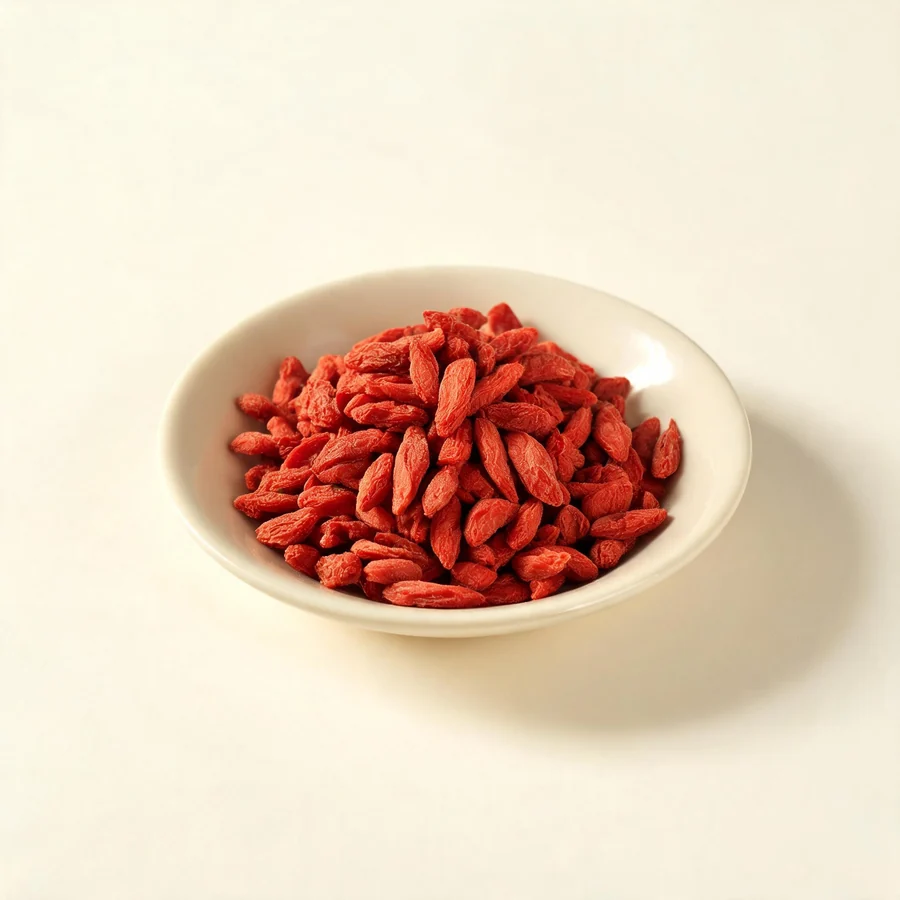
| Eaten as food | 10 to 15 g a day, chewed as they are or added to porridge, soup or a mug of tea. This is the usual maintenance amount, and it suits skin dryness that is being managed over a season rather than a week. |
| Concentrated juice and wine | A small glass of either carries more fruit than a handful of berries does, and these are the forms named in the warfarin reports. They are not the way to treat dry skin, and anyone on an anticoagulant should avoid them. |
| Course length | Weeks to months, judged by the skin and the digestion. If the abdomen feels full, the stool loosens or the mouth becomes sticky, the amount is reduced rather than continued. |
Chewing the dried fruit is as reasonable as decocting it, and for skin dryness managed gently it is often the more practical route. Long hard boiling reduces some of the heat-sensitive constituents, so a short steep or eating the berries suits the nutritional side of the herb. The limit is set by the sugar and by the digestion rather than by toxicity.
Citations and further reading
Only real sources are listed: the classical materia medica passages quoted above, and the source works behind the botanical and safety statements.
- Shen Nong Ben Cao Jing (Divine Husbandman's Classic of Materia Medica), attributed compilation of the Han period - classical entry quoted above.
- Ben Cao Gang Mu, Li Shizhen, 1578 (Compendium of Materia Medica) - classical entry quoted above.
- Ben Cao Jing Shu, Ming period (Commentary on the Materia Medica) - classical entry quoted above.
- Gou Qi Zi monograph: Pharmacopoeia of the People's Republic of China - source for the accepted botanical source, part used and food-medicine status.
- Modern evidence statement: based on laboratory and review literature on Lycium barbarum polysaccharides, summarised as a statement about the level of evidence rather than as a cited finding. No clinical trial is presented as proof of effect.
- Botanical description: botanical literature on Lycium barbarum, Solanaceae.
Educational reference for qualified practitioners. This page is not medical advice, and skin conditions should be diagnosed by a clinician before treatment.