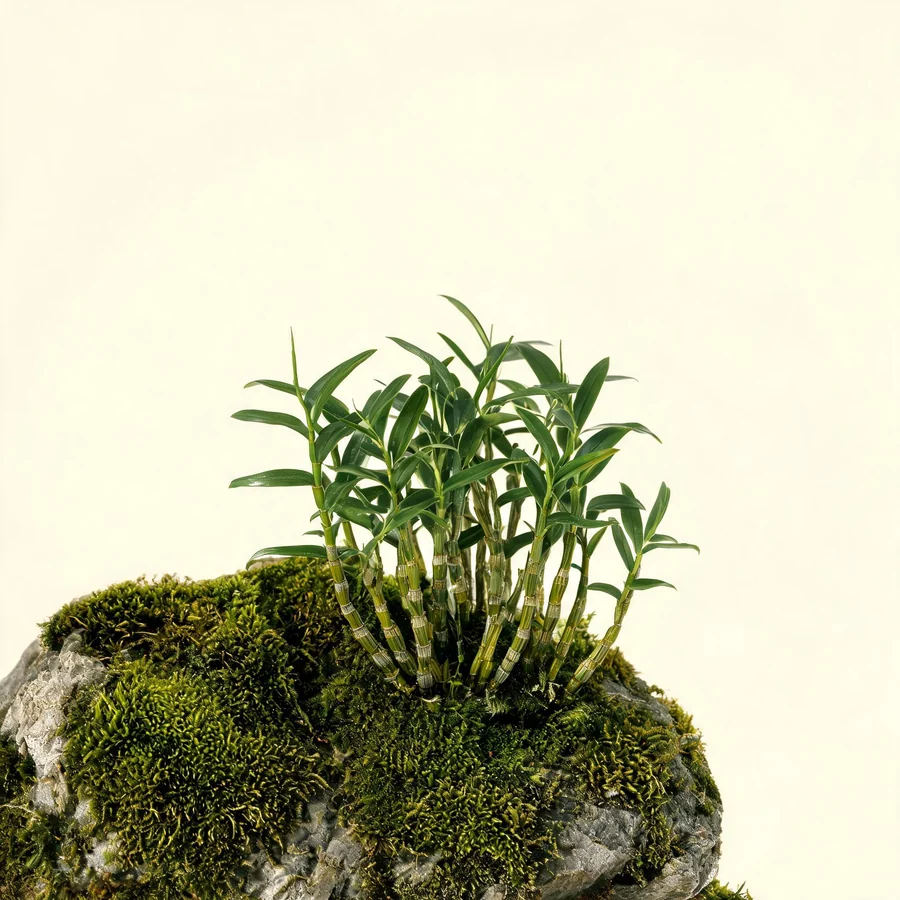
Skin profile
Where this herb sits in skin practice: the pattern it corrects, the skin signs it suits, and what it should not be used for.
Shi Hu belongs to the dry end of skin practice. It is a slow, moistening tonic for skin that has lost its suppleness, not a herb for an inflamed or weeping lesion. Its strengths are gentleness and staying power; its limits are that it does nothing for dampness, infection or active heat, and that the best material is expensive and often substituted.
Skin signs that suggest it
- Dry, thin, papery skin with fine lines and a dull look, rather than redness or swelling (Yin and fluid depletion)
- Tightness and stinging after washing, worse in dry air, winter or air-conditioned rooms (dryness without dampness)
- Cracks at the heels, knuckles or lips that reopen, with a dry mouth and thirst (fluid depletion)
- A dry scalp with fine white flakes and no greasiness (dryness of the scalp)
- A low-grade warmth or flush in the afternoon or evening, with a red tongue that has little coating (deficiency heat)
When it is not the right herb
Not for skin that is red, hot, swollen or weeping, and not for greasy, seborrhoeic or infected skin where Dampness is present. The stem is cool and moistening, so it can make Dampness heavier and a greasy scalp worse. It is also not for a person with cold digestion, loose stools and a dislike of cold food, and it is not an acute remedy for a sudden dry patch that needs assessment.
What it does for skin
Skin-relevant actions only. Each one describes a mechanism in TCM terms and what it looks like on the skin.
Nourishes Yin and moistens dry skin
The stem is mostly water-soluble polysaccharide, and the tradition reads that physical quality as its action: it replenishes the deep moisture that keeps skin supple. It is chosen for skin that is dry and thin rather than red and scaly, and for the dryness that follows a long illness, a fever or a period of poor fluid intake. It is a moisturising herb in the TCM sense, not a barrier cream, and it works slowly.
Generates fluids and relieves tightness
A dry mouth, thirst and skin that feels tight after washing are read as fluid depletion, and Shi Hu is one of the gentler herbs that generates fluid. It is used where the dryness is general rather than patchy: the lips crack, the throat is dry, the tongue has little coating, and the skin feels a size too small. Because it is not cloying, it can be continued while the person rebuilds, which is why it suits convalescence.
Clears deficiency heat that warms the skin
Deficiency heat is a low-grade warmth that comes from a lack of Yin rather than from an excess of Fire. It shows on the skin as a faint flush over the cheeks, warmth to the touch without inflammation, night sweats and a red tongue with little coating. Shi Hu cools that heat gently while it moistens, so it is used where the skin is both dry and warm, and where a colder or more draining herb would leave it drier still.
Supports the skin through recovery and ageing
Chronic dryness in older people and after a long illness is read as a slow depletion of Yin and Essence, and the stem is used as a gentle restorative rather than as a treatment for a named disease. It is paired with Blood- and Yin-nourishing herbs and taken over weeks. Its value in this setting is that it moistens without being heavy, so it can be continued while the person is still recovering.
Skin conditions it is used for
Mapped to the condition pages on this site. The pattern column shows what the skin is doing when this herb is the right choice.
| Condition | Pattern | Why it suits | Typical setting |
|---|---|---|---|
| Skin dryness | Yin and fluid depletion with true dryness, not Dampness | Generalised dryness of the skin, with fine lines, tightness and a dull surface, is read as a lack of the fluids that keep the skin supple. Shi Hu generates fluid and nourishes Yin, and it is chosen when the dryness is widespread and the tongue is red with little coating. It is a supporting herb, given over weeks with other Yin tonics, and it is not used where the skin is greasy or oozing. | Yi Wei Tang with Shi Hu and Mai Dong |
| Cracked skin | Fluid depletion with dryness at the heels, knuckles and lips | Cracks that reopen, especially at the heels and knuckles, are read as skin that has lost its moisture and elasticity. Shi Hu is used where the cracking comes with a dry mouth, thirst and a red, dry tongue, rather than with cold, thick, calloused skin. It moistens from within and is paired with Sheng Di Huang when the depletion is marked; a crack that is deep, bleeding or infected needs clinical care. | Zeng Ye Tang with Shi Hu added |
| Dry and hot skin | Yin deficiency with empty heat in the skin | Skin that is dry and yet warm to the touch, with a faint flush and a red tongue that has little coating, is read as Yin deficiency with empty heat. Shi Hu cools the heat while it moistens, which is why it suits this mixed picture better than a purely cooling or a purely nourishing herb. It is used with Sheng Di Huang and Mu Dan Pi when the warmth is pronounced, and it is not a treatment for hot, red, swollen or infected skin. | Modified Zhi Bo Di Huang Wan with Shi Hu |
| Senile pruritus | Dry, thin, ageing skin with deficiency heat and itch | Itch in older people whose skin is dry, thin and crumbly is read as dryness with a little lingering heat rather than as Wind or Dampness. Shi Hu moistens the skin and cools the low-grade warmth, and it is used as part of a gentle Yin-nourishing approach over weeks. It is not an antipruritic in the sedating sense, and persistent itch, weight loss or a new rash needs assessment. | Modified Dang Gui Yin Zi with Shi Hu and Mai Dong |
| Dry scalp | Dryness of the scalp without greasiness or inflammation | A dry scalp with fine white flakes and no redness or greasiness is read as dryness rather than as damp-heat, which is the opposite of the seborrhoeic picture. Shi Hu is used where the scalp dryness comes with general dryness of the skin, a dry mouth and a red tongue, and it is taken internally rather than applied. A scalp that is red, itchy and greasy needs a different approach. | Shi Hu with Mai Dong and Gou Qi Zi in a Yin-nourishing formula |
Combinations for skin
Herbs it is paired with when the skin, not an internal organ, is the target.
| Partner | Ratio | Why the pair is used |
|---|---|---|
| Mai Dong | Equal parts in decoction | Both herbs generate fluids and nourish Yin, but they lean in different directions. Mai Dong works on the Lung and Stomach, while Shi Hu reaches the Stomach and Kidney. Together they cover the dry upper and middle body, which is why the pair is used where the skin is dry and tight and the mouth and throat are dry at the same time. Mai Dong is also far cheaper, so the pair is a practical way to extend an expensive stem. |
| Sheng Di Huang | One part Shi Hu to two parts Sheng Di Huang | Sheng Di Huang nourishes Yin and cools the Blood more strongly than the orchid, and the two are combined after a severe febrile illness when the tongue is dark and dry, the thirst is intense and the skin is dry and warm. The Rehmannia supplies the deeper cooling and nourishment while Shi Hu replenishes the fluids, and the proportion gives the Rehmannia the larger share. This is a short-term combination for marked depletion rather than a long tonic. |
| Tian Hua Fen | Five parts Shi Hu to three parts Tian Hua Fen | Tian Hua Fen clears heat and generates fluid from the cooling side, while Shi Hu nourishes from the tonifying side. Together they reach the thirst, dryness and low-grade heat that follow a long illness, and the orchid is given the larger share because the picture is depletion rather than active heat. The pair is the basis of the classical approach to a dry, hot Stomach, and on the skin it is used for dryness that runs warm. |
Formulas where it leads
- Yi Wei Tang (益胃汤) - A gentle formula for Stomach Yin deficiency with dryness and thirst. Shi Hu is one of its moistening ingredients, and in skin practice the formula is used where dry, tight skin is part of a wider picture of fluid depletion rather than a local rash.
- Sha Shen Mai Men Dong Tang (沙参麦门冬汤) - A Lung and Stomach Yin formula for dryness after a febrile illness. It suits dry skin with a dry cough, a cracked voice and thirst, and Shi Hu is added when the depletion is marked and the skin is thin and papery.
- Zeng Ye Tang (增液汤) - A three-herb formula for fluid depletion with dryness and a dry stool. In skin practice it is used for cracked lips, dry skin and thirst after illness, with Shi Hu added when the dryness is general rather than confined to the bowel.
Safety for skin use
What to check before recommending or using it, including the cautions that matter most for skin patients.
Do not use, or use with caution
- Cold, weak digestion with loose stools, a poor appetite, a bloated abdomen and a dislike of cold food. A cool, moistening stem adds to the burden on a Spleen that is already struggling.
- An acute febrile illness or Damp-Warmth that has not yet dried out. The moistening quality is said to retain what should be expelled, so the fever lingers or the Dampness thickens.
- Dampness or Phlegm-fluid accumulation, with a muzzy head, copious saliva, swelling or a greasy coating. A cloying Yin tonic can make the dampness worse.
- Large doses. The recorded problem at excess is digestive: cramping and loose stool from the effect on intestinal smooth muscle, so the standard range is a ceiling rather than a starting point.
Pregnancy and breastfeeding
Safety in pregnancy has not been established through clinical research. The stem is slightly cool and moistening, and some Chinese sources advise pregnant women not to self-treat, especially in the first trimester. It is widely eaten as a food in southern China, which is reassuring for culinary use but not a substitute for evidence at medicinal doses. Use belongs to a practitioner, and breastfeeding mothers should take the same conservative line, keeping to low doses and short courses.
Interactions
- Atropine and other anticholinergic medicines. The stem is said to raise intestinal tone and contractility, which runs against what atropine does to the gut, so the two are not recommended together; the flag comes from the alkaloids rather than the mucilage.
- Antihypertensive drugs. The stem has been reported to widen blood vessels and lower blood pressure mildly, so combining it with a blood-pressure medicine raises a theoretical risk of an excessive fall, and pressure should be watched.
- Insulin, metformin and sulfonylureas. Preclinical work reports that the polysaccharides lower glucose by improving insulin action, so an added hypoglycaemic effect is possible and blood sugar should be monitored.
- Oral medicines generally. A stem this rich in mucilage coats whatever it meets, so it is prudent to separate it from other oral medicines by an hour or two. This is a practical precaution rather than a documented interaction.
General safety references
General references for herbal hepatotoxicity and herb-drug interactions; they are not specific to this herb.
- Review article: Herbal hepatotoxicity - an update on traditional Chinese medicine preparations. Alimentary Pharmacology & Therapeutics, 2014. PMID: 24844799.
- Interactions between herbal medicines and prescribed drugs: an updated systematic review. Drugs, 2009. PMID: 19719333.
- Warfarin and food, herbal or dietary supplement interactions: a systematic review. British Journal of Clinical Pharmacology, 2021. PMID: 32478963.
Evidence
The classical record is quoted with its source. The modern note states the level of evidence plainly.
Classical record
味甘,平。主治伤中,除痹,下气,补五脏虚劳羸瘦,强阴。久服厚肠胃。
Its flavour is sweet and its nature balanced. It addresses injury in the middle, removes painful obstruction, lowers Qi, replenishes the five organs in depletion and wasting, and reinforces Yin. Long use, it is said, thickens the Stomach and intestines.
Shen Nong Ben Cao Jing (Divine Husbandman's Classic of Materia Medica) - The wasting and Yin-strengthening clauses are the oldest statement of the nourishing action. On the skin they are the basis for using the stem where the body, and with it the skin, is thin and dry.
真石斛治胃中虚热有功
True Shi Hu has a real effect on deficiency heat in the Stomach.
Ben Cao Yan Yi (Extended Meaning of Materia Medica), Kou Zongshi - A brief remark that carried weight: it established the stem as a first choice for a dry, hot Stomach, and the word genuine signals the worry about substitutes that has followed the plant ever since.
石斛气平,味甘淡微咸,阴中之阳,降也。乃足太阴脾、足少阴右肾之药。
Its Qi is balanced; its flavour is sweet, bland and a little salty. It is the Yang within Yin, and its direction is downward. It is assigned to the foot taiyin Spleen channel and to the foot shaoyin Kidney channel.
Ben Cao Gang Mu (Compendium of Materia Medica), Li Shizhen - Li Shizhen's entry is quoted for the channel attribution rather than for a prescription. The Spleen and Kidney assignment explains why the stem is used for both the digestion and the lower body, and why its dryness work on the skin is constitutional rather than local.
Modern evidence
Evidence status
- Laboratory work on Dendrobium polysaccharides reports moisture retention, antioxidant activity and effects on skin cells in culture. These are cell and animal findings, and they do not establish a clinical benefit for dry skin or any other skin condition.
- No clinical trial evidence supports Shi Hu for skin disease. The skin indications on this page come from the traditional use of a Yin-nourishing food-medicine, and the modern literature is best read as early laboratory interest rather than as proof.
- Authenticity is the practical modern issue. Premium species are expensive and frequently substituted, and the pharmacopoeia lists several accepted Dendrobium species. A dose is only meaningful when the material has been identified, which is why quality control matters more here than for a cheap herb.
PubMed records
Selected real PubMed records for this herb's species or its constituents, chosen by species name and title relevance. They are references for the non-TCM discussion above, not proof that the herb treats any skin condition.
- Dendrobium nobile Lindl. Polysaccharides protect fibroblasts against UVA-induced photoaging via JNK/c-Jun/MMPs pathway.. Journal of ethnopharmacology, 2022. PMID: 35973631 (skin-related record).
- Dendrobium nobile Lindl Polysaccharides Attenuate UVB-induced Photodamage by Regulating Oxidative Stress, Inflammation and MMPs Expression in Mice Model.. Photochemistry and photobiology, 2023. PMID: 36651803 (skin-related record).
Dose and forms
Skin-practice dosing and the preparations that suit skin complaints.
| Form | Dose and notes |
|---|---|
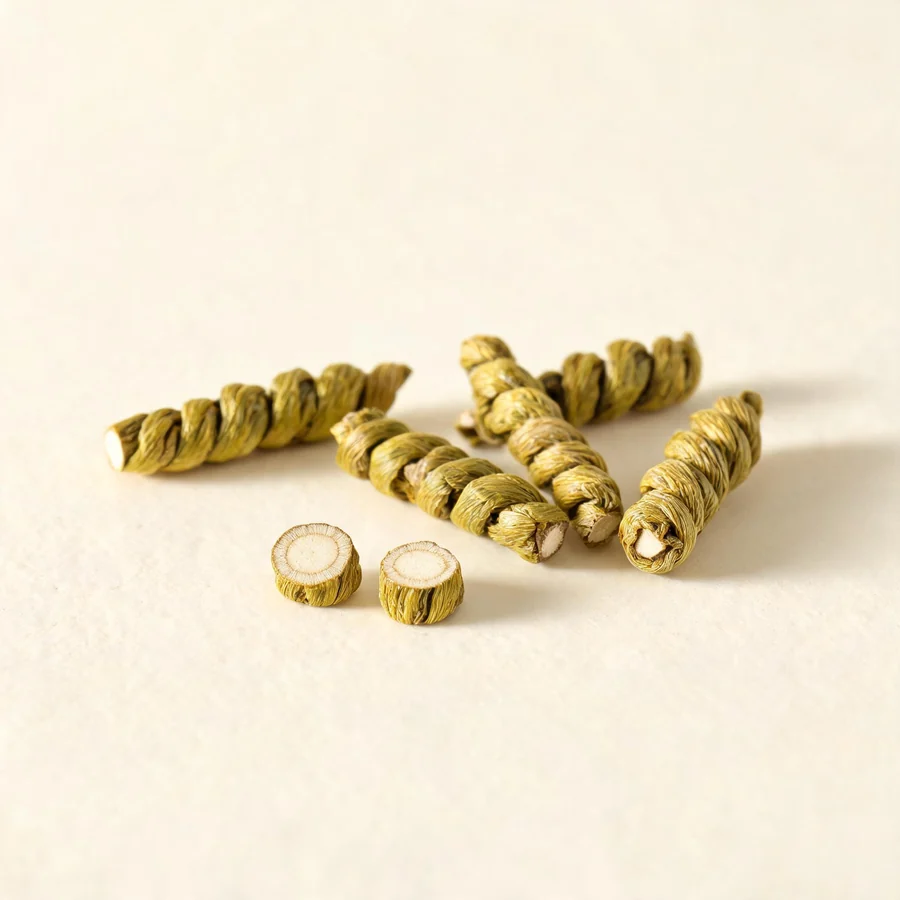
| Dried stem | 6 to 12 g of dried stem in decoction, the range for gentle and sustained Yin nourishment. The twisted dried form is weighed as the dried stem and is the one preferred for long courses. |
| Fresh stem | 15 to 30 g of fresh stem when heat is active and fluids have been badly damaged. The fresh form is more cooling, and it can be juiced, chewed or added to soup as well as decocted. |
| Decoction order | The dried stem is dense and mucilaginous, so it is simmered for 20 to 30 minutes before the rest of the formula goes in. This is a point about preparation rather than a property of the plant. |
The choice of form matters as much as the number. Fresh stem is the more cooling article and is chosen when heat is active, the tongue is dark and dry and thirst is intense; the dried and twisted forms are milder and are used for the slow work of rebuilding Yin over weeks. Because the stem is dense it is boiled ahead of the rest of a formula. Because the premium grades are expensive and often substituted, a dose is only as good as the material it was weighed from.
Citations and further reading
Only real sources are listed: the classical materia medica passages quoted above, and the source works behind the botanical and safety statements.
- Shen Nong Ben Cao Jing (Divine Husbandman's Classic of Materia Medica), attributed compilation of the Han period - classical entry quoted above.
- Ben Cao Yan Yi (Extended Meaning of Materia Medica), Kou Zongshi, Song dynasty - classical entry quoted above.
- Ben Cao Gang Mu (Compendium of Materia Medica), Li Shizhen, 1578 - classical entry quoted above.
- Shi Hu monograph, Dendrobii Caulis: Pharmacopoeia of the People's Republic of China - source for the accepted species and part.
- Botanical description and identification: botanical literature on Dendrobium, Orchidaceae.
Educational reference for qualified practitioners. This page is not medical advice, and skin conditions should be diagnosed by a clinician before treatment.