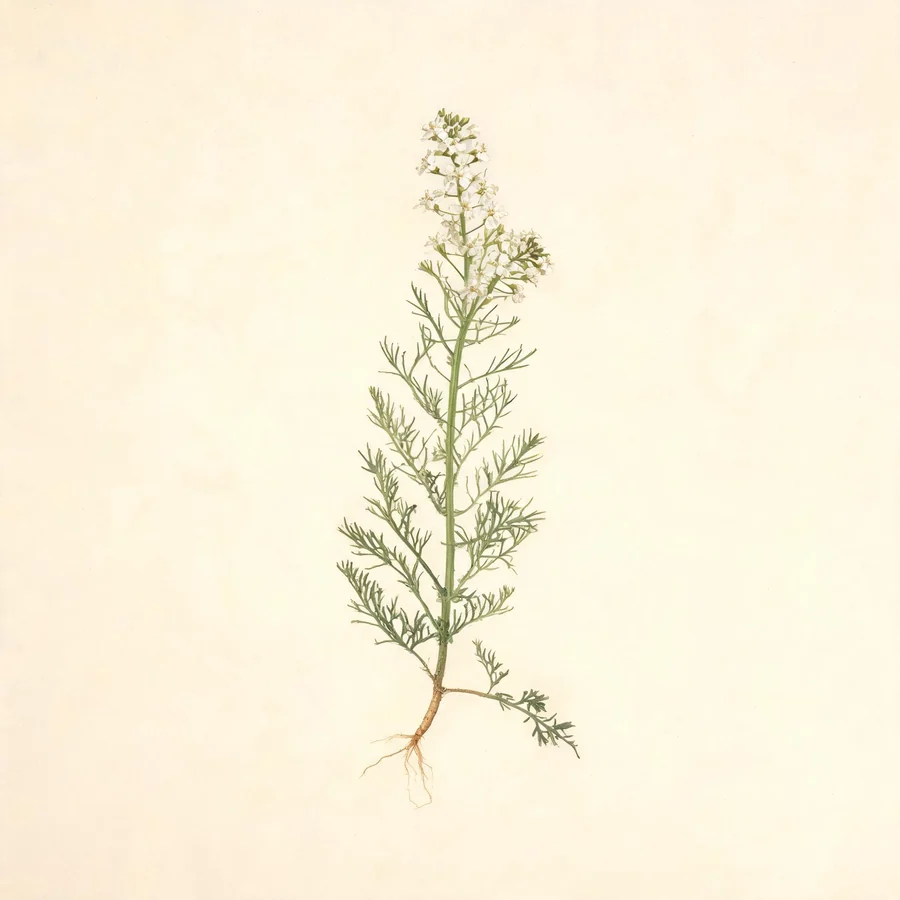
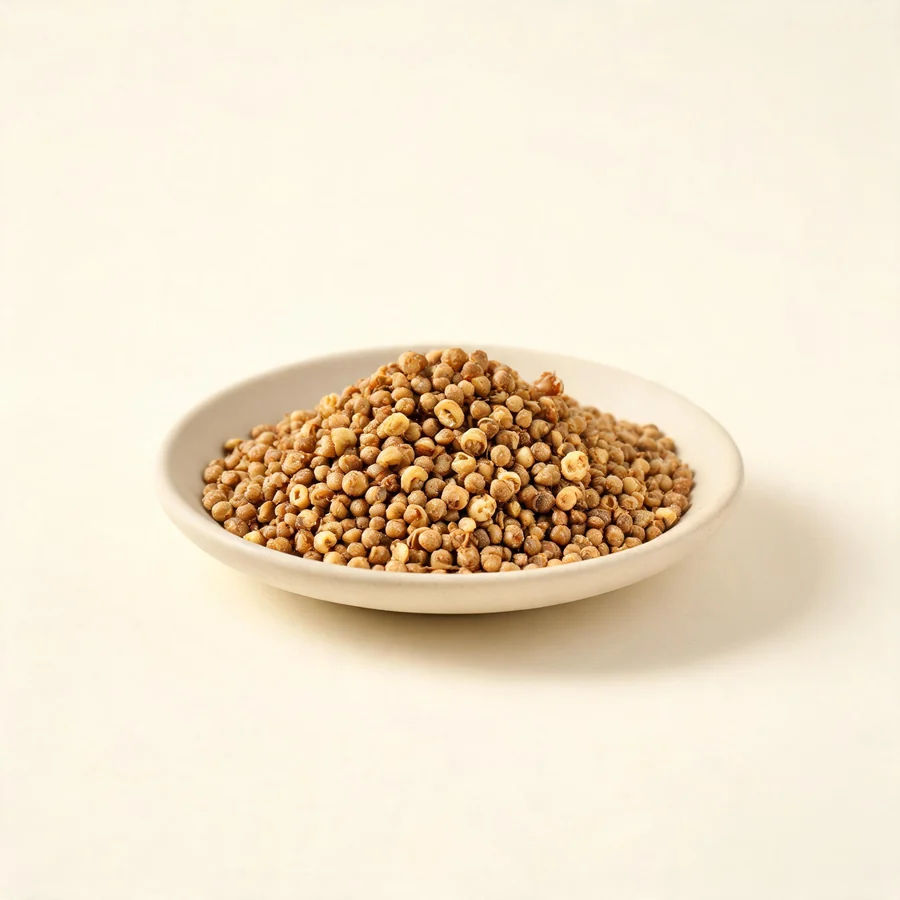
Skin profile
Where this herb sits in skin practice: the pattern it corrects, the skin signs it suits, and what it should not be used for.
Ting Li Zi is a fluid herb rather than a skin herb: it is used when water is held between skin and flesh and the face or limbs are swollen, and only in a robust person with a full chest. It is slightly toxic, it is stopped when the swelling settles, and breathlessness with swelling belongs in medical care.
Skin signs that suggest it
- Puffy eyelids and a swollen face on waking, with a full, tight chest and scanty urine
- Skin that is pale, cool and waterlogged, holding a dent when pressed, worst in the morning and in damp weather
- Swelling of the feet and ankles towards evening, with breathlessness on exertion or on lying flat
- Dry, unremarkable skin over the swollen area, with no redness, scale or weeping to explain the swelling
- A greasy or slippery tongue coat and a forceful pulse, in a person who is not thin or depleted
When it is not the right herb
Dermatitis is not its territory, and neither is skin that is red, hot, weeping or infected. It does nothing for rash, scale or itch, so using it there exposes a person to a cardiac glycoside for no benefit. Swelling that arises from a weak Spleen, a cold Kidney or a failing heart is the wrong kind, since the fluid is present because the driving force has failed rather than because an excess blocks the way; a thin, cold, tired person with a deep weak pulse is not a candidate. It is not for pregnancy, not for a child without supervision, and not for a long course, because the old instruction was to stop once the fluid had cleared. Breathlessness at rest, a swollen face with frothy urine or rapid weight gain is an emergency.
What it does for skin
Skin-relevant actions only. Each one describes a mechanism in TCM terms and what it looks like on the skin.
Pushes held water out of the surface
Fluid collecting between skin and flesh is what this seed addresses, and it is the strongest descender in the materia medica. The signs are a puffy face, a waterlogged surface and a limb that keeps a dent, and the seed moves that water down and out with the urine. Force is exactly the point: other herbs coax fluid along, this one drives it, so it is chosen where swelling is obvious and the patient is strong.
Frees the way above so urine can flow
The old reasoning: the Lung directs water downward, so obstruction there obstructs the bladder too. Clear the blockage above and the route below opens, so the swelling goes down as urine output rises. One mechanism accounts for two choices, namely why the seed is picked when the chest is full as well as the tissue swollen, and why it is never used for swelling by itself; it also explains the pairing with herbs that work from below.
Breaks up hot, thickened fluid
Where held fluid is hot as well as stuck, with a tight shiny swelling, thirst, dark scanty urine and a rapid pulse, the seed's coldness and bitterness come into their own: cold clears the heat, bitterness and pungency break the mass. This is the version of the pattern in which fang ji is added. Pale, cold, pitting swelling is its opposite and is not treated this way.
Eases the breathlessness that accompanies swelling
A full chest and an inability to lie flat are treated alongside the swelling, as one disorder rather than two. It is also the most dangerous setting, because breathlessness with swelling points to heart or kidney disease and needs a diagnosis rather than a decoction. Supervised care is the only place for the herb here, and never a home remedy for a swollen face.
Skin conditions it is used for
Mapped to the condition pages on this site. The pattern column shows what the skin is doing when this herb is the right choice.
| Condition | Pattern | Why it suits | Typical setting |
|---|---|---|---|
| Facial Swelling | Water held between skin and flesh: puffy eyelids and a full face, with scanty urine | Puffiness of face and eyes is named in the oldest records and is still the clearest skin use. Surface water shows in the face first, and the seed shifts it by opening the route above and driving it down. An excess picture with a full chest and a forceful pulse is the setting, jujube is usually added to protect digestion, and treatment stops when the puffiness has gone. Breathlessness, frothy urine or rapid weight gain with a swollen face needs urgent medical assessment. | Ting Li Da Zao Xie Fei Tang |
| Skin Swelling | Water at the surface: pale, pitting, waterlogged skin with a tight chest | A full pale skin that dents, little urine and a tight chest together describe fluid at the surface. For that the seed is the strong option, brought in when a gentler herb such as mulberry root bark has not done enough, and given in a compound for a short period. Swelling that climbs from the legs upward, or that appears in a cold and depleted person, is a different problem and is not an indication for a draining seed. | Ji Jiao Li Huang Wan, or Ting Li Da Zao Xie Fei Tang |
| Swollen Ankle | Fluid sinking to the lowest point, with scanty urine and a heavy leg | Swelling that gathers by evening and eases on lying down is fluid that has sunk, and when a full chest and scanty urine accompany it the seed is used to move things from above. Its role is supporting, with the lower-body water herbs doing the local work. One hot, red, painful ankle is not fluid-led swelling at all: injury, infection and a clot all need assessment before herbs are considered. | Within Ji Jiao Li Huang Wan with Fang Ji and Huang Bo |
| Red And Swollen Feet | Damp-heat settling in the feet: pitting swelling with heat and scanty dark urine | Leg-qi, the old name for feet and lower legs that swell, feel heavy and burn while urine runs scanty and dark, is where this seed and fang ji traditionally meet. The seed opens the route above while the lower herbs drain damp-heat, and the pair forms the old pill for fluid with heat. Cellulitis, injury and infected ulcers are not this, and spreading redness with fever needs immediate care. | Ji Jiao Li Huang Wan |
Combinations for skin
Herbs it is paired with when the skin, not an internal organ, is the target.
| Partner | Ratio | Why the pair is used |
|---|---|---|
| Da Zao | 9 to 15 g of seed with about 12 jujubes | The whole of the classical two-herb prescription for a chest awash and a face that is swollen. Jujube, sweet and warm, guards the middle, while the seed drains with such force that digestion can suffer, and the pair removes the water without exhausting the patient. Its mucilage clouds the liquid and clogs a strainer, so the seed goes into the pot tied in cloth and is never rinsed first. |
| Sang Bai Pi | 1 to 1, about 10 g of each | Both send Lung Qi down and move water, yet the mulberry bark is sweet, cold and gentle while this seed is pungent, bitter and forceful. The bark fits a mildly puffy face with yellow phlegm; the seed fits a chest genuinely full of fluid. Given together they cover severe swelling that has both heat and a large volume of fluid behind it, and the seed is the first to be withdrawn. |
| Fang Ji | 1 to 1, as in Ji Jiao Li Huang Wan | Water is drained and damp-heat cleared below by fang ji, while the route above is opened by the seed, so both ends of fluid movement are covered at once. The old pill for fluid with heat contains both, and the combination matters most in a foot that is swollen, hot and heavy. Draining herbs both, so the course is brief and digestion is watched. |
| Da Huang | used alongside Da Huang in formulas for severe fullness | Rhubarb clears stagnation from the bowel, and the seed opens what is blocked in the Qi of the Lung; classical writers contrasted the two as opening the bowel against opening the Qi. Together they drain from chest to abdomen, which fits a swollen face with a tight distended belly and no bowel movement. Harsh pair, short and supervised course only. |
Formulas where it leads
- Ting Li Da Zao Xie Fei Tang (葶苈大枣泻肺汤) - The two-herb prescription from the Jin Gui Yao Lue for a Lung awash with fluid: breathless, swollen in the face, unable to lie flat. Jujube shields the stomach from the seed's force, and the course is brief. Modern care would look for heart or kidney disease behind the picture before any herb is given.
- Ji Jiao Li Huang Wan (己椒苈黄丸) - The classical pill for fluid with heat in the abdomen and lower body, containing fang ji, pepper, this seed and rhubarb. Skin practice meets it in the swollen, hot, heavy foot of leg-qi, where fluid and heat have sunk to the lowest point. Strong medicine, and one for a practitioner.
Safety for skin use
What to check before recommending or using it, including the cautions that matter most for skin patients.
Do not use, or use with caution
- Swelling from deficiency: a thin, cold, tired person with cold limbs, pale urine and a deep weak pulse. A harsh draining seed weakens such a person and does not touch the cause.
- Dry skin from Yin or fluid deficiency, with a red peeled tongue, night sweats and thirst. Fluid is drained by the seed, and the surface left behind is drier than before.
- Heart disease, particularly treatment with digoxin or another cardiac glycoside. The seed has glycosides of its own and the gap between a useful and a dangerous amount is small.
- Pregnancy, breastfeeding and young children without direct supervision. Descent is strong, the glycosides could in theory enter milk, and in a small body the toxic dose sits close to the therapeutic one.
- Swelling caused by a failing heart or kidney or by a clot, or a face swollen with breathlessness. These are emergencies, not indications for a decoction.
Pregnancy and breastfeeding
Best avoided. Descent is powerful, cardiac glycosides are present, and nothing shows it to be safe in pregnancy; it is kept for a clear-cut indication with no safer alternative, and then only under supervision. No data exist on transfer into milk during breastfeeding, and both the glycoside content and the draining action argue for short, supervised courses while the infant is watched for drowsiness, poor feeding or loose stools.
Interactions
- Digitalis and related heart drugs. Helveticoside and evomonoside are both present in the seed, so with digoxin the effect on the heart can be additive and a rhythm disturbance becomes more likely. The combination requires medical supervision and cardiac monitoring.
- Furosemide and other diuretics. The seed promotes urine itself, so the two together can strip fluid and potassium from the body, and low potassium makes glycoside poisoning more likely. Anyone already taking a diuretic should not add this seed without advice.
- Anticoagulants and antiplatelet medicines. Weak antiplatelet activity has been shown for the seed's flavonoids in the laboratory, which is a theoretical reason for care with warfarin, aspirin or clopidogrel.
- Lithium. A strong diuretic herb may raise lithium levels by reducing clearance, and lithium's range is narrow.
Allergy and patch testing
Mustard-family sensitivity is the specific caution. The seed comes from plants in the cabbage and mustard family, and a person who reacts to mustard, cress or related pollen could in theory react to it. Reactions to the seed itself are not well recorded, and the greater risk with this herb is dose and quality rather than allergy. Material should be clean, free of mould and correctly identified, because a substituted seed is a different medicine.
General safety references
General references for herbal hepatotoxicity and herb-drug interactions; they are not specific to this herb.
- Review article: Herbal hepatotoxicity - an update on traditional Chinese medicine preparations. Alimentary Pharmacology & Therapeutics, 2014. PMID: 24844799.
- Interactions between herbal medicines and prescribed drugs: an updated systematic review. Drugs, 2009. PMID: 19719333.
- Warfarin and food, herbal or dietary supplement interactions: a systematic review. British Journal of Clinical Pharmacology, 2021. PMID: 32478963.
Evidence
The classical record is quoted with its source. The modern note states the level of evidence plainly.
Classical record
Pungent and cold. The old entry gives it for knotted accumulations and masses, and for eating and drinking disorders that mix cold with heat; it breaks hardness, expels pathogenic influences and opens the waterways.
Shen Nong Ben Cao Jing (Divine Husbandman's Classic of Materia Medica), Han compilation - Both halves of the action are already there in the oldest entry, breaking a mass and opening the waterways, and the skin use grows out of the second.
Bitter and very cold, with no toxicity on record. It draws water out of the Bladder, calms heat that has been retained, drives out pathogenic water lurking between skin and flesh, is indicated for swelling of the face and around the eyes, and is said to benefit the lower abdomen.
Ming Yi Bie Lu (Supplement to the Classic of Materia Medica) - This is the line that puts the seed on a skin page: water held between skin and flesh, and swelling of face and eyes, are named outright.
In Li Gao's words the Qi is sent downward with more force than most herbs possess: bitter and cold, thick in both flavour and Qi, second only to rhubarb, and better than anything else at opening what has closed in the Yang part of the Lung.
Li Gao, Jin dynasty physician - Li Gao's rhubarb comparison is the oldest reason the seed is reserved for excess and for brief use.
Modern evidence
Evidence status
- The cardiac glycoside content is the best-established fact about the seed. Helveticoside and evomonoside are the constituents named in the literature, and between them they account for the old heart-strengthening use and for the danger of combining it with heart drugs; the southern source plant is considered the more toxic.
- No controlled clinical trial of Ting Li Zi in skin oedema was identified, and the skin indications rest on the classical water-passage reading rather than on trial evidence. Recorded harm is gastrointestinal, with nausea, vomiting, poor appetite and diarrhoea at higher doses, and the theoretical concern is a disturbance of heart rhythm.
- Regulatory status: the seed is an accepted article in the Chinese Pharmacopoeia as Descurainiae Semen or Lepidii Semen, and the two official sources differ in strength. Quality matters here, because substitution with other seeds is recorded, and the material should come from a supplier who can name the species.
PubMed records
Selected real PubMed records for this herb's species or its constituents, chosen by species name and title relevance. They are references for the non-TCM discussion above, not proof that the herb treats any skin condition.
- Descurainia sophia L. and Lepidium apetalum Willd.: A comprehensive review of botany, ethnopharmacology, phytochemistry, pharmacology, actual and potential applications.. Fitoterapia, 2025. PMID: 40962150 (pharmacology or review record).
Dose and forms
Skin-practice dosing and the preparations that suit skin complaints.
| Form | Dose and notes |
|---|---|
| Decoction | 3 to 10 g of stir-fried seed daily, tied in cloth, inside a formula rather than alone. Where other draining herbs are present, or the patient is small, 3 to 6 g is enough. |
| Powder | 3 to 6 g of ground stir-fried seed, taken as a powder rather than decocted, and only under supervision. Powder is stronger, so the amount comes down. |
| Course length | Days rather than weeks. The old instruction was to stop as soon as the fluid cleared, because a long course causes deficiency and the glycoside load accumulates. |
Toxicity governs the dose as much as strength does. The seed is not rinsed before decoction and is tied in cloth, because its mucilage clouds the liquid and is thought to carry the action. Dry-frying or honey-frying softens the harshness on the stomach and lowers the toxicity, and the honey-fried form is the one for a person with some deficiency and for children. Nausea, vomiting, poor appetite or diarrhoea is a reason to stop rather than to reduce, and a person with a heart condition should not take the seed at all without medical agreement.
Citations and further reading
Only real sources are listed: the classical materia medica passages quoted above, and the source works behind the botanical and safety statements.
- Shen Nong Ben Cao Jing (Divine Husbandman's Classic of Materia Medica), Han compilation - classical entry summarised above, the original not quoted.
- Ming Yi Bie Lu (Supplement to the Classic of Materia Medica) - the passage on water held between the skin is summarised above, the original not quoted.
- Li Gao, Jin dynasty, on the force of the seed, as preserved in the later materia medica literature - summarised above, the original not quoted.
- Jin Gui Yao Lue (Zhang Zhongjing), the source of Ting Li Da Zao Xie Fei Tang and Ji Jiao Li Huang Wan - formula composition and indications.
- Descurainiae Semen and Lepidii Semen monographs, Pharmacopoeia of the People's Republic of China - accepted sources, processing and dose range.
- Modern evidence statement: based on published work on the cardiac glycosides of Descurainia and Lepidium, and on recorded adverse effects; no clinical trial in skin disease is presented as proof.
Educational reference for qualified practitioners. This page is not medical advice, and skin conditions should be diagnosed by a clinician before treatment.