Skin profile
Where this herb sits in skin practice: the pattern it corrects, the skin signs it suits, and what it should not be used for.
Ban Zhi Lian is chosen for a lesion that is hot and hard rather than hot and wet, and it works best as a partner to stronger toxin-clearing and Blood-moving herbs. Its coldness and its effect on the Blood are the practical limits on how long it can be given.
Skin signs that suggest it
- Red, hot, hard swellings and boils that are painful to touch and slow to point
- Clusters of follicular pustules on a red base, with a yellow tongue coating
- Hot, tight swelling around a bite, graze or minor wound, with foul discharge
- A lesion that is dusky or purple at the centre and hard at the edge
- A purple-tinted tongue with yellow coating, and a pulse that is rapid and wiry
When it is not the right herb
Not for skin that is pale, cold, thin or dry and has no heat in it, and not for a chronic ulcer that looks pale and watery and heals slowly. Anyone with Blood deficiency, marked by a sallow face, light-headedness and scanty periods, is a poor candidate, as is someone whose digestion is cold and loose: the herb's bitterness and cold will thin an already thin Blood picture and loosen an already loose stool. Pregnancy and breastfeeding rule it out. A spreading skin infection, a large abscess or a fever with a fast-advancing red edge needs medical care, and a poultice is no substitute for it.
What it does for skin
Skin-relevant actions only. Each one describes a mechanism in TCM terms and what it looks like on the skin.
Clears heat toxin and cools a hot lesion
The primary skin action. Heat toxin shows as a lesion that is not only red but angry: a boil with a hard base, a pustule with a red halo, an infected graze that becomes hot and tender, or a carbuncle that throbs. Ban Zhi Lian is colder than the general heat-clearing herbs and is chosen when the local reaction is intense and confined. It is not a broad anti-inflammatory for fever or internal heat, and it is not used to cool a whole-body hot pattern on its own.
Breaks stasis and disperses a hard swelling
The acrid quality gives the herb a moving edge that the bitter-cold roots lack. Where inflammation has sat long enough for the tissue to thicken, the lesion feels hard and fixed rather than soft, and the surrounding skin is dusky. Ban Zhi Lian is then paired with Blood-moving herbs such as Chi Shao or E Zhu so that the congestion is loosened while the heat is cleared. This is why it appears in formulas for indurated swellings and not only in those for acute infection.
Takes heat and ooze out of the surface when applied
A cooled decoction or a crushed fresh plant is applied to hot, weeping or discharging lesions, and the tradition uses this route freely for boils, bites and infected grazes. The wash reduces the surface heat and the moisture that keeps a lesion macerated, and it puts the herb where the problem is without asking the digestion to process a cold, bitter decoction. It is a comfort measure and a support to internal treatment, not a way to avoid medical care for an infection.
Drains damp-heat downward through the urine
The herb enters the Kidney channel and has a diuretic action, which gives a second exit for damp-heat when a skin eruption is accompanied by hot, scanty urine, heaviness in the legs or a discharge. This is a supporting effect rather than the main reason to choose it, but it explains why the herb recurs in formulas for damp-heat of the lower body as well as in washes for the skin.
Skin conditions it is used for
Mapped to the condition pages on this site. The pattern column shows what the skin is doing when this herb is the right choice.
| Condition | Pattern | Why it suits | Typical setting |
|---|---|---|---|
| Boils | Heat toxin gathering into a hard, tender swelling | An early boil is a concentration of heat and toxin in one place, and the tradition treats it by cooling the heat and loosening the congestion that keeps it hard. Ban Zhi Lian does both, which is why it appears in oral formulas and in poultices for boils, usually with Pu Gong Ying, Jin Yin Hua or Lian Qiao. A boil with a spreading red edge, fever or a large collection of pus needs medical review, and drainage is a clinical procedure rather than something a compress can achieve. | Wu Wei Xiao Du Yin with Ban Zhi Lian added, or with Pu Gong Ying and Jin Yin Hua |
| Skin abscess | Heat toxin with pus forming under a hard, red surface | Before a collection of pus declares itself, the skin over it is hard, red and exquisitely tender, and the traditional aim is to help the swelling either scatter or point. Ban Zhi Lian supplies the toxin-clearing half of that work and is combined with herbs that move Qi and Blood at the surface. Once a collection is established, the abscess has to be drained; a poultice can soften the surface but cannot empty a cavity, and delay carries a real risk of spread. | Modified Xian Fang Huo Ming Yin with Ban Zhi Lian |
| Folliculitis | Heat toxin lodged in the hair follicles | Crops of small pustules on the back, shoulders or limbs, each with a red base, are read as heat toxin held in the follicles, and the herb suits this because it clears the toxin and reduces the surrounding hardness at the same time. It is given internally in a formula and used as a wipe for the affected area, with Lian Qiao or Pu Gong Ying. Recurrent crops, or folliculitis that follows shaving, also need the local irritant removed and, where infection is confirmed, an appropriate antibiotic. | Ban Zhi Lian with Lian Qiao and Pu Gong Ying, internally and as a wipe |
| Cellulitis | Spreading heat toxin with redness, heat and tenderness | The tradition knows spreading hot redness as a toxin pattern and treats it with strong cooling and toxin-resolving herbs, and Ban Zhi Lian has a place among them. The modern boundary is firm: cellulitis is a bacterial infection that can progress in hours, and it needs antibiotics and assessment. A cooled wash may be used alongside treatment for comfort, but the herb is never a reason to wait, and an advancing red edge or a fever with rigors means urgent care. | Jia Wei Xiao Du Yin type formulas, alongside antibiotics and medical care |
| Skin infection | Heat toxin in broken or inflamed skin | Infected grazes, insect bites, minor wounds and infected eczema share a picture of heat toxin at a surface that is no longer intact. Ban Zhi Lian is used where the reaction is hot, red and tender rather than pale and watery, usually as a wash and with a small internal dose. The herb's name for resolving toxin is traditional; it does not sterilise a wound, and a spreading infection, a deep puncture or a bite over a joint needs medical attention rather than a herbal wash. | Ban Zhi Lian and Pu Gong Ying decoction, used as a wash with a small internal dose |
Combinations for skin
Herbs it is paired with when the skin, not an internal organ, is the target.
| Partner | Ratio | Why the pair is used |
|---|---|---|
| Huang Qin | 15 to 30 g Ban Zhi Lian with 6 to 10 g Huang Qin | The two skullcaps divide the work. Huang Qin root is the broad internal heat clearer for fever, jaundice and damp-heat diarrhoea, while Ban Zhi Lian whole plant is the specialist in toxic swellings and stagnation. They are combined when heat is both widespread and concentrated in a lesion, and the pair is a reminder that a shared genus does not make two herbs interchangeable. |
| Pu Gong Ying | 15 to 30 g each in decoction | Dandelion clears heat toxin and reduces swelling, with a particular reputation for breast and skin lesions, and it is gentler than Ban Zhi Lian. The pair is standard for boils, mastitis-like swellings and infected eczema, with dandelion leading in recurrent low-grade problems and the skullcap added when the lesion is hard and painful. |
| Jin Yin Hua | 15 to 30 g Ban Zhi Lian with 10 to 15 g Jin Yin Hua | Honeysuckle flower clears toxin at the surface and in the upper body, while the whole-plant skullcap reaches deeper and moves what has stagnated. Together they cover a lesion that is both spreading at the edge and hard at the centre, and the pair appears in many of the classical toxin-resolving formulas. |
| Chi Shao | 10 to 15 g each | Red peony cools the Blood and quickens it, which addresses the stagnation that makes a hot lesion hard and dusky. Ban Zhi Lian supplies the toxin-clearing that red peony does not, so the pair is used where infection and induration are present together, and red peony is the safer choice when the person is run down and the stronger stasis-breaking herbs are too much. |
Formulas where it leads
- Wu Wei Xiao Du Yin (五味消毒饮) - The classic formula for heat toxin with boils and carbuncles, built on dandelion, viola, honeysuckle and chrysanthemum. Ban Zhi Lian is added when the lesion is hard and slow to resolve, and the whole formula is used for the early, hot stage rather than for a cold, watery sore.
- Xian Fang Huo Ming Yin (仙方活命饮) - A surgical formula for toxic swellings that combines toxin-clearing with Blood-moving and pus-expelling herbs. Ban Zhi Lian fits its logic when the swelling is indurated, and the formula is used before a collection has formed; once pus is established, drainage rather than a decoction is the priority.
Topical use
Ban Zhi Lian is applied as a cooled decoction or a crushed fresh poultice to boils, bites, infected grazes and hot, weeping patches. The fresh plant is the traditional field remedy in southern China, where it grows on damp ground and is picked for exactly this purpose. The external route puts a cold, toxin-clearing herb directly on the lesion and spares the digestion, which matters because the internal dose is large and bitter.
| Preparation | How and when it is used |
|---|---|
| Cooled decoction compress | Simmer 30 g of dried whole plant in 700 ml of water for 20 minutes, strain and cool to skin temperature. Soak clean gauze and hold it against the lesion for 10 to 15 minutes twice daily, then pat the skin dry. Make a fresh batch each day and discard what is left. |
| Fresh poultice | Crush a handful of clean fresh plant, wrap it in a thin cloth and lay it over a hot, hard swelling for 20 minutes. Wash the area afterwards, check the skin for irritation, and do not seal the poultice under an airtight dressing. |
| Dilute wash for a wide area | Where several lesions on a limb need treatment, use half the strength above and wipe the area rather than soaking it. Keep the liquid away from the eyes and mouth, and stop if the skin stings or tightens. |
Patch test and cautions
Patch test on a small area of normal skin for 24 hours before the first proper use. Do not apply to broken, ulcerated or openly infected skin without clinical supervision, and never apply over a collection of pus that has not been drained. Stop at once if burning, stinging or spreading redness develops, and do not use the wash on the face or near the eyes.
Safety for skin use
What to check before recommending or using it, including the cautions that matter most for skin patients.
Do not use, or use with caution
- The herb suits a person with plenty of Blood and heat behind the lesion. It does not suit Blood deficiency, where the face is pale, standing up brings dizziness, periods are scanty and the tongue is pale; being bitter, cold and moving, it can thin an already thin Blood picture. If it is used at all, it belongs beside Blood-nourishing herbs and for a fixed period.
- A digestion that runs cold and weak, with loose bowel movements, little appetite, a chilly sensation in the belly and a dislike of cold drinks, is the other main objection. The bitter cold can make a tendency into an everyday problem; where the herb is needed, give it after food and at the bottom of the dose range.
- Pale, watery, slow-healing sores and ulcers with no surrounding heat. These are cold or deficient lesions, and a cooling, moving herb does not help them and may slow healing further.
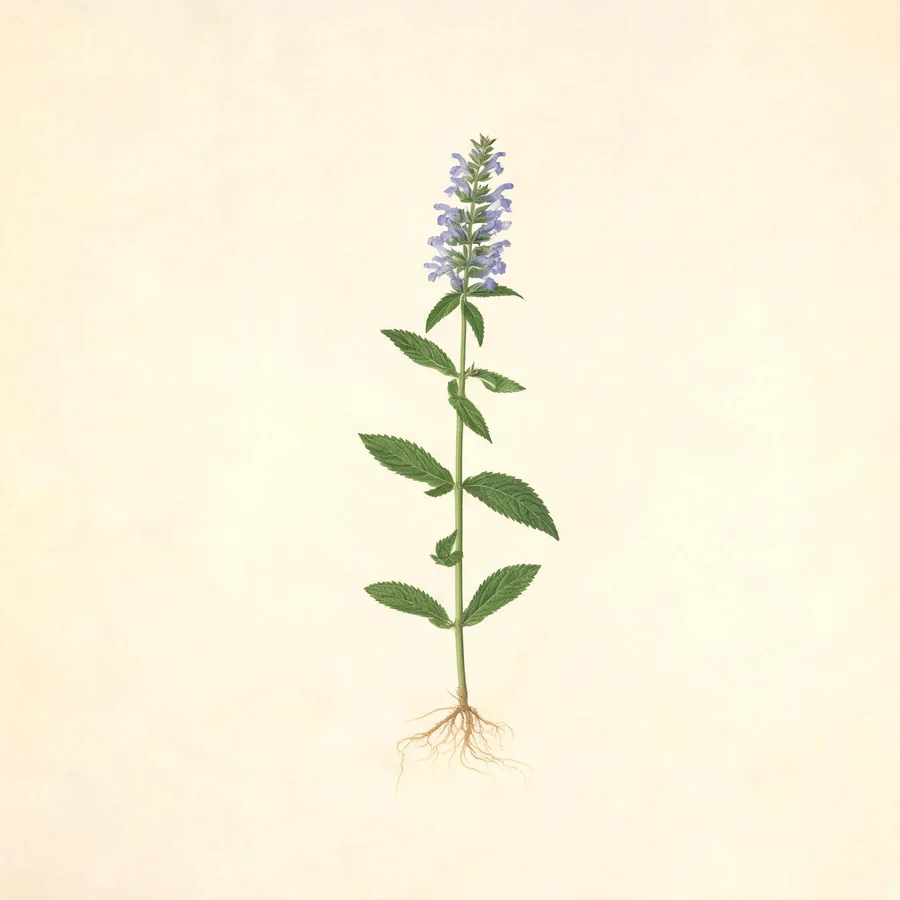
- Undocumented or unlabelled plant material. Confusion with Ban Bian Lian (Lobelia chinensis), a different plant with different actions, is a real problem in the market, and the botanical identity should be known before use.
Pregnancy and breastfeeding
Best avoided. It moves the Blood and breaks stasis, and the old texts counsel care during pregnancy, the concern being that so moving and cooling a herb might unsettle an early pregnancy. There are no good safety data, and it is not a cleansing tea for anyone pregnant or trying to conceive. A clinician treating a serious condition may judge the balance differently, but that judgement belongs to someone following the pregnancy rather than to self-prescription. A small topical area is a far smaller exposure and is still worth discussing.
Interactions
- Anticoagulants and antiplatelet drugs. Laboratory work on the plant shows mild antiplatelet activity, and no clinical interaction has been documented. Anyone taking warfarin, apixaban or clopidogrel should tell the prescriber before adding a Blood-moving herb, and should report unusual bruising, nosebleeds or dark stools.
- Chemotherapy and immunosuppressants. Extracts have shown immunomodulatory and antiproliferative effects in laboratory models, which is exactly why the herb should not be started quietly alongside cytotoxic treatment or drugs given after transplant. The oncology or transplant team needs to know what is being taken.
- Diuretics and antihypertensives. The herb has a diuretic action, so it may add to fluid loss and to the effect of a diuretic, particularly in an older person whose intake is poor. This is a reason to keep the dose modest and to watch for dizziness rather than a reason to forbid the herb.
Allergy and patch testing
Contact dermatitis to herb poultices is well recognised, and a wash that causes burning or a new rash should be stopped and not repeated. People who react to other plants in the mint family, including mint, basil and dead-nettle, may be more likely to react to this skullcap, and a patch test is sensible before a first poultice.
General safety references
General references for herbal hepatotoxicity and herb-drug interactions; they are not specific to this herb.
- Review article: Herbal hepatotoxicity - an update on traditional Chinese medicine preparations. Alimentary Pharmacology & Therapeutics, 2014. PMID: 24844799.
- Interactions between herbal medicines and prescribed drugs: an updated systematic review. Drugs, 2009. PMID: 19719333.
- Warfarin and food, herbal or dietary supplement interactions: a systematic review. British Journal of Clinical Pharmacology, 2021. PMID: 32478963.
Evidence
The classical record is quoted with its source. The modern note states the level of evidence plainly.
Classical record
清热,解毒,祛风,散血,行气,利水,通络,破瘀,止痛。内服主血淋,吐血,衄血;外用治毒蛇咬伤,痈疽,疔疮,无名肿毒。
It clears Heat and resolves toxin, breaks stasis and stops pain, disperses Wind, moves Qi, scatters Blood, frees the channels and promotes urination. Internally it is given for nosebleed, vomiting of blood and bloody strangury; externally for snakebite, deep sores, boils and toxic swellings without a name.
Quan Zhou Ben Cao (Materia Medica of Quanzhou) - The entry lists both the internal and the external applications, and it is the clearest classical statement that one plant is used as a drink and as a poultice.
半枝莲解蛇伤之仙草。
A single line calls Ban Zhi Lian the wondrous herb for resolving snakebite injury.
Yao Jing Shi Yi Fu (Rhyme on the Properties of Medicines) - A single line, and the reason growers in the south still think of the plant as a snakebite remedy before anything else.
Modern evidence
Evidence status
- Laboratory studies of Scutellaria barbata extracts and their diterpenoid and flavonoid constituents report anti-inflammatory and antibacterial activity in cell and animal models. These findings describe mechanisms rather than clinical benefit, and most are reported at concentrations well above those reached by a decoction.
- Clinical evidence in skin disease is very limited. What exists is mostly small Chinese-language reports of multi-herb formulas and washes, without controls or independent replication, so no conclusion can be drawn about efficacy in boils, folliculitis or infected eczema.
- The toxicity data are reassuring but animal-based: an oral median lethal dose of the decoction in mice of about 6.1 g per kg, and subchronic studies without significant organ damage at ordinary doses. There is no equivalent human safety dataset for the large traditional doses used over months.
PubMed records
Selected real PubMed records for this herb's species or its constituents, chosen by species name and title relevance. They are references for the non-TCM discussion above, not proof that the herb treats any skin condition.
- Identification and characterization of chemical constituents in Scutellariae barbatae Herba by UHPLC-QTOF-MS.. Journal of chromatographic science, 2026. PMID: 42607287 (pharmacology or review record).
Dose and forms
Skin-practice dosing and the preparations that suit skin complaints.
| Form | Dose and notes |
|---|---|
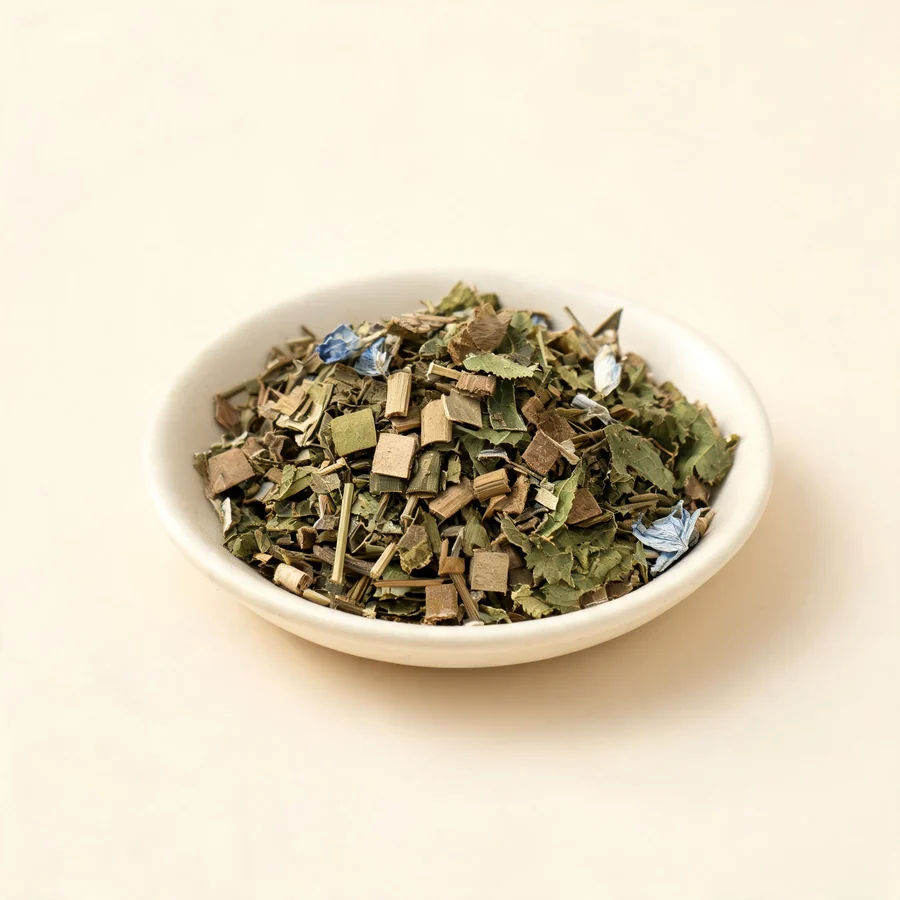
| Decoction (internal) | 15 to 30 g of dried whole plant daily in a formula. Up to 60 g is recorded for acute hot swellings under supervision, and the lower end belongs to mild lesions, delicate digestion and older patients. Take it with a meal rather than on an empty stomach. |
| External wash or poultice | 30 to 60 g simmered in about 1 litre of water, cooled and used as a compress or wash, or a handful of clean fresh plant crushed for a poultice. The external route does not carry the same digestive limit, but the concentration should still be reduced for thin or sensitive skin. |
| Course length | One to two weeks for an acute lesion, with review. Because the herb is cold and moves Blood, it is not continued as an indefinite tea, and a lesion that has not improved in that time needs a diagnosis rather than a longer course. |
A dose this size reflects how light and mild the whole plant is gram for gram, not a belief that large amounts suit everyone. The higher figures in the old sources belong to acute, frankly hot conditions and to supervised care; mild lesions, a delicate stomach and older age sit at the bottom of the range. Fresh material is several times the weight of the dried equivalent, so the two sets of figures cannot be swapped. Courses stay short, and the herb is almost always one part of a formula rather than the whole of the treatment.
Citations and further reading
Only real sources are listed: the classical materia medica passages quoted above, and the source works behind the botanical and safety statements.
- Quan Zhou Ben Cao (Materia Medica of Quanzhou), Qing dynasty - classical entry quoted above.
- Yao Jing Shi Yi Fu (Rhyme on the Properties of Medicines), Qing dynasty - classical entry quoted above.
- Scutellaria barbata monograph: Pharmacopoeia of the People's Republic of China - accepted botanical source, part used and quality requirements.
- Modern evidence statement: based on laboratory literature on Scutellaria barbata diterpenoids and flavonoids, summarised as a statement about the level of evidence rather than as a cited finding. No clinical trial is presented as proof of effect.
- Botanical identification: botanical literature on Scutellaria barbata, Lamiaceae, including the distinction from Lobelia chinensis and Scutellaria indica.
Educational reference for qualified practitioners. This page is not medical advice, and skin conditions should be diagnosed by a clinician before treatment.