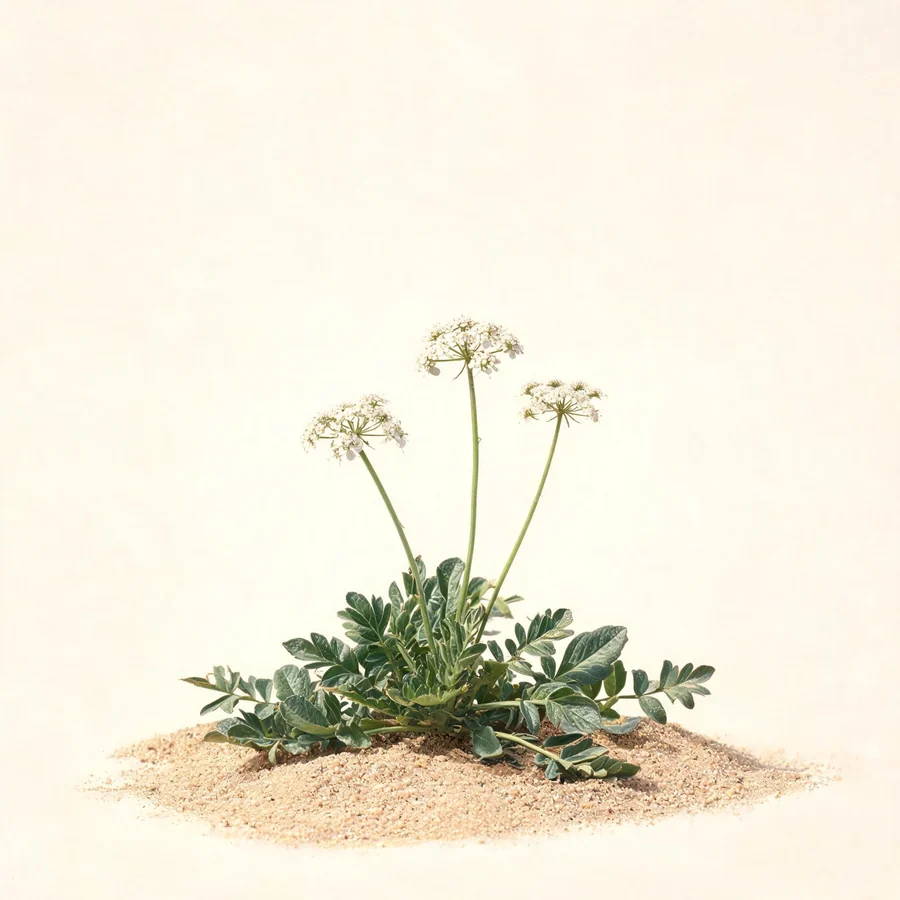
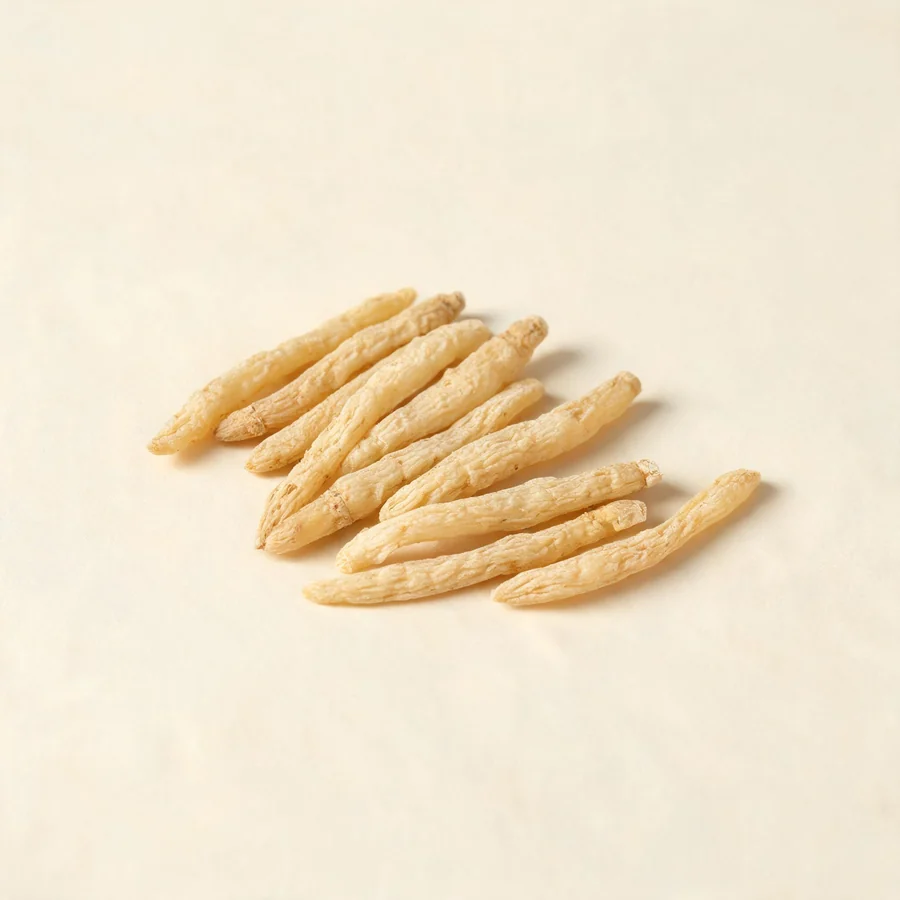
Skin profile
Where this herb sits in skin practice: the pattern it corrects, the skin signs it suits, and what it should not be used for.
Bei Sha Shen is the light, cool root for dry, thin, hot skin with a dry throat and a lingering dry cough: it replenishes Yin in the Lung and Stomach without burdening the digestion. It is not for cold, damp or greasy patterns, and it is never decocted with Li Lu.
Skin signs that suggest it
- Dry, thin, tight skin that feels warm, with flushing over the cheeks in the afternoon
- A dry throat and a dry cough with scanty, sticky sputum that lingers after a fever
- Night sweats with dryness, a dry mouth at night and a tongue with little or no coat
- Dry, cracked lips or a dry, scurfy nose, worse in dry air and in autumn
- Warm palms and soles with a fine, rapid pulse, and no true heat signs
When it is not the right herb
A cough or a skin flare arising from external cold is not for it. Chill, a white tongue coat, a runny nose and plenty of clear watery sputum call for warming and dispersing, and a cool moistening root thickens the sputum and may drag the illness out. Dampness or phlegm is the second bar: a greasy coat, profuse watery sputum, a heavy body and a foggy head mean that added moisture feeds the dampness, not the deficiency. Cold, weak digestion with loose stools calls for a smaller dose or the dry-fried form rather than free use, and the root is never boiled with Li Lu, a pairing the tradition forbids outright rather than limiting by dose.
What it does for skin
Skin-relevant actions only. Each one describes a mechanism in TCM terms and what it looks like on the skin.
Restores the moisture film of the Lung
The Lung is described as needing a film of moisture to work, and when illness or dry air uses it up the airway becomes irritable and the skin above it dry and tight. Bei Sha Shen replenishes that film with a sweet, slightly cool root rather than suppressing the cough, and the effect is on the supply rather than on the symptom. It is why the herb is used in the recovery stage rather than during an acute hot illness.
Clears the residual heat that keeps drying the surface
The warmth this herb addresses is the low-grade heat of depletion, not the fever of an acute attack. Flushing in the afternoon, hot palms and soles, sweating at night and a mouth that dries after dark, with a red tongue and scant coat, are its signs. A cool but not cold root clears that warmth without the harshness of the bitter herbs, which is why a person already thin and dry tolerates it.
Moistens the Stomach so fluid reaches the skin
A dry mouth, a thirst that is not relieved, hunger without appetite and a dry stool are the signs of a Stomach that has lost its moisture, and the skin is dry in the same proportion. The root generates fluid in the middle without being cloying, and it is used where a richer tonic would sit heavily. It is a supporting herb in that picture, and the fluid it helps generate is what the surface draws on.
Settles the tight, dry, irritable surface that follows illness
Skin that is tight, thin and easily irritated after a fever or a long illness is the surface counterpart of a dry Lung, and the herb is used to settle it over weeks rather than days. It is combined with moistening and blood-nourishing herbs, with an emollient on the surface, and it is not expected to change a rash that has another cause. A persistent or spreading rash needs assessment rather than a tonic.
Skin conditions it is used for
Mapped to the condition pages on this site. The pattern column shows what the skin is doing when this herb is the right choice.
| Condition | Pattern | Why it suits | Typical setting |
|---|---|---|---|
| Skin Dryness | Lung and Stomach Yin deficiency: dry, thin, tight skin after illness | A dry surface with a dry throat, a dry mouth and a tongue without coat is read as fluid failing in the Lung and Stomach. The root restores that fluid and is light enough for a thin person whose digestion is easily burdened, and that is why it is chosen over the richer tonics in such a case. It is used over weeks with an emollient, and generalised scaling with a family history of ichthyosis needs a diagnosis. | Sha Shen Mai Men Dong Tang |
| Dry And Hot Skin | Empty heat from Yin deficiency: dry skin with afternoon flushing and warm palms | Skin that is dry and hot at once, with afternoon flushing, hot palms and soles and night sweats, is read as Yin deficiency with empty heat. The low-grade warmth is cleared by the root, which also restores the fluid that heat is consuming, and it does not have the coldness of the bitter herbs. True heat, with high fever, a red face and a rapid full pulse, is another pattern and not a case for a gentle tonic. | With Sheng Di Huang, Zhi Mu and Mu Dan Pi |
| Skin Tightness | Fluid deficiency at the surface: tight, thin skin with a dry mouth | A face or a body that feels tight and drawn, worse in dry air and after washing, with a dry mouth and a scanty coat, is read as fluid not reaching the surface. The root supplies fluid from the middle and is mild enough to continue, and it is used with an emollient and with gentler cleansing. Tightness with redness, swelling or a burning pain is not this pattern and needs assessment. | With Mai Dong and Yu Zhu |
| Cracked Skin | Dryness of the lips and fine fissures from fluid depletion | Cracked lips and fine painful fissures in dry weather, with thirst and a dry mouth, are read as fluid failing at the surface. The root generates fluid and is gentle enough for a long course, and it is used with a barrier preparation on the lips. A fissure that bleeds or persists, or one on the foot of a person with diabetes, needs treatment, and a persistent lip crack can have a cause of its own. | With Mai Dong, Tian Hua Fen and Yu Zhu |
| Senile Pruritus | Dryness from declining Yin, with heat rather than cold | Itch in later life that comes with dry, thin skin, a dry throat and night warmth is read as dryness from declining Yin with a little empty heat, and the root is a supporting herb for that version of it. It is used with blood-nourishing and itch-settling medicines rather than alone. An itch with weight loss, jaundice, a new rash or a change in a mole needs medical assessment first. | With Dang Gui, Bai Shao and Bai Xian Pi |
Combinations for skin
Herbs it is paired with when the skin, not an internal organ, is the target.
| Partner | Ratio | Why the pair is used |
|---|---|---|
| Mai Dong | 1 to 1, commonly 10 g each | Mai Dong nourishes Stomach Yin and makes fluid, while Bei Sha Shen clears the Lung as it moistens, so the two halves of a dry picture are covered. A dry cough that comes with a parched throat and dry skin after a fever is its use, and the mixture is light enough to continue for several weeks. |
| Yu Zhu | 1 to 1, commonly 10 g each | Yu Zhu, the milder and more neutral partner, sends moisture out to skin and muscle as well as into the Stomach, while Bei Sha Shen is cooler and stays focused on the Lung. Broad, gentle moistening that can be kept up for weeks results, and it is chosen when the mouth, the skin and the chest are all dry at once. |
| Shi Hu | 1 to 1, commonly 10 g each | Stomach Yin is shared territory, but Shi Hu is the more powerful and reaches the Kidney too, where it clears deficiency heat that has started to rise. Being lighter, Bei Sha Shen reaches the Lung too, so the pair is chosen when depletion runs deep: great thirst, burning discomfort in the upper abdomen, weight loss and a tongue with no coat at all. It suits established deficiency rather than a cough of a few weeks. |
| Sheng Di Huang | 9 g Bei Sha Shen with 18 g Sheng Di Huang | The Blood is cooled by Sheng Di Huang, which also feeds the deeper Yin held by Liver and Kidney; Bei Sha Shen works higher, in Lung and Stomach. Between them they cover the full depth of a Yin deficiency spread across several organs, which is why they meet in prescriptions for a mouth that is dry with a slight fever, and for the thirst that belongs to a long wasting illness. Raw material is used, because cooling is what is wanted. |
Formulas where it leads
- Sha Shen Mai Men Dong Tang (沙参麦门冬汤) - From Wu Jutong's treatise on warm disease, and the signature prescription for a Lung left dry and Yin-deficient after a fever, with Bei Sha Shen leading. Skin practice borrows it for the dry, tight, thin surface that follows a febrile illness, with a dry cough and throat. A short course, not for use while fever still burns.
- Yi Wei Tang (益胃汤) - The formula for Stomach Yin deficiency, with sha shen, ophiopogon, raw rehmannia, Yu Zhu and rock sugar. It is the model for a dry mouth, dry lips and a dull, dry face after illness, and it is gentle enough to take as a decoction over a week or two. It is not for a greasy tongue or a cold, loose digestion.
Safety for skin use
What to check before recommending or using it, including the cautions that matter most for skin patients.
Do not use, or use with caution
- A cough arising from external cold: a chill, a white coat, a runny nose and plenty of clear watery sputum. Coolness and moisture together thicken the sputum and may drag the illness out.
- Dampness or Phlegm: a greasy tongue, profuse watery sputum, a heavy body and a foggy head. Yin tonics add substance, and in this picture the added moisture feeds the dampness.
- Cold, weak digestion with loose stools, a caution of degree rather than an absolute bar: it calls for a smaller dose, a warming companion herb or the dry-fried form, and it is a reason not to use the root freely.
- Never decocted with Li Lu (Veratrum). The old prohibition has a laboratory footing, since boiling the two together increases how much Veratrum alkaloid is extracted.
- Oily, seborrhoeic or acne-prone skin with yellow greasy scale, which is damp-heat and not dryness at all.
Pregnancy and breastfeeding
Generally considered safe at standard doses. No classical prohibition exists, the root is gentle and it does not move Blood, yet the caution matches the one for a weak digestion: given in quantity, a cool moistening herb can worsen cold limbs and loose stools during pregnancy. Where the dry pattern is clear, with a dry throat, thirst and a red tongue carrying scant coat, ordinary doses under supervision are reasonable; without that pattern the herb is simply unnecessary.
Interactions
- Immunosuppressants such as ciclosporin or tacrolimus. Laboratory work on the root's polysaccharides shows immune responses being pushed both up and down, so anyone taking an immunosuppressant or receiving immunotherapy should raise the herb with the prescriber instead of assuming it is neutral.
- Glucose-lowering medicines. People with diabetes sometimes take the root for thirst, and no interaction with glucose-lowering drugs has been documented; even so, the prescriber should know and the readings should be watched rather than the medication changed.
- Li Lu (Veratrum). This is an incompatibility rather than an interaction of dose: decocting the two together raises the extraction of Veratrum alkaloids, and the combination is prohibited in traditional practice.
Allergy and patch testing
Reactions are rare, and the specific caution is the plant family. The root comes from the carrot family, and a person with a known allergy to celery, fennel, coriander or related pollens could in theory react. The more common practical problem is identity, because the southern sha shen is a different plant from a different family and the two are sold under one name, so a reaction may be to material the buyer did not expect.
General safety references
General references for herbal hepatotoxicity and herb-drug interactions; they are not specific to this herb.
- Review article: Herbal hepatotoxicity - an update on traditional Chinese medicine preparations. Alimentary Pharmacology & Therapeutics, 2014. PMID: 24844799.
- Interactions between herbal medicines and prescribed drugs: an updated systematic review. Drugs, 2009. PMID: 19719333.
- Warfarin and food, herbal or dietary supplement interactions: a systematic review. British Journal of Clinical Pharmacology, 2021. PMID: 32478963.
Evidence
The classical record is quoted with its source. The modern note states the level of evidence plainly.
Classical record
沙参有南北二种,北者质坚性寒,南者体虚力微。
North and south are the two kinds of sha shen. The northern material is firm and cold by nature; the southern is weaker in body and faint in strength.
Ben Jing Feng Yuan (Collected Commentary on the Classic of Materia Medica), Zhang Lu, Qing dynasty - The short classical statement of the north and south distinction, which is still the reason the two roots are not interchangeable on a prescription.
甘苦微寒,味淡体轻。专补肺阴,清肺火。治久咳肺痿,金受火刑者宜之,寒客肺中作嗽者勿服。
Sweet, bitter and a little cold, bland to the taste and light in body. Its work is to replenish the Yin of the Lung and clear Fire there; it is given for a cough that has lasted a long time and for the wasted Lung, and it fits the case where Fire is punishing Metal. Where Cold has settled into the Lung and is the cause of the cough, the herb is not to be used.
Ben Cao Cong Xin (Materia Medica Renewed), Wu Yiluo, Qing dynasty - An unusually explicit early pairing of the indication with its exact opposite, the cough caused by cold.
清养之功,北逊于南;润降之性,南不及北。
For clearing and nourishing the southern root is the better; for moistening and for directing downward the northern root is stronger.
Ben Cao Bian Du (Materia Medica Made Plain), Zhang Bingcheng, Qing dynasty - A compact account of how the two roots divide the work, still repeated in modern texts.
Modern evidence
Evidence status
- Laboratory work on the root's polysaccharides reports immunomodulatory, antioxidant and antitussive activity. In mice, an acute oral dosing study found the decoction tolerated up to roughly 32 g per kg with no deaths, which is consistent with low acute toxicity and says nothing about a skin benefit.
- No controlled clinical trial of Bei Sha Shen in dry skin or in any skin condition was identified. Its skin use rests on the warm-disease tradition for damaged fluids and on the reasoning that the Lung governs the skin, not on trial evidence.
- Regulatory status: the root is an accepted article in the Chinese Pharmacopoeia as Radix Glehniae. Quality matters, because the northern and southern sha shen are different plants from different families sold under one name, and the root is also the subject of the classical incompatibility with Li Lu.
PubMed records
Selected real PubMed records for this herb's species or its constituents, chosen by species name and title relevance. They are references for the non-TCM discussion above, not proof that the herb treats any skin condition.
- Glehnia littoralis Fr. Schmidtex Miq.: A systematic review on ethnopharmacology, chemical composition, pharmacology and quality control.. Journal of ethnopharmacology, 2023. PMID: 37369334 (pharmacology or review record).
Dose and forms
Skin-practice dosing and the preparations that suit skin complaints.
| Form | Dose and notes |
|---|---|
| Decoction | 5 to 12 g of dried root daily in a formula, with 5 to 9 g when it supports other Yin tonics and the upper part of the range when it takes the lead for Stomach Yin with great thirst and dryness. |
| Food use | Up to 15 or 30 g in soups and congees, where preparation is gentler and the root counts as a food. Figures at that level come from food and decoction practice, not from routine prescribing. |
| Stir-fried form | Gentle stir-frying tempers the coolness for a person whose Stomach is sensitive, and gives up some moistening power in exchange. It is the form for a long course in a delicate digestion. |
Being light in body and bland in taste, the root is prescribed in generous weight rather than a few grams, since a gentle herb in a tiny dose achieves little. Toxicity is not the limit here, coolness is: the amount comes down when digestion is weak, and dry-frying is the answer when a long course would otherwise leave the Spleen cold. Weeks rather than months is the usual span, and it stops if the stool loosens or appetite fades.
Citations and further reading
Only real sources are listed: the classical materia medica passages quoted above, and the source works behind the botanical and safety statements.
- Ben Jing Feng Yuan (Collected Commentary on the Classic of Materia Medica), Zhang Lu, Qing dynasty - the passage on the two sha shen is quoted in the original above.
- Ben Cao Cong Xin (Materia Medica Renewed), Wu Yiluo, Qing dynasty - the passage on Lung Yin and the cold cough is quoted in the original above.
- Ben Cao Bian Du (Materia Medica Made Plain), Zhang Bingcheng, Qing dynasty - the comparison of the northern and southern roots is quoted in the original above.
- Sha Shen Mai Men Dong Tang and Yi Wei Tang, warm-disease formulas of the Qing period - composition and indications as summarised above.
- Radix Glehniae monograph, Pharmacopoeia of the People's Republic of China - accepted source, part and quality requirements.
- Modern evidence statement: based on published laboratory work on Glehnia littoralis polysaccharides and on the classical incompatibility literature, presented as a statement about the level of evidence rather than as a cited finding.
Educational reference for qualified practitioners. This page is not medical advice, and skin conditions should be diagnosed by a clinician before treatment.