Skin profile
Where this herb sits in skin practice: the pattern it corrects, the skin signs it suits, and what it should not be used for.
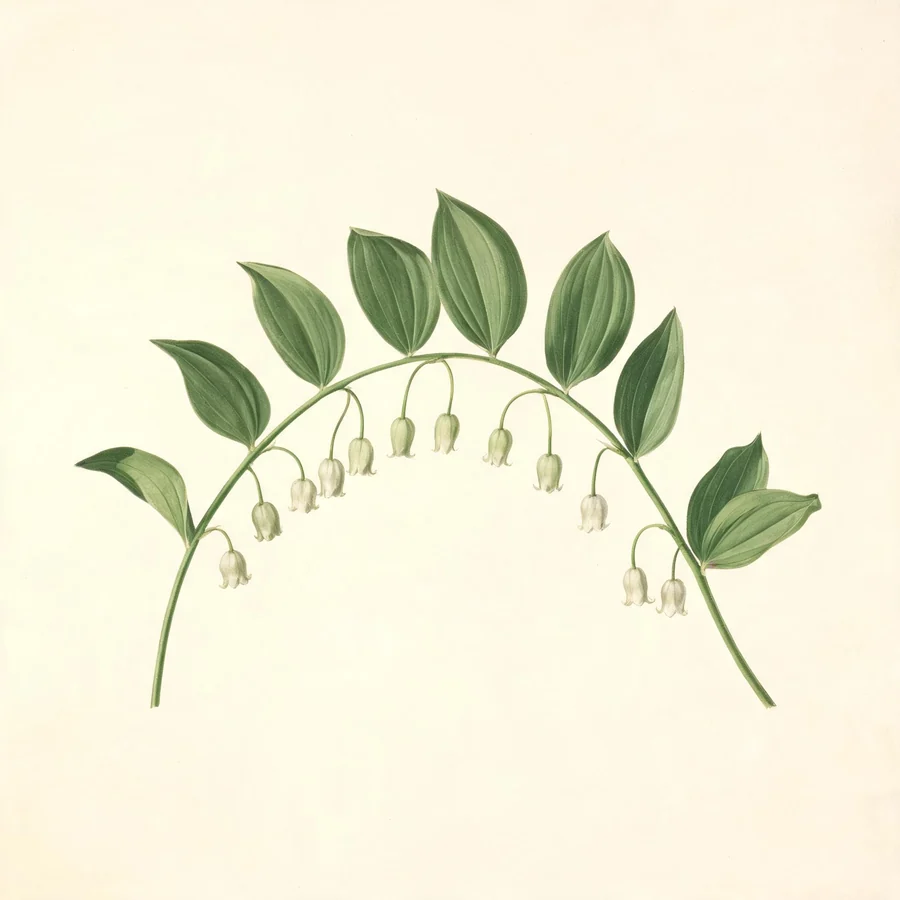
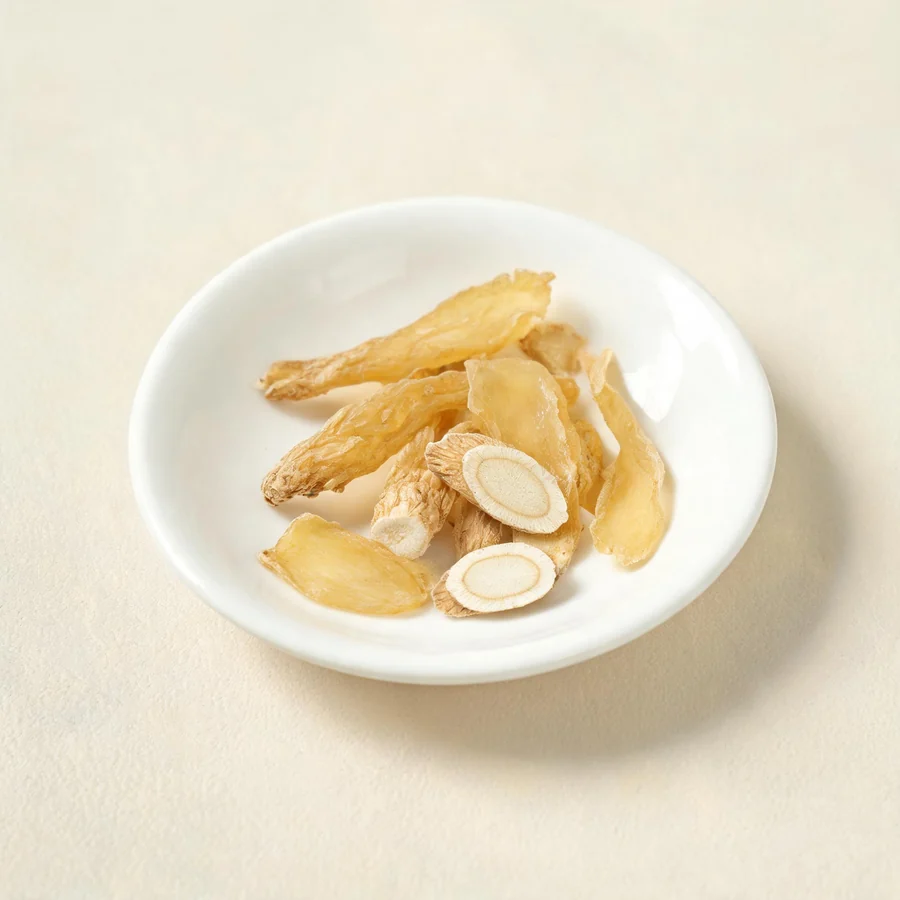
Yu Zhu is the gentle moistening herb for dry, tight, dull skin: it restores fluid to the Lung and Stomach, softens a papery surface and is the classical source of the claim about clearing dark facial patches. It is wrong for greasy, damp or cold-loose patterns.
Skin signs that suggest it
- Dry, rough, tight skin with a dull, slightly grey or lacklustre tone
- Fine lines and a papery texture, worse in dry weather and after a febrile illness
- Dry lips, a dry throat and thirst that is present but not urgent, with little wish for cold drinks
- A dry cough with scanty phlegm that lingers alongside the skin dryness
- A red tongue with little or no coating, and a fine, slightly rapid pulse
When it is not the right herb
Damp, greasy skin is the wrong ground for it. A thick greasy tongue coat, a sense of fullness after eating very little, queasiness, loose stools and a heavy body all say that moisture is already in excess, and a sweet moistening rhizome makes that worse. Oily, acne-prone or seborrhoeic skin with yellow greasy scale is not suitable either, nor is a cold weak digestion with chronic loose stools. Wind-cold with no dryness behind it should not be treated this way, since moisture laid on a surface whose pathogen has not been released is held to keep the illness in. Nor does the herb replace an emollient or sun protection for dry or pigmented skin.
What it does for skin
Skin-relevant actions only. Each one describes a mechanism in TCM terms and what it looks like on the skin.
Restores moisture to the Lung, which supplies the surface
Moisture is carried out to skin and hair from the Lung, so dryness there shows above as a rough surface. Yu Zhu moistens that source gently and without cloying, which is why a dry cough with dry skin suits it better than either symptom alone. It is the reason the herb belongs to the warm-disease formulas used during recovery, when fever has burned off the fluid that the surface depends on.
Moistens the Stomach and makes fluid
A dry mouth, a parched throat, a tongue without coat and a thirst that is not urgent point to a Stomach whose moisture has gone. Sweet, moist and slightly cool, the rhizome restores fluid without the coldness of the bitter herbs, which is why a thin person with a delicate digestion can take it. Dry lips and a tight facial skin often ease alongside the mouth.
Softens fine lines and a papery texture
The old cosmetic claim follows from restoring fluid rather than standing apart from it. Fine lines that deepen in dry weather, a face that feels tight after washing and a papery texture are the picture, and the herb is taken internally for weeks while an emollient works on the surface. Collagen is not rebuilt by it, and a deep wrinkle or a sun-damaged patch will not disappear.
Brightens a dull complexion and addresses dark patches
The Shen Nong Ben Cao Jing already describes the rhizome as clearing dark patches from the face and improving the complexion, and later practice used it for the dull, dry face that comes with depletion. The reasoning is that a surface short of moisture and Blood looks shadowed and uneven. It supports formulas for melasma rather than carrying them, and pigmentation needs sun protection and a diagnosis.
Skin conditions it is used for
Mapped to the condition pages on this site. The pattern column shows what the skin is doing when this herb is the right choice.
| Condition | Pattern | Why it suits | Typical setting |
|---|---|---|---|
| Skin Dryness | Lung and Stomach fluid deficiency: dry, rough skin with a dry throat | A dry surface with a dry throat, a dry cough and a tongue without coat is read as fluid failing in the Lung and Stomach. For this the rhizome is the gentle choice: it moistens without the heaviness of the richer tonics, so a thin person whose digestion is easily burdened can continue it. It is given as a decoction or as food over weeks with an emollient alongside, and generalised scaling needs a diagnosis. | Sha Shen Mai Men Dong Tang, or with Mai Dong and pear |
| Skin Tightness | Fluid deficiency at the surface: skin that feels tight after washing | A face that feels tight and drawn rather than itchy or red, worse after washing and in dry air, is read as the surface being short of fluid. Fluid is restored from within by the rhizome, which is mild enough for a long period, and it is used with an emollient and gentler cleansing. Tightness with redness, scaling or burning is another problem and needs assessment. | With Mai Dong and Bei Sha Shen |
| Wrinkled And Shrunken Skin | Fluid and Yin depletion with a dry, papery surface | Fine wrinkling and a papery, shrunken look in a thin, dry person with a dry mouth and a tongue without coat is read as depletion of Yin and fluid rather than simple ageing. Over months, usually in a compound with blood-nourishing herbs, the rhizome is a slow support. Photoageing is not reversed by it, and a sudden change in texture needs a medical explanation. | With Shu Di Huang, Dang Gui and Gou Qi Zi |
| Melasma | Yin and fluid deficiency with a dull, dry face and uneven pigmentation | The classical claim about dark facial patches is the root of its use in melasma, and the claim is made for the pattern in which the face is dry and dull and the person depleted. It supports, given with blood-nourishing and liver-softening medicines, and it is not a lightening treatment. Melasma from sun, pregnancy or hormones needs sun protection and a diagnosis, and a changing pigmented lesion needs to be seen. | With Bai Shao, Dang Gui and Gou Qi Zi |
| Cracked Skin | Dryness of the lips and superficial fissures from fluid deficiency | Cracked lips and fine painful fissures in dry weather, with a dry mouth and a scanty tongue coat, are read as fluid failing to reach the surface. Moisture is restored from within by the rhizome, which is gentle enough for a long course, while an emollient and a lip barrier do the local work. A fissure that bleeds or persists, or one on a diabetic foot, needs treatment rather than a tonic. | With Mai Dong and Tian Hua Fen |
Combinations for skin
Herbs it is paired with when the skin, not an internal organ, is the target.
| Partner | Ratio | Why the pair is used |
|---|---|---|
| Bei Sha Shen | 10 g of each | Both moisten without weight, though the work divides: Bei Sha Shen cools and clears as it moistens, and Yu Zhu is milder and more neutral. Autumn's lingering dry cough, a throat that dries in someone talking all day and the thirst left after a fever are what the two suit, and the mixture is gentle enough as a tea or a congee. |
| Mai Dong | 10 g of each | Heart heat is cleared by Mai Dong as well as moistened, whereas Yu Zhu stays in the Lung and Stomach. Thirst, a dry cough, a red dry tongue and restlessness after a fever that has burned off fluid are what the two address together, and when digestion is delicate Yu Zhu takes the larger share because it cloys less. |
| Shi Hu | 10 g of each | Stomach Yin is Shi Hu's stronger suit, and it clears deficiency heat too, while Yu Zhu is gentler and reaches more widely. Where thirst is marked and the tongue has lost its coat entirely, neither alone is enough; together they are stronger without being harsh. |
| Tian Hua Fen | 10 g Yu Zhu with 10 g Tian Hua Fen | Thirst is the sign that calls for Tian Hua Fen, which clears heat and makes fluid, and it is the usual addition to a Yin tonic for that reason. Paired with Yu Zhu it works on a mouth and throat dry with a thirst hard to satisfy, and it suits the dull, dry skin of someone thirsty all day, though persistent thirst needs investigating rather than treating. |
Formulas where it leads
- Jia Jian Wei Rui Tang (加减葳蕤汤) - The formula for releasing the exterior when the patient is already dry, built on Yu Zhu under its old name wei rui. Skin practice meets it in the person whose dry skin flares with every cold: the pathogen is dispersed without stripping what moisture the surface has left. A short course, and not for a hot, wet or infected eruption.
- Sha Shen Mai Men Dong Tang (沙参麦门冬汤) - The warm-disease prescription for a Lung left dry after a fever, containing sha shen, ophiopogon and Yu Zhu among others. It is the model for dry, tight, dull skin with a dry cough and a dry throat following an illness, and it is taken for a week or two rather than as a long tonic.
- Yi Wei Tang (益胃汤) - The prescription for Stomach Yin deficiency, containing sha shen, ophiopogon, raw rehmannia and Yu Zhu. Its skin relevance is the dry mouth, dry lips and dull, dry face of someone whose fluid has been depleted by illness or a long fever, and it is gentle enough for a week or two as a decoction.
Safety for skin use
What to check before recommending or using it, including the cautions that matter most for skin patients.
Do not use, or use with caution
- Dampness or Phlegm lodged in the Spleen and Stomach: a thick greasy coat, fullness after little food, nausea, loose stools and a heavy body. A moistening herb adds to moisture that is already too much.
- A cold, deficient Spleen with long-standing loose stools. Slight coolness is still coolness, and a weak cold digestion has no use for it, while the moistening property may loosen the stool further.
- Oily, acne-prone or seborrhoeic skin with yellow greasy scale and a greasy tongue. That is damp-heat, and a sweet moistening tonic is the wrong tool.
- Wind-cold with no Yin deficiency behind it: a chill, a white coat and clear watery mucus. Moisture laid on a surface whose pathogen has not been released is held to keep the illness in.
- Being overweight with limbs that feel heavy and a complexion that looks muddy, which is the damp constitution that moistening herbs burden.
Pregnancy and breastfeeding
Gentle, not classically forbidden, free of any blood-moving or uterine action, and eaten in soups across southern China including by expectant mothers, it is regarded as safe at ordinary doses with guidance. What limits it is digestion: a cold Spleen or loose stools in pregnancy may be aggravated by its moistening nature, and then it is cut back or omitted. Breastfeeding follows the same rule, with a damp, weak digestion as the only real caution.
Interactions
- Glucose-lowering medicines. Blood glucose falls with the rhizome's compounds in animal work, so with insulin, metformin or a sulphonylurea the effect could in principle be additive. Monitoring matters, and a steady dose makes any change easier to attribute.
- Digoxin. Cardiotonic glycosides of the kind found in lily of the valley are present in the rhizome, so a theoretical additive effect with digoxin exists: grounds for care, not alarm.
- Anticoagulants. Steroidal glycosides from Polygonatum have acted on tissue factor in laboratory work, a weak clotting signal worth mentioning to a prescriber when someone is on warfarin.
- Laxatives. Loosening of the stool is a known effect of moistening herbs, so it may add to a laxative taken for constipation.
Allergy and patch testing
Allergy is uncommon, and the practical problem is the material. The rhizome is sold as several Polygonatum species and sometimes as a related genus, and it is frequently brightened with sulphur, which can leave an irritant residue and a smell of burning sulphur. A person with a known sensitivity to sulphur or to related plants should choose unsulphured material, and any new rash or gut upset while taking it is a reason to stop and check the source.
General safety references
General references for herbal hepatotoxicity and herb-drug interactions; they are not specific to this herb.
- Review article: Herbal hepatotoxicity - an update on traditional Chinese medicine preparations. Alimentary Pharmacology & Therapeutics, 2014. PMID: 24844799.
- Interactions between herbal medicines and prescribed drugs: an updated systematic review. Drugs, 2009. PMID: 19719333.
- Warfarin and food, herbal or dietary supplement interactions: a systematic review. British Journal of Clinical Pharmacology, 2021. PMID: 32478963.
Evidence
The classical record is quoted with its source. The modern note states the level of evidence plainly.
Classical record
It is sweet and neutral. It served for sudden feverish wind attack, for a body that cannot move, for injury to the sinews and for lumps in the flesh, and for every kind of depletion. Long use, the text says, clears the dark patches on the face, improves the complexion, keeps the skin supple and lightens the body while postponing age.
Shen Nong Ben Cao Jing (Divine Husbandman's Classic of Materia Medica), under the older name wei rui - Beauty and long life are claimed in the very first record of the herb, which is how a rhizome with no name for rashes came to be used on the face.
Li Shizhen records that for alternating chills and fever, for recurrent fever and for every insufficient pattern he reached for this rhizome in place of ginseng and astragalus, since it neither chills nor dries, and that the results surprised him.
Ben Cao Gang Mu (Compendium of Materia Medica), Li Shizhen, on use in place of ginseng - An extravagant claim for a herb this mild, and the classical warrant for using it where a dry surface sits on general depletion.
Sweet, neutral and moist in nature, it builds without shutting a pathogen in, and that is the reason old formulas carry it.
Ben Cao Bian Du (Materia Medica Made Plain), Qing dynasty - The sentence that explains how a moistening tonic can be given in an exterior pattern without trapping the illness.
Modern evidence
Evidence status
- Laboratory and animal studies of Polygonatum odoratum polysaccharides report antioxidant activity, effects on blood glucose and lipid levels, and some measures of skin and connective tissue in aged animals. These are not trials in people, and no clinical study of the rhizome in dry skin, melasma or any skin disease was identified.
- The cosmetic claim is classical rather than tested. No controlled trial of Yu Zhu for facial pigmentation or for skin ageing was found, and the evidence for the herbs used in melasma generally is limited and formula-based rather than single-herb.
- Regulatory status: the rhizome is an accepted article in the Chinese Pharmacopoeia, and China classes it among substances that count as food and medicine alike, which is unusual and reflects its long record of gentle use. Quality problems are substitution with related species and brightening with sulphur.
PubMed records
Selected real PubMed records for this herb's species or its constituents, chosen by species name and title relevance. They are references for the non-TCM discussion above, not proof that the herb treats any skin condition.
- Extracts of Rhizoma polygonati odorati prevent high-fat diet-induced metabolic disorders in C57BL/6 mice.. PloS one, 2013. PMID: 24312343 (pharmacology or review record).
Dose and forms
Skin-practice dosing and the preparations that suit skin complaints.
| Form | Dose and notes |
|---|---|
| Decoction | 6 to 12 g of dried rhizome daily in a formula. For a dry cough or a scratchy throat the lower end is enough, and at that level it can be eaten as food. |
| Higher range | Up to 15 or 30 g where dryness is marked and the course runs for weeks, under supervision. An hour or two of simmering is needed to release its mucilage, so it belongs in soups and congees rather than a quick infusion. |
| Forms | Raw rhizome is the choice while some heat is left to clear; once the aim is pure tonification, steamed or honey-fried pieces are used, and pastes and pills are how the old texts took it over many months. |
Occasional mild gastrointestinal discomfort on overdose is the main practical limit, and the herb is on the medicine-food list and eaten in soups. A dry cough or a scratchy throat needs only the lower end, while a wasting and thirsting picture calls for the higher end over a longer period with the dose held steady. Because it is moistening, the dose comes down or the herb stops if the stool loosens, the appetite dulls or the tongue coat turns thick and greasy.
Citations and further reading
Only real sources are listed: the classical materia medica passages quoted above, and the source works behind the botanical and safety statements.
- Shen Nong Ben Cao Jing (Divine Husbandman's Classic of Materia Medica), under the older name wei rui - the passage on the complexion and the skin is summarised above, the original not quoted.
- Ben Cao Gang Mu (Compendium of Materia Medica), Li Shizhen, 1578 - the note on using it in place of ginseng and astragalus is given in translation above.
- Ben Cao Bian Du (Materia Medica Made Plain), Qing dynasty - the comment on moist substance and on not blocking a pathogen is given in translation above.
- Jia Jian Wei Rui Tang, Sha Shen Mai Men Dong Tang and Yi Wei Tang, warm-disease formulas of the Qing period - composition and indications as summarised above.
- Rhizoma Polygonati Odorati monograph, Pharmacopoeia of the People's Republic of China, and the Chinese medicine-food dual-use list - accepted source and regulatory status.
- Modern evidence statement: based on published laboratory and animal work on Polygonatum odoratum polysaccharides, presented as a statement about the level of evidence rather than as a cited finding.
Educational reference for qualified practitioners. This page is not medical advice, and skin conditions should be diagnosed by a clinician before treatment.