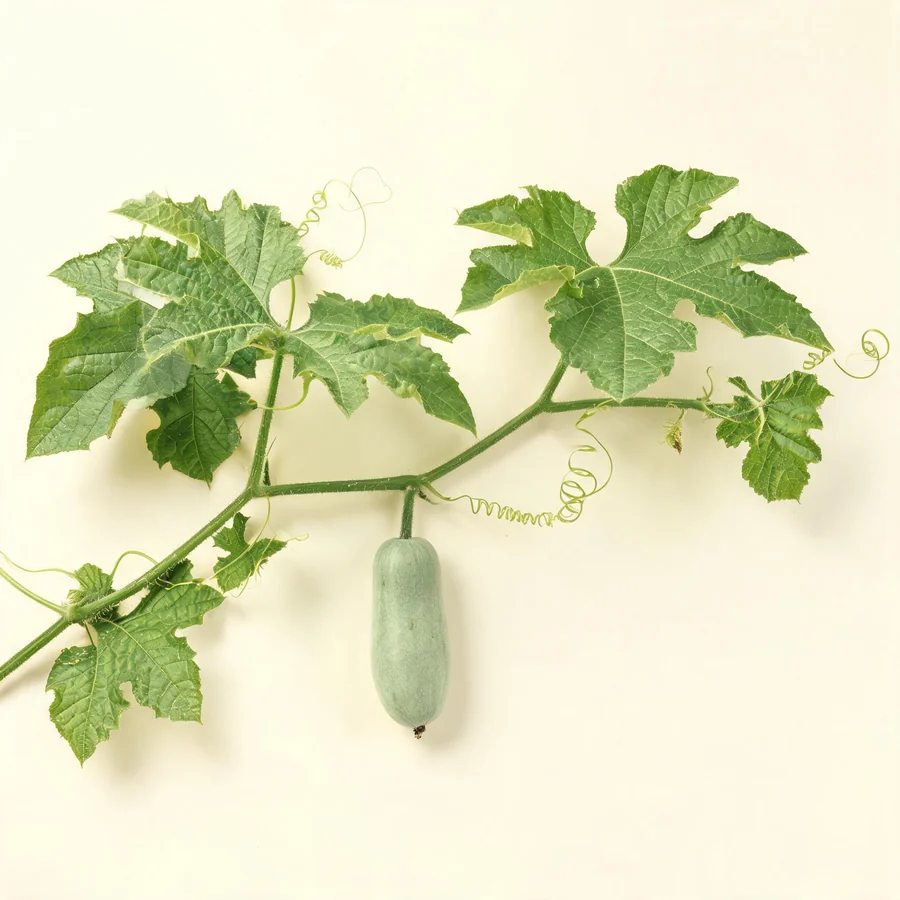
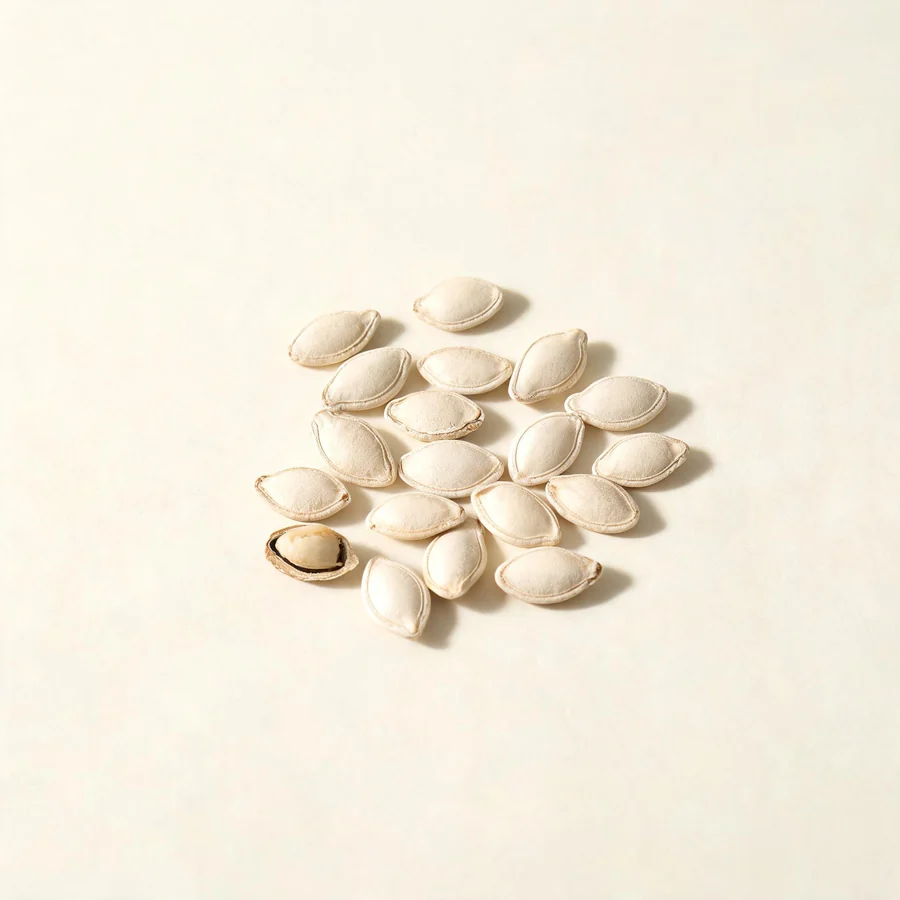
Skin profile
Where this herb sits in skin practice: the pattern it corrects, the skin signs it suits, and what it should not be used for.
Dong Gua Zi sits between the kitchen and the dispensary, and its skin uses follow that position: a face paste for a dull, greasy complexion, a cooling supporting herb for red facial pimples, and a pus-draining deputy in a boil formula. It is gentle enough to use for weeks, which is also its limitation, because a lesion that needs a diagnosis will not be solved by a seed.
Skin signs that suggest it
- Red pimples across the nose and cheeks that sting, burn and weep a yellow fluid
- A greasy shine with a dull, sallow complexion and a heavy feeling in the limbs
- A boil or abscess that is slow to point and to drain its pus
- Oily skin with a coated tongue, puffiness and sluggish digestion
- A yellow, greasy tongue coating and a slippery pulse
When it is not the right herb
Not for dry, thin skin without heat or dampness, and not for a cold complexion that is pale and lacking colour rather than dull and greasy. Because the seed is cool and slippery it is a poor choice in Spleen deficiency-cold, where cold pain in the abdomen, loose stools and a poor appetite are all deepened by a cooling seed; the fried form is used instead when some of the draining action is still needed. It does not treat pneumonia, nor any feverish illness of the chest, whatever the traditional use for pus may suggest. During pregnancy it is used only under supervision, and a new facial rash that could be rosacea should be diagnosed rather than self-treated.
What it does for skin
Skin-relevant actions only. Each one describes a mechanism in TCM terms and what it looks like on the skin.
Cools heat that shows on the face
The Lung channel reaches the skin and the face, and red, stinging pimples on the nose and cheeks are read as heat in that upper territory. The seed is cool and sweet rather than bitter, so it clears that heat gently and is suitable for a longer, food-like course. It is combined with herbs that clear Lung and Stomach heat, and it is a supporting rather than a leading ingredient when the inflammation is severe.
Discharges pus and reduces swelling
Where heat has caused tissue to break down, the seed is described as draining the pus out rather than walling it in, and that is why it appears in the classical formulas for abscess. On the skin it is used for boils and suppurating lesions that are slow to drain and feel tense and heavy, usually with herbs that clear toxin. An abscess that is large, deep or spreading needs drainage and antibiotics, and the seed is not an alternative to either.
Drains dampness away from the surface
The greasy shine, the puffy face and the sluggish feeling that come with dampness are treated by moving fluid downward and out. The seed enters the Large and Small Intestine, which is the traditional route by which dampness leaves, and the fried form is used here because it is less cold. On the skin the change is a less oily surface and a clearer complexion rather than a dramatic clearing of a rash.
Brightens a dull complexion
The cosmetic use is the oldest use: the seed was ground into face pastes and creams for a complexion that was dull, rough and slightly oily, and the classical claim is that it makes the face lustrous and improves colour. It is a slow, surface-level effect and it belongs to a paste or a wash rather than to a decoction for the skin. It is not a treatment for melasma or for pigment that has a hormonal or inflammatory cause.
Skin conditions it is used for
Mapped to the condition pages on this site. The pattern column shows what the skin is doing when this herb is the right choice.
| Condition | Pattern | Why it suits | Typical setting |
|---|---|---|---|
| Rosacea | Heat in the Lung and Stomach rising to the nose and cheeks | The classical description of red pimples the size of beans on the nose and face, painful and weeping a yellow fluid, is close to what is now called rosacea, and it is the clearest skin indication in the seed's record. The seed cools the heat and drains the dampness that makes the lesions weep, and it is used with herbs that clear Stomach fire. Rosacea that is persistently red, thickened or affecting the eyes needs a dermatological diagnosis, and a food-derived seed is a supporting measure. | Modified Qing Wei San with Dong Gua Zi, or with Lu Gen and Yi Yi Ren |
| Acne | Damp-heat with oily skin and slow-healing pustules | Acne that is oily, greasy and slow to settle, with pustules rather than deep nodules, matches the seed's cooling and draining actions. It is used as a supporting herb in formulas that clear Lung and Stomach heat, and its cosmetic record makes it acceptable as a face paste as well as a decoction. Deep nodular or scarring acne needs proper treatment, and a mild seed is not enough on its own. | Modified Pi Pa Qing Fei Yin with Dong Gua Zi |
| Boils | Heat toxin with pus forming and slow pointing | A boil that stays hard and tense and will not come to a head is read as pus that is not being discharged, and the seed's traditional role is to drain it. It is a deputy rather than a lead in this picture, combined with toxin-resolving herbs and used internally or as a dusting powder. Any boil on the face, or one with spreading redness and fever, needs medical care. | Modified Wu Wei Xiao Du Yin with Dong Gua Zi |
| Skin abscess | Damp-heat and stagnant blood collecting into pus | An abscess has two components in this framework: the damp-heat that produces the pus and the stagnant blood that walls it off. The seed addresses the first and is paired with a blood-moving herb for the second, which is the logic of the classical abscess formulas. Its use on the skin is an extension of that internal logic, and the seed does not replace drainage. | Xian Fang Huo Ming Yin with Dong Gua Zi, or a modified Wu Wei Xiao Du Yin |
| Dark face | Dull, greasy complexion from dampness with poor transformation | A face that is dull, slightly greasy and lacking brightness is read as dampness sitting in the surface while the Spleen fails to transform fluids, and the seed's cosmetic and draining actions meet in that picture. It is used as a face paste and as a mild internal herb, alongside Spleen-supporting herbs. A complexion that is dark from cold, from blood stasis or from a systemic illness is a different matter and is not helped by a cooling seed. | Face paste of the powdered seed with honey, or a modified Si Jun Zi Tang with Dong Gua Zi |
Combinations for skin
Herbs it is paired with when the skin, not an internal organ, is the target.
| Partner | Ratio | Why the pair is used |
|---|---|---|
| Yi Yi Ren | 24 g Dong Gua Zi with 30 g Yi Yi Ren | Job's tears drains dampness and strengthens the Spleen, and the seed cools the heat and discharges the pus, so the pair covers both the fluid that feeds the lesion and the pus it produces. For the skin this suits an oily, puffy face with slow-healing pustules, where drying alone would leave the surface rough. The Spleen support matters, because a draining seed used for too long can leave the digestion weaker than it found it. |
| Lu Gen | 60 g Lu Gen with 24 g Dong Gua Zi | Reed rhizome, cold and sweet, is the choice when heat is scorching the fluids, and the seed loosens the thick material that heat has left behind. One moistens while it cools, the other transforms while it drains, which is why the two meet in the classical abscess formula. For the face it suits red, stinging lesions in someone who is thirsty with a dry mouth. |
| Tao Ren | Roughly 9 to 12 g of each, in equal parts | Peach kernel breaks static blood, and the seed clears heat and drains away pus that stasis has helped produce. An indurated lesion has two halves, and the pair takes one each: the trapped blood that makes it hard, and the damp-heat that makes it suppurate. The kernel also softens the bowel, so the purulent material has a route out below. |
| Pu Gong Ying | 9 to 15 g each | Dandelion is the standard herb for heat toxin with swelling, and the seed adds the draining of dampness that keeps a lesion weeping and greasy. Together they suit boils and pustules on oily skin, and the pair is cooling enough that it is kept short in a person with a cold digestion. |
Topical use
The seed's topical history is cosmetic before it is medical. It was ground to a fine powder and worked into pastes and creams for the face, and the classical text that records the practice praises the result as brightening and smoothing. In a skin edition the same powder is used for a dull, greasy complexion and for small weeping pustules, always as a thin layer that is washed off rather than left to dry on the skin. It is a mild application, and it is not a treatment for an infected or spreading lesion.
| Preparation | How and when it is used |
|---|---|
| Face paste | One to two teaspoons of finely ground seed are mixed with enough honey, egg white or water to make a soft paste, spread thinly over clean skin and left for ten to fifteen minutes before being rinsed with warm water. It is used once or twice a week on oily, dull skin, and the eyes and any broken skin are avoided. |
| Dusting powder for weeping pustules | A small quantity of the ground seed is dusted sparingly onto small weeping pustules after cleaning, using a clean pad rather than the fingers. It is applied once daily for a few days only, because the powder dries the surface and can cake. |
Patch test and cautions
A patch test on the inner arm for twenty-four hours is sensible before a face paste is used, because a seed powder mixed with honey or egg white can irritate as easily as soothe. Keep the paste off broken skin and out of the eyes, rinse thoroughly, and stop if the skin becomes redder or tighter. Do not leave a paste on overnight, since a drying seed powder left in place can crack the surface it was meant to smooth.
Safety for skin use
What to check before recommending or using it, including the cautions that matter most for skin patients.
Do not use, or use with caution
- Spleen and Stomach deficiency-cold: a poor appetite, cold pain in the abdomen, loose stools and a pale tongue. A cool, slippery seed deepens the looseness, and the old texts warn that long courses leave the middle cold.
- Pregnancy and breastfeeding. Several classical and modern sources list the seed as unsuitable in pregnancy because of its slippery, downward quality, and although no controlled human data exist, the caution is respected; a practitioner decides, and it is not a self-care herb in pregnancy.
- Dry skin without dampness, and a complexion that is pale and cold rather than dull and greasy. A cooling, draining seed has nothing to clear in that picture and can leave the skin drier.
- A febrile chest illness or a spreading skin infection. The seed is not a treatment for pneumonia, for cellulitis or for an abscess that needs drainage, and using it instead delays care.
Pregnancy and breastfeeding
Several classical and modern sources list it as unsuitable in pregnancy, and the reason given is a cool, slippery quality that moves downward, not any demonstrated action on the womb. No safety research settles the question, so use belongs under practitioner supervision, in the smallest amount and for the shortest time, and it is avoided altogether where there is a history of miscarriage or preterm labour. A face paste on a small area is a far lower exposure than a decoction, but it should still be declared to a practitioner.
Interactions
- Diuretics. The seed drains fluid and promotes urination, so an additive effect with a prescribed diuretic is possible. Anyone taking one should tell the prescriber, so that fluid balance and electrolytes can be watched while the seed is used.
- Laxatives and bowel-active medicines. Its cool, slippery quality can loosen the stool, so it may add to the effect of a laxative or to the gut effects of some antibiotics, which matters in an older person who is already prone to loose stools.
- No pharmacokinetic interaction with liver enzymes has been documented for the seed, and its constituents give no reason to expect one. That absence is noted rather than filled with a warning, and ordinary caution about combining a new herb with regular medicines still applies.
Allergy and patch testing
A seed powder applied to the face is a common enough home remedy that irritation is seen more often than true allergy, and the difference matters: irritation settles when the paste is removed, while an allergic reaction spreads beyond the treated area. Patch test first, keep the first application short, and stop if there is itching, swelling or a rash in new places. Anyone who has reacted to other Cucurbitaceae seeds should avoid it.
General safety references
General references for herbal hepatotoxicity and herb-drug interactions; they are not specific to this herb.
- Review article: Herbal hepatotoxicity - an update on traditional Chinese medicine preparations. Alimentary Pharmacology & Therapeutics, 2014. PMID: 24844799.
- Interactions between herbal medicines and prescribed drugs: an updated systematic review. Drugs, 2009. PMID: 19719333.
- Warfarin and food, herbal or dietary supplement interactions: a systematic review. British Journal of Clinical Pharmacology, 2021. PMID: 32478963.
Evidence
The classical record is quoted with its source. The modern note states the level of evidence plainly.
Classical record
味甘,平。主令人悦泽,好颜色,益气不饥。久服,轻身、耐老。
It is sweet and neutral in nature. It is used to give a person a lustrous look and a good complexion, to supplement Qi and to prevent hunger; long use is held to make the body lighter and to postpone ageing.
Shen Nong Ben Cao Jing (Divine Husbandman's Classic of Materia Medica) - The oldest entry is entirely about appearance and vitality, which shows that the cosmetic use came before the therapeutic one and shaped how the seed was taken.
寒,无毒。主除烦满不乐。久服寒中。可作面脂,令面悦泽。
It is cold and free of toxicity. It lifts a sense of oppressive fullness and low spirits; long use cools the middle; it can be worked into a facial pomade that brightens and smooths the face.
Ming Yi Bie Lu (Supplement to the Classic of Materia Medica), Tao Hongjing - The same short entry carries the face cream, the therapeutic use and the warning about prolonged use, and it is the source of the caution still repeated today.
主治心经蕴热,小水淋痛,并鼻面酒渣如麻豆,疼痛,黄水出。
Its main indications are heat that has lodged in the Heart channel, urine that scalds and stings as it passes, and wine-coloured blotches across nose and cheeks the size of a bean, sore to the touch and oozing a yellow discharge.
Ben Cao Shu (Account of Materia Medica) - A urinary and a facial indication in one sentence, and the facial one is the closest thing in the classical record to a description of rosacea.
Modern evidence
Evidence status
- The seed's constituents are those of a food: saponins, citrulline and trigonelline, together with fatty oils in which oleic and linoleic acid predominate. Laboratory work on these compounds concerns inflammation and fluid balance generally rather than skin disease, and no experiment has tested whether a face paste lightens a complexion.
- No controlled clinical trial of winter melon seed in rosacea, acne or any other dermatosis is available to cite. The skin use rests on a classical cosmetic record and on the abscess formulas, which is a record of long use rather than a demonstration of effect.
- Toxicology is unremarkable for a food-grade seed, and the classical caution is only that long use cools the middle. The practical risk is not the seed but the delay: a facial rash that is rosacea, a boil that needs draining or a pigmentation problem can all be made worse by months of home pastes.
PubMed records
Selected real PubMed records for this herb's species or its constituents, chosen by species name and title relevance. They are references for the non-TCM discussion above, not proof that the herb treats any skin condition.
- Antimicrobial studies on methanol extract of benincasa hispida cogn., fruit.. Ancient science of life, 2003. PMID: 22557093 (pharmacology or review record).
Dose and forms
Skin-practice dosing and the preparations that suit skin complaints.
| Form | Dose and notes |
|---|---|
| Decoction | Nine to thirty grams of the dried seed, crushed or lightly pounded before decocting so the oil leaves the kernel. Nine to fifteen grams is the mild range and fifteen to thirty grams is used for a suppurating lesion. |
| For facial heat and oily skin | Nine to fifteen grams daily inside a formula, continued for two to four weeks and then reviewed rather than taken indefinitely. |
| Topical | One to two teaspoons of the ground seed in a face paste, once or twice a week, or a small quantity dusted on a weeping pustule once daily for a few days. |
| Stir-fried form | Dry-fried until slightly yellowed, then cooled and crushed, for dampness, discharge and a weak digestion, because frying makes the seed gentler on the Stomach. |
The raw seed is chosen where heat, phlegm and pus are the problem, and the stir-fried form where dampness, discharge and weak digestion are. It should be crushed before decoction so the oil leaves the kernel, and there is no special handling beyond that. The ordinary ceiling of about thirty grams is where the classical and modern ranges stop for a decoction, while the food forms are limited by appetite rather than by dose.
Citations and further reading
Only real sources are listed: the classical materia medica passages quoted above, and the source works behind the botanical and safety statements.
- Shen Nong Ben Cao Jing (Divine Husbandman's Classic of Materia Medica), attributed compilation of the Han period - classical entry quoted above.
- Ming Yi Bie Lu (Supplement to the Classic of Materia Medica), Tao Hongjing, Southern and Northern Dynasties - classical entry quoted above.
- Ben Cao Shu (Account of Materia Medica) - classical entry quoted above.
- Xian Fang Huo Ming Yin: classical formula for the early stage of a boil or abscess - the formula named above.
- Semen Benincasae monograph: Pharmacopoeia of the People's Republic of China - accepted botanical source, part used and quality requirements.
- Modern evidence statement: based on laboratory literature on the seed's saponins and fatty oils, summarised as a statement about the level of evidence rather than as one cited finding.
- Botanical description and identification: botanical literature on Benincasa hispida, Cucurbitaceae.
Educational reference for qualified practitioners. This page is not medical advice, and skin conditions should be diagnosed by a clinician before treatment.