Skin profile
Where this herb sits in skin practice: the pattern it corrects, the skin signs it suits, and what it should not be used for.
Ma Bian Cao sits midway between the cooling herbs and the Blood-movers: it suits a lesion or a bruise that is both hot and fixed, and it is mild enough for a wash over a wide area. The limits on it are coldness and its action on the uterus, not toxicity.
Skin signs that suggest it
- A bruise or injury site that stays hot, hard and painful for longer than expected
- Red, hot, painful boils or infected sores with a hard edge
- Itchy, weeping patches that feel hot to the touch and worsen in warmth
- Swelling of a limb or the face with heat, tightness and a heavy feeling
- Fixed, stabbing pain in the skin or deeper tissue, with a purple tongue
When it is not the right herb
Avoid in pregnancy and during heavy or prolonged menstrual bleeding, since the herb moves Blood and opens the menses. It is also wrong for Blood deficiency with a pale face, dizziness and scanty periods, where nothing is stuck to release, and for pale, watery, slow-healing sores with no heat. A spreading skin infection, a hot swollen joint with fever or a suspected deep abscess needs medical assessment first, and the herb is not a treatment for a bleeding disorder or a reason to stop an anticoagulant.
What it does for skin
Skin-relevant actions only. Each one describes a mechanism in TCM terms and what it looks like on the skin.
Moves the Blood and disperses a fixed swelling
Its first skin use is for stagnation that has become visible: a bruise that is raised and tender, a haematoma that is slow to settle, or a lesion with a hard, dusky centre. The herb is cool, so it moves without adding heat, which distinguishes it from the warm Blood-moving herbs used for cold, achy stasis. It is given internally and applied as a cooled wash, and it is not used on a swelling that might be a clot or a collection of pus.
Clears heat toxin and reduces a hot swelling
Boils, infected grazes and inflamed insect bites are treated with the same cooling, dispersing action, and the herb is milder than the strong toxin-clearing roots. That mildness is its place: it suits a crop of small furuncles, an inflamed bite or a lesion that is settling, and it supports rather than replaces a stronger formula when infection is established. A boil with a spreading red edge or a fever needs medical review.
Cools and dries an itchy, weeping surface
As a wash, the decoction takes heat and surface moisture out of an oozing, itchy patch, and it is used on the hot, stinging type of eczema rather than the dry, lichenified type. The effect is drying in practice without being a true astringent, and it is temporary: the wash is repeated, and the internal formula does the deeper work. It should be stopped once the ooze settles, or the skin becomes tight.
Drains damp-heat so that swelling settles
The herb promotes urination, which gives damp-heat a route out when a skin eruption is accompanied by puffiness, heaviness in the legs or hot, scanty urine. It is a supporting effect, and it is the reason the herb appears in formulas for swollen, inflamed skin of the lower body as well as in washes. It also means the herb can add to fluid loss, which matters in an older person on a diuretic.
Skin conditions it is used for
Mapped to the condition pages on this site. The pattern column shows what the skin is doing when this herb is the right choice.
| Condition | Pattern | Why it suits | Typical setting |
|---|---|---|---|
| Bruising | Blood stasis with heat in injured tissue | A bruise that remains raised, warm and painful after the first few days is read as Blood that has leaked and stayed, with heat in the tissue. The herb moves that static Blood and cools the local reaction at the same time, which is why it suits the hot, tender bruise rather than the cold, fading one. A bruise that expands, a swelling that pulses or any bruising on an anticoagulant needs assessment before massage or herbs. | Modified Tao Hong Si Wu Tang with Ma Bian Cao, or a cooled wash |
| Skin swelling | Stasis and dampness with heat, fluid collecting in the tissue | Swelling of a limb or the face after an injury or an infection is read as dampness and stagnant Blood held in the tissue, and the herb addresses both by moving Blood and promoting urination. It is a supporting remedy, not a diagnostic one: a hot, swollen, unilateral limb can be a clot or a deep infection, and those need urgent assessment before any wash is applied. | Ma Bian Cao with Che Qian Zi and Ze Lan, or as a cooled wash |
| Boils | Heat toxin with local stasis | An early boil is a small, hard, hot swelling, and the herb's combination of cooling and dispersing suits it before a collection forms. It is used in a formula with dandelion or honeysuckle and as a poultice on the lesion. Once a boil is large, fluctuant or surrounded by spreading redness, it needs drainage or antibiotics rather than a herbal compress. | Wu Wei Xiao Du Yin with Ma Bian Cao, or a fresh poultice |
| Skin infection | Heat toxin in broken or inflamed skin | Infected grazes, bites and minor wounds that are hot and red are treated with cooling washes and, where the reaction is more than trivial, an internal formula. The herb is a mild support, and its reputation comes from the traditional use of verbena for stubborn sores. It does not sterilise a wound or replace antibiotics, and a spreading infection or a bite over a joint needs medical care. | Ma Bian Cao and Tu Fu Ling decoction, used as a wash with a small internal dose |
| Itchy skin | Heat and dampness with a stagnant surface | When itch comes with redness, warmth and a little ooze, the herb is used as a wash to cool and dry the surface, and internally to clear the heat driving it. It is not the herb for dry, pale, winter itch, where cooling and drying make the skin worse. Persistent generalised itch needs a cause found, because a wash treats the sensation and not the reason for it. | Ma Bian Cao with Tu Fu Ling and Bai Xian Pi, as a wash |
Combinations for skin
Herbs it is paired with when the skin, not an internal organ, is the target.
| Partner | Ratio | Why the pair is used |
|---|---|---|
| Tu Fu Ling | 15 to 30 g each in decoction, or 30 g each in a wash | Smilax glabra drains damp-heat and is the standard herb for hot, oozing skin lesions, while verbena adds the Blood-moving and swelling-reducing half. The pair is used for weeping eczema, infected bites and stubborn damp sores, and the wash is often more useful than the drink because it reaches the surface directly. |
| Che Qian Zi | 10 to 15 g Che Qian Zi with 15 to 30 g Ma Bian Cao | Plantain seed drains damp-heat through the urine and is used where a skin eruption is accompanied by difficult, hot urination or by swelling of the legs. The pair gives two exits for the same dampness, one through the skin and one through the bladder, and it is a standard combination for damp-heat of the lower body. |
| Yi Mu Cao | 15 to 30 g each | Motherwort moves Blood gently and is the usual choice for stasis in menstruation and after childbirth, while verbena is cooler and adds toxin-clearing and diuresis. Used together they address stasis accompanied by heat, and the pair suits a bruised or swollen area that feels hot rather than cold. Neither is used in pregnancy. |
| Chi Shao | 10 to 15 g each | Red peony cools the Blood and quickens it, which is exactly the combination of actions needed for a hot, hard lesion, and it is gentler than the strong stasis-breaking herbs. The pair is used for indurated red swellings and for bruising that has become warm and tender, and red peony is the safer partner when the person is depleted. |
Topical use
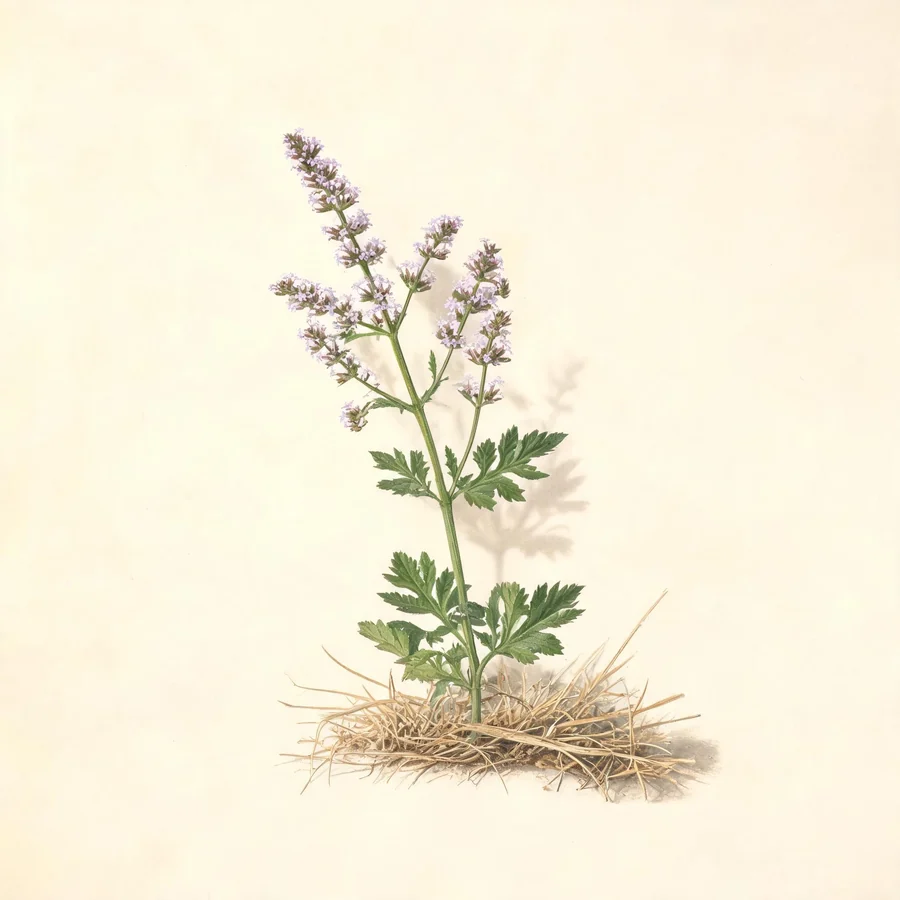
Ma Bian Cao is used externally as a cooled wash, a compress or a fresh poultice for hot, itchy, oozing skin and for small boils and bites. The whole plant is simmered, and the liquid is applied to the affected area rather than swallowed, which puts a cooling, mildly moving herb on the surface and spares a cold, bitter decoction from the stomach. In folk practice the fresh plant is crushed and laid on a bite or a small boil, and the wash is repeated while the lesion is hot.
| Preparation | How and when it is used |
|---|---|
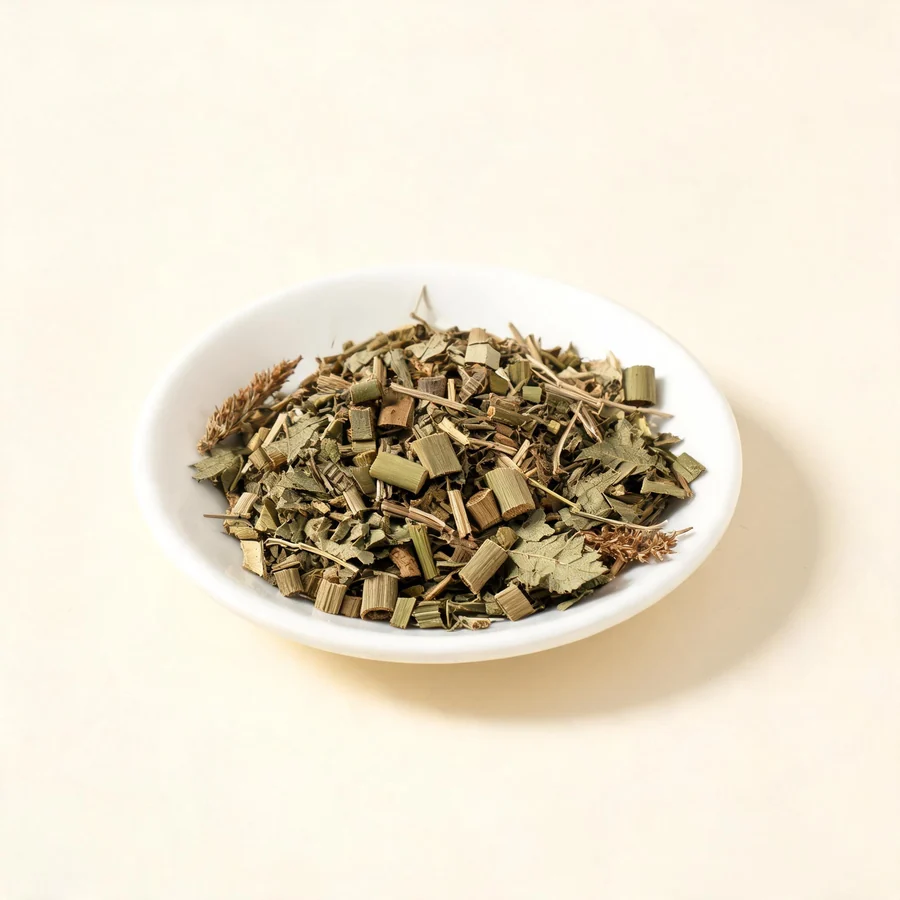
| Cooled decoction wash | Simmer 30 to 60 g of dried herb in 1 litre of water for 20 minutes, strain and cool to skin temperature. Bathe or compress the area for 10 to 15 minutes twice daily, pat dry, and make a fresh batch each day. |
| Fresh poultice for a bite or small boil | Crush a handful of clean fresh plant, wrap it in a single layer of cloth and hold it against the lesion for 15 to 20 minutes. Wash the skin afterwards, check for irritation, and do not cover it with an airtight dressing. |
| Dilute soak for hands or feet | Use half the strength above in a basin and soak for 10 minutes. Stop if the skin stings or tightens, and do not use the same batch for two people. |
Patch test and cautions
Patch test a small area of normal skin for 24 hours first. Do not apply to broken, ulcerated or openly infected skin without supervision, and never over a collection of pus that has not been drained. Keep the wash out of the eyes, mouth and genitals, stop if burning or spreading redness develops, and discard the liquid after use.
Safety for skin use
What to check before recommending or using it, including the cautions that matter most for skin patients.
Do not use, or use with caution
- Pregnancy, at any stage. Uterine tissue from animals and from women responds to the plant with excitation in the laboratory, and the herb opens the menses and moves Blood, so it is left out rather than reduced.
- Heavy or prolonged menstrual bleeding, and any bleeding disorder. The herb moves Blood at a time when the problem is too much flow rather than stagnation, and it should not be added to that picture.
- Blood deficiency with a pale complexion, dizziness, a pale tongue and scanty periods. There is nothing stuck to release, and a moving herb leaves the person more depleted.
- Cold, weak digestion, with loose stools and a poor appetite. A cool, bitter herb taken internally can deepen the weakness, and the lower dose or an external-only approach is preferred.
- Pale, watery, slow-healing sores and chronic ulcers with no heat. These are cold or deficient lesions that a cooling, dispersing herb does not help and may slow.
Pregnancy and breastfeeding
Avoid. The herb moves Blood and unblocks the menses, and laboratory work on uterine muscle has shown an excitatory effect, so it is treated as a herb to leave out at every stage rather than one to use in small amounts. There is no adequate safety data in pregnancy, and the classical cautions agree with the modern ones. A woman who is trying to conceive should treat it the same way, and it should not be taken as a general cleansing tea. External use on a small area is a much smaller exposure, but it is still best discussed with a practitioner.
Interactions
- Anticoagulants and antiplatelet drugs. Verbenalin has not thinned the blood consistently in laboratory work, and some of the data point the other way, but the herb moves Blood in the traditional sense. Anyone on warfarin, aspirin, clopidogrel, heparin or a direct oral anticoagulant should discuss a course with both prescribers, and the same applies before surgery or dental work.
- Drugs that contract the uterus, such as oxytocin, and sedatives. Uterine muscle is stimulated by the herb in the laboratory, and animal extracts have quietened the nervous system and suppressed convulsion, so drowsiness may add to that from benzodiazepines, barbiturates or alcohol. Neither combination belongs to self-care.
- Iron and mineral supplements. Tannins in the plant bind iron and other minerals inside the gut, so an iron tablet should be taken two hours or more away from the decoction. This matters most in someone already anaemic from heavy periods.
Allergy and patch testing
Contact dermatitis from a herb wash is a common problem, and a wash that stings or leaves a new rash should be stopped rather than repeated. Verbenaceae sensitivity is not well studied, but anyone who reacts to other plants in the family, or to a previous herb poultice, should patch test before using this one on a large area.
General safety references
General references for herbal hepatotoxicity and herb-drug interactions; they are not specific to this herb.
- Review article: Herbal hepatotoxicity - an update on traditional Chinese medicine preparations. Alimentary Pharmacology & Therapeutics, 2014. PMID: 24844799.
- Interactions between herbal medicines and prescribed drugs: an updated systematic review. Drugs, 2009. PMID: 19719333.
- Warfarin and food, herbal or dietary supplement interactions: a systematic review. British Journal of Clinical Pharmacology, 2021. PMID: 32478963.
Evidence
The classical record is quoted with its source. The modern note states the level of evidence plainly.
Classical record
It is used for hidden sores on the lower half of the body.
Ming Yi Bie Lu (Supplement to the Classic of Materia Medica) - A narrow first notice dating from the Wei and Jin period: the plant arrives in the materia medica as a treatment for stubborn sores below the waist, a use that later texts never quite dropped.
It serves for abdominal masses and collections of blood, and for malaria of long standing, and it breaks blood stasis. Boil it down until the liquid is syrupy and take it with wine.
Ben Cao Shi Yi (Supplement to the Materia Medica) - Chen Cangqi, writing in the Tang, is the source of the two uses that most distinguish the herb, the breaking of blood and the treatment of chronic malaria, and his preparation is still recognisable.
It opens menstruation, and it is used for swelling of the abdomen caused by blood and Qi in women, and for periods that come irregularly.
Ri Hua Zi Ben Cao (Materia Medica of Ri Huazi) - The gynaecological indication is set out here in the Song, with distension and irregularity given more weight than pain on its own.
Modern evidence
Evidence status
- Laboratory work on verbena extracts and on the iridoid glycoside verbenalin reports anti-inflammatory, antipyretic and mild sedative activity in animal models. The doses used are generally far above the medicinal range, and the findings do not establish benefit in skin disease.
- Clinical evidence for the herb in skin disease is thin: some Chinese-language reports describe verbena washes for eczema and hot sores, but they are small, uncontrolled and rarely replicated. No conclusion about efficacy can be drawn from them, and no trial of the single herb in a defined skin condition was identified.
- Toxicology is better characterised than efficacy: verbenalin at high exposure produces parasympathomimetic and nervous system effects in animals, while ordinary decoctions have caused nothing worse than nausea, dizziness or stomach discomfort in a minority of people. That wide practical margin explains why a slightly toxic label has never produced reports of harm at the doses used in practice.
PubMed records
Selected real PubMed records for this herb's species or its constituents, chosen by species name and title relevance. They are references for the non-TCM discussion above, not proof that the herb treats any skin condition.
- Plant Extracts as Skin Care and Therapeutic Agents.. International journal of molecular sciences, 2023. PMID: 37895122 (skin-related record).
Dose and forms
Skin-practice dosing and the preparations that suit skin complaints.
| Form | Dose and notes |
|---|---|
| Decoction (internal) | 15 to 30 g of dried herb daily, taken with food. Some regional texts give only 4.5 to 9 g where the case is mild, a sign of how differently practitioners have judged the plant's strength. Fresh material is used at about twice the dried weight because of its water content. |
| External wash | 30 to 90 g simmered in 1 to 2 litres of water for a compress, a bath or a wipe. The external route avoids the digestive limit, but the concentration should be reduced for thin, broken or sensitive skin. |
| Course length | Three to seven days while the problem is acute, then review. Longer courses are not how the herb is usually prescribed, and a lesion that has not settled in a week needs a diagnosis rather than more of the same wash. |
How much is given depends on what is wanted from it: less for clearing heat in a mild eruption, the middle of the range for moving Blood in a bruise or a hard swelling, and the larger figures for a wash, where nothing is swallowed. A course rarely runs beyond a week, and the limits are set by the herb's coldness and its action on the uterus, not by any measured toxicity. Fresh plant is roughly half as strong by weight as dried, so the fresh figures should not be read as a dried dose.
Citations and further reading
Only real sources are listed: the classical materia medica passages quoted above, and the source works behind the botanical and safety statements.
- Ming Yi Bie Lu (Supplement to the Classic of Materia Medica), Tao Hongjing, Southern and Northern Dynasties - classical entry quoted above.
- Ben Cao Shi Yi (Supplement to the Materia Medica), Chen Cangqi, Tang dynasty - classical entry quoted above.
- Ri Hua Zi Ben Cao (Materia Medica of Ri Huazi), Five Dynasties period - classical entry quoted above.
- Verbena officinalis monograph: Pharmacopoeia of the People's Republic of China - accepted botanical source, part used and quality requirements.
- Modern evidence statement: based on laboratory and toxicological literature on Verbena officinalis and verbenalin, summarised as a statement about the level of evidence rather than as a cited finding. No clinical trial is presented as proof of effect.
Educational reference for qualified practitioners. This page is not medical advice, and skin conditions should be diagnosed by a clinician before treatment.