Skin profile
Where this herb sits in skin practice: the pattern it corrects, the skin signs it suits, and what it should not be used for.
Yuan Zhi is a spirit-calming root with a small, old surgical role: a paste or a decoction for an early boil or a hard red swelling that needs to localise. The saponins irritate the stomach, so the honey-fried root is the internal form and the course is short.
Skin signs that suggest it
- A hard red swelling that is coming to a head, with pain that is worse on pressure
- A boil or carbuncle with thick pus and a red, raised rim
- A small abscess that is tense, tender and not yet discharging
- A firm, painless lump of the kind read as Phlegm and Qi congestion
- The person is also restless, sleeps badly and has palpitations
- A pale or coated tongue, and a pulse that is wiry or slippery
When it is not the right herb
Not for a spreading infection: a red streak, fever, a rapidly enlarging area of redness or a lesion on the face near the eye is a medical emergency and not a case for a paste. Not for an ulcer that is pale, cold and discharging thin fluid, which is a deficiency picture that a pungent warming herb will not help. Not for anyone with active gastritis or a stomach ulcer, and not as a long internal course, because the saponins are the problem rather than the dose alone.
What it does for skin
Skin-relevant actions only. Each one describes a mechanism in TCM terms and what it looks like on the skin.
Disperses swelling and congestion
The pungent taste is read as moving what has stagnated, and the root's traditional surface use is on a hard, red, painful swelling that has not yet liquefied. It is given by mouth and applied as a paste, the rationale being that moving Qi and Blood at the site lets the lesion either resolve or come to a head cleanly. It is a measure for a small, early lesion, and it is not a substitute for drainage once an abscess has formed.
Draws out pus and brings a lesion to a head
In the classical surgical tradition, an abscess that is tense and pointing is helped by herbs that push it outward rather than suppress it, and this root is used in that role with the toxin-clearing and pus-expelling herbs. The visible effect is a lesion that localises and discharges rather than spreading sideways. Modern practice reads the same event as a boil coming to a head, and the important part is knowing when to stop and let a clinician drain it.
Moves the Qi that has congested under the skin
A firm, movable lump with no heat and no discharge is read as Phlegm and Qi bound together, and the pungent warmth is used to get things moving again. The root appears in formulas for scrofula and for nodules alongside drying and softening herbs, in a supporting role. It is not a softening agent itself, so it does not replace the salty and mineral herbs that do that work, and a lump that is growing needs assessment.
Settles the restlessness that keeps a lesion inflamed
Boils and flare-ups often arrive in a person who is overworked, sleeps badly and feels agitated, and the tradition treats the spirit and the surface as connected. The root calms the spirit while it moves the congestion, which is why it is chosen for a lesion in someone whose sleep and mood are part of the picture. The visible change is a calmer person and a quieter lesion, and neither effect is a substitute for treating an infection properly.
Skin conditions it is used for
Mapped to the condition pages on this site. The pattern column shows what the skin is doing when this herb is the right choice.
| Condition | Pattern | Why it suits | Typical setting |
|---|---|---|---|
| Boils | Heat and toxin pushing outward with Qi and Blood congestion | An early boil that is hard and red and has not yet pointed is the classic setting for the root's dispersing and pus-expelling action, used internally with toxin-clearing herbs and, in the older practice, as a paste of the raw powder. It is a measure for a small lesion in an otherwise well person. A boil on the face or near the eye, a boil with fever, or one that is enlarging rather than pointing needs medical care rather than a herb. | A toxin-resolving formula with Jin Yin Hua and Lian Qiao, the root in a supporting role |
| Skin abscess | Local congestion with pus forming | An abscess is read as a local contest between defensive Qi and a pathogen, with heat and dampness collecting into pus. The root's contribution is movement: it disperses the congestion so the collection localises, and it is used with the herbs that clear the heat and resolve the toxin. Once an abscess is established, drainage is the treatment, and a paste or a decoction is an adjunct rather than an alternative. | A formula with Zhe Bei Mu and Zao Jiao Ci, with the root as assistant |
| Pustules | Heat and dampness fighting at the surface | A pustule is heat cooking the fluids at the surface, and the root is added where the lesions are sparse, red and slow to come to a head rather than numerous and greasy. It moves the congestion and helps the lesion resolve outward. It is a supporting herb and not the main treatment for pustular acne, which belongs to the heat-clearing and damp-draining herbs. | A heat-clearing formula with Pu Gong Ying and Zhe Bei Mu |
| Pus and discharge | Pus that is failing to discharge | Where a lesion is tense, painful and pointing but not yet discharging, the tradition reads the pus as failing to move outward and uses herbs that push it. This root belongs to that group, and it is paired with the toxin-resolving herbs rather than relied on alone. The character of the discharge matters: thick and foul points to heat, thin and watery to deficiency, and the second is not a case for a pungent warming herb. | A pus-expelling formula with Huang Qi and Zao Jiao Ci |
| Skin swelling | Qi and Blood congestion without heat | A firm, cool, movable swelling that is not red is read as Qi and Blood congestion, and the pungent warmth of the root is the part of the treatment that gets it moving. It is used with blood-moving and Phlegm-transforming herbs, and the honey-fried form is chosen if the course is to last more than a few days. A swelling that is hot, red, one-sided or rapidly enlarging is a different problem and needs urgent assessment. | A formula with Dang Gui, Chuan Xiong and Zhe Bei Mu |
Combinations for skin
Herbs it is paired with when the skin, not an internal organ, is the target.
| Partner | Ratio | Why the pair is used |
|---|---|---|
| Jin Yin Hua | Yuan Zhi 3 to 6 g with Jin Yin Hua 10 to 15 g | Honeysuckle is the leading herb for heat toxin and clears the heat that produced the boil, while the root moves the congestion and helps it point. One clears and the other disperses, which is why they are used together at the hard, early stage. Both are given for a short course, and the root is the gentler partner here rather than the stronger one. |
| Zhe Bei Mu | 6 g of each in decoction | Fritillary clears heat and transforms Phlegm, and the root moves Qi and disperses swelling, so together they address a firm nodule from two directions. The pair suits scrofula and a hard lump that is not yet hot, and it is a supporting combination inside a bigger formula. Neither herb is a treatment for a lump that is growing, hard and fixed. |
| Huang Qi | Yuan Zhi 3 g with Huang Qi 15 to 30 g | Astragalus supports the surface and helps a lesion discharge and heal, and the root supplies the movement that carries it outward. The pair is for a boil or a sore that is slow rather than acute, because a deficiency picture needs tonifying before it needs dispersing. It is the classical reasoning behind the pus-expelling formulas. |
| Lian Qiao | 6 to 10 g of each | Forsythia clears heat and resolves swelling and is one of the standard surface herbs for sores, so it does the clearing that lets the root's dispersing work go somewhere. The pair suits a red, tender swelling with a hard centre, and it is used for a short course. Both are drying in different ways, so a dry person needs a moistening herb alongside. |
Topical use
The external use is a paste of the raw root powder, applied to an early boil or a hard red swelling to help it localise. It is an older practice, it belongs with a practitioner, and it is short: a few days, on a small lesion, with the skin watched. The raw powder is the more irritating form, and it is kept off broken skin, off the face and away from the eyes.
| Preparation | How and when it is used |
|---|---|
| Raw powder paste | Mix a small quantity of finely ground raw root with a little warm water to a thick paste. Spread it on the centre of the swelling, cover with clean gauze and leave it for a few hours once daily, then wash it off and inspect the skin. Discard the paste after each use, and stop after three days if the lesion has not changed. |
| Honey-fried powder paste | Where the skin is sensitive, use the honey-fried root instead of the raw powder, mixed with water to a paste. It is gentler and less likely to sting, and it is the form to choose for a lesion on thin or dry skin. |
Patch test and cautions
Do not apply to broken, ulcerated or discharging skin, to the face, or to a lesion near the eye. Patch test on normal skin first and stop at once if burning, stinging or spreading redness develops. A boil with fever, a red streak or rapid enlargement needs medical care rather than a paste. The raw powder is never taken on an empty stomach, because the saponins cause nausea.
Safety for skin use
What to check before recommending or using it, including the cautions that matter most for skin patients.
Do not use, or use with caution
- Active gastritis, a stomach or duodenal ulcer, or a history of bleeding ulcer. The saponins irritate the gastric lining directly, and the honey-fried form does not remove the risk entirely.
- Excess heat or Phlegm-Fire with a red face, a yellow coating and a bitter taste. The root is warm, pungent and drying, which only intensifies a state that is already heated and parched.
- A pale, cold lesion with a thin watery discharge, or a chronic ulcer that will not heal. That is a deficiency picture, and a dispersing warming herb has nothing to disperse and spends what is left.
- Pregnancy, as a self-prescribed herb. Animal work has shown a decoction stimulating uterine muscle, so the decision belongs to a practitioner who has weighed the need for it.
Pregnancy and breastfeeding
Used cautiously and only under guidance. A decoction of the root has been shown to stimulate uterine muscle in animal experiments, pregnant animals included, so the old caution finds support in modern work. It is not a routine herb in pregnancy and is not self-prescribed, and the external paste is also best left alone at that time. Sickness in early pregnancy usually has another explanation and needs assessment, not treatment with a root that upsets the stomach.
Interactions
- Sedatives and sleep medicines. In animal studies the root intensified barbiturate effects and produced sedation of its own, so a benzodiazepine, a z-drug or a drowsy-making antihistamine may be felt more strongly; anyone affected should not drive.
- Cholinesterase inhibitors such as donepezil and rivastigmine. Laboratory findings suggest the root's constituents support cholinergic signalling, which pushes in the same direction as these drugs, so an additive effect cannot be excluded and is worth raising with the prescriber.
- Anticoagulants. The saponins are haemolytic in the laboratory, which does not translate into a bleeding risk at ordinary oral doses, but anyone taking warfarin, apixaban or clopidogrel ought to declare it rather than assume the root is neutral.
Allergy and patch testing
Contact dermatitis to a herbal paste is well recognised, and the raw powder is more likely to irritate than the honey-fried form. Patch test first, keep the paste off broken skin and off the face, and stop if the area becomes more irritated rather than calmer. A reaction to other Polygala species, or to a previous herbal plaster, is a reason for more caution.
General safety references
General references for herbal hepatotoxicity and herb-drug interactions; they are not specific to this herb.
- Review article: Herbal hepatotoxicity - an update on traditional Chinese medicine preparations. Alimentary Pharmacology & Therapeutics, 2014. PMID: 24844799.
- Interactions between herbal medicines and prescribed drugs: an updated systematic review. Drugs, 2009. PMID: 19719333.
- Warfarin and food, herbal or dietary supplement interactions: a systematic review. British Journal of Clinical Pharmacology, 2021. PMID: 32478963.
Evidence
The classical record is quoted with its source. The modern note states the level of evidence plainly.
Classical record
主咳逆伤中,补不足,除邪气,利九窍,益智慧,耳目聪明,不忘,强志倍力。
It is used for cough with rebellious Qi and damage to the middle, for supplementing what is insufficient and clearing pathogenic Qi, for opening the nine orifices, for benefiting intelligence and brightening the senses, and for preventing forgetfulness while firming the will.
Shen Nong Ben Cao Jing (Divine Husbandman's Classic of Materia Medica) - The oldest entry, and it says nothing about the skin: the pus and swelling action belongs to the later surgical literature rather than to this passage.
凡使远志,先须去心,若不去心,服之令人闷。
The woody core must be removed before the root is used. If it is left in, the dose will leave the chest feeling tight and oppressed.
Lei Gong Pao Zhi Lun (Master Lei's Treatise on Processing) - A fifth-century processing rule that is still followed, and an early sign that the root was known to upset the body rather than to be a gentle tonic.
Modern evidence
Evidence status
- Laboratory work on the root's saponins, tenuifolin among them, reports sedative, expectorant and anti-inflammatory activity, and the same saponins are haemolytic in vitro. The gastric irritation is the effect that matters most for anyone using the root on the skin, because an internal course is what usually causes it.
- No controlled trial of this root in boils, abscess or any skin condition was identified. The external paste is a traditional practice with no clinical literature behind it, and a boil is usually a self-limiting staphylococcal infection that responds to drainage and, where indicated, antibiotics.
- Regulatory status: the dried root is an accepted herbal substance in the Chinese Pharmacopoeia, which specifies the honey-fried preparation as well as the raw root. The information here describes traditional practice and does not claim a proven skin benefit.
PubMed records
Selected real PubMed records for this herb's species or its constituents, chosen by species name and title relevance. They are references for the non-TCM discussion above, not proof that the herb treats any skin condition.
- Polygalae Radix: review of metabolites, pharmacological activities and toxicology.. Frontiers in pharmacology, 2024. PMID: 38873413 (safety record).
- Polygalae Radix: A review of its traditional uses, phytochemistry, pharmacology, toxicology, and pharmacokinetics.. Fitoterapia, 2020. PMID: 33069838 (safety record).
Dose and forms
Skin-practice dosing and the preparations that suit skin complaints.
| Form | Dose and notes |
|---|---|
| Decoction | 3 to 10 g of dried root daily in a formula. Three to five grams is enough when the aim is to settle the spirit, and six to ten when Phlegm has to be moved; for a skin lesion it is a supporting herb at the lower end. |
| Honey-fried form | Zhi Yuan Zhi, fried with honey, is the standard for internal use and is gentler on the stomach. The raw root is avoided above about 6 g, because nausea, vomiting and throat irritation are reported. |
| External paste | A small quantity of raw powder mixed with water, applied to a small early lesion once daily for no more than a few days, with the skin inspected between applications. |
| Course length | Short: a week or two for an internal course, and days for a paste. It is stopped as soon as the lesion points or the stomach objects. |
Two things shape the dose here. The first is the aim: a small dose calms the spirit, a larger one moves Phlegm, and for a skin lesion the root is a supporting herb rather than the lead. The second is the form, which matters more than the number, because the saponins in the raw root cause nausea and throat irritation and the honey-fried preparation is the gentler article. Taking the dose with or after food, never on an empty stomach, is the simplest way to limit gastric upset.
Citations and further reading
Only real sources are listed: the classical materia medica passages quoted above, and the source works behind the botanical and safety statements.
- Shen Nong Ben Cao Jing (Divine Husbandman's Classic of Materia Medica) - the entry on the nine orifices and the intelligence is quoted above.
- Lei Gong Pao Zhi Lun (Master Lei's Treatise on Processing) - the rule on removing the woody core is quoted above.
- Radix Polygalae monograph, Pharmacopoeia of the People's Republic of China - accepted species, part used and the honey-fried preparation.
- Pharmacological literature on Polygala saponins, summarised as a statement about the level of evidence rather than as a cited finding.
- Classical surgical literature on dispersing swelling and expelling pus, summarised for the traditional indication rather than presented as evidence of effect.
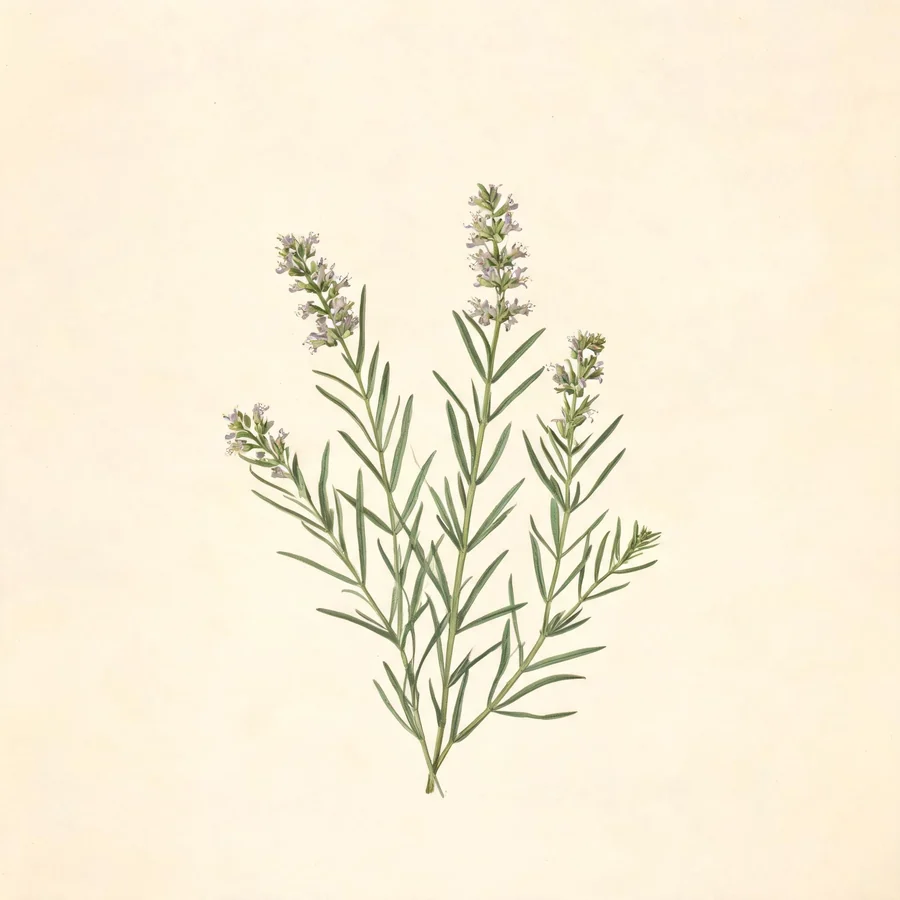
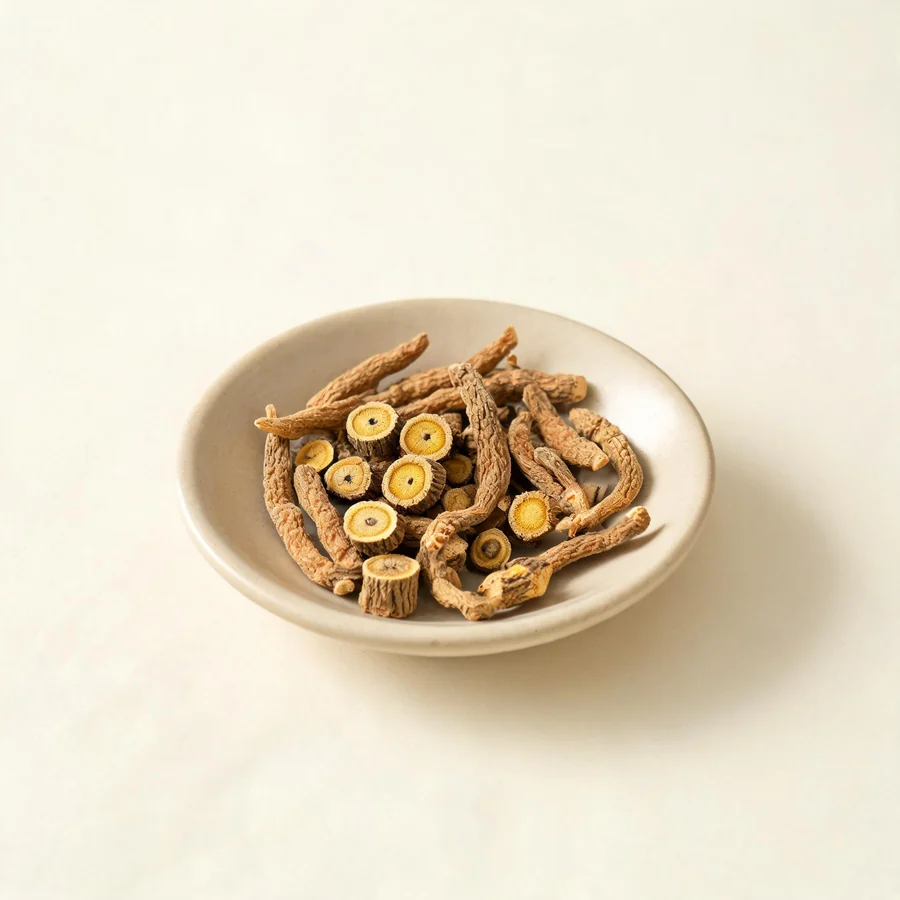
- Botanical literature on Polygala tenuifolia, Polygalaceae, for identification of the dried root.
Educational reference for qualified practitioners. This page is not medical advice, and skin conditions should be diagnosed by a clinician before treatment.