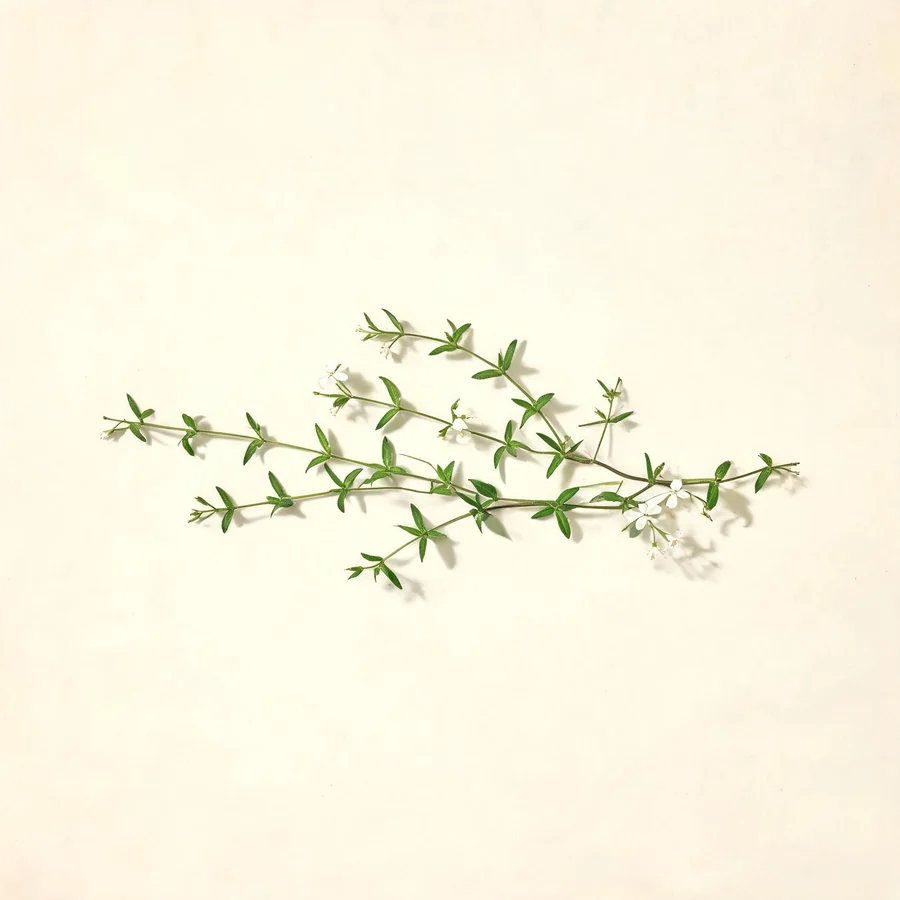
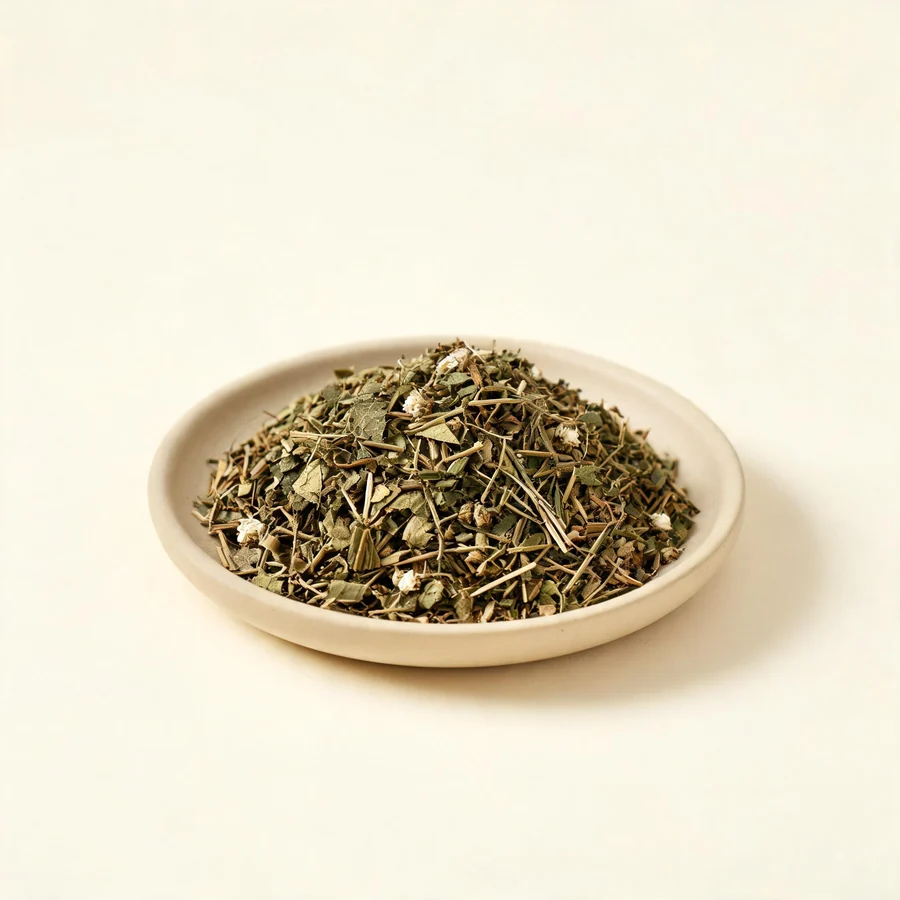
Skin profile
Where this herb sits in skin practice: the pattern it corrects, the skin signs it suits, and what it should not be used for.
Bai Hua She She Cao is chosen where heat toxin shows in the skin as pus, redness and a hard swelling, and where the lesion is wet as well as angry. It is a supporting herb for the toxin and dampness components, never a substitute for drainage or antibiotics.
Skin signs that suggest it
- Hot, red, tender boils or abscesses with a hard centre and a red rim spreading into the surrounding skin (heat toxin)
- Pustules, folliculitis or inflamed acne papules that are painful and slow to settle (heat toxin in the follicles)
- Weeping or crusted patches with a sticky yellow discharge and a heavy feeling in the limbs (heat toxin with dampness)
- A red tongue carrying a yellow, greasy coat, with thirst, dark scanty urine and a rapid pulse
- Genital or perianal itch with dampness and a burning sensation, showing that the heat has settled low as well as in the skin
When it is not the right herb
Not for skin that is pale, dry, thin and cold, and not for chronic eczema that has thickened and dried out, because a herb this cold thins the skin further and cools the digestion. Not for a person with a poor appetite, loose stools and a cold abdomen. Not a long-term herb and not a cancer treatment: the tumour-adjacent research is laboratory work, not established care. A spreading hot swelling, a boil on the face, or any lesion with fever needs medical assessment before a herb is considered.
What it does for skin
Skin-relevant actions only. Each one describes a mechanism in TCM terms and what it looks like on the skin.
Clears Heat and resolves Toxin
This is the herb's main skin action and the reason it is chosen at all. Heat toxin is the pattern behind a lesion that is red, hot, painful and purulent: a boil with a hard centre, a cluster of pustules, an infected graze with a bright rim, or a carbuncle with several heads. The cold clears the fire and the toxin-resolving quality is held to stop the poisoning spreading through the surrounding tissue. It is a supporting herb inside a formula rather than a stand-alone treatment for infection.
Drains Dampness from a weeping lesion
The other half of its nature is sweet and bland, which is what makes it useful when a hot lesion is also wet. It suits oozing patches in the skin folds, a weeping eczema with a sticky yellow discharge, and crusted lesions that leave a stain on the dressing. Dampness is what makes such a lesion heavy, slow to heal and prone to return, and draining it is the reason the herb belongs in damp-heat skin formulas rather than in purely cooling ones.
Reduces abscesses and softens a hard swelling
The classical phrase is that it disperses abscesses and dissipates nodules, which on the skin means a swelling that has not yet pointed. It is used for a hard, tender lump under red skin, for a nodular or cystic acne lesion that will not settle, and for the indurated edge around a boil. The aim is to stop a collection forming rather than to wait for it to discharge, so the herb is given early in the course of a hot swelling rather than late.
Cools an acute eruptive rash
Because it clears heat at the level where a rash is still forming, it is also added to formulas for acute eruptive rashes where lesions are red and raised and the person has fever or a sore throat. It is not the leading herb in that setting, where cooling the Blood matters more, but it adds toxin-clearing to a formula that is already venting heat outward, and it is one of the herbs a practitioner reaches for when a rash is angry rather than merely pink.
Skin conditions it is used for
Mapped to the condition pages on this site. The pattern column shows what the skin is doing when this herb is the right choice.
| Condition | Pattern | Why it suits | Typical setting |
|---|---|---|---|
| Boils | Heat toxin gathering into a boil, with redness, heat and pain | A boil is the clearest skin expression of heat toxin: a red, hot, painful swelling that comes up quickly and may point. The herb is given early, while the swelling is still hard, to clear the fire and disperse the collection before it forms, and it stays in the formula once pus appears because of its toxin-resolving action. It is used with other heat-clearing flowers and roots rather than alone. | Wu Wei Xiao Du Yin, or a toxin-resolving formula with Jin Yin Hua and Pu Gong Ying |
| Skin abscess | Toxic heat with pus and a tense, tender swelling | An abscess is heat toxin that has gathered in one place and begun to damage tissue, and the tradition treats it in two stages. Before pus forms the aim is to scatter the swelling and this cold, draining herb is part of that; once pus has formed the emphasis shifts to helping it discharge and to stopping the redness spreading. The herb supports that work but never replaces drainage or medical assessment of a large collection. | A pus-moving formula with Jin Yin Hua, Lian Qiao and Zao Jiao Ci, alongside medical care |
| Folliculitis | Heat toxin lodged in the hair follicles | Small pustules at the mouth of hair follicles, each on a red base and tender to touch, are read as heat toxin settling where hairs leave the skin. This herb clears the heat, resolves the toxin and dries the moisture that keeps the follicles inflamed, which is why it appears in formulas for recurrent folliculitis on the back, scalp and limbs. Friction, shaving and occlusive clothing are part of the cause and are addressed alongside the formula. | With Lian Qiao and Pu Gong Ying, or as a bitter-cold wash for the affected area |
| Acne | Heat toxin with oily, inflamed papules and pustules | Inflammatory acne with red papules, pustules and a greasy surface is read as heat and toxin in the upper body. The herb is added to a Lung-heat formula when the lesions are angry and purulent rather than merely comedonal, because its strength is the toxin and pus component. It is a secondary herb here, and the formula still needs the blood-cooling and oil-drying medicines that lead in acne treatment. | Added to Pi Pa Qing Fei Yin with Mu Dan Pi and Huang Qin |
| Cellulitis | Heat toxin spreading through the skin and subcutaneous tissue | A warm, red, tender area that enlarges hour by hour, often around a graze or insect bite, is a spreading heat toxin picture. The herb is one of several that clear heat and resolve toxin, and it is used in a formula beside the cooling flowers while the person is under medical care, because an infection spreading at this speed needs antibiotics and review. Nothing on this page should delay that assessment. | Used alongside antibiotic treatment, in a formula with Jin Yin Hua, Lian Qiao and Huang Qin |
| Erysipelas | Bright red, sharply bordered, hot plaque with fever | Erysipelas, the sharply outlined bright red plaque with fever and a burning surface, is described in the tradition as fire toxin in the skin, often with damp-heat underneath. This cold herb clears the fire, resolves the toxin and drains the dampness that keeps the plaque wet at its edge. It is a support to antibiotic treatment, and a plaque near the eye or spreading quickly is a medical emergency rather than a prescribing question. | With Jin Yin Hua, Lian Qiao and Chi Shao in a toxin-clearing formula, alongside antibiotics |
Combinations for skin
Herbs it is paired with when the skin, not an internal organ, is the target.
| Partner | Ratio | Why the pair is used |
|---|---|---|
| Jin Yin Hua | 15 to 30 g Bai Hua She She Cao with 10 to 15 g Jin Yin Hua | Jin Yin Hua is aromatic and works mainly in the upper body, entering the Lung, and it is the classic choice for a sore throat and for the opening stage of a hot swelling. Hedyotis is colder, heavier and pulls downward into the bowel and the urinary route. That is why the pair is used for a mixed picture, such as a boil on the neck beside burning urine, and why neither herb is simply preferred over the other. |
| Ban Zhi Lian | 15 to 30 g each in decoction | Two cold herbs that both clear heat toxin and both disperse nodules, and they are the standard pair for abscesses and lumps. Scutellaria barbata adds blood-moving and stasis-dispersing strength, while hedyotis adds the dampness-draining and urinary push. Both are hard on a weak Spleen, so the pair is given in short courses with a warming or Spleen-supporting herb alongside. |
| Pu Gong Ying | 15 to 30 g each | Dandelion also clears heat toxin, disperses nodules and is the safer of the two for a delicate digestion, since it is less cold and better established in practice. The pair is used for boils, for a hot swelling that will not settle and for folliculitis that keeps returning. Where the lesion is very red and spreading, the colder herb is increased and dandelion keeps the formula from becoming too harsh. |
| Huang Qin | 10 to 15 g Huang Qin with 15 to 30 g Bai Hua She She Cao | Huang Qin drains damp-heat and clears fire in the upper body, while this herb adds toxin-resolving and abscess-dispersing work with a downward pull. The combination suits an infected, weeping eczema or a pustular eruption on the trunk, where the lesion is both wet and purulent. Huang Qin is the more drying of the two, so the pair is balanced with a Spleen-supporting herb in a delicate person. |
Topical use
The fresh plant has a long folk use as a poultice for hot, swollen skin, and a cooled decoction is used as a wash for weeping or infected patches. Topical use puts the cold, toxin-clearing quality directly on the lesion and is reserved for limited areas of intact or lightly broken skin. It is not a way to treat a spreading infection, and it does not replace medical care for a large abscess.
| Preparation | How and when it is used |
|---|---|
| Fresh herb poultice | 30 to 60 g of the fresh plant crushed to a soft paste and spread on clean gauze over the swelling. Applied for 20 minutes once or twice daily, with a fresh paste each time and the skin washed and dried between applications. Use on the boil itself and not on the surrounding healthy skin. |
| Cooled decoction wash | 30 g of dried herb simmered in 500 ml of water for 20 minutes, strained and cooled to skin temperature. Apply with clean gauze as a compress for 10 to 15 minutes once or twice daily to weeping, crusted or inflamed patches. Discard the liquid after each session rather than storing it. |
Patch test and cautions
Patch test on a small area of normal skin for 24 hours before first use. Do not apply to deep, ulcerated or clearly spreading infection, and do not seal the area under an occlusive dressing, which traps heat and moisture. Stop at once if burning, stinging or a new red rim appears, and keep the preparation away from the eyes and mouth.
Safety for skin use
What to check before recommending or using it, including the cautions that matter most for skin patients.
Do not use, or use with caution
- Spleen and Stomach deficiency-cold: a poor appetite, loose stools, a cold abdomen and a pale tongue. A herb this cold can deepen all of those, and prolonged use is a common cause of loose stools and fatigue in someone who is already depleted.
- Dry, cold or deficient skin without active heat, including chronic lichenified eczema and ichthyosis. Clearing heat that is not there leaves the skin drier and the circulation poorer, and the lesion typically becomes more irritable rather than calmer.
- Pregnancy, unless a practitioner is supervising. The plant is cold and is described as moving the Blood, and the Guangxi materia medica lists pregnancy among its cautions rather than forbidding it outright, so a short course for a clear hot infection is a decision for a practitioner.
- Known allergy to the Rubiaceae family, or a previous contact reaction to a herb paste or wash. A poultice on inflamed skin is a common way for a sensitivity to declare itself, and it should not be repeated after a reaction.
Pregnancy and breastfeeding
Use only under practitioner supervision. The herb is cold and is credited with a gentle blood-moving action, and the Guangxi materia medica lists pregnancy among its cautions, so the concern is the coldness and the movement rather than any recorded harm to the fetus. Internal use is reserved for a clear hot infection at the lowest useful dose for the shortest time, and topical use is limited to small areas. While breastfeeding the same caution applies, since a cooling herb taken for several weeks can unsettle a small infant's digestion.
Interactions
- Immunosuppressants are the interaction worth naming. Laboratory work on hedyotis extracts reports stimulation of lymphocyte and phagocytic activity, which runs against the purpose of a drug given after transplant or for autoimmune disease, so anyone on such treatment should tell the prescriber before adding the herb.
- Anyone on chemotherapy or a targeted drug should tell the oncology team about the herb. Its extracts influence several of the same signalling pathways that newer targeted drugs are built to block, which makes an additive effect plausible and unmeasured in people; the decision belongs with the treating team rather than with the patient alone.
- Anticoagulants and antiplatelet drugs carry a theoretical additive bleeding risk from the blood-moving quality, although no clinical reports confirm it. Because the plant also increases urine flow, medicines that depend on fluid balance, diuretics and lithium among them, may be affected, so the prescriber needs the whole list rather than the herb alone.
Allergy and patch testing
Contact dermatitis from herb pastes and washes is well recognised, and a poultice applied to already inflamed skin is a common trigger. Patch test first, keep applications to limited areas, and stop at once if the skin becomes more irritated rather than calmer. A reaction to this plant may recur with other members of the madder family, and it should be recorded rather than tested again.
General safety references
General references for herbal hepatotoxicity and herb-drug interactions; they are not specific to this herb.
- Review article: Herbal hepatotoxicity - an update on traditional Chinese medicine preparations. Alimentary Pharmacology & Therapeutics, 2014. PMID: 24844799.
- Interactions between herbal medicines and prescribed drugs: an updated systematic review. Drugs, 2009. PMID: 19719333.
- Warfarin and food, herbal or dietary supplement interactions: a systematic review. British Journal of Clinical Pharmacology, 2021. PMID: 32478963.
Evidence
The classical record is quoted with its source. The modern note states the level of evidence plainly.
Classical record
清热散瘀,消痈解毒。治痈疽疮疡,瘰疬。又能清肺火,泻肺热。
It clears heat, disperses stasis, draws out abscesses and neutralises toxin. Boils, sores, ulcerated lesions and scrofula are its indications, and it also clears and drains fire in the Lung, for wheezing, cough and a stuffed chest.
Quanzhou Bencao (Quanzhou Materia Medica) - A regional text that already describes the toxin-clearing and abscess-dispersing pattern that later oncology took an interest in.
清热解毒,活血利尿。治扁桃体炎,咽喉炎,阑尾炎,肝炎,痢疾,尿路感染,小儿疳积。
It clears heat, resolves toxin, quickens the Blood and opens the flow of urine. The recorded indications include inflamed tonsils and throat, appendicitis, hepatitis, dysentery, urinary infection and the wasting of childhood malnutrition.
Guangxi Zhongyao Zhi (Guangxi Materia Medica), 1959 - The first official entry for the plant, and the reason a coastal folk remedy became a standard medicine.
Modern evidence
Evidence status
- Laboratory studies of hedyotis extracts report anti-inflammatory, antibacterial and immune-stimulating activity in cell and animal models. These are not trials in people and they do not establish a benefit in any skin condition.
- Clinical evidence for this herb in skin disease is very limited. Most reports come from Chinese-language formula studies in which it is one ingredient among many, so no conclusion about its own effect on boils, acne or eczema can be drawn from them.
- The plant is an accepted herbal substance in the Chinese Pharmacopoeia, and the tumour-adjacent research around it is research interest rather than established treatment. Cancer care belongs with an oncology team, and this page does not present the herb as an alternative.
PubMed records
Selected real PubMed records for this herb's species or its constituents, chosen by species name and title relevance. They are references for the non-TCM discussion above, not proof that the herb treats any skin condition.
- Antitumor potential of Hedyotis diffusa Willd: A systematic review of bioactive constituents and underlying molecular mechanisms.. Biomedicine & pharmacotherapy = Biomedecine & pharmacotherapie, 2020. PMID: 34321173 (pharmacology or review record).
Dose and forms
Skin-practice dosing and the preparations that suit skin complaints.
| Form | Dose and notes |
|---|---|
| Decoction (internal) | 15 to 30 g of dried herb daily, inside a formula rather than alone. Up to 60 g is recorded for acute infection under practitioner supervision, and the lower end is used when the digestion is delicate or the course is longer than a week. |
| Fresh herb for external use | 30 to 60 g of the fresh plant crushed to a paste for a poultice, or the same weight simmered briefly for a wash. The fresh material is preferred for topical use because the cold, moist quality is stronger and the paste holds together on the skin. |
| Course length | One to two weeks for an acute hot or infected lesion, with review. Stop or reduce if the appetite falls, the stools loosen or the person feels cold, since those are the signs that the coldness has reached the digestion. |
This is a large-weight, mild herb: the whole plant is light and extracts readily, which is why the gram figures look generous beside a concentrated root. The limit is the coldness rather than any toxicity, so the practical rule is a short course, a moderate dose and warming or Spleen-supporting company when a course runs past a fortnight. The fresh plant is used at the higher end for poultices, and the dried herb is what goes into a decoction.
Citations and further reading
Only real sources are listed: the classical materia medica passages quoted above, and the source works behind the botanical and safety statements.
- Quanzhou Bencao (Quanzhou Materia Medica), regional materia medica of Fujian - classical entry quoted above.
- Guangxi Zhongyao Zhi (Guangxi Materia Medica), 1959 - classical entry quoted above and the source of the pregnancy caution.
- Hedyotis diffusa monograph: Pharmacopoeia of the People's Republic of China - accepted botanical source, part used and quality requirements.
- Modern evidence statement: based on laboratory literature on hedyotis extracts, summarised as a statement about the level of evidence rather than as a cited finding.
- Botanical description and identification: botanical literature on Hedyotis diffusa, Rubiaceae, including the related species sold as substitutes.
Educational reference for qualified practitioners. This page is not medical advice, and skin conditions should be diagnosed by a clinician before treatment.