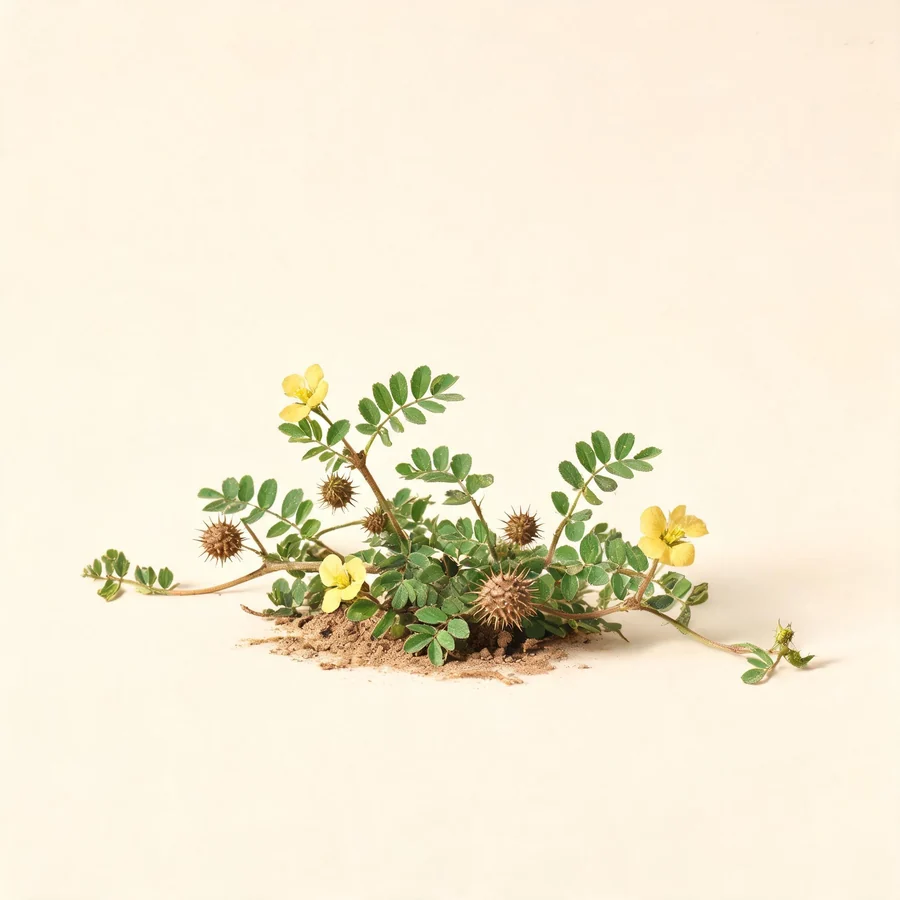
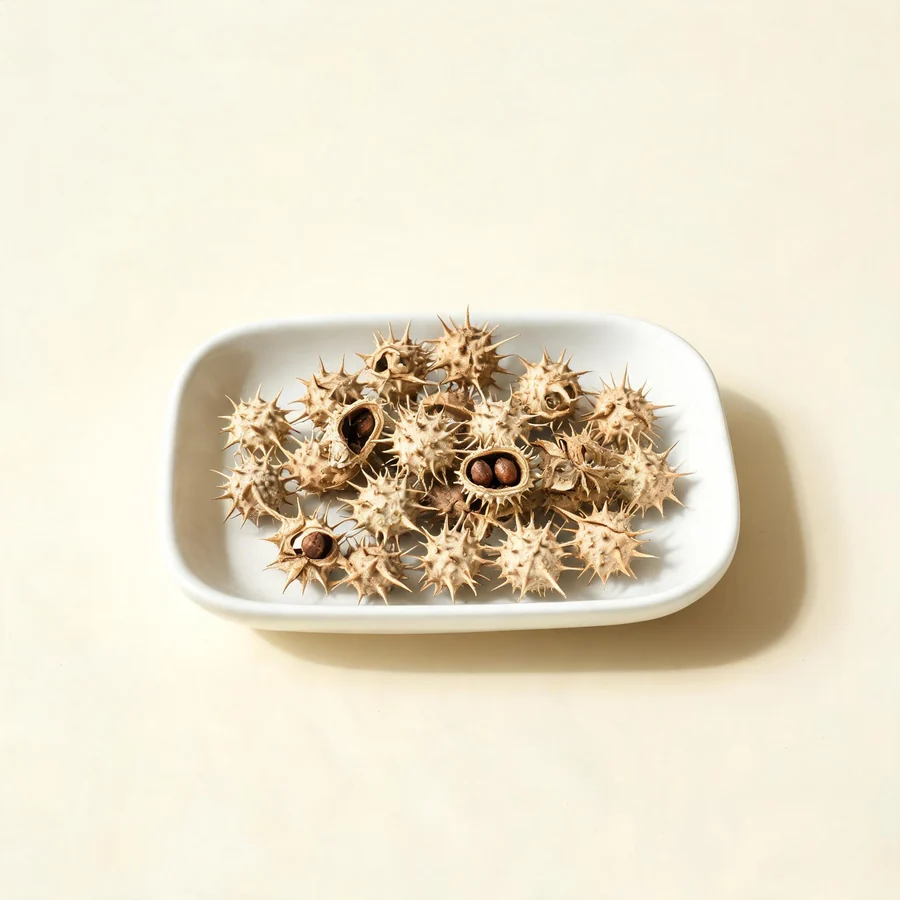
Skin profile
Where this herb sits in skin practice: the pattern it corrects, the skin signs it suits, and what it should not be used for.
Ji Li is the herb for itch that moves and a flare that follows temper: it scatters Wind at the surface and loosens the constraint underneath, as a small part of a larger formula.
Skin signs that suggest it
- Weals that rise within minutes, wander, and fade within a few hours (Wind in the surface)
- Itch that shifts around the body, worse in wind, warmth or at night
- Flushing, red eyes and irritability alongside the skin flare (Liver yang rising with constraint)
- Dry, scaling, itchy skin in an older or depleted person, worse in winter (Blood deficiency generating Wind)
- A wiry pulse, a slightly dusky tongue and tightness across the chest or the rib-side
When it is not the right herb
Avoid in pregnancy: old texts say the fruit speeds labour and pushes the fetus down, and its pungent, dispersing character is the reason. Not for pure deficiency: where the skin is dry and thin, the person is dizzy from emptiness and there is no sense of anything stuck and no Wind, so a scattering herb finds nothing to release and may draw on what little remains. Use with care in anyone on blood pressure medicine, since its measured lowering effect can add to theirs, and in anyone on anticoagulants. It is not a herb for self-selection at supplement doses.
What it does for skin
Skin-relevant actions only. Each one describes a mechanism in TCM terms and what it looks like on the skin.
Dispels Wind and stops itch
The core skin action. Itch that moves, weals that come and go, and a surface that reacts to wind or warmth are read as Wind sitting at the skin, and the pungent fruit scatters it. The action is on the movement of the itch rather than on its intensity, which is why it is chosen for a wandering rash rather than for a fixed, lichenified patch. It is used internally and, in practice, in a cooling rinse.
Loosens constraint that keeps a flare going
Skin that flares with anger, deadlines or lost sleep is read as Liver qi that has stuck, and the fruit courses the Liver and spreads what has tightened. This is why it is chosen for the person whose hives or itch arrives with a tight chest, sighing and a short temper, and why the skin settles when the constraint does. It is a supporting herb in that picture rather than the lead.
Settles rising yang so the face stops burning
Flushing, red eyes, headache and irritability are read as yang rising to the head, and the bitter taste is described as descending. Read on the skin, that is the burning, flushing face that flares with stress, and the fruit is used where the redness and the irritability belong together. It does not replace the heavy minerals in a severe case.
Releases the mild internal Wind of Blood deficiency
Itch of long standing in someone dry, pale and thin is read as Blood too thin to nourish the surface, so a mild internal Wind develops. The fruit is used inside a nourishing formula alongside He Shou Wu and Dang Gui, where its dispersing action is the smallest part of the prescription and the nourishing herbs do the work. Given alone to that person it would dry the skin further.
Skin conditions it is used for
Mapped to the condition pages on this site. The pattern column shows what the skin is doing when this herb is the right choice.
| Condition | Pattern | Why it suits | Typical setting |
|---|---|---|---|
| Urticaria | Wind in the surface with red, wandering weals | Weals that appear within minutes, move about and fade within hours are the textbook picture of Wind at the surface, and the fruit is one of the herbs used to scatter it. It is combined with the wind-releasing herbs for the acute attack, and it suits the person whose hives come with irritability and a tight chest. If the lips or tongue swell, or there is wheeze or trouble breathing, that is an emergency. | Ji Li with Jing Jie and Fang Feng in a wind-dispelling formula |
| Chronic urticaria | Wind with constraint and Blood that does not nourish the surface | Hives that persist for months are read differently from an acute attack: the Wind is still there, but the constraint and the thin Blood underneath keep it going. The fruit is used with herbs that nourish the Blood and loosen the Liver, at the lower end of its range, over weeks. A chronic eruption that does not respond, or that comes with other systemic symptoms, needs investigation. | Ji Li with Dang Gui, He Shou Wu and Fang Feng |
| Itchy skin with redness | Wind in the surface, often with Liver constraint | Itch without a primary rash, worse in wind and warmth and easier when the person is calm, is read as Wind with constraint, and the fruit addresses both. It is a supporting herb in a formula that also clears heat or nourishes Blood depending on the background. Itch with weight loss, night sweats or a new rash needs a diagnosis before treatment. | Ji Li with Fang Feng, Jing Jie and Mu Dan Pi |
| Neurodermatitis | Wind and constraint with thickened, lichenified skin | Lichenified, thickened patches that itch intensely and worsen with stress are read as Wind that has settled into a constrained area of skin. The fruit is used for its relaxing effect on the Liver and its itch action, and it is combined with Blood-moving and nourishing herbs because the skin is already thick. It is not a single-herb treatment, and the habit of scratching is part of what has to change. | Ji Li with Dang Gui, Bai Shao and Mu Dan Pi |
| Senile pruritus | Blood deficiency generating internal Wind | Dry, thin, itchy skin in an older person, worse in winter and at night, is read as Blood that no longer nourishes the surface, with a mild internal Wind. The fruit is a small component of a nourishing formula, added to release the itch while Dang Gui and He Shou Wu rebuild the Blood. Given alone, its drying and dispersing quality would make the skin worse. | Ji Li with Dang Gui, He Shou Wu and Bai Shao |
Combinations for skin
Herbs it is paired with when the skin, not an internal organ, is the target.
| Partner | Ratio | Why the pair is used |
|---|---|---|
| Jing Jie | 6 to 10 g each | Jing Jie is the light, ascending wind herb that releases the exterior and reaches the head, and the fruit is the descending, settling one. Together they cover Wind that is both at the surface and stuck underneath, which is the shape of an acute itchy rash with a tight chest. The pair is used in the first days of an attack rather than for a chronic itch. |
| Fang Feng | 6 to 10 g each | Fang Feng is the wind herb that does not dry, and it is the standard partner for an itchy, wandering rash. With the fruit, the surface is released and the constraint behind it loosened at the same time. The combination suits hives and itchy rashes provoked by wind, cold air or stress, and the two are used at equal weight. |
| Dang Gui | 10 g Dang Gui with 6 to 9 g Ji Li | Dang Gui nourishes and moves the Blood, and the fruit scatters the Wind that the thin Blood has generated. The pairing is for chronic itch in a dry, pale person, where dispersing alone would make the skin worse. The nourishing herb carries the greater weight and the fruit is kept at the lower end of its range. |
| He Shou Wu | 10 to 15 g He Shou Wu with 6 to 9 g Ji Li | He Shou Wu is the slower, deeper Blood and yin tonic, and it is used where the dryness and the itch have been present for years. The fruit works on the surface while the tonic works underneath, and the course is measured in months. A person with a sluggish digestion takes He Shou Wu cautiously, and the fruit does not change that. |
| Ju Hua | 6 to 10 g each | Both settle the Liver and clear the head, but from different directions: the chrysanthemum is cool and clearing and suits the hot, flushed picture, while the fruit is warmer and more mobile and suits the stuck one. Together they take in the hot side and the blocked side of one flushing, itching problem, which is why the classical eye formulas keep both. |
Safety for skin use
What to check before recommending or using it, including the cautions that matter most for skin patients.
Do not use, or use with caution
- Pregnancy: the fruit is said to speed labour and push the fetus down, and its pungent, Blood-moving character is the reason. It is avoided throughout rather than only in the first trimester.
- Pure deficiency with no Wind or constraint: dryness, thinness, dizziness from emptiness and a fine weak pulse. A dispersing herb finds nothing to release there, and may draw on what little remains.
- Low blood pressure and treatment with antihypertensives: a lowering effect has been measured, so readings need watching and the combination is not assembled without advice.
- Children under three, and anyone taking a concentrated supplement: the fruit is classed as slightly toxic, and the supplement form is a far larger exposure than the decoction.
Pregnancy and breastfeeding
Avoid. Old texts say the fruit speeds birth and drives the fetus down, and later writers kept the warning rather than letting it lapse. That fits the herb's character, since nothing about a pungent, dispersing, Blood-moving fruit belongs in pregnancy. Human safety data are lacking, and there is no reason to seek them while gentler herbs can do the same work.
Interactions
- Medicines for high blood pressure: the measured lowering effect can add to whatever is prescribed, whether a calcium channel blocker, an ACE inhibitor or a diuretic, so readings taken at home are the practical way to keep an eye on it.
- Glucose-lowering medicines: some research on the fruit reports a fall in blood sugar, which can push a well-controlled person too low. It is not forbidden, but the prescriber needs to know.
- Anticoagulants and antiplatelets: the Blood-moving classification is the basis, and a published case linked a formula containing the fruit to a clotting episode in someone on clopidogrel. That is a signal rather than proof, and it is worth mentioning at a review.
- Digoxin, ciclosporin and some chemotherapy agents: laboratory work suggests the saponins and phenolic compounds inhibit the pump that limits how much of these is absorbed, so a narrow-therapeutic level could in principle rise. Nothing has been shown in people.
Allergy and patch testing
No specific allergy is well documented for the fruit, but a rinse made from a spiny plant can irritate, and any preparation applied to inflamed skin should be patch tested first. Stop if the skin stings or reddens at the site of application rather than at the lesion.
General safety references
General references for herbal hepatotoxicity and herb-drug interactions; they are not specific to this herb.
- Review article: Herbal hepatotoxicity - an update on traditional Chinese medicine preparations. Alimentary Pharmacology & Therapeutics, 2014. PMID: 24844799.
- Interactions between herbal medicines and prescribed drugs: an updated systematic review. Drugs, 2009. PMID: 19719333.
- Warfarin and food, herbal or dietary supplement interactions: a systematic review. British Journal of Clinical Pharmacology, 2021. PMID: 32478963.
Evidence
The classical record is quoted with its source. The modern note states the level of evidence plainly.
Classical record
It strengthens the sinews and bones, brightens the eyes and scatters wind.
Shen Nong Ben Cao Jing (Divine Husbandman's Classic of Materia Medica) - The oldest entry already places the fruit among the wind-dispersing herbs, which is the basis of its skin use rather than its later eye reputation.
The fruit is acrid and slightly cold and is recorded as non-toxic. Its uses are Wind-generated itching of the body, headache, cough with rebellious Qi and injury to the Lung, and it settles restlessness while bringing Qi downward.
Ming Yi Bie Lu (Supplement to the Classic of Materia Medica), Tao Hongjing - The skin indication is stated plainly here, and the disagreement over whether the fruit is warm or cold begins in this same text.
The commentary argues from taste rather than from experiment: bitter drains, warm opens, and acrid both disperses and moistens. From that it concludes that the fruit treats diseased Blood, breaks accumulations and masses, frees an obstructed throat and difficult lactation, and clears itch of the body that comes with headache.
Ben Cao Jing Shu (Commentary on the Classic of Materia Medica) - A clear example of the tradition reasoning from taste to indication, and the source of the itch-with-headache pairing that skin practice still uses.
Modern evidence
Evidence status
- Laboratory work on the fruit's steroidal saponins and alkaloids reports anti-inflammatory, antihypertensive and hypoglycaemic activity, and some of it examines effects on the skin. It is animal and cell work, not evidence of a clinical effect on itch or urticaria.
- Clinical evidence in skin disease is essentially absent: no controlled trial of the fruit in urticaria, pruritus or any other skin condition was identified, and the modern safety signal comes from isolated reports of kidney and liver enzymes rising in people on high-dose commercial products rather than the decoction.
- Regulatory status: the dried fruit is an accepted herbal substance in the Chinese Pharmacopoeia, classed as slightly toxic. Veterinary reports of liver damage and skin photosensitivity in grazing sheep concern the fresh plant, a different exposure from the processed fruit in a decoction.
PubMed records
Selected real PubMed records for this herb's species or its constituents, chosen by species name and title relevance. They are references for the non-TCM discussion above, not proof that the herb treats any skin condition.
- Terrestrosin D, a spirostanol saponin from Tribulus terrestris L. with potential hepatorenal toxicity.. Journal of ethnopharmacology, 2022. PMID: 34626781 (safety record).
- The mitigating effects of Tribulus terrestris extract on the cytotoxic, genotoxic, biochemical and phytotoxic effects of omethoate in roots of Allium cepa bulbs.. Scientific reports, 2025. PMID: 41407821 (safety record).
Dose and forms
Skin-practice dosing and the preparations that suit skin complaints.
| Form | Dose and notes |
|---|---|
| Decoction | 6 to 10 g of the fruit, de-spined and stir-fried, daily in a formula. The lower end suits a settling action on the head and the face; the upper end is for loosening constraint and for itch. |
| Powder in classical skin formulas | Old skin preparations took roughly 6 g at a time, three times daily, for weeks on end: several times the exposure of a decoction, and one that needs watching. |
| Higher range | Acute cases are recorded at up to 15 g, with supervision. The range is not a licence to push the dose, because the Blood-moving and dispersing effects grow with it. |
| Course length | Short courses for an acute flare, longer only inside a nourishing formula for chronic itch, and always with review. The fruit is rarely given on its own. |
What matters most here is which preparation is in front of you. Steeping the fruit, de-spined and stir-fried, at 6 to 10 g is the everyday clinical exposure; a powdered old skin formula at 6 g three times daily multiplies it; a standardised capsule is another product again, and the safety notes belong to those larger intakes. Read the label and the cup together.
Citations and further reading
Only real sources are listed: the classical materia medica passages quoted above, and the source works behind the botanical and safety statements.
- Shen Nong Ben Cao Jing (Divine Husbandman's Classic of Materia Medica), attributed compilation of the Han period - classical entry quoted above.
- Ming Yi Bie Lu (Supplement to the Classic of Materia Medica), Tao Hongjing, Southern and Northern Dynasties - classical entry quoted above.
- Ben Cao Jing Shu (Commentary on the Classic of Materia Medica), Miao Xiyong, Ming dynasty - classical entry quoted above.
- Pharmacopoeia of the People's Republic of China, Fructus Tribuli monograph - source for the accepted botanical source, part used and toxicity classification.
- Botanical identification: taxonomic literature on Tribulus terrestris, Zygophyllaceae, including the distinction from the smooth Sha Yuan Zi seed.
- Modern evidence statement: summarised from laboratory and case-report literature on the fruit and its saponins, presented as a comment on the level of evidence rather than as a cited finding.
Educational reference for qualified practitioners. This page is not medical advice, and skin conditions should be diagnosed by a clinician before treatment.