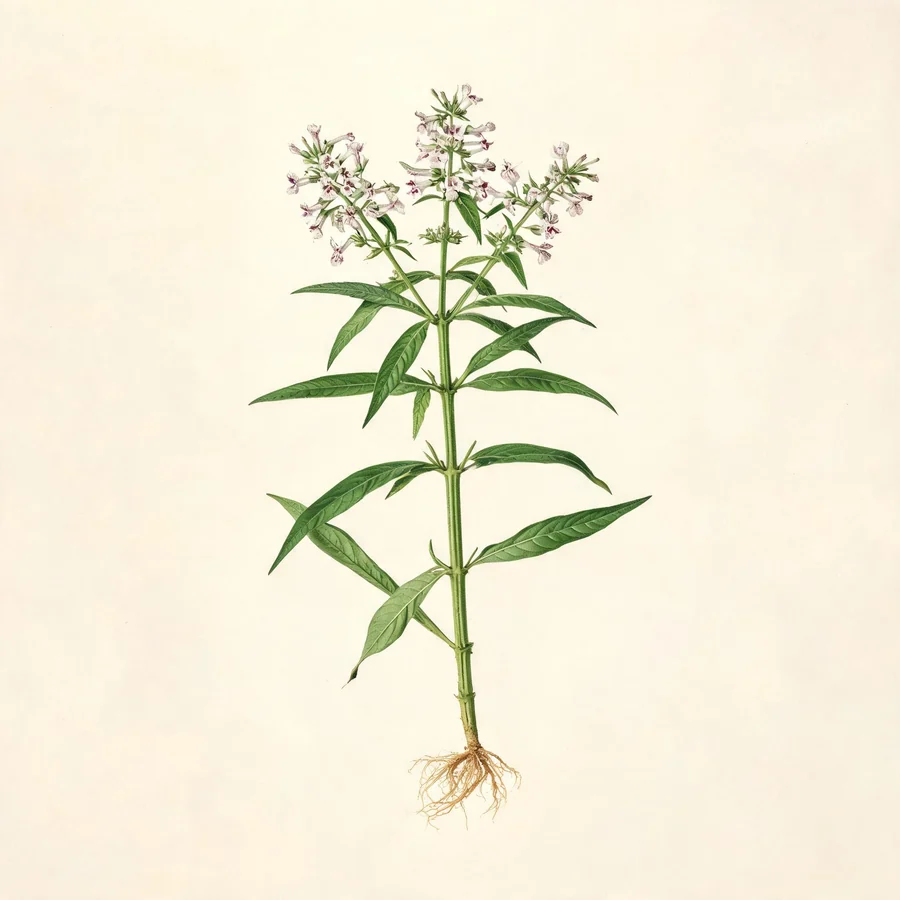
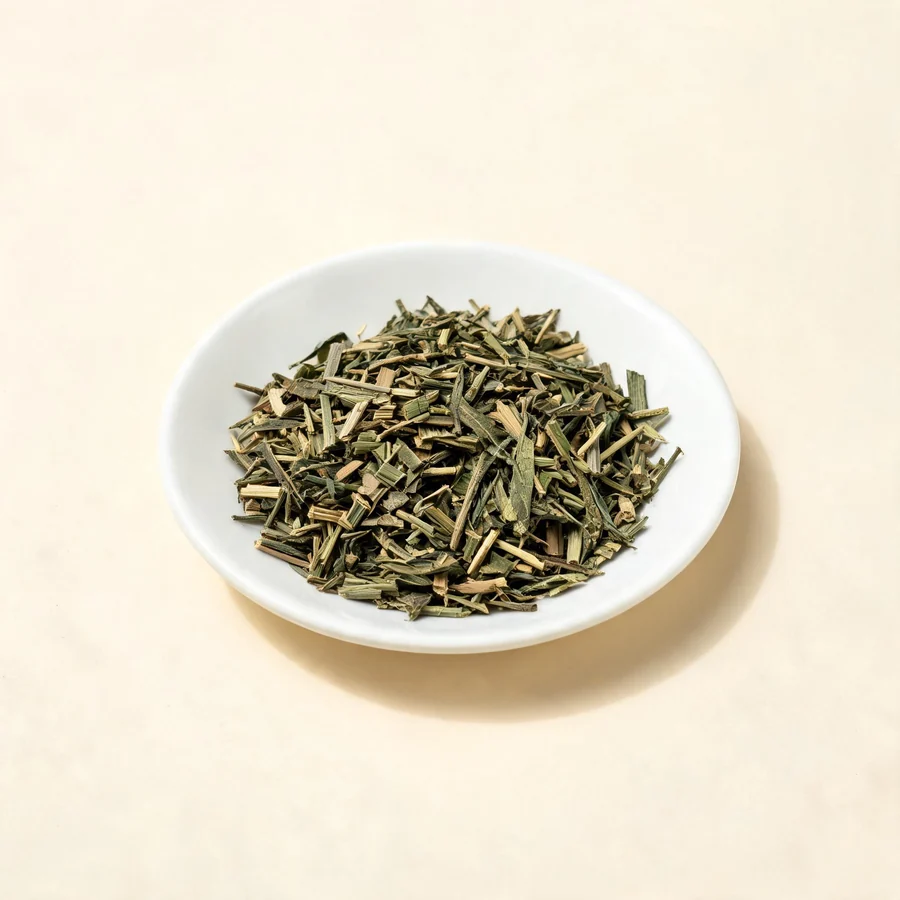
Skin profile
Where this herb sits in skin practice: the pattern it corrects, the skin signs it suits, and what it should not be used for.
Chuan Xin Lian is a herb for the acute, hot and wet phase: red, swollen, painful skin with pus or discharge. Its bitterness is the source of both its strength and its limits, and it is stopped as soon as the heat settles.
Skin signs that suggest it
- Hot, red, swollen and painful lesions with a spreading edge (heat toxin)
- Pus, purulent discharge or a yellow crust (toxin with dampness)
- Weeping eczema or infected dermatitis with a foul smell
- Boils, carbuncles or an abscess that is tense and tender
- A red tongue with a yellow coating, and a rapid pulse
When it is not the right herb
Not for cold, pale or dry skin, and not for chronic eczema that has become thickened and dry. The herb is intensely bitter and cold, so it is avoided where digestion is weak, the appetite poor or the stools loose, and it is not given for a cold-type lesion with no redness or heat. Courses are short because the bitterness accumulates against the Stomach, and it must not stand in for antibiotics when a bacterial infection requires them.
What it does for skin
Skin-relevant actions only. Each one describes a mechanism in TCM terms and what it looks like on the skin.
Clears heat and resolves toxin
The primary action. Heat toxin shows as skin that is hot, red, swollen and painful, often with pus or a foul discharge. Chuan Xin Lian is used where the reaction is intense and localised, such as a boil, an abscess or an infected graze, and it can be swallowed or applied as a fresh poultice. It is one of the strongest toxin-clearing herbs available, which is also why it is reserved for clear heat.
Dries dampness and reduces oozing
Bitterness dries, and this herb is the bitterest in common use. That makes it suitable for damp-heat skin that weeps, crusts or smells, including infected eczema and moist skin folds. The drying is strong enough to irritate already dry skin, so it is matched to lesions that are visibly wet rather than merely red.
Reduces swelling and pain
A hot, tense swelling is the picture: a boil before it points, an abscess, a painful inflamed cyst or a red swollen insect bite. The herb reduces the swelling as it clears the heat, and the fresh leaf pounded and applied is a traditional field remedy. It does not replace incision and drainage when a collection of pus has formed.
Cools the Blood in hot eruptive rashes
Where heat has entered the Blood, the skin may show a dusky rash, small bleeds or a rapidly spreading redness. Chuan Xin Lian cools the Blood as well as the surface, and it is added to formulas for acute febrile rashes. This is a supporting role, and a rash with fever or mucosal involvement needs urgent assessment.
Acts as a short-course internal anti-infective
Much of the modern use is as a herbal anti-infective for hot, discharging skin and soft-tissue infection, often in tablet form. It is given for days rather than months, with food, and stopped when the acute phase settles. The aim is to reduce the heat and toxin load while the body and, where needed, conventional treatment do the rest.
Skin conditions it is used for
Mapped to the condition pages on this site. The pattern column shows what the skin is doing when this herb is the right choice.
| Condition | Pattern | Why it suits | Typical setting |
|---|---|---|---|
| Boils | Heat toxin gathering in the flesh | A boil is a contained pocket of heat toxin, and Chuan Xin Lian is used when it is hot, red, tense and slow to settle. It clears the toxin and reduces the swelling, and the fresh leaf can be pounded and applied while the herb is taken internally. A boil with spreading redness, fever or a black centre needs medical care. | Wu Wei Xiao Du Yin, or the fresh herb as a poultice |
| Skin abscess | Toxic heat with pus and swelling | An abscess is the same process with a collection of pus. The herb is a supporting internal treatment for the inflammation around it, and a wash or poultice is used on the surface. Established abscesses need drainage, so the herb sits alongside medical treatment rather than replacing it. | Xian Fang Huo Ming Yin with Chuan Xin Lian |
| Cellulitis | Heat toxin spreading through the skin and soft tissue | Cellulitis is a spreading, hot, tender redness with a poorly defined edge, and in the tradition it is heat toxin moving through the flesh. Chuan Xin Lian is used as an adjunct for the heat and swelling, but cellulitis can become serious quickly and needs antibiotics and medical review, particularly with fever, blistering or rapid spread. | Huang Lian Jie Du Tang with Chuan Xin Lian, alongside medical care |
| Erysipelas | Acute heat toxin with a raised red plaque | Erysipelas produces a bright, raised, sharply bordered red plaque with heat and pain, which is a classic heat-toxin picture. The herb's toxin-clearing and swelling-reducing actions make it a reasonable supporting component, and cool compresses of a dilute decoction can ease the surface. It does not replace antibiotics, and facial erysipelas is an emergency. | Wu Wei Xiao Du Yin or Huang Lian Jie Du Tang, with medical treatment |
| Impetigo | Heat toxin with dampness producing crusted sores | Impetigo shows golden or honey-coloured crusts on red skin, often around the nose and mouth. The combination of heat, toxin and dampness fits the herb, and a dilute wash is used to clean the area while an internal course addresses the heat. It is contagious, so hands, towels and dressings need care, and extensive or spreading impetigo needs medical treatment. | Wu Wei Xiao Du Yin, with a diluted wash of the decoction |
| Folliculitis | Heat toxin lodged in the hair follicles | Inflamed follicles with red papules and pustules are read as heat toxin in the skin. Chuan Xin Lian is used where the lesions are tender and recurring, often with Lian Qiao and Pu Gong Ying, and the herb can also be applied as a wash. Widespread, deep or recurrent folliculitis should be assessed for an underlying cause. | Chuan Xin Lian with Lian Qiao and Pu Gong Ying |
| Skin infection | Toxic heat in a wound or lesion | An infected graze, bite or small wound with redness, heat and discharge is a heat-toxin picture. A short internal course and a dilute wash are the traditional approach, alongside ordinary wound cleaning. Spreading redness, fever, a deep or dirty wound or an animal bite needs urgent medical attention, and the herb does not replace antibiotics. | A short course with Jin Yin Hua and Lian Qiao, plus a dilute wash |
| Eczema | Damp-heat with oozing and crusting | Chuan Xin Lian is used in the wet, inflamed phase of eczema, when the skin is red, weeping and crusted rather than dry and thickened. The bitterness dries the dampness and the cold clears the heat, and it is paired with skin-specific herbs such as Ku Shen and Bai Xian Pi. Once the flare settles into dryness, the herb is stopped. | A damp-heat formula with Ku Shen and Bai Xian Pi |
Combinations for skin
Herbs it is paired with when the skin, not an internal organ, is the target.
| Partner | Ratio | Why the pair is used |
|---|---|---|
| Huang Qin | 6 to 9 g each | The two share a bitter, cold nature and a heat-clearing action, but Huang Qin drains dampness and targets the upper body while Chuan Xin Lian carries more toxin-resolving force. The pair is used for hot skin and soft-tissue infection with yellow discharge, and the combination is stronger than either herb alone. |
| Jin Yin Hua | 10 to 15 g Jin Yin Hua with 6 to 9 g Chuan Xin Lian | Honeysuckle clears heat and resolves toxin gently at the surface, while andrographis is bitter, drying and more forceful. Together they cover a hot infection at two levels, and the gentler herb allows the pair to be taken for slightly longer than andrographis alone. |
| Gan Cao | 3 to 6 g Gan Cao with 6 to 9 g Chuan Xin Lian | Licorice harmonises an extremely bitter formula, protects the Stomach and soothes an inflamed surface. It makes the decoction drinkable and reduces the nausea that a plain andrographis decoction tends to cause, which is why it appears in lozenges and throat preparations. |
| Bo He | 3 to 6 g Bo He with 6 to 9 g Chuan Xin Lian | Peppermint releases Wind-Heat at the surface while andrographis clears the toxin beneath. The pairing is used for an early hot rash or a sore throat with fever, where the surface and the deeper heat need treating at the same time. |
| Pu Gong Ying | 10 to 15 g each | Dandelion clears heat and resolves toxin with a particular affinity for boils and breast swellings, and it is gentler than andrographis. Together they are used for recurrent boils and hot, tender nodules, with the dandelion carrying more of the long-term work. |
Formulas where it leads
- Wu Wei Xiao Du Yin (五味消毒饮) - The classical formula for heat toxin with boils and hot swellings, built on Jin Yin Hua, Ju Hua, Pu Gong Ying and Zi Hua Di Ding. Chuan Xin Lian is a modern addition where the lesion is intensely hot and the person can tolerate a bitter herb.
- Huang Lian Jie Du Tang (黄连解毒汤) - A fire-purging formula for severe heat toxin with redness, swelling and pus. Chuan Xin Lian is added for its strong toxin-clearing action, and the combination is reserved for acute, robust presentations because every herb in it is cold and drying.
Topical use
Chuan Xin Lian is applied to hot, swollen and discharging skin as a fresh poultice or a dilute wash. The fresh leaf is crushed and laid on a boil, an inflamed bite or a small infected wound, and a cooled decoction is used to clean crusted or weeping areas. The same intense bitterness that clears heat internally is harsh on intact skin, so topical use is limited to the lesion and to short periods.
| Preparation | How and when it is used |
|---|---|
| Fresh poultice | A small handful of clean fresh leaves is crushed to a paste and spread on gauze. Apply to a single hot boil or inflamed bite for 10 to 15 minutes, once or twice daily, and remove if stinging develops. Do not apply to broken skin that is deep, heavily contaminated or bleeding. |
| Dilute wash | 10 to 15 g of dried herb is simmered in 500 ml of water for 15 minutes, strained and cooled. Use the liquid to clean and rinse crusted or weeping areas, then pat dry. Make it fresh each time and do not store it. |
| Cool compress | Soak clean gauze in the cooled decoction, wring it out and lay it over a hot, red patch for 10 minutes. Repeat once or twice daily. Stop if the skin becomes dry, tight or more irritated, which is a sign that the drying action is too strong. |
Patch test and cautions
Patch test on a small area of normal skin first, and keep the preparation away from the eyes, mouth and genital skin. Do not use it on dry, cracked or cold skin, and do not cover a poultice with an airtight dressing. Stop at once if burning, blistering or spreading redness develops, and seek medical advice for any lesion that is enlarging quickly or accompanied by fever.
Safety for skin use
What to check before recommending or using it, including the cautions that matter most for skin patients.
Do not use, or use with caution
- Weak or cold digestion: a very bitter, very cold herb burdens the Stomach, so loose stools, a poor appetite, chilly limbs or years of fragile digestion are reasons to choose a different herb.
- Peptic ulcer, active gastritis or reflux: the bitterness and cold irritate damaged gastric mucosa, and nausea or epigastric burning while taking it is a signal to stop.
- Cold-type skin lesions with no redness or heat, and Wind-Cold patterns with chills and clear discharge rather than a sore throat.
- Known sensitivity to Andrographis, and previous urticaria or rash after an andrographis product.
Pregnancy and breastfeeding
Use only under practitioner supervision, and preferably not at all. In animals, andrographolide has produced antifertility and reproductive changes, and a nature this cold and descending may put the fetus at risk. Chinese product labels commonly advise caution or avoidance, and there is no human safety data. During breastfeeding, data are very limited and some labels list it as a contraindication, so the cautious position is to avoid it, or to use the lowest dose for the shortest time.
Interactions
- Andrographis extracts inhibit several cytochrome P450 enzymes in laboratory work, so medicines cleared by those pathways may rise in the blood; this matters most where a medicine has a narrow therapeutic window.
- Chinese clinical guidance discourages the use of andrographolide preparations together with macrolide antibiotics such as erythromycin and azithromycin, on the grounds of possible interference.
- In preclinical work andrographolide lowered blood pressure and reduced platelet activity, so it may add to warfarin, aspirin, clopidogrel or antihypertensives; bruising or dizziness should be reported.
- Because it modulates immune activity, it pairs poorly with immunosuppressive therapy after transplant; the interaction is unpredictable and needs a specialist's view.
Allergy and patch testing
Oral andrographis products have caused urticaria and rash, and injectable andrographolide preparations have been associated with rare anaphylaxis. A known sensitivity is an absolute bar. Topical use can also irritate, so patch test first and stop if the lesion becomes more inflamed.
General safety references
General references for herbal hepatotoxicity and herb-drug interactions; they are not specific to this herb.
- Review article: Herbal hepatotoxicity - an update on traditional Chinese medicine preparations. Alimentary Pharmacology & Therapeutics, 2014. PMID: 24844799.
- Interactions between herbal medicines and prescribed drugs: an updated systematic review. Drugs, 2009. PMID: 19719333.
- Warfarin and food, herbal or dietary supplement interactions: a systematic review. British Journal of Clinical Pharmacology, 2021. PMID: 32478963.
Evidence
The classical record is quoted with its source. The modern note states the level of evidence plainly.
Classical record
清热解毒,消炎退肿。治咽喉炎症,痢疾,高热。研末,每次三分,日三服,白汤送下,治感冒发热头痛及热泻。
It clears heat and resolves toxin, reduces inflammation and swelling, and is used for inflammation of the throat, dysentery and high fever. Ground to a powder it is taken in doses of about one gram, three times daily, with plain hot water, for colds with fever and headache and for hot diarrhoea.
Quan Zhou Ben Cao (Quanzhou Materia Medica) - A regional herbal recording how the powder was taken in folk practice, a dose remarkably close to the modern tablet.
止血凉血,拔毒生肌。治肺脓疡,喉炎,口腔炎,结膜炎。
It stops bleeding and cools the Blood, draws out toxin and generates new flesh, and is used for abscess of the lung, inflammation of the larynx, inflammation of the mouth and inflammation of the conjunctiva.
Guang Xi Zhong Cao Yao (Guangxi Chinese Herbal Medicine) - The line about drawing out toxin and generating flesh explains the fresh poultice used for boils and infected wounds.
清热凉血,消肿止痛,治胆囊炎,支气管炎,高血压,百日咳。
It clears heat and cools the Blood, reduces swelling and relieves pain, and is used for inflammation of the gallbladder, bronchitis, raised blood pressure and whooping cough.
Jiang Xi Cao Yao (Jiangxi Herbal Medicine) - The wide twentieth-century extension of the herb beyond throat and bowel is visible here, including the swelling and pain language used for skin lesions.
Modern evidence
Evidence status
- Andrographolide, the main diterpenoid lactone, has been studied extensively in laboratory work for anti-inflammatory, antibacterial, antiviral and immune-modulating activity. Most of this is cell and animal research, and the relevance to skin disease is inferred rather than demonstrated.
- Small randomised trials of andrographis extracts exist for upper respiratory infection, but skin-specific trials are scarce and none of the single herb in boils, cellulitis or eczema was identified. No conclusion about dermatological efficacy can be drawn.
- Regulatory status: the dried aerial part is an accepted herbal substance in the Chinese Pharmacopoeia, and purified andrographolide products are also licensed in China. This page describes traditional practice and the current state of the evidence, not a claim of proven benefit in skin disease.
PubMed records
Selected real PubMed records for this herb's species or its constituents, chosen by species name and title relevance. They are references for the non-TCM discussion above, not proof that the herb treats any skin condition.
- Andrographolide Relieves Post-Operative Wound Pain but Affects Local Angiogenesis.. Pharmaceuticals (Basel, Switzerland), 2022. PMID: 36559037 (skin-related record).
- Antifungal activity of Andrographis paniculata extracts and active principles against skin pathogenic fungal strains in vitro.. Pharmaceutical biology, 2012. PMID: 22587518 (skin-related record).
Dose and forms
Skin-practice dosing and the preparations that suit skin complaints.
| Form | Dose and notes |
|---|---|
| Decoction (internal) | 6 to 9 g of dried herb daily, taken cooled and in sips because the taste is extremely bitter. It is given with food and in a formula rather than alone. |
| Tablets and capsules | Powdered herb is taken in capsules at 1 to 3 g for each dose; tablets and dripping pills sold today follow the same idea: a small amount of concentrated material. |
| Topical poultice or wash | A small handful of fresh leaf, or 10 to 15 g of dried herb decocted in 500 ml of water, for a single lesion or a limited area. |
| Course length | Three to seven days for an acute hot lesion, with review. Stomach upset comes mainly from long courses at high doses; months of continuous use are not intended. |
The herb is dosed in single figures because it is so bitter and cold, and it is given briefly rather than as a daily tonic. Tablets and capsules are the practical form for most people, since a decoction is hard to drink. Internally it is taken with food to reduce nausea; the fresh plant is kept for external use, where concentration at the lesion matters more than the swallowed dose.
Citations and further reading
Only real sources are listed: the classical materia medica passages quoted above, and the source works behind the botanical and safety statements.
- Quan Zhou Ben Cao (Quanzhou Materia Medica), regional herbal - classical entry quoted above.
- Guang Xi Zhong Cao Yao (Guangxi Chinese Herbal Medicine), regional herbal - classical entry quoted above.
- Jiang Xi Cao Yao (Jiangxi Herbal Medicine), regional herbal - classical entry quoted above.
- Chuan Xin Lian monograph: Pharmacopoeia of the People's Republic of China - source for the accepted botanical source, part used and quality requirements.
- Modern evidence statement: based on laboratory literature on andrographolide and on small trials in upper respiratory infection, summarised as a statement about the level of evidence rather than as a cited finding.
- Botanical description and identification: botanical literature on Andrographis paniculata, Acanthaceae.
Educational reference for qualified practitioners. This page is not medical advice, and skin conditions should be diagnosed by a clinician before treatment.