Skin profile
Where this herb sits in skin practice: the pattern it corrects, the skin signs it suits, and what it should not be used for.
Quan Shen is for hot lesions that discharge: raw, weeping, bleeding or crusted skin, and boils with an oozing surface. The astringency that makes it useful is also what makes it unsuitable for dry, cold skin.
Skin signs that suggest it
- Red, raw or eroded patches that weep or bleed easily (heat toxin with blood heat)
- Boils, infected grazes or abscesses with a discharging surface
- Hot, tender nodules or indurated swellings that are slow to settle
- Itchy vesicles that weep and crust (damp-heat with discharge)
- A red tongue with a yellow coating, and a rapid or slippery pulse
When it is not the right herb
Not for dry, cold or pale skin, and not for a cold, non-inflamed ulcer with no redness, heat or swelling; the classical caution is explicit about yin-type sores. The astringent tannins can harden the stool and blunt the appetite, so it is not used for long periods, and it is avoided where the bowel is already dry or the digestion cold. It is a herb for discharging, hot lesions, not for dry scaly ones.
What it does for skin
Skin-relevant actions only. Each one describes a mechanism in TCM terms and what it looks like on the skin.
Clears heat and resolves toxin
Quan Shen is used where infection or inflammation has produced a hot, red, painful lesion: a boil, an infected graze, a hot tender swelling or a patch of infected eczema. It is a supporting rather than a leading toxin-clearing herb, but it brings something the colder herbs do not, which is the ability to tighten the surface at the same time.
Cools the Blood and stops bleeding
Where heat drives blood out of the small vessels, the skin may show purpura, petechiae or a lesion that bleeds when touched. The cool nature lowers the heat and the astringent quality contracts the tissue, so the two halves of the action work together. It is a supporting herb for bleeding into the skin, not a treatment for a bleeding disorder.
Dries ooze and binds the surface
The tannins bind proteins at the surface, which is the mechanism behind the traditional use on weeping and eroded skin. A cooled decoction used as a compress reduces the clear or bloody ooze and leaves the surface less raw. This is the most distinctive skin action of the herb and the reason it is chosen for erosions and vesicles rather than dry plaques.
Disperses swelling and softens nodules
For a hard, tender lump, a boil that will not point or a lymph node that is enlarged and painful, the herb is used to disperse the swelling. A poultice or a strong wash carries the astringent and antimicrobial quality straight to the tissue. A lump that is hard, fixed or enlarging needs medical assessment.
Cools and binds in the same movement
Most herbs either clear or hold. Quan Shen does both, which is why it suits the skin and the bowel, where heat toxin so often produces discharge. That same logic sets its limits: with nothing to bind and nothing to cool, the astringent and cold halves of the herb have no work to do.
Skin conditions it is used for
Mapped to the condition pages on this site. The pattern column shows what the skin is doing when this herb is the right choice.
| Condition | Pattern | Why it suits | Typical setting |
|---|---|---|---|
| Boils | Heat toxin with a discharging surface | A boil that is red, hot and beginning to discharge is a heat-toxin lesion, and Quan Shen adds astringency to the usual toxin-clearing herbs so the surface settles as the heat clears. It is applied as a wash or poultice and taken internally in a formula. A boil with spreading redness or fever needs medical care. | Wu Wei Xiao Du Yin with Quan Shen |
| Skin abscess | Toxic heat with swelling and pus | Where an abscess is tense, tender and slow to settle, Quan Shen helps disperse the swelling and dry the discharge, usually alongside honeysuckle and other toxin-clearing herbs. Its astringency is useful once drainage has begun and the surface is oozing. It does not replace drainage or antibiotics for an established collection. | Xian Fang Huo Ming Yin, or a Quan Shen wash |
| Impetigo | Heat toxin with crusting and ooze | Impetigo produces red skin with golden crusts and a moist base, which fits both halves of the herb: the heat toxin is cleared and the oozing surface is bound. A dilute decoction is used to clean the area, and an internal course addresses the heat. It is contagious, so hands, towels and dressings need care, and extensive disease needs medical treatment. | Quan Shen with Jin Yin Hua and Lian Qiao |
| Skin erosion | Raw, weeping surface from heat and dampness | An erosion is a patch where the surface skin is lost and the area is raw, glazed or weeping. Quan Shen is well suited because it cools the inflammation and its tannins reduce the ooze, and a cooled compress is the simplest form. Deep, spreading or infected erosions need medical assessment rather than a herbal wash. | A strong Quan Shen decoction as a cooled compress |
| Skin infection | Toxic heat in an infected wound | For a small infected graze or wound with redness and discharge, the herb is used as a wash and, in a formula, internally. Its astringency helps the surface while the toxin is cleared. A deep, dirty, spreading or febrile wound needs urgent medical care, and the herb is not a substitute for wound cleaning or antibiotics. | Quan Shen with Huang Qin in a short course, plus a wash |
| Itchy vesicular rashes | Damp-heat with vesicles that weep | Small itchy vesicles that break and weep are a damp-heat picture with discharge, which is exactly where the astringent half of Quan Shen earns its place. A cooled wash reduces the ooze and the itch, and an internal formula clears the underlying heat. A blistering rash that is spreading, painful or accompanied by fever needs medical assessment. | Quan Shen with Bai Xian Pi and Ku Shen |
| Purpura | Blood heat with bleeding into the skin | Non-blanching purple spots point to heat that drives blood through the vessel walls. Quan Shen cools the Blood and its astringency helps hold the vessel, and it is used as a supporting herb in formulas for heat-type purpura. New, spreading or unexplained purpura needs medical assessment, and a bleeding disorder is not treated with herbs alone. | Quan Shen with Sheng Di Huang and Mu Dan Pi |
| Anal irritation | Damp-heat and engorged vessels around the anus | Itch, moisture and bleeding around the anus from engorged haemorrhoids point to damp-heat pouring downward. Quan Shen reaches the area through its Large Intestine affinity, and a sitz bath lets the astringent quality act directly. Bleeding that persists, alters in character or comes with weight loss needs proper investigation. | Quan Shen sitz bath with Di Yu |
Combinations for skin
Herbs it is paired with when the skin, not an internal organ, is the target.
| Partner | Ratio | Why the pair is used |
|---|---|---|
| Huang Qin | 6 to 9 g each | Huang Qin is the stronger drying herb for damp-heat, while Quan Shen adds astringency and a haemostatic action it does not have. Together they clear more completely and bind the bowel and surface as well as cooling them, which suits hot, discharging lesions and inflamed skin with a weepy base. |
| Jin Yin Hua | 10 to 15 g Jin Yin Hua with 6 to 9 g Quan Shen | Honeysuckle clears heat toxin at the surface and upper body, while Quan Shen cools the Blood, binds the tissue and disperses swelling. The pair covers the dispersing and the binding sides of a hot infection, and it is used for boils, impetigo and hot skin lesions in their first stage. |
| Gan Cao | 15 g Quan Shen with 9 g Gan Cao | The classical pairing from Zi Shen Tang, in which liquorice softens the bitterness, shields the Stomach and contributes a mild toxin-resolving action. It is used where heat toxin touches both the Lungs and the intestines, and in skin practice where a hot lesion runs alongside gut disturbance. |
| Di Yu | 10 to 15 g each | Di Yu is the more single-minded stopper of bleeding, especially from the lower body, while Quan Shen reaches wider into heat toxin and discharge. Together they are used for bleeding haemorrhoids and for eroded skin that bleeds easily, taken by mouth and as a sitz bath or wash. |
| Bai Xian Pi | 10 to 15 g Bai Xian Pi with 6 to 9 g Quan Shen | Bai Xian Pi clears damp-heat and quiets itch, and Quan Shen dries the ooze and binds the surface. The pair is used for itchy vesicular rashes and moist, eroded patches, with the gentler herb carrying the itch and the astringent one the discharge. |
Formulas where it leads
- Zi Shen Tang (紫参汤) - A two-herb formula from the Jin Gui Yao Lue pairing Zi Shen, the old name for this rhizome, with Gan Cao. It was used for diarrhoea with chest pain, and it illustrates the classical combination of clearing and binding; the skin use is an extension of the same logic.
- Wu Wei Xiao Du Yin (五味消毒饮) - The classical formula for heat toxin with boils and hot swellings. Quan Shen is a supporting addition where the lesion is weeping or bleeding, because it brings an astringency that the other herbs in the formula do not.
Topical use
Quan Shen is applied as a cooled wash, a compress or a poultice, and as a gargle in traditional practice. On the skin it is used for raw, weeping and bleeding lesions, for boils and for infected grazes, where the astringent tannins reduce ooze and the cool nature clears surface heat. It is a herb for limited, defined areas: a strong decoction on a large eroded surface can sting and dry the skin.
| Preparation | How and when it is used |
|---|---|
| Cooled compress | 15 to 30 g of sliced dried rhizome is simmered in 500 ml of water for 20 minutes, strained and cooled. Soak clean gauze, wring it out and lay it on the affected area for 10 to 15 minutes, once or twice daily. Stop if the skin stings or becomes tighter and drier. |
| Wash or sitz bath | A stronger decoction of 30 g in 1 litre of water, cooled to a comfortable temperature, is used to rinse a weeping area or as a sitz bath for irritated, bleeding haemorrhoids. Soak for 10 minutes and pat dry. Do not share the liquid or keep it beyond the day. |
| Poultice | Dried rhizome is ground to a fine powder, mixed with a little water or honey to a paste and spread on gauze for a boil or a hot swelling. Apply for 20 to 30 minutes and change once or twice daily. Do not apply to a deep, open or freely bleeding wound. |
| Gargle | A cooled, strained decoction is used as a gargle for a hot, raw throat or mouth ulcers, and spat out after rinsing. This is a traditional use of the same astringent action, and it should not be swallowed in quantity. |
Patch test and cautions
Patch test first, and keep the preparation away from the eyes and from mucosal surfaces other than the mouth rinse. Do not use on dry, cold or pale skin, and do not cover a poultice with an airtight dressing. Stop at once if burning, blistering or spreading redness develops, and seek medical advice for any wound that is deep, dirty or accompanied by fever.
Safety for skin use
What to check before recommending or using it, including the cautions that matter most for skin patients.
Do not use, or use with caution
- Cold and weak digestion: a bitter, astringent, cool root can worsen a cold middle, loose stools, poor appetite and abdominal pain that warmth eases.
- Dry or cold skin lesions with no heat or discharge, including the classical yin-type sore that is pale and non-inflamed.
- Constipation or a dry bowel: the tannins bind, and a long course can harden the stool and dull the appetite.
- Known sensitivity to the herb, and pregnancy without practitioner supervision.
Pregnancy and breastfeeding
Use only under practitioner supervision. It does not appear among the drugs classical texts prohibit in pregnancy, yet it is cool, has a mild reputation for moving the Blood and carries a heavy tannin load, none of which has been studied in pregnancy. Prudence therefore favours avoiding it unless a clearly hot, discharging infection needs treatment, and then using the smallest dose briefly. Pregnant women should not treat their own diarrhoea or bleeding with herbs.
Interactions
- Tannins bind iron into insoluble complexes, so iron tablets and iron-rich supplements need a gap of at least two hours from the herb or the iron will not be absorbed.
- Alkaloid medicines and some other oral drugs bind in the same way, so leave a gap of one to two hours before any tablet.
- Warfarin and the direct oral anticoagulants need separate mention: the herb has a reputation for stopping bleeding and also contains anti-inflammatory compounds, so clotting time may move in either direction and should be checked.
- Strong tea adds its own tannins and can tip the astringency into constipation, so it is limited during a course.
Allergy and patch testing
A reaction to Quan Shen is not commonly reported, but any astringent herb applied to broken skin can sting or sensitise. Patch test a cooled decoction first, keep compresses to limited areas, and stop if the skin becomes more irritated rather than calmer.
General safety references
General references for herbal hepatotoxicity and herb-drug interactions; they are not specific to this herb.
- Review article: Herbal hepatotoxicity - an update on traditional Chinese medicine preparations. Alimentary Pharmacology & Therapeutics, 2014. PMID: 24844799.
- Interactions between herbal medicines and prescribed drugs: an updated systematic review. Drugs, 2009. PMID: 19719333.
- Warfarin and food, herbal or dietary supplement interactions: a systematic review. British Journal of Clinical Pharmacology, 2021. PMID: 32478963.
Evidence
The classical record is quoted with its source. The modern note states the level of evidence plainly.
Classical record
紫参,味苦辛寒。主心腹积聚,寒热邪气。通九窍,利大小便。一名牡蒙。
Zi Shen is bitter and acrid and cold in nature. Its indications are masses and accumulations in the chest and below, and the noxious Qi of cold and heat; it opens the nine orifices and eases both urine and stool. Another of its names is Mu Meng.
Shen Nong Ben Cao Jing (Divine Husbandman's Classic of Materia Medica) - The earliest record files the herb under an older name, and already holds the two themes that persist: masses and swellings, and free passage of urine and stool.
紫参,微苦,无毒,主治肠胃大热,唾血、衄血、肠中聚血、痈肿诸疮。
Zi Shen is slightly bitter and free of toxicity. It is used for great heat in the stomach and the intestines, for blood in the spittle, for bleeding from the nose, for blood pooled inside the bowel, and for swellings and sores of several kinds.
Ming Yi Bie Lu (Supplement to the Classic of Materia Medica) - The bleeding and sore indications are set out explicitly here, and later practice kept this part of the herb's range.
拳参,生淄州田野。叶如羊蹄,根似海虾,黑色。五月采。……捣末,淋渫肿气。
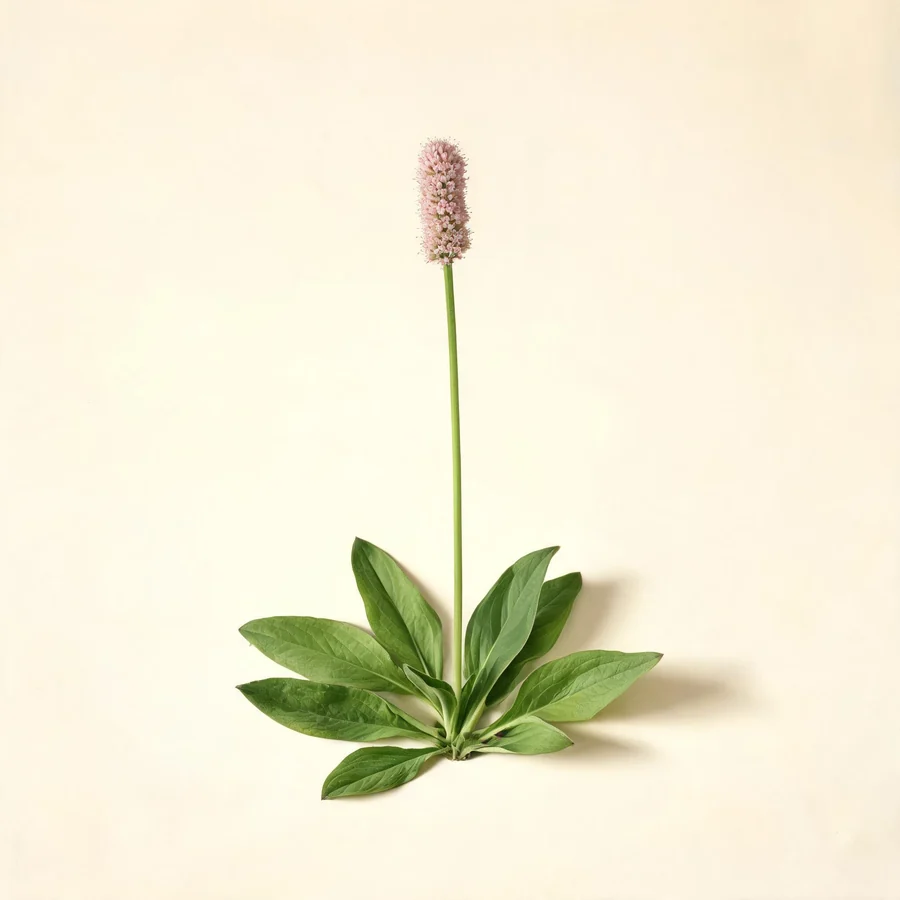
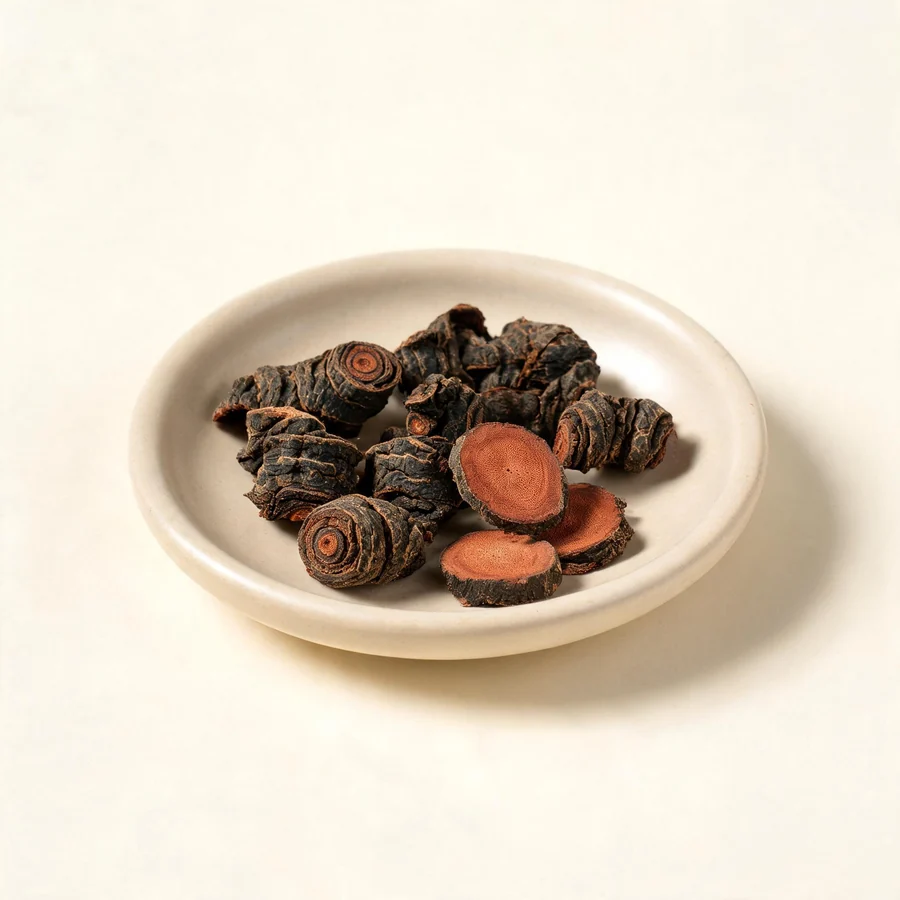
Quan Shen grows in the open country around Zizhou. Its leaf is like dock and its root, which is black, resembles a sea shrimp. It is collected in the fifth month, and pounded into a powder it is used to wash swellings.
Ben Cao Tu Jing (Illustrated Classic of Materia Medica) - A Song dynasty text where the modern name appears, and it records the external use of root powder washed over a swelling.
紫参,叶似羊蹄,紫花青穗,皮紫黑,肉红白,肉浅皮深,所在有之。
The leaves of Zi Shen resemble those of dock, the flowers are purple on a blue green spike, the outer skin is purple black and the flesh a pale red, lighter than the skin. The plant is found in many places.
Xin Xiu Ben Cao (Newly Revised Materia Medica) - A Tang description written to separate the plant from lookalikes, giving the field marks a collector would use.
Modern evidence
Evidence status
- Laboratory work reports that the rhizome contains roughly 9 to 25 per cent tannins, together with flavonoids and other phenolic compounds, and that extracts have astringent, antimicrobial and anti-inflammatory activity. These are mainly in vitro and animal studies.
- Clinical trial evidence for Quan Shen in skin disease is very limited, and no adequately powered dermatological trial of the single herb was identified. Older clinical reports describe its use in bacterial dysentery, but those are historical observations rather than current trial evidence.
- Regulatory status: the dried rhizome is an accepted herbal substance in the Chinese Pharmacopoeia, where it is classified as slightly toxic. Oral toxicity data in animals show a wide margin at ordinary doses, and the practical caution is the cold astringency rather than acute poisoning.
PubMed records
Selected real PubMed records for this herb's species or its constituents, chosen by species name and title relevance. They are references for the non-TCM discussion above, not proof that the herb treats any skin condition.
- Polygonum bistorta Linn. as a green source for synthesis of biocompatible selenium nanoparticles with potent antimicrobial and antioxidant properties.. Biometals : an international journal on the role of metal ions in biology, biochemistry, and medicine, 2024. PMID: 39127845 (pharmacology or review record).
- Anti-inflammatory activity of Polygonum bistorta, Guaiacum officinale and Hamamelis virginiana in rats.. The Journal of pharmacy and pharmacology, 1994. PMID: 8051612 (skin-related record).
Dose and forms
Skin-practice dosing and the preparations that suit skin complaints.
| Form | Dose and notes |
|---|---|
| Decoction (internal) | 4.5 to 9 g of dried rhizome daily for heat toxin with discharge or bleeding. Up to 15 g is used in acute cases under supervision, and older reports of 30 g belong to supervised hospital practice. |
| Tablets and granules | Concentrated granules are dosed by the manufacturer's equivalent; follow the label rather than converting directly from the raw weight. |
| Topical compress or wash | 15 to 30 g simmered in 500 ml of water for a compress, or 30 g in 1 litre for a wash or sitz bath, used cooled once or twice daily. |
| Course length | Short courses of one to two weeks, with review. Stop if the stool becomes hard, the appetite dulls or the skin becomes dry and tight. |
Official classification puts the root in the slightly toxic class, but the oral margin in animals is wide, and the label is best read as a warning about the class of herb, not the usual cup. The practical limits are the cold astringency and the tannins: prolonged use can constipate and dull the appetite. It is given for a defined problem, then reviewed, and is not a daily tonic.
Citations and further reading
Only real sources are listed: the classical materia medica passages quoted above, and the source works behind the botanical and safety statements.
- Shen Nong Ben Cao Jing (Divine Husbandman's Classic of Materia Medica), attributed compilation of the Han period - classical entry quoted above.
- Ming Yi Bie Lu (Supplement to the Classic of Materia Medica) - classical entry quoted above.
- Xin Xiu Ben Cao (Newly Revised Materia Medica), Tang dynasty - classical entry quoted above.
- Ben Cao Tu Jing (Illustrated Classic of Materia Medica), Song dynasty - classical entry quoted above.
- Quan Shen monograph: Pharmacopoeia of the People's Republic of China - source for the accepted botanical source, part used, quality requirements and toxicity classification.
- Modern evidence statement: based on laboratory literature on bistort tannins and flavonoids and on older clinical reports, summarised as a statement about the level of evidence rather than as a cited finding.
- Botanical description and identification: botanical literature on Polygonum bistorta (Bistorta officinalis), Polygonaceae.
Educational reference for qualified practitioners. This page is not medical advice, and skin conditions should be diagnosed by a clinician before treatment.