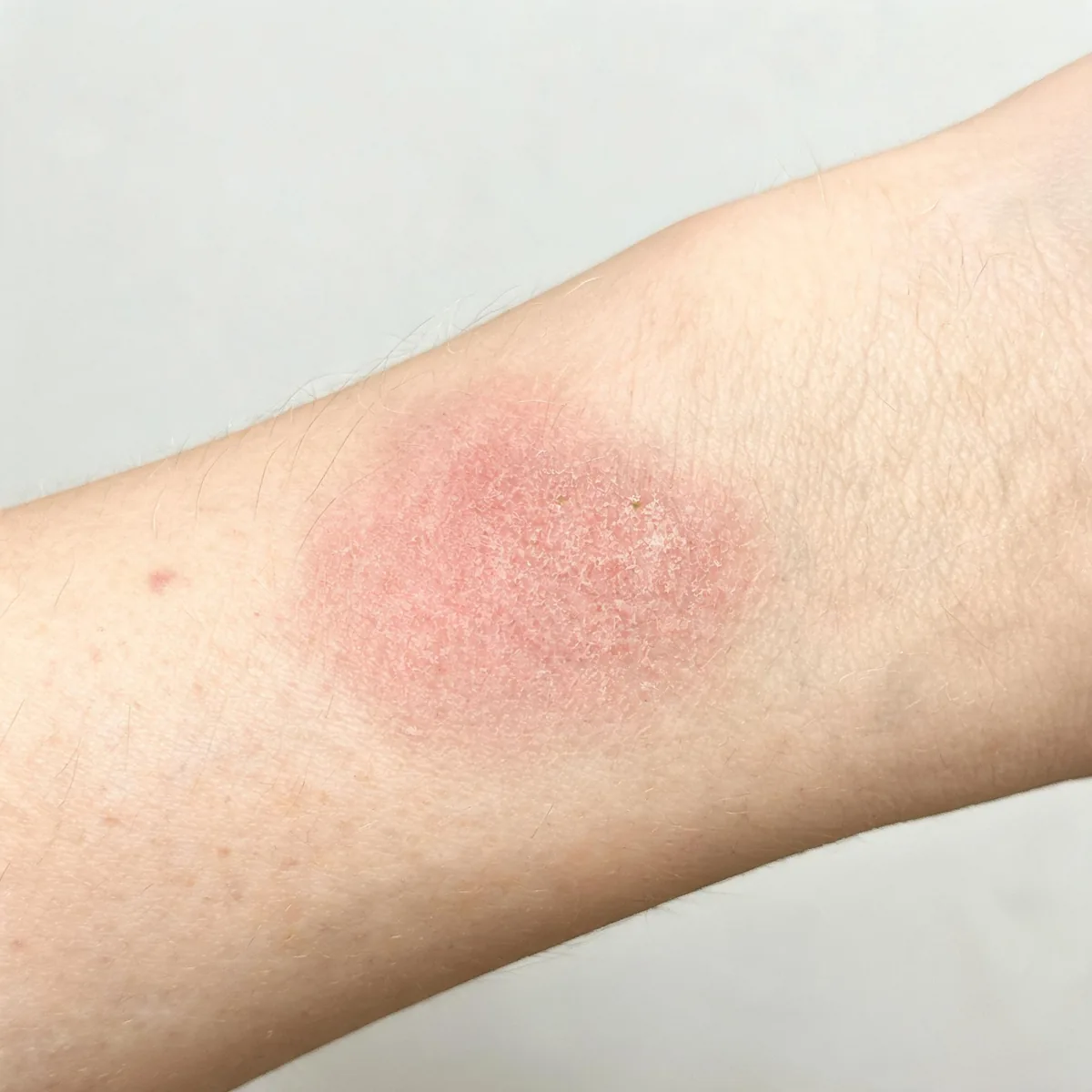
Understanding Skin hypersensitivity to touch
The classical literature links the skin to the Lung system and Defensive Qi, which circulates just beneath the surface. When the barrier is weakened or breached, Wind, Heat or Dampness can irritate the surface and produce hypersensitivity.
Wind-Heat gives red hot swollen skin with intense itching worse with heat, sudden onset after a cold or sore throat, sore throat and thirst.
Damp-Heat gives skin that feels heavy and warm and may weep sticky fluid, worse in humid weather or after greasy food, with heaviness and chest stuffiness.
Heat in the Blood gives bright red skin that feels hot and burns, with hypersensitivity worse at night, a deep red tongue with red spots, restlessness and thirst. Blood deficiency with external wind gives dry rough flaky skin with itch that shifts and worsens at night, a pale complexion and an aversion to drafts.
The skin is the outer boundary of the Lung system, and the Defensive Qi that patrols just beneath it is what keeps Wind, Heat, and Dampness outside. When that patrol is thin, the surface is caught unprepared: a draught, a sudden change of temperature, or an allergen gets in and the skin reacts at once with redness, swelling, and itch.
Not all of it comes from outside. Heat accumulated deep in the Blood can set the skin on edge from within, so it feels hot, red, and sore to the lightest touch even when nothing external has happened; this deeper fire tends to accompany stress, overwork, and food that is heavy on spice and grease. Where Blood is chronically short the skin loses its moisture and its defences together, becoming dry, fragile, and easy for even mild Wind to penetrate, which gives the persistent sensitivity that wanders from place to place. This last picture is commoner in people who are constitutionally weak, have recently given birth, or have been ill for a long time.
Because each mechanism produces a different kind of sensitivity, the symptom is never treated on its own. A practitioner reads the quality of the redness, whether the skin oozes or flakes, the tongue and the pulse, and the person's overall constitution before choosing herbs and points.
Conventional view
Conventional medicine has no single label for skin that hurts on light touch; the clinical term is allodynia, and it is treated as a symptom with several possible sources. Nerve-related causes include peripheral neuropathy, fibromyalgia, and pain after shingles, while inflammatory skin disease such as eczema, contact dermatitis, or sunburn can make the surface tender in the same way. In some people the nervous system itself becomes sensitised after an injury or a long period of pain, so ordinary touch is interpreted as painful.
Assessment rests on the physical examination and the history, with tests used to exclude nerve damage or an autoimmune condition. Treatment is aimed at the presumed cause: numbing agents and corticosteroid creams for localised skin trouble, antihistamines where an allergic reaction is involved, and oral nerve-pain medicines such as gabapentin, pregabalin, or a tricyclic antidepressant. Moisturisers and avoiding irritants are first-line for inflammatory skin disease, and immunosuppressant creams or systemic drugs are kept for severe cases.
These measures can dull the sensation, but they do not explain why this person's skin reacts so strongly in the first place, and the underlying susceptibility usually remains. Nerve-pain drugs commonly cause drowsiness or dizziness, and long-term steroids thin the skin and carry systemic risks. Conventional care also treats the symptom in a generic way, without separating the trapped heat, the dampness, or the blood deficiency that TCM reads as the drivers of the sensitivity.
Selected PubMed records
Real PubMed records for the conventional discussion above, selected by condition name and title relevance. They are references, not a claim that any treatment is proven for this condition.
- Allodynia and hyperalgesia in neuropathic pain: clinical manifestations and mechanisms.. The Lancet. Neurology, 2014. PMID: 25142459.
How it is assessed
The practitioner examines the skin and takes the history of onset and triggers.
What a practitioner looks for
- Redness and heat: red hot skin suggests Wind-Heat or Heat in the Blood.
- Moisture: weeping sticky skin suggests Damp-Heat.
- Dryness: dry flaky shifting sensitivity suggests Blood deficiency with wind.
- Red flags: sudden swelling, breathing difficulty, or rapidly spreading pain.
The consultation starts with the skin surface and with the story of how quickly it changed. Sudden red, swollen, fiercely itchy patches that feel warm and settle under a cold compress point to Wind-Heat. The pulse floats and runs fast, the tongue shows red beneath a thin yellow coat, and both confirm that a pathogen is being held at the surface.
When the skin is also oozing or sticky the picture shifts to Damp-Heat: vesicles or damp erythema, worse in humid weather, a red body whose coating is thick, greasy, and yellow, and a slippery rapid pulse that points to internal dampness joined with heat. Heat in the Blood is deeper again, with bright red burning skin, sometimes tiny red spots, thirst, a feeling of heat, irritability, a dark red tongue with a thin yellow coat, and a rapid wiry pulse.
Recurrent or long-standing sensitivity sends the practitioner looking for Blood Deficiency with External Wind: dry, scaly, itchy skin that is worst at night, a pale tired appearance, a pale tongue with a thin white coat, and a thin wiry or weak pulse. The lack of nourishment, rather than an active pathogen, is what leaves that skin so reactive.
TCM patterns in Skin hypersensitivity to touch
Four patterns are described for skin that hurts or reacts to light touch; the practical question is whether the picture is excess at the surface, heat in the Blood, or deficiency. Wind-Heat is the acute version: red, hot, swollen, fiercely itchy skin after a cold, a sore throat, or exposure to wind, with a floating rapid pulse. Damp-Heat adds a turbid quality, so the skin feels heavy and warm and may weep sticky fluid, with a thick greasy yellow coating. Heat in the Blood is deeper again, with bright red burning skin worst at night, red spots on the tongue, restlessness, and thirst. The dry, chronic picture belongs to Blood Deficiency with External Wind, where pale, flaky, shifting itch appears because the surface has lost its nourishment. Patterns overlap: a Wind-Heat flare can settle into dampness, and an acute eruption may sit on a base of deficiency that decides how fast it clears.
| Pattern | Key signs | The itch | Tongue | Main formula |
|---|---|---|---|---|
| Wind-Heat | Red hot swollen skin | Intense itching worse with heat | Body: Red at the tip and edgesCoat: Thin yellow or white turning yellow | Not specified |
| Damp-Heat | Skin feels heavy, warm and may weep sticky fluid | Not specified | Body: Red, often swollen with teeth marksCoat: Yellow, greasy and thick, usually in the middle and at the root | Not specified |
| Heat in the Blood | Bright red skin that feels hot and burns; Deep red tongue with red spots | Not specified | Body: Deep red, often with red points or pricklesCoat: Thin, yellow and dry | Not specified |
| Blood Deficiency with External Wind | Dry rough or flaky skin | Itching that comes and goes or shifts location | Body: Pale and thin, sometimes slightly dryCoat: Thin, white and a little dry | Not specified |
Wind-Heat
Red hot swollen skin with sudden intense sensitivity.
This pattern belongs to the surface. An external pathogen carrying wind and heat settles where the Defensive Qi ought to be guarding, and once that guard is broken the skin becomes the place where the two forces meet, with sudden redness, swelling, and fierce itching. Heat makes the surface feel hot and over-sensitive to even light contact, while the wind gives the itch its shifting, unpredictable quality.
The tongue shows red at the tip and edges beneath a thin yellow coating, while the pulse floats and runs fast. Hot rooms, hot showers, overheating, and greasy, spicy, fried, or sweet food all aggravate it, while cool compresses, a cool room, and cool drinks or herbal teas settle it. Yin Qiao San disperses the pathogen from the exterior, Chan Tui is added to stop the itch, and Hegu (LI-4) with Quchi (LI-11) releases the surface and clears the heat.
Signs
- Red hot swollen skin
- Intense itching worse with heat
- Sudden onset after a cold or sore throat
- Sore throat and thirst
Diet and lifestyle for this pattern: Keep cool and avoid overheating. Drink plenty of water and herbal teas such as mint or chrysanthemum to clear Heat gently, avoid spicy, greasy or fried food that adds internal Heat, wear loose breathable fabrics and use cool compresses on itchy areas.
Damp-Heat
Heavy warm weeping skin worse in humidity.
When Dampness and Heat combine they become trapped in the skin, which then feels heavy, warm, and tender. The dampness swells the tissue and may make it weep clear or sticky fluid; the heat reddens it and gives a burning quality. Friction and pressure become unpleasant, and humid weather or a greasy meal will often bring on a flare.
The tongue body is red, its yellow coating greasy and thickest towards the centre and the root, and the pulse is soggy and rapid or slippery and rapid. Damp or humid surroundings, greasy, spicy, fried, or sweet food, alcohol or coffee, and overeating all worsen it, while a cool environment, light bland food such as congee and vegetables, and gentle exercise that produces a light sweat help drain it. Xiao Feng San is the formula, with Ku Shen, Cang Zhu, and Fang Feng, and Quchi (LI-11), Yinlingquan (SP-9), and Sanyinjiao (SP-6) as the points.
Signs
- Skin feels heavy, warm and may weep sticky fluid
- Worse in humid weather or after greasy food
- Heaviness in body and head
- Chest and upper abdominal stuffiness
Diet and lifestyle for this pattern: Eat light, easy food such as congee, steamed vegetables and moderate amounts of cooling fruit, and avoid greasy, fried, sweet and spicy food that generates Dampness and Heat. Keep living spaces dry and aired, use a dehumidifier if needed, and keep exercise gentle and regular so a light sweat helps eliminate Dampness.
Heat in the Blood
Bright red burning skin with night-time sensitivity.
Here the heat has moved below the surface and into the Blood itself, agitating and accelerating its flow and pushing fiery energy out to the skin. The small vessels become engorged and inflamed, so the skin looks bright red, feels hot, and stings at the lightest touch. Because this is internal rather than superficial, it often flares when the body is at rest and daytime activity no longer disperses the heat.
The tongue is deep red with red spots or prickles and a thin yellow dry coating, and the pulse runs fast and wiry, sometimes slippery. Greasy, spicy, fried, or sweet food, alcohol or coffee, emotional strain, hot environments and hot showers, and the night all aggravate it, while a cool room, cool compresses, cool drinks, and rest and calm ease it. Xiao Feng San is used to cool the Blood and settle the itch, Chan Tui supports it, and Xuehai (SP-10) with Quchi (LI-11) is the point pair that clears heat from the Blood and calms the skin.
Signs
- Bright red skin that feels hot and burns
- Hypersensitivity worse at night
- Deep red tongue with red spots
- Restlessness with thirst
Diet and lifestyle for this pattern: Avoid spicy, greasy and fried food, alcohol and coffee, which all add Heat to the Blood. Eat cooling food such as cucumber, watermelon, mung beans and chrysanthemum tea, keep the body cool and calm, avoid hot baths, saunas and overexertion, and use gentle activity such as walking or tai chi to move Qi without overheating.
Blood Deficiency with External Wind
Dry flaky skin with shifting night sensitivity.
When Blood is insufficient it cannot nourish and moisten the skin, which becomes dry, fragile, and poorly defended. External Wind then finds it easy to enter and lodge in the surface, and the combination of internal dryness with an external pathogen produces a sensitivity in which even light touch provokes itching, often in a pattern that moves about as wind does.
The tongue is pale and thin under a thin white coat that is slightly dry, and the pulse is fine, with a wiry quality at the left middle position and a floating one at the right front. Wind and draughts, dry air, greasy or spicy or sweet food, overwork and lost sleep, and emotional strain all aggravate it, while moisturising, a warm calm room, nourishing warm meals, and adequate sleep relieve it. Dang Gui Yin Zi nourishes the Blood, moistens the dryness, and dispels the Wind, with Dang Gui, Shu Di Huang, Bai Shao, Fang Feng, and Chan Tui, and Xuehai (SP-10), Quchi (LI-11), Sanyinjiao (SP-6), and Zusanli (ST-36) as the points.
Signs
- Dry rough or flaky skin
- Itching that comes and goes or shifts location
- Worse at night
- Pale complexion
- Aversion to wind and drafts
Diet and lifestyle for this pattern: Eat regular meals rich in blood-nourishing food such as dark leafy greens, beetroot, liver, black sesame and goji berries, and avoid cold, raw and spicy food that can deplete or dry the Blood. Protect the skin from wind and dry air with gentle fragrance-free moisturisers and a scarf, and keep movement consistent such as walking or tai chi so Qi and Blood move without overexertion.
Treatment approach
How the tradition treats skin hypersensitivity to touch, with the herbs, formulas and points used for it.
Principles
- Treat acute swelling or breathing difficulty as an emergency.
- Clear Wind-Heat where the skin is red, hot and suddenly sensitive.
- Drain dampness where the skin weeps and feels heavy.
- Nourish Blood where sensitivity is dry and shifting, and address any nerve or systemic cause medically.
- Root and branch are treated together: the surface pathogen is expelled, the Blood is cooled where it is overheated, and the substances that keep the skin resilient are restored. Quchi (LI-11) recurs because it clears heat and calms itch, Xuehai (SP-10) cools the Blood, and Sanyinjiao (SP-6) harmonises dampness and Blood. The formula follows the pattern, with Yin Qiao San chosen for the Wind-Heat picture, Xiao Feng San where dampness or blood heat is mixed in, and Dang Gui Yin Zi once the deficiency dominates.
Herbs used
Formulas
Acupoints
What to expect
- Acute heat patterns are described as settling within weeks.
- Deficiency patterns improve more slowly.
- Neuropathic or generalised skin pain needs medical investigation.
- Redness and reactivity usually begin to fall within the first few sessions, and within a week of the herbs being started, with acute pictures resolving quickly and chronic ones improving gradually. Acupuncture runs once or twice weekly with daily herbs, and as the skin settles the formula is often redirected towards the root deficiency to reduce the chance of relapse, so the prescription at week four may differ from the one at week one.
Safety and when to get help
Seek medical help urgently for
- Difficulty breathing or swelling of the face, lips or throat.
- Rapidly spreading redness or pain.
- New generalised skin pain or burning, especially with weakness or numbness.
For anything severe, sudden or spreading quickly, read when a skin problem needs urgent care.
Cautions
- Avoid known irritants and harsh fabrics.
- Do not scratch or rub; friction worsens sensitivity.
- New neurological symptoms need urgent assessment.
Using this alongside conventional care
- TCM is described as complementary to conventional care: prescribed topical treatment and medical assessment continue alongside herbs.
- Topical steroids and oral antihistamines can usually continue alongside herbs and acupuncture, but the practitioner needs the full medication list. Blood thinners such as warfarin, aspirin, and clopidogrel deserve particular care because Dang Gui can add to their effect, and if a nerve-pain medicine is causing drowsiness the point selection can avoid adding to it. No prescribed drug should be stopped without the prescriber's agreement.
Diet and lifestyle
- Keep the diet light and cooling during flares, favouring steamed vegetables and whole foods.
- During a flare keep food light and cooling: whole grains, lightly cooked or steamed vegetables, and modest servings of lean protein, with alcohol, spicy dishes, deep-fried food, and excess coffee left aside because they generate heat and dampness. If the skin is dry and Blood Deficiency is part of the picture, add gentle blood-nourishing foods such as cooked spinach, beetroot, black sesame, and small portions of good-quality red meat or bone broth. Room-temperature water through the day helps the surface stay defended.
If you're pregnant
Blood Deficiency becomes more likely in pregnancy as blood is directed towards the fetus, so dry, wind-sensitive skin may worsen. Dang Gui Yin Zi has a place here, but Dang Gui moves blood and the dose needs professional supervision, and Yin Qiao San is generally regarded as safe for acute Wind-Heat provided the cold herbs stay at low doses. Herbs with a strong wind-dispersing or damp-draining action, Ku Shen and Cang Zhu among them, are best left out. Acupuncture is a good alternative, needling gently at Xuehai (SP-10) and Quchi (LI-11).
If you're breastfeeding
Many herbs pass into breast milk. Bitter-cold herbs such as Ku Shen and Shi Gao are therefore avoided, since they can cause diarrhoea in the infant or affect milk supply. Milder options such as Jin Yin Hua and Fang Feng are safer for clearing Wind-Heat. Where Blood Deficiency is present, Dang Gui Yin Zi has a place, with the baby watched for any change in digestion. Acupuncture remains a safe route throughout.
If treating a child
In children the commonest pictures are Wind-Heat and Damp-Heat, often triggered by dietary irregularity or an environmental allergen, with red, itchy skin that may weep. Doses run at roughly a half to a third of the adult amount, Yin Qiao San works in reduced quantity for acute urticaria, and Xiao Feng San is used with care. Children describe symptoms poorly, so observation of the skin, the coating, and behaviour matters more than the history; acupressure, tuina, and points such as Quchi (LI-11) and Zusanli (ST-36) often replace needles.
If treating an elderly patient
With age, Blood and Yin decline, which makes Blood Deficiency with External Wind the dominant picture, with skin that is thin, dry, and easily irritated. Treatment nourishes Blood and moistens dryness, Dang Gui Yin Zi being the usual choice, often supported by Shu Di Huang and Bai Shao, at about two thirds of the adult dose so the digestion is not burdened. Chronic cases respond slowly, drug interactions need review, and acupuncture is prioritised for symptom relief.
Urgent-sign guidance is based on standard sources: NHS anaphylaxis, NHS cellulitis, NHS Stevens-Johnson syndrome, NHS melanoma.
Evidence
Evidence status
Compiled for this page from the classical and modern literature; not a systematic review, so treat it as a pointer to sources rather than clinical guidance.
There is no evidence specific to touch hypersensitivity; the nearest research concerns itch and urticaria. A meta-analysis of six randomised trials found acupuncture significantly reduced itch severity compared with placebo, while evidence for lesion improvement was inconclusive and trials were small with high risk of bias. A trial in chronic urticaria found a herbal formula reduced wheal size and itching with fewer adverse events than an antihistamine.
Studies often cited
Acupuncture significantly reduced itch severity compared with placebo, but evidence for skin lesion improvement was inconclusive. The trials were small with high risk of bias. Lee JH, Choi TY, Kim JI, et al. J Altern Complement Med. 2012;18(6):529-536.
In a trial of 120 patients, those receiving Xiao Feng San showed significantly greater reduction in wheal size and itching at four weeks compared with loratadine, with fewer adverse events. Trial in chronic urticaria, as recorded in the classical literature source.
Classical record
When wind and dampness contend, the whole body aches and pains; the method is to induce sweating to resolve it.
- Jin Gui Yao Lue (Essential Prescriptions of the Golden Cabinet).
银翘散主太阴风温、温热、温疫、冬温……但热不恶寒而渴者
Yin Qiao Powder is the remedy for Taiyin wind-warmth, warm heat, pestilence, and winter warmth, where heat occurs without aversion to cold, together with thirst.
Wen Bing Tiao Bian (Systematized Identification of Warm Diseases) - Classical citation: Upper Jiao chapter; the formula is the foundation for Wind-Heat at the surface.
Common questions
Why does my skin hurt to touch?
The classical literature reads it as defensive Qi failing to shield the surface from Wind and Heat. New generalised nerve-type skin pain needs medical review.
Is it an allergy?
It may relate to contact irritation, but generalised hypersensitivity is not simply allergy and needs assessment.
When is it an emergency?
Sudden facial or throat swelling, breathing difficulty, or rapidly spreading pain.
Can herbs reduce sensitivity?
The tradition describes clearing heat and nourishing Blood, with improvement over weeks depending on the pattern.
What if my symptoms overlap two patterns?
Overlap is common, especially during a flare. A rash may start as Wind-Heat and become sticky and weeping as Damp-Heat joins in, while bright redness and burning point more towards Heat in the Blood; chronic sensitivity usually sits on a base of Blood Deficiency that can flare into any of them. Notice which sign dominates, and let the tongue and pulse settle the question, since the acute attack and the underlying weakness need different treatment.