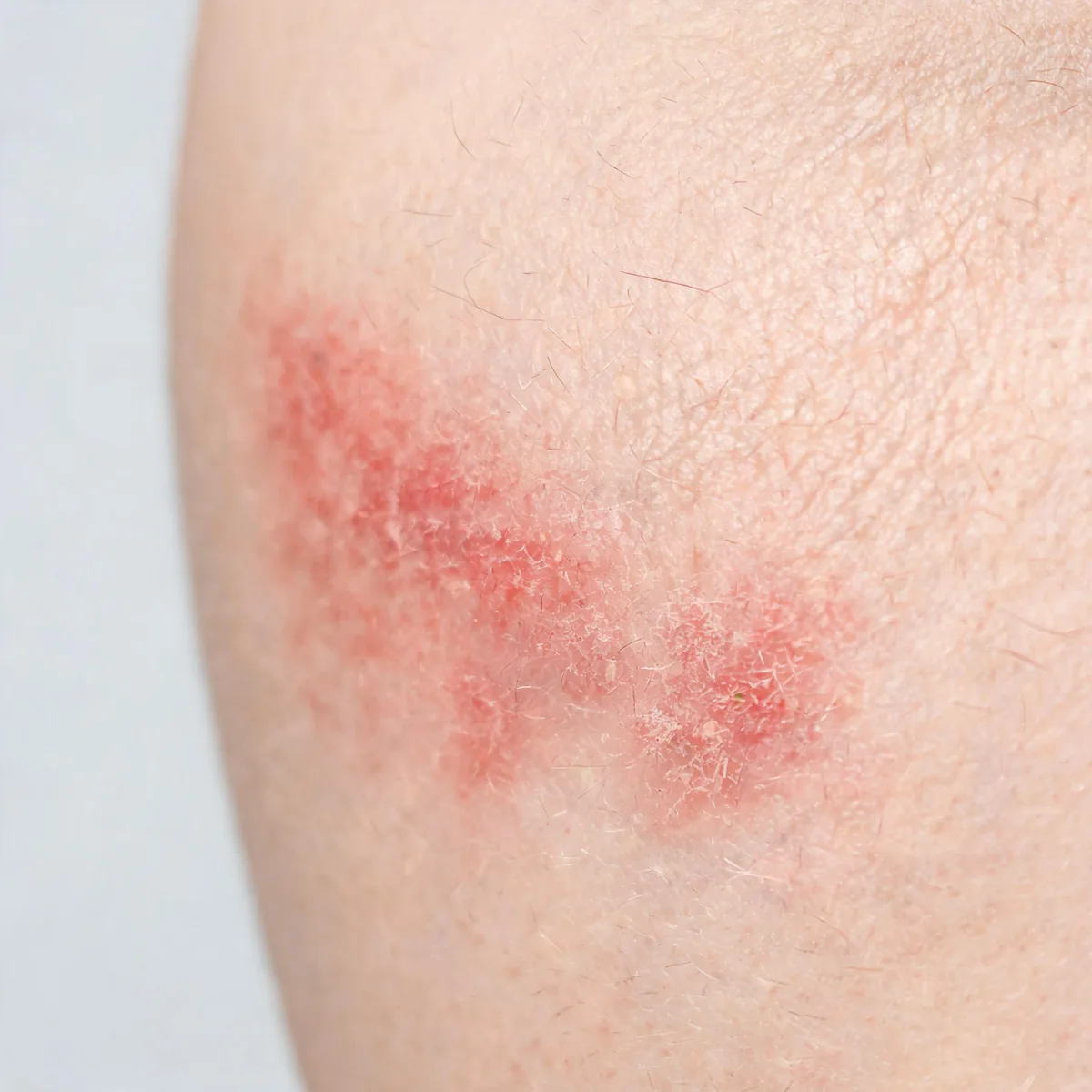
Understanding Face itching
The tradition describes the face as connected to the Lungs which govern the skin, the Stomach, and the Liver channel, and as the part of the body most exposed to external pathogens.
Wind-Heat gives redness and heat on the face with itch worse with heat, sun or spicy food, thirst and a sore throat. Damp-Heat in the Liver channel gives a sticky persistent itch with oozing or crusting after scratching, a bitter taste and rib-side fullness.
Blood deficiency with external wind gives dry flaky rough skin with itch worse at night, a pale complexion and an aversion to drafts. Spleen deficiency with dampness gives a sticky heavy itch with a puffy sallow complexion, poor appetite and loose stools.
Two patterns are easily confused. Wind-Cold gives itch that worsens with cold exposure and improves with warmth, with a pale face, chills and a clear runny nose. Dry-Wind gives dry scaly flaky skin with itch worse in dry weather or heated rooms, a dry mouth and nose, and mild fever - wind that has dried the surface.
The face is where the Stomach and Liver channels come to the surface and where the state of the Lungs, which govern the skin, is most visible. It is also the part of the body that is never covered, so wind, heat, cold and dryness reach it first, lodge in the skin and stall the movement of Qi and Blood until itch appears. The quality of that itch is the thread a practitioner follows, because a burning itch that flares in the sun and a sticky itch that weeps after scratching do not come from the same disturbance.
Internal imbalance surfaces on the face just as readily as an invasion from outside. Where dampness and heat gather in the Liver and Gallbladder, they climb the channel to the face; a Spleen too weak to move fluids lets dampness collect and drift upward instead. A corticosteroid cream may quiet the skin for a while, yet it neither drains dampness nor rebuilds Blood, so the itch returns when the cream stops. Herbs and acupuncture are chosen for the pattern behind the flare so that the conditions producing it change.
Conventional view
In Western medicine facial itching is a symptom rather than a diagnosis. It appears in eczema, contact dermatitis, psoriasis, seborrhoeic dermatitis and allergy, and it can also follow dry skin, sun exposure or a systemic problem such as liver or kidney disease. Assessment is by examination and history, with patch testing or blood tests when an underlying cause needs to be found.
Conventional treatment is topical first, with emollients, corticosteroid creams and calcineurin inhibitors. Oral antihistamines are used where allergy drives the itch, while systemic drugs such as immunosuppressants or biologics are reserved for stubborn cases, and light therapy is a further option when the problem persists.
The limitation is that relief is symptomatic. Long-term topical steroids thin the skin, antihistamines cause drowsiness, and the itch often returns once treatment stops. The approach also tends to treat facial itching as one entity, which misses the distinct internal patterns that decide why one person flares with heat and another with dryness.
Selected PubMed records
Real PubMed records for the conventional discussion above, selected by condition name and title relevance. They are references, not a claim that any treatment is proven for this condition.
- Facial pruritus and stiffness as the initial manifestations of glycine receptor antibody-positive progressive encephalomyelitis with rigidity and myoclonus: a case report and literature review.. Frontiers in immunology, 2026. PMID: 42920638.
- Spinal opiate analgesia and facial pruritus: a neural theory.. Postgraduate medical journal, 1982. PMID: 6755416.
How it connects
Patterns overlap, and the overlap is often the most useful clue. A long-standing dry itch from Blood deficiency can flare into acute redness on a hot day, which is Wind-Heat laid over the deficiency, and the practitioner treats the acute layer first without abandoning the root. Where the itch is mainly dry and wakes the person at night while the skin is also greasy, blood deficiency with secondary dampness is likely; where a bitter taste and sticky discharge lead the picture, Damp-Heat is the driver even if scratching has made the skin look dry. Facial itching also arrives with eczema, contact dermatitis, seborrhoeic dermatitis and allergy, and the pattern explains why the skin reacts as it does.
How it is assessed
The practitioner examines the skin and asks what makes the itch better or worse.
What a practitioner looks for
- Triggers: itch worse with heat and sun suggests Wind-Heat; worse with cold suggests Wind-Cold.
- Skin state: dry and flaky suggests Blood deficiency or Dry-Wind; oozing suggests Damp-Heat.
- Complexion: puffy and sallow suggests Spleen deficiency.
- Red flags: sudden facial swelling, lips or tongue swelling, or breathing difficulty.
The consultation begins with the sensation, because a facial itch carries its pattern in its quality. Burning and redness that arrive with sun, heat or spicy food, with thirst and a sore throat or yellow nasal discharge, point to Wind-Heat sitting in the skin. The tongue tip and edges are red under a thin yellow coat, and a pulse that floats and races shows external heat stirring the Blood.
An itch that is persistent and sticky, oozing or crusting after scratching, with a bitter taste, warm red cheeks, fullness along the ribs and dark scanty urine, marks Damp-Heat in the Liver channel. The coat is thick, greasy and yellow over a red body, and the pulse is wiry, slippery and rapid. Where the itch is heavy and dull with a puffy sallow face, poor appetite and loose stools, the Spleen is failing to move fluids, and the tongue is pale, swollen and greasy with a weak pulse.
A dry, flaking itch that is worse at night, with a pale or sallow complexion, dizziness and sensitivity to drafts, indicates Blood deficiency with external wind. The tongue is pale and thin, the pulse fine and wiry. Itch provoked by cold and eased by warmth belongs to Wind-Cold, with a pale tongue, a floating tight pulse and a clear runny nose. Dry scaly skin, a powdery rash and dryness of mouth and nose after autumn weather or a long illness suggest Dry-Wind, with a slightly red uncoated tongue and a floating rapid pulse.
TCM patterns in Face itching
Six patterns account for most facial itching, and they divide along a simple line. In three the disturbance arrives from outside, as Wind-Heat, Wind-Cold or Dry-Wind lodging in the skin of the face; in the other three it rises from within, as Blood deficiency with external wind, dampness from a weak Spleen, or Damp-Heat in the Liver channel. What separates them is not the itch alone but its behaviour: whether heat or cold eases it, whether the skin is dry or oozing, whether the face is red or pale and puffy, and whether the itch came suddenly or has crept on for months. Two people with the same red patch on the cheek can need opposite treatment, one clearing heat and the other warming and dispersing, because the visible change is the end of a process rather than its beginning. Reading tongue, pulse and triggers together turns a list of patterns into a decision.
| Pattern | Key signs | The itch | Tongue | Main formula |
|---|---|---|---|---|
| Wind-Heat | Redness and heat on the face; Thirst with dry mouth | Itching worse with heat, sun or spicy food | Body: Red at the tip and edgesCoat: Thin yellow or white turning yellow | Not specified |
| Damp-Heat in the Liver Channel | Redness and warmth on the face; Rib-side pain or fullness | Sticky persistent itch with oozing or crusting after scratching | Body: Red, with redder sides and edgesCoat: Yellow and greasy, thicker at the centre and root | Not specified |
| Blood Deficiency with External Wind | Dry flaky rough skin | Itching worse at night | Body: Pale and thin, sometimes slightly dryCoat: Thin, white and a little dry | Not specified |
| Spleen Deficiency with Dampness | Not specified | Sticky heavy itch on the face | Body: Pale and swollen, often with teeth marks along the edgesCoat: White, greasy and moist, thick in the middle | Not specified |
| Wind-Cold | Pale or slightly red face without true redness | Itching worsens with cold exposure | Body: Normal or slightly paleCoat: Thin white and moist | Not specified |
| Dry-Wind | Dry scaly or flaky facial skin; Dry mouth, nose and throat | Itching worse in dry weather or heated rooms | Body: Slightly red and dry, possibly crackedCoat: Thin white and dry | Not specified |
Wind-Heat
Red hot itchy face worse with sun or spicy food.
Wind-Heat strikes the surface of the body, and the face is usually the first place it lands because nothing covers it. The heat irritates the skin and its small vessels, producing redness and a hot itch that grows in warmth, while the wind gives the itch its shifting, come-and-go character. It typically follows hot windy weather or a stretch of spicy, greasy meals, and it can arrive with thirst, a sore throat or yellow nasal discharge.
The tongue tip and edges are red under a thin yellow coat, and the pulse floats and runs fast. Sun, heat, alcohol and spicy food make it worse, while a cool compress and rest in a cool room calm it. Xiao Feng San is the formula named for this presentation, dispersing wind, clearing heat and draining dampness, and the points chosen are LI-4 Hegu, LI-11 Quchi, GB-20 Fengchi and LI-20 Yingxiang.
Signs
- Redness and heat on the face
- Itching worse with heat, sun or spicy food
- Thirst with dry mouth
- Sore throat or yellow nasal discharge
Diet and lifestyle for this pattern: Stay cool and out of long sun exposure, drink plenty of water and cooling teas such as chrysanthemum or mint, and avoid spicy, greasy and fried food as well as alcohol, which add Heat. Use a gentle fragrance-free cleanser and keep the face shielded from wind.
Damp-Heat in the Liver Channel
Sticky persistent itch with oozing and a bitter taste.
Dampness and heat gather in the Liver and Gallbladder and travel up the channel to the face. Dampness gives the itch its sticky persistence, so the skin weeps or crusts where it has been scratched, while the heat brings redness and a burning feel. The bitter taste and the fullness along the ribs belong to the same Liver disharmony, and the urine is often dark and scanty.
The tongue body is red with redder sides and a yellow greasy coat that lies thicker at the centre and root; the pulse is wiry, slippery and rapid. Alcohol, fried and spicy food, humid weather and anger all aggravate it, and a light cooling diet in a calm environment eases it. Long Dan Xie Gan Tang is the formula, sometimes strengthened with Ku Shen and Bai Xian Pi, and the points are LR-3 Taichong, LR-8 Ququan, SP-9 Yinlingquan and ST-40 Fenglong.
Signs
- Sticky persistent itch with oozing or crusting after scratching
- Bitter taste in the mouth
- Redness and warmth on the face
- Rib-side pain or fullness
Diet and lifestyle for this pattern: Avoid greasy, fried and spicy food and alcohol, which all generate Damp-Heat. Eat cooling, Dampness-draining food such as mung beans, bitter gourd, celery and cucumber, and use light exercise and stress management to keep Liver Qi from stagnating.
Blood Deficiency with External Wind
Dry flaky face with night itch and pallor.
Blood keeps the skin fed and supple, so a chronic shortfall leaves the face rough, dry and flaking. That dryness stirs an internal wind, and the itch begins to move about or arrive in spells. A surface left weak by the lack of Blood also lets external wind in, which is why a draught can set off an attack, and the itch is usually worse at night when circulation slows.
The tongue is pale and thin with a thin white, slightly dry coat; the pulse is fine, wiry at the left middle position and floating at the right front. Wind, dry air, night-time, spicy food and overwork worsen it, while moisturiser, sleep and protection from the wind help. Dang Gui Yin Zi is the classical formula, and the points are SP-10 Xuehai, SP-6 Sanyinjiao, GB-20 Fengchi and ST-36 Zusanli.
Signs
- Dry flaky rough skin
- Itching worse at night
- Pale or sallow complexion
- Aversion to wind and drafts
- Dizziness or light-headedness
Diet and lifestyle for this pattern: Eat blood-nourishing food such as black sesame, red dates, spinach and liver, and avoid spicy, drying food and alcohol. Protect the face from wind and cold with a scarf, moisturise gently to keep the skin hydrated, and get enough sleep so Blood can rebuild.
Spleen Deficiency with Dampness
Sticky heavy itch with a puffy sallow complexion.
A Spleen too weak to transform and transport fluids leaves them to gather as dampness, which is heavy, sticky and inclined to rise. It surfaces on the face as a dull, lingering itch that does not burn, with a complexion that looks puffy and sallow rather than red. Humid weather and rich meals make it worse, because both add to the load the Spleen cannot move.
The tongue is pale and swollen with teeth marks and a white greasy, moist coat; the pulse is soggy and slow, sometimes slippery. Cold and greasy food, overeating and a sedentary routine aggravate it, while gentle walking, dry weather and warm light meals ease it. Shen Ling Bai Zhu San is the formula, and the points are ST-36 Zusanli, SP-9 Yinlingquan and BL-20 Pishu.
Signs
- Sticky heavy itch on the face
- Puffy or sallow complexion
- Poor appetite with loose stools
- Heaviness in body and limbs
Diet and lifestyle for this pattern: Eat warm cooked food such as congee, soups and steamed vegetables, and avoid cold, raw, greasy and sweet food. Small frequent meals are easier on the Spleen, and gentle daily walking helps Qi flow and dries Dampness.
Wind-Cold
Itch worse with cold and better with warmth.
Wind-Cold attacks the surface and the exposed face takes the first blow. It blocks defensive Qi in the skin and traps it there, which produces a prickling itch. Since cold tightens the pores, the itch flares in chilly or windy conditions and relaxes when warmth returns, and chills with a clear runny nose often come with it.
The tongue body is normal or slightly pale with a thin white moist coat, and the pulse floats and feels tight. Cold wind, air conditioning, cold drinks and sudden drops in temperature make it worse, while a warm cloth, staying out of the wind and warm drinks such as ginger tea ease it. Jing Fang Bai Du San is the formula named for this pattern, and the points are GB-20 Fengchi and LI-4 Hegu.
Signs
- Itching worsens with cold exposure
- Itching improves with warmth
- Pale or slightly red face without true redness
- Chills with aversion to cold
- Clear runny nose and sneezing
Diet and lifestyle for this pattern: Protect the face from cold wind with a scarf, sip warm ginger tea daily, and keep the body warm with warming food so the exterior can be released. Avoid raw cold food and iced drinks, and stay out of draughts.
Dry-Wind
Dry scaly skin worse in dry weather and heated rooms.
External dryness arrives with wind and settles into the skin of the face, taking its moisture with it. What is left is parched and scaly, too dry to protect itself, so even a mild current of air sets off a flaking itch. It appears most often in autumn, in heated rooms, and in people who are already inclined to dryness.
The tongue is slightly red with a dry surface, a thin white dry coat and possibly fine cracks; the pulse floats and runs fast, stronger at the right cun position. Dry air, indoor heating, spicy and fried food, smoking, alcohol and late nights all worsen it, while a humidifier, a fragrance-free moisturiser, warm water with pear juice and cool moist weather help. Sang Xing Tang is the formula, and the points are LU-7 Lieque, KI-6 Zhaohai and LI-11 Quchi.
Signs
- Dry scaly or flaky facial skin
- Itching worse in dry weather or heated rooms
- Dry mouth, nose and throat
- Mild aversion to wind or cold
- Low-grade fever or slight thirst
Diet and lifestyle for this pattern: Use a humidifier in dry rooms and apply a gentle fragrance-free moisturiser daily. Eat hydrating food such as pear, snow fungus soup and cucumber, avoid spicy, fried and very dry food, keep alcohol and coffee modest, and take gentle walks in fresh moist air so the Lungs can spread fluids.
Treatment approach
How the tradition treats face itching, with the herbs, formulas and points used for it.
Principles
- Settle Wind, which the framework treats as the mechanism of itch.
- Clear heat and drain dampness where the face is red, hot or oozing.
- Nourish Blood and moisten dryness where the skin is dry and flaky.
- Warm and dispel cold where the itch improves with warmth.
- The strategy follows the division between patterns that come from outside and patterns that come from within. Where wind, cold or dryness has invaded, the treatment expels the pathogen and calms the skin; where the trouble is internal, it rectifies the organ involved and nourishes the skin from within, clearing heat and dampness or rebuilding Blood and Qi. Formulas are adjusted rather than fixed, so a person with a Blood deficiency base who flares with acute Wind-Heat receives a formula that clears the heat without abandoning the blood, and points on the face are combined with distal points chosen for the pattern.
Herbs used
Formulas
- Xiao Feng San
- Long Dan Xie Gan Tang
- Dang Gui Yin Zi
- Shen Ling Bai Zhu San
- Jing Fang Bai Du San
- Sang Xing Tang
Acupoints
- LI-4 (Hegu)
- LI-11 (Quchi)
- GB-20 (Fengchi)
- LI-20 (Yingxiang)
- LR-3 (Taichong)
- LR-8 (Ququan)
- SP-9 (Yinlingquan)
- ST-40 (Fenglong)
- SP-10 (Xuehai)
- SP-6 (Sanyinjiao)
- ST-36 (Zusanli)
- BL-20 (Pishu)
- LU-7 (Lieque)
- KI-6 (Zhaohai)
What to expect
- Wind and heat patterns are described as settling within weeks.
- Dryness and deficiency patterns take longer.
- Recurrence follows diet, weather and stress if the pattern is not addressed.
- Timelines differ by pattern. Wind-Heat and Wind-Cold often settle within one to two weeks, Damp-Heat and Spleen deficiency usually take three to six weeks as the dampness drains, and chronic Blood deficiency with dryness needs two to three months to rebuild reserves. Acupuncture is given once or twice a week and herbs are taken daily, and it is normal for the itch to fluctuate as the pattern shifts before it settles.
Safety and when to get help
Seek medical help urgently for
- Sudden swelling of the face, lips or tongue.
- Difficulty breathing or throat tightness.
- Facial itch with spreading redness and fever.
For anything severe, sudden or spreading quickly, read when a skin problem needs urgent care.
Cautions
- Do not apply strong topical steroids to the face without advice.
- Avoid known irritants and harsh cleansers.
- Persistent facial rashes should be medically diagnosed.
Using this alongside conventional care
- TCM is described as complementary to conventional care: prescribed topical treatment and emollients continue alongside herbs.
- Treatment sits alongside conventional care rather than replacing it. Moisturisers and mild topical steroids can continue, and prescription creams, oral antihistamines or immunosuppressants should be disclosed to both the dermatologist and the TCM practitioner so the two plans do not work against each other. Dang Gui and Chuan Xiong both thin the blood mildly, so anyone taking warfarin or another anticoagulant should tell both practitioners before a formula is started. Keep a current list of medicines and supplements, and never stop a prescribed medicine abruptly.
Diet and lifestyle
- Avoid spicy, greasy and deep-fried food, and reduce alcohol and caffeine.
- The general principle is to avoid what generates heat and dampness: spicy food, greasy and deep-fried meals, and alcohol, which also dilates the small vessels and makes itch feel worse. Cooling, hydrating foods such as cucumber, pear, celery and leafy greens suit most patterns. Where dryness dominates, add sesame seeds, spinach, sweet potato and bone broth; where dampness dominates, reduce dairy, sugar and cold drinks. Regular warm cooked meals support the Spleen, which is what turns food into the Blood and fluids the skin needs.
If you're pregnant
Pregnancy places heavy demands on a mother's Blood and Yin, and Blood deficiency with external wind is the pattern most often seen for facial itching at this time, with dry flaking skin and an itch that night makes worse. Dang Gui Yin Zi is widely regarded as safe when an experienced practitioner prescribes it and can lower the Dang Gui dose, but any formula built on toxic or strongly moving herbs is avoided. Mu Tong in Long Dan Xie Gan Tang is contraindicated in pregnancy, and the bitter-cold Ku Shen in Xiao Feng San may drain too hard. Acupuncture is a low-risk stand-in throughout, with SP-10 Xuehai and SP-6 Sanyinjiao held back until the final weeks.
If you're breastfeeding
While breastfeeding, herbs that pass into milk and upset the baby's digestion are the ones to avoid. Ku Shen, Long Dan Cao and Huang Qin are all bitter and cold, and can bring on loose stools or colic in an infant, so when a Damp-Heat picture needs clearing, a gentler herb such as Fu Ling or Yin Chen Hao is substituted, or acupuncture carries the treatment. Dang Gui Yin Zi is usually well tolerated in this situation, and so is Shen Ling Bai Zhu San. Xiao Feng San is reserved for cautious short courses under guidance, and acupuncture poses no risk to the infant.
If treating a child
Children most often present with Wind-Heat or with Damp-Heat that follows their food, and the itch comes with red dry cheek patches or small papules. Where a formula is needed, Xiao Feng San is the usual choice, at one-quarter to one-half of the adult amount according to age and weight, and Chan Tui suits children well for calming wind and itch. Because a young child cannot describe the sensation, diagnosis leans on the skin and on behaviour. A red tongue tip with a fast floating pulse fits Wind-Heat; a swollen, pale tongue carrying a greasy coat fits Spleen deficiency with dampness. Cutting back sugar and dairy often helps as much as the herbs.
If treating an elderly patient
Among older people the pattern seen most often is Blood deficiency with external wind. Skin thins, dries and flakes, and night-time itching is common. Dang Gui Yin Zi is the formula to build from, given at roughly two-thirds of the usual adult amount so that a weaker digestion is not overwhelmed, and every prescribed medicine should be reviewed before herbs are added. Acupuncture can stand alone, with SP-10 Xuehai, SP-6 Sanyinjiao and ST-36 Zusanli giving gentle cumulative relief. Progress is slow, so moisturising the skin and nourishing Blood with black sesame, goji berries and bone broth matter throughout.
Urgent-sign guidance is based on standard sources: NHS anaphylaxis, NHS cellulitis, NHS Stevens-Johnson syndrome, NHS melanoma.
Evidence
Evidence status
Compiled for this page from the classical and modern literature; not a systematic review, so treat it as a pointer to sources rather than clinical guidance.
Most of the direct evidence comes from atopic dermatitis and chronic urticaria rather than from facial itching as such, and it is moderate. Acupuncture trials report reduced itch intensity and better quality of life that outlast the treatment course, and reviews of herbal formulas report symptom improvement with less reliance on topical steroids. Trial quality is uneven, samples are small, and few studies look specifically at the face.
Studies often cited
In a randomised controlled trial, acupuncture reduced itch intensity and improved quality of life compared with antihistamine and placebo, and the benefit persisted after the treatment period. Pfab F, et al. Allergy. 2012;67(4):566-73. doi:10.1111/j.1398-9995.2011.02779.x
A systematic review of randomised trials found that several formulas, including Xiao Feng San, improved symptoms and reduced steroid use, although trial quality varied and sample sizes were small. Tan HY, et al. Br J Dermatol. 2013;168(4):724-31. doi:10.1111/bjd.12142
A review of randomised trials found that most reported reduced itching and wheal formation compared with controls, but the evidence was limited by small samples and risk of bias. Zhang W, et al. Evid Based Complement Alternat Med. 2016;2016:5194230.
Classical record
Itching is attributed to wind; when blood is deficient, dryness arises, and dryness generates wind, hence itching.
- Wai Ke Zheng Zong (Orthodox Manual of External Medicine), Volume 4, Itching section.
面痒者,由风热客于皮肤,搏于血气,故令痒也。
Facial itching arises when wind-heat lodges in the skin and contends with the blood and qi, and that contention is what produces the itch.
Zhu Bing Yuan Hou Lun, Wind Itch - Classical citation: for this page: Zhu Bing Yuan Hou Lun (Treatise on the Causes and Symptoms of Diseases), Volume 35, Wind Itch section.
Common questions
Why does my face itch in winter?
The Dry-Wind and Wind-Cold patterns describe itch worse in dry weather, heated rooms and cold exposure respectively.
Can herbs calm facial itch?
The tradition describes settling Wind and correcting the pattern behind it, with improvement over weeks.
When is it an emergency?
Sudden facial, lip or tongue swelling, or breathing difficulty.
Is it linked to my digestion?
The Spleen deficiency with dampness pattern links a sticky facial itch to bloating and loose stools.