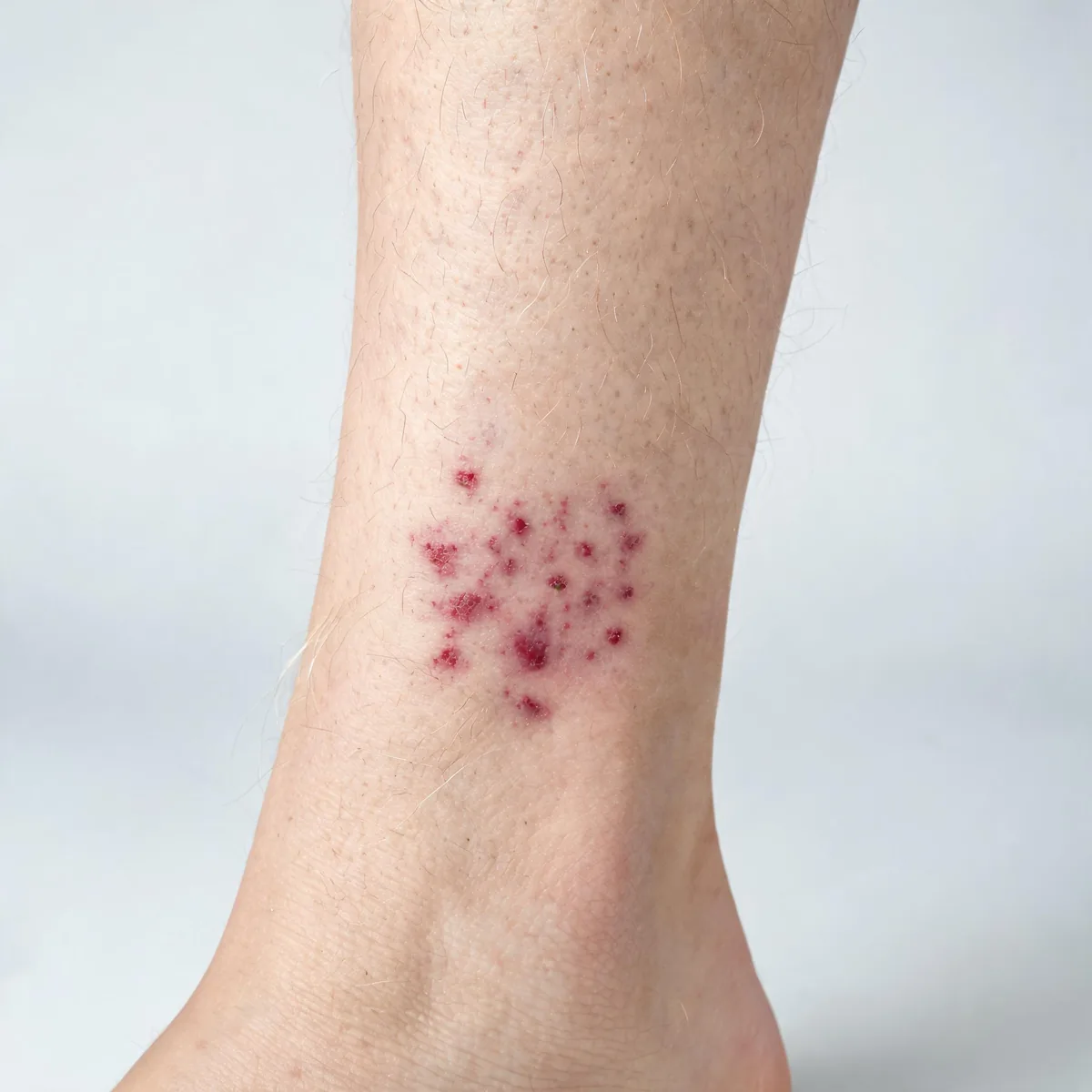
Understanding Henoch Schonlein purpura
The classical literature connects the skin and vessels to the Lungs, which govern defensive Qi and the pores, and to the Spleen, which keeps Blood in the vessels.
When a Wind-Heat pathogen follows a cold or sore throat, it can disturb the Lung function and agitate the Blood, so it leaks into the skin as purpura. That is the commonest sequence in children.
Heat victorious agitating the Blood gives high fever worse at night, dark red or purplish non-itchy purpura, bleeding from the nose, gums, stool or urine and restlessness. Wind-Heat gives itchy bright red purpura after an upper respiratory infection.
Damp-Heat in the channels adds swollen hot red joints with heavy aching, which is the joint component. Blood stagnation with heat gives dark patches with fixed stabbing pain. Qi not controlling Blood gives dull dusky purpura with profound fatigue and loose stools, and Empty-Heat from Yin deficiency gives recurrent dull red purpura with night sweats.
The classical literature frames purpura as Blood leaving its vessel. The Lung spreads defensive Qi across the surface and governs the pores, so an external pathogen that is not fully cleared can disturb that surface and agitate the Blood beneath it, which is why the rash so often follows a sore throat or a cold. The Spleen holds Blood inside the vessels, so when its Qi is weak the leak is slow and persistent rather than sudden. Between those two ends, Heat that reaches the Blood level makes Blood move recklessly, and Dampness that joins the Heat sinks into the joints.
What follows depends on depth and on the person. In an acute excess picture the spots are bright and spread quickly, and there may be fever, thirst, bleeding from the nose or gums, or blood in the urine and stool. In a deficiency picture the spots are dull and recurrent and come with fatigue, or with a mild afternoon fever and night sweats. The classical literature treats that distinction as the foundation of treatment, and it also notes that mixtures are common, so a child can present with Blood Heat sitting on a Spleen that cannot hold what is left.
Conventional view
Henoch-Schonlein purpura, now usually called IgA vasculitis, is a condition in which small vessels of the blood are inflamed and leak. It usually follows an upper respiratory infection and mainly affects children, although adults can develop it as well. The classic signs are a raised purplish rash over the legs and buttocks, together with swollen painful joints, abdominal pain, and occasionally inflamed kidneys that leak blood or protein into the urine. The diagnosis rests on the rash and the accompanying symptoms, and biopsy of the skin or kidney can confirm deposits of IgA in vessel walls.
Treatment depends on severity. Mild disease confined to the skin needs support only, with rest and pain relief; joint pain is managed with nonsteroidal anti-inflammatory drugs; and severe abdominal pain or significant kidney involvement is treated with steroids or other drugs that suppress the immune response. There is no single cure, so care is directed at controlling symptoms and preventing organ damage.
The classical literature identifies the limits of that approach. Conventional treatment suppresses inflammation and manages the acute episode but does not address the underlying predisposition, and recurrence is common; corticosteroids carry substantial side effects when used long term and nonsteroidal drugs can irritate the stomach. The standard approach also does not separate the different underlying imbalances that TCM describes, which may explain recurrent episodes, or low-grade symptoms that persist despite treatment.
Selected PubMed records
Real PubMed records for the conventional discussion above, selected by condition name and title relevance. They are references, not a claim that any treatment is proven for this condition.
- A Review of IgA Vasculitis (Henoch-Schönlein Purpura) Past, Present, and Future.. Medical science monitor : international medical journal of experimental and clinical research, 2024. PMID: 38281080.
- IgA Vasculitis (Henoch-Schönlein Purpura): An Update on Treatment.. Journal of clinical medicine, 2024. PMID: 39518760.
- Henoch-Schönlein Purpura (IgA Vasculitis): Rapid Evidence Review.. American family physician, 2020. PMID: 32803924.
How it connects
Henoch-Schonlein purpura rarely occurs in isolation: it is a systemic vasculitis that often involves the joints, gut and kidneys. In TCM the clustering is explained by shared pathogenic factors. When Heat invades the Blood level it can agitate blood in the skin, causing purpura, in the intestines, causing abdominal pain and bleeding, and in the joints, causing hot swollen arthralgia; the same Heat that drives blood out of vessels in the skin also disrupts the normal flow of Qi and Blood in the channels, producing pain. Damp-Heat is another common thread, pouring downward to cause blood in the stool or urine while settling into the joints to create painful obstruction. The Spleen's failure to manage Dampness often underlies these combined symptoms. Read that way, the clustering is a consequence of one pathology rather than several diseases: the Heat that drives Blood from the vessels of the skin also disturbs the even flow of Qi and Blood through the channels, which is why arthralgia arrives with the rash, and the same Damp-Heat that pours downward produces blood in stool or urine while settling into the joints. The classical literature therefore treats the skin, the gut and the joints as one picture, and watches the urine as the place where the process can continue quietly after the rash has gone.
How it is assessed
The practitioner assesses the purpura and, importantly, the abdominal and urinary symptoms.
What a practitioner looks for
- Onset: purpura after a sore throat in a child suggests Wind-Heat.
- Joint component: swollen hot joints suggest damp heat in the channels.
- Abdominal component: pain, vomiting or blood in the stool is urgent.
- Kidney component: blood in the urine or reduced urine output needs prompt assessment.
The examination begins with the rash: its colour, where it starts, how fast it spreads and whether it itches. The classical literature reads bright red spots that spread quickly after a cold as an exterior invasion, dark fixed spots that ache as stasis, and pale recurrent spots with fatigue as deficiency, then calls on the tongue and pulse to settle the question. Itching is a useful discriminator, because the Wind-Heat picture itches and comes and goes while the Blood Heat picture does not itch at all and instead brings thirst and a sense of heat that worsens at night.
The joint, gut and urinary findings are part of the same assessment rather than separate items. Swollen, hot, red joints with a heavy aching sensation point to Damp-Heat in the channels, and purpura appearing around the affected joints supports it. Dense, dark, painful patches that stay in one place, with a purplish tongue and a choppy pulse, point to stasis. Pale dusky spots with a weak pulse and no heat at all point to Qi not controlling Blood, and a less vivid rash with night sweats, dry mouth and a thin rapid pulse points to Empty-Heat from Yin deficiency.
TCM patterns in Henoch Schonlein purpura
Six patterns describe one process at different depths. The first question is how the spots look and behave: bright red, itchy and coming and going suggests Wind-Heat; deep red or purple, unitching and accompanied by bleeding from several sites suggests Heat victorious agitating Blood; dark patches that stay put and hurt when pressed suggest Blood Stagnation with Heat; and dull dusky spots that recur quietly suggest depletion. The second question is where else the process has landed, since swollen hot joints put Damp-Heat in the channels. The third is the state of the person, because profound fatigue with loose stools belongs to Qi not controlling Blood, while night sweats, five-palm heat and a low-grade afternoon fever belong to Empty-Heat from Yin deficiency. Tongue, pulse and the presence or absence of heat decide between them, and mixed pictures are treated in order of urgency.
| Pattern | Key signs | The itch | Tongue | Main formula |
|---|---|---|---|---|
| Heat victorious agitating Blood | Not specified | Dark red or purplish non-itchy rash | Body: Deep crimson, dry and prickly, sometimes with stasis spotsCoat: Dry and yellow | Not specified |
| Wind-Heat | Red tongue tip and edges | Itchy bright red purpura | Body: Red at the tip and edgesCoat: Thin yellow or white turning yellow | Not specified |
| Painful Obstruction due to Damp Heat in Channels | Swollen hot red joints; Pain worse with warmth, better with cold | Not specified | Body: Red, possibly slightly swollenCoat: Yellow and greasy | Not specified |
| Blood Stagnation with Heat | Dark purplish skin patches or bruising; Fixed stabbing pain worse at night | Not specified | Body: Reddish-purple, with stasis spots and dark sublingual veinsCoat: Thin, dry and yellow | Not specified |
| Qi not controlling Blood | Not specified | Not specified | Body: Pale and puffy with teeth marksCoat: Thin white | Not specified |
| Empty-Heat caused by Yin Deficiency | Recurrent purpura dull red rather than bright; Dry mouth and throat | Not specified | Body: Red, thin and dry, often crackedCoat: Little or none; the tongue may look peeled | Not specified |
Heat victorious agitating Blood
High fever with dark non-itchy purpura and bleeding.
This is the deepest excess picture. Heat penetrates to the Blood level and agitates what it finds there, so Blood moves recklessly and bursts out of the vessels, producing sudden widespread purpura together with bleeding from the nose, gums, stool or urine. The fever runs high and is worse at night, which the classical literature takes as a sign of how deep the Heat sits, and the restlessness or even delirium reflects Heat disturbing the Heart and Spirit. Intense thirst with a dry mouth accompanies it. The tongue is deep crimson with a prickly surface under a dry yellow coat, sometimes with purplish spots, and the pulse is rapid and wiry, becoming fine if the bleeding is heavy.
Spicy, fried and greasy food, alcohol and coffee, frustration and anger, overexertion, lost sleep and hot rooms all add Heat and worsen the bleeding, while cooling food and water, cold compresses, rest in a quiet cool room and emotional calm help. Replacing fluids matters because the Heat consumes them quickly. The cornerstone formula clears Heat from the Blood level, cools the Blood and stops the bleeding, with Shui Niu Jiao replacing rhinoceros horn in modern practice. Shui Niu Jiao, the raw Rehmannia that restores fluids, Mu Dan Pi and Chi Shao are its herbs. SP-10 Xuehai, LI-11 Quchi, SP-6 Sanyinjiao and LR-3 Taichong are the points, the last to calm the agitation.
Signs
- High fever worse at night
- Dark red or purplish non-itchy rash
- Bleeding from nose, gums, stool or urine
- Mental restlessness or agitation
Diet and lifestyle for this pattern: Eat cooling, non-spicy food such as mung beans, cucumber, watermelon and lotus root, and avoid all hot, spicy, fried and greasy food as well as alcohol and coffee. Rest is essential during the acute phase, avoid physical exertion and emotional stress, keep the room cool and aired, and drink plenty of room-temperature water to cool the Blood and replenish fluids.
Wind-Heat
Itchy bright red purpura after a cold or sore throat.
Wind-Heat is the early, surface version of the process. The pathogen enters through the nose and mouth, usually after a cold or a sore throat, disturbs defensive Qi and then attacks the small vessels just under the skin, so Blood leaks into the skin and forms bright red, itchy purpura that comes up suddenly. Wind is at work here, which is why the rash comes and goes, and mild fever with chills and a sore throat accompany it. The tongue shows a red tip and edges under a thin yellow coat; the pulse floats and runs fast.
Spicy, fried and greasy food, wind and drafts, overexertion and lost sleep stir it up, while rest away from wind, a cool environment, cooling food and plenty of water help the body push the pathogen out. Yin Qiao San releases exterior Wind-Heat and soothes the throat, and the classical literature notes that it is often combined with a Blood-cooling formula to stop the bleeding behind the rash. Jin Yin Hua, Lian Qiao, Zi Cao and Bo He are the herbs named. LI-11 Quchi, LI-4 Hegu and SP-10 Xuehai clear the surface, release the exterior and cool the Blood.
Signs
- Itchy bright red purpura
- Fever with mild chills and sore throat
- Appears or worsens after a respiratory infection
- Red tongue tip and edges
Diet and lifestyle for this pattern: Eat light, cooling food such as mung bean soup, chrysanthemum tea and pear, and avoid spicy, greasy and fried food that can add Heat. Rest in a cool calm environment and stay out of draughts and wind so the pathogen does not go deeper.
Painful Obstruction due to Damp Heat in Channels
Swollen hot red joints with heavy aching.
Here Dampness and Heat combine and settle in the joints, which the classical literature likens to steam trapped in a closed space: the result is swelling, redness and a hot pain that warmth or pressure makes worse. In this condition the pattern explains the joint component that runs alongside the rash, and purpura may appear around the affected joints. A heavy aching sensation in the limbs, thirst, dark scanty urine and a red body with a yellow greasy coat complete the picture. The pulse is slippery and rapid.
Spicy, fried and greasy food, hot humid weather, coffee and alcohol and overexertion aggravate it, while cold compresses, rest with the limb raised, cooling food and water and a cool room ease it. Si Miao San clears Heat and dries Dampness in the lower body and channels, reducing swelling, redness and pain. Huang Bo and Cang Zhu are its herbs, the first cooling and drying, the second opening the channels to relieve heaviness. SP-9 Yinlingquan, GB-34 Yanglingquan and LI-11 Quchi drain Dampness, benefit the sinews and clear Heat from the channels.
Signs
- Swollen hot red joints
- Pain worse with warmth, better with cold
- Heavy aching sensation in limbs
- Thirst with dark scanty urine
Diet and lifestyle for this pattern: Avoid greasy, fried and spicy food that creates Dampness and Heat, and favour light, cooling meals such as mung bean soup, barley water and plenty of vegetables. Rest the affected joints during acute flares, and gentle movement once pain subsides helps prevent stiffness.
Blood Stagnation with Heat
Dark purple patches with fixed stabbing pain.
This pattern follows Heat that has lingered. The tradition describes Heat in the Blood driving bright red spots at first, then, as it persists, congealing the Blood the way a stew reduces to a thick paste, so the purpura becomes denser, darker and painful. The trapped Heat keeps simmering, producing restlessness, a sensation of internal heat that is worse at night, and a thirst that wants the mouth rinsed rather than swallowed. Dry rough or scaly skin and dark patches or bruising appear. The tongue is reddish-purple with stasis spots and distended sublingual veins under a thin dry yellow coat, and the pulse is choppy and rapid, and often wiry at the left Guan.
Spicy food and alcohol, stress, hot rooms, overexertion and the night itself make it worse, while cold compresses, rest, cooling drinks such as chrysanthemum or dandelion tea and gentle movement help. The formula is the Blood-cooling cornerstone, combined with Blood-invigorating herbs so that lingering Heat and congealed stasis are addressed together. Shui Niu Jiao, Chi Shao, Mu Dan Pi and Zi Cao are the herbs named. SP-10 Xuehai, LI-11 Quchi, SP-6 Sanyinjiao and LR-3 Taichong move Blood, cool it and calm the irritability.
Signs
- Dark purplish skin patches or bruising
- Fixed stabbing pain worse at night
- Internal heat especially at night
- Irritability
Diet and lifestyle for this pattern: Eat cooling, blood-nourishing food such as cucumber, celery, mung beans and dark leafy greens, and avoid spicy, greasy and fried food that adds Heat. Keep the skin clean without harsh scrubbing, and gentle stretching or walking moves Blood without the overexertion that generates Heat.
Qi not controlling Blood
Dull dusky purpura with profound fatigue and loose stools.
In this pattern the vessel is intact and the contents are not hot; what fails is the force that keeps them in place. The tradition describes Spleen Qi too weak to hold Blood, so it seeps out slowly and produces persistent dull or dusky purple purpura and easy bruising, the picture of chronic or recurrent disease. Qi is the vital force of the body, so its deficiency also brings profound fatigue, a pale lustreless complexion, poor appetite, loose stools, shortness of breath with a reluctance to speak, and heavy or prolonged menstrual bleeding. The tongue is pale and puffy with teeth marks under a thin white coat, and the pulse is fine and weak, most of all at the right guan.
Overwork, long periods of standing, raw cold and iced food, lost sleep and excessive worry drain the Qi further, while rest lying down, warm easily digested meals and gentle movement conserve and rebuild it. Gui Pi Tang strengthens Spleen Qi and contains the Blood, addressing the deficiency and the bleeding together. Huang Qi raises the sinking Qi, Dang Gui replenishes what has been lost and Bai Zhu strengthens the Spleen's production of Qi. ST-36 Zusanli, SP-6 Sanyinjiao and REN-6 Qihai are used with moxibustion to build and lift the core Qi.
Signs
- Purpura dull or dusky purple rather than bright
- Profound fatigue and exhaustion
- Pale lustreless complexion
- Poor appetite with loose stools
- Shortness of breath
Diet and lifestyle for this pattern: Eat warm cooked food such as soups, congees and stews that are easy to digest, and avoid raw, cold and iced items that further weaken the Spleen. Rest takes priority, with gentle activity such as walking, since overexertion depletes Qi quickly.
Empty-Heat caused by Yin Deficiency
Recurrent dull red purpura with night sweats.
When the Yin fluids that cool and nourish run low, a subtle empty fire starts to burn within. The classical literature is careful to distinguish it from full Heat: this is not a raging fire but a restless smouldering warmth that gently agitates the Blood and pushes it out into the skin. The purpura is dull rather than bright red and tends to recur, flaring when the body is most depleted, at night or after exertion. Low-grade afternoon fever, night sweats, a dry mouth and throat that is worse at night, five-palm heat, malar flush and restless sleep accompany it. The tongue is red, thin and dry with cracks and little or no coat, and the pulse is fine and rapid, weak at depth, and weakest at the left rear position.
Overexertion, late nights, spicy and fried food, alcohol, coffee and prolonged stress deplete Yin further and let the fire flare, while rest, a cool environment, cooling food and water and gentle movement rebuild it. Zhi Bai Di Huang Wan nourishes Yin and drains the empty fire without injuring fluids. The raw Rehmannia, Zhi Mu and Huang Bo are its herbs, and Mu Dan Pi cools the Blood while keeping it in motion. KI-3 Taixi and KI-6 Zhaohai treat the root, SP-6 Sanyinjiao supports Yin and Blood, and BL-23 Shenshu fortifies the Kidney's deeper reserve.
Signs
- Recurrent purpura dull red rather than bright
- Low-grade afternoon fever or heat
- Night sweats
- Dry mouth and throat
- Heat in palms and soles
Diet and lifestyle for this pattern: Rest and avoid late nights, since sleep is when Yin rebuilds. Eat cooling, moistening food such as pear, lily bulb, black sesame, tofu and cucumber, strictly limit spicy, fried and roasted food as well as alcohol and coffee, which consume Yin and fan empty fire, and choose gentle restorative movement such as tai chi or yin yoga over intense sweating.
Treatment approach
How the tradition treats henoch schonlein purpura, with the herbs, formulas and points used for it.
Principles
- Coordinate with medical care: HSP involves the kidneys and gut, and needs monitoring.
- Cool the Blood and resolve toxicity where purpura is bright and accompanied by fever and bleeding.
- Dispel Wind-Heat where the rash follows a respiratory infection.
- Support Qi and Yin in the recovery and recurrent phases.
- The order of work follows urgency: stop the bleeding and settle the rash while the purpura is active, then correct the imbalance that allowed it, cooling, dispersing and draining in excess patterns and strengthening the Spleen or nourishing Yin in deficiency ones. Because mixed pictures are common, a formula usually covers both the flare and the constitutional weakness.
Herbs used
Formulas
- Yin Qiao San
- Si Miao San
- Gui Pi Tang
- Zhi Bai Di Huang Wan
Acupoints
- SP-10 (Xuehai)
- LI-11 (Quchi)
- SP-6 (Sanyinjiao)
- LR-3 (Taichong)
- LI-4 (Hegu)
- SP-9 (Yinlingquan)
- GB-34 (Yanglingquan)
- ST-36 (Zusanli)
- qihai-ren-6
- KI-3 (Taixi)
- KI-6 (Zhaohai)
- BL-23 (Shenshu)
What to expect
- The rash usually settles over weeks, but kidney involvement can appear or persist later, which is why follow-up testing matters.
- Joint symptoms often settle faster than the rash.
- Recurrence is possible in the weeks after the illness.
- The classical literature sets a realistic pace: joints often ease before the skin does, the rash commonly fades over two to three weeks, and chronic deficiency patterns are measured in months rather than weeks. Treatment tapers once things stabilise, but the course is completed after the rash clears, since the underlying imbalance can persist and can trigger a further episode.
Safety and when to get help
Seek medical help urgently for
- Severe abdominal pain with vomiting or blood in the stool.
- Blood in the urine or a sudden decrease in urine output.
- Severe headache, confusion, seizures, or a rapidly spreading rash with fever.
For anything severe, sudden or spreading quickly, read when a skin problem needs urgent care.
Cautions
- HSP needs medical monitoring of urine and blood pressure, usually for weeks after the rash.
- Do not stop prescribed treatment without advice.
- A feverish rash in a child needs urgent assessment to exclude other causes.
Using this alongside conventional care
- This page is complementary: HSP is a systemic vasculitis requiring medical monitoring, and herbs are used only alongside that care and with medical agreement.
- Because the condition can involve the kidneys and the gut, coordination is not optional. Corticosteroids are never stopped abruptly; they are tapered with the prescribing doctor while the TCM practitioner monitors progress, and Blood-cooling herbs with mild anticoagulant effects are declared to the doctor when someone is on blood thinners. A full medication list belongs at the first consultation, and any change in urine colour, urine output or abdominal pain is reported to the medical team rather than managed with herbs alone.
Diet and lifestyle
- Avoid spicy, greasy and rich food, and favour cooling blood-nourishing food.
- The general rule is to take nothing that adds Heat or Dampness while the rash is active: spicy, greasy, deep-fried and rich food, shellfish, alcohol and caffeine are the usual list, and cooling, blood-nourishing food such as cucumber, mung beans, watermelon and greens takes their place. The classical literature adjusts this by pattern. In Heat victorious agitating Blood it adds lotus root and room-temperature water and stresses rest; in Wind-Heat, pears, chrysanthemum tea and mung bean soup; in Damp-Heat joint pain, barley water and lighter meals; in Blood Stagnation, celery and dark greens; in Qi not controlling Blood, warm soups, congees and stews with nothing raw or iced; and in Yin Deficiency, pear, lily bulb, black sesame and tofu, with late nights avoided because sleep is when Yin rebuilds.
If you're pregnant
This condition is rare in pregnancy but needs cautious handling. Blood-Heat and Wind-Heat patterns can still occur, and because pregnancy carries a risk of miscarriage, herbs that strongly move or aggressively cool the Blood are used with great care: the Blood-cooling cornerstone includes Mu Dan Pi and Chi Shao, both Blood-moving, so their doses are reduced and monitored. Acupuncture is the safer first line, gently at Quchi LI-11 and at Xuehai SP-10. The Qi not controlling Blood pattern may become more prominent as pregnancy taxes the mother's Qi, and Gui Pi Tang is relatively safe in experienced hands. Any formula containing Tao Ren or Hong Hua is avoided, and the obstetrician is kept informed.
If you're breastfeeding
Most of the cooling and Blood-stanching herbs used here, such as Mu Dan Pi and Sheng Di Huang, are considered safe in moderate doses during breastfeeding, but very bitter-cold herbs such as Huang Lian or Da Huang are avoided because they can pass into milk and cause diarrhoea in the infant. Gentler options for the Damp-Heat picture, such as Yi Yi Ren, are preferred. Acupuncture carries no known risk to milk supply or to the baby, and points such as Zusanli ST-36 and Sanyinjiao SP-6 support the mother's Spleen Qi and her recovery.
If treating a child
This is mainly a disease of childhood, with the highest incidence between the ages of three and ten, and Wind-Heat together with Heat victorious agitating Blood are the usual patterns, usually after an infection of the upper respiratory tract. The spots usually come up faster and cover more skin, and a child may be feverish and irritable. Doses are scaled by age, at between a half and two thirds of the adult amount for school-age children and a quarter to a third for toddlers, and formulas such as Yin Qiao San and the Blood-cooling cornerstone are prescribed by a practitioner used to children. Acupressure or paediatric tuina can replace needles, using Quchi (LI-11) with Xuehai (SP-10) to clear Heat.
If treating an elderly patient
The condition is uncommon in later life, and when it appears the picture shifts towards deficiency, with Empty-Heat from Yin Deficiency and Qi not controlling Blood more likely and purpura that is dull, chronic and recurrent rather than bright and acute. The tongue looks pale, or red with almost no coat, and the pulse is weak, so treatment favours gentle tonification and avoids harsh cold herbs that could damage an already weakened Spleen and Kidney. Doses run at about two thirds of the standard adult amount and the timeline is slower, with a medication review to catch interactions and care over needling in anyone on anticoagulants.
Urgent-sign guidance is based on standard sources: NHS anaphylaxis, NHS cellulitis, NHS Stevens-Johnson syndrome, NHS melanoma.
Evidence
Evidence status
Compiled for this page from the classical and modern literature; not a systematic review, so treat it as a pointer to sources rather than clinical guidance.
Evidence consists mainly of case series, observational studies and many Chinese trials, with few high-quality English randomised trials. A systematic review of Chinese herbal medicine for HSP found that cooling-blood and wind-dispelling formulas, such as modifications of Xi Jiao Di Huang Tang, improved purpura resolution and reduced recurrence compared with conventional medication alone, though many studies had methodological limits. A 2015 Korean case series reported successful treatment in five patients. Kidney monitoring still governs management.
Two details from the literature are worth naming. The Korean series behind the case reports used a customised formula called Jing Rui Tang in five patients with Yin-deficiency disease, and recorded complete resolution of the purpura, the joint pain and the renal involvement with no recurrence during follow-up, which is a stronger result than most case series report and should be read as a single small series rather than as proof. The systematic review behind the cooling-Blood approach found improved resolution and fewer recurrences against conventional medication alone, while noting the methodological limits of the trials it pooled.
Studies often cited
Cooling-blood, wind-dispelling formulas such as modified Xi Jiao Di Huang Tang improved purpura resolution and reduced recurrence versus conventional medication alone, with methodological limits. Systematic review (as recorded in the source)
Reported successful treatment in five patients. 2015 case series (as recorded in the source)
Five patients with Henoch-Schonlein purpura presenting with a Yin deficiency pattern were treated with a customised formula, Jing Rui Tang, and all achieved complete resolution of purpura, joint pain and renal involvement without recurrence during follow-up, suggesting that Yin-nourishing and Blood-cooling herbs may help chronic cases. Lee JH, et al. Korean herbal medicine for treating Henoch-Schonlein purpura with Yin deficiency: five case reports. Journal of Korean Medicine. 2015;36(1):93-101. https://pmc.ncbi.nlm.nih.gov/articles/PMC4332006
PubMed records for the TCM evidence
Real PubMed records for the TCM clinical evidence discussed above, selected by condition name and title relevance. They are references, not proof of benefit.
- Traditional Chinese medicine versus regular therapy in Henoch-Schönlein purpura nephritis in children: study protocol for a randomized controlled trial.. Trials, 2019. PMID: 31464626.
- Chinese patent herbal medicine Huaiqihuang for Henoch-Schonlein purpura nephritis in children: a systematic review of randomized controlled trials.. BMC complementary medicine and therapies, 2021. PMID: 34743723.
Classical record
When blood is hot, it moves recklessly; therefore cooling the blood is essential.
- Xue Zheng Lun (Treatise on Blood Syndromes), chapter 2, Blood Heat. The Chinese original is not reproduced here: it could not be recovered reliably from the source record, and is not guessed.
入血就恐耗血动血,直须凉血散血。
Once heat has entered the blood there is danger that it will consume and agitate the blood, so one must cool the blood and disperse it.
Wen Bing Tiao Bian, Chapter 3, Lower Burner - Classical citation: which features it in its account of how TCM understands this condition. It states the treatment principle that the Blood Heat and Blood Stagnation patterns both follow, cooling the Blood while keeping it moving rather than simply stopping the leak.
Common questions
Is HSP just a skin rash?
No. It can involve the joints, gut and kidneys, which is why urine tests and medical follow-up matter.
Can herbs treat HSP?
Only alongside medical care. Kidney and intestinal involvement need monitoring and sometimes treatment that herbs cannot replace.
Why does my child need urine tests?
Kidney involvement can develop or persist after the rash settles, often without symptoms.
When is it urgent?
Severe abdominal pain, vomiting, blood in the stool, blood in the urine or reduced urine output.
Can TCM help if HSP affects the kidneys?
It can support care, though not replace it. The classical literature reads kidney involvement as Heat that damages the Blood network, or as Yin deficiency with empty fire, and chooses herbs that cool the Blood, arrest bleeding and protect kidney function. Because renal involvement can be serious, treatment is coordinated with a nephrologist and urine testing continues throughout.
Do I have to take herbs indefinitely?
No. Treatment is intensive while the rash is active and bleeding needs stopping, then reduces to a maintenance dose that corrects the underlying imbalance. Once the pattern has resolved and the body is stable the herbs are stopped, though chronic recurrent cases may take a gentle formula for some months, with the aim of eventually relying on the body's own balance.
How fast does the rash clear with TCM?
Many people see the rash begin to fade inside the first fortnight. How completely it clears depends on the pattern, since Wind-Heat settles fastest while Blood Stagnation and the deficiency patterns take longer, and treatment usually continues for a while after the skin is clear to reduce the chance of a relapse.